

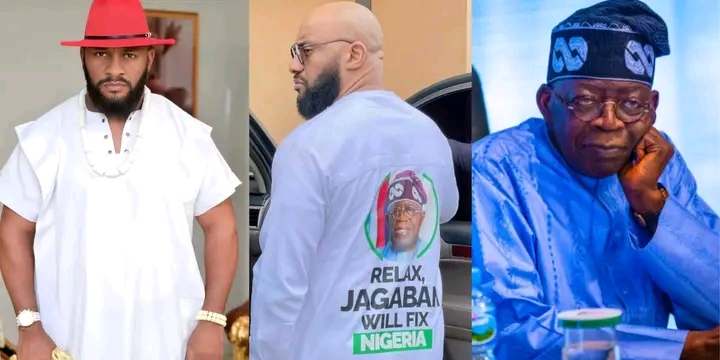
There are moments in Nigerian public life that do not arrive with noise, but still shake the air around them. Yul Edochie’s shift in tone toward President Bola Ahmed Tinubu landed like that. No countdown, no warning, just a sharp public letter that felt different from everything he had said in the last 2 years. For a man who proudly called himself Asiwaju Boy, and even rocked outfits with the president’s face printed boldly across the chest, this new voice of frustration did not sound like something that grew slowly. It sounded like something that snapped.
Before this recent moment, Yul was one of the loudest celebrity defenders of the president. And anyone who followed him closely already knows the way he defended was not the quiet type. He backed the government loudly and cheerfully, even when people mocked him. Even when Nigerians were drowning in heavy fuel prices, rising food costs, and insecurity, he was still standing on the belief that Tinubu will fix Nigeria. He repeated that line several times across interviews, posts, and videos. It became something like a personal mantra.
Which is why the words he wrote on the night he addressed Tinubu directly became a jolt. People were not expecting it, but they felt the weight of it. Something had changed.
Below is the full journey of how he got there, and the long road that led to the day he stopped defending Tinubu.
The early days when Yul walked confidently with his chest out
When the 2023 election dust settled, and Bola Ahmed Tinubu of the All Progressives Congress became president, many celebrities either stayed silent or acted neutral. Some were scared of backlash, others simply did not want to pick sides. Yul did not belong to either group. He stepped out boldly and announced himself without fear.
He referred to himself as Asiwaju Boy. He posted pictures in Tinubu inspired outfits, with wide smiles. His captions were full of confidence. He said he was 100 percent behind the president, and he felt sure Nigeria was finally entering a new phase of development. He said he trusted Tinubu’s leadership ability, and he did not care what anyone said. He even argued passionately that Tinubu would surprise Nigerians in a good way.
When critics were dragging the new administration, Yul fired back. When the economic pressure tightened around ordinary people, he insisted that the sacrifice was temporary. He said every great nation had to pass through a stage of discomfort before growth arrived. Even when people cursed him, insulted him, and called him blind, he never stopped supporting the president. His loyalty remained firm.
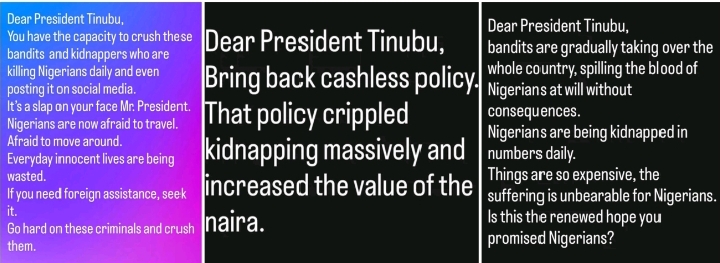
The tone did not change in 2024, and surprisingly, it did not change in early 2025 either. Yul was still defending some federal decisions when many of the president’s supporters had already gone silent. He even suggested policy adjustments like the return of the cashless policy that was active during the old naira redesign era. He argued that the cashless approach would stabilize the naira and reduce robbery cases. His suggestions were framed like a devoted supporter speaking to someone he believed in.
There was no sign then that he would ever fall out of line.
The pressure pot Nigeria became in 2025
While Yul was defending Tinubu publicly, Nigeria was moving in a rough direction that almost no one could pretend away anymore. Prices were climbing weekly. Families were breaking under the weight of feeding. Transport became nearly painful. Power supply was still unreliable, and the sudden spikes in electricity bills shocked many homes and shops. But the worst hit came from the insecurity that kept rising steadily.
Kidnapping cases began to multiply. Bandits spread boldly across roads that used to be safe. Villages were attacked. Travellers disappeared. Even major highways that once carried heavy commercial activity became fear zones. People were praying before every journey, as if Nigeria had turned into a massive field of uncertainty.
These problems were not rumors. They were real daily issues affecting millions. Every week there was a new headline. Every day someone was tweeting about a kidnapping. Every hour people were discussing the cost of food. The tension was everywhere.
Yul saw all of this. Even his comment section began to fill with frustrated Nigerians who told him he was defending what was killing them. Some accused him of being out of touch. Some said he was doing it for political benefit. Some mocked him. Others insulted him bitterly.
But through all of this, Yul continued insisting that Tinubu would fix Nigeria. He took the criticism with a calm face. Until he did not.
The shift that came like cold water on a hot surface
The letters he posted since December 4 2025 felt like someone turning around in the middle of a long road trip. It was not coated with niceness. It was not packaged diplomatically. It came out raw. In that letter, he said bandits were gradually taking over the whole country. He said kidnappers were everywhere now. He said Nigerians did not feel safe anymore. He called out the suffering openly and directly.
He questioned the entire renewed hope promise, and he said it in a way that did not sound like someone merely advising from a friendly corner. It sounded like someone who had reached a breaking point. The line he used made it clear. He said people are tired. He said people cannot continue like this. That did not look like the Yul people had known for 2 years. Something flipped inside him.
To many observers, that letter was his loudest moment of frustration. And it began circulating quickly. The same people who used to drag him were now sharing his post. Some said welcome home. Some said reality has finally set in. Some said they had been waiting for the day he would open his eyes. Others mocked him gently, saying he finally understood.
The reaction proved that the post was a major turning point. Even political analysts picked it up and began discussing whether Yul had officially withdrawn support, or whether he was simply calling for action. The public could feel that he was not the same defender he used to be.
The old loyalty is not fully buried, but the new tone refuses to hide
Even though the letter felt heavy and almost confrontational, Yul did not declare openly that he no longer supports Tinubu. He did not use a line like I am done. He did not say I no longer stand with you. Instead, he framed it as a painful truth brought forward because he still cares.
But anyone reading the tone can tell the relationship is no longer what it used to be.
Before this moment, Yul defended every wave with boldness. He had no hesitation. Now he sounded unsure. The unconditional energy was missing. The supporter had become a critic. The cheerleader had become someone demanding results. The enthusiastic believer had become a concerned citizen speaking sharply.
It was not a gentle shift. It was a cold turn.
Even the timing added weight. December 2025 was already a period when insecurity was dominating the national conversation. So, when Yul added his own voice, it echoed loudly. People were tired, and they needed loud truth. He gave it to them.
Why this moment shook online spaces
People are used to celebrities flipping sides, but Yul’s case felt different because his loyalty was not a small or subtle one. He defended Tinubu loudly. He embraced it fully. He tied his image to the administration boldly. So, when he finally expressed disappointment, it felt symbolic.
It felt like someone who carried a flag suddenly dropping it. And that visual was too powerful to ignore.
Also, the fact that he did not sugarcoat it made the shift stronger. He went straight to the point. He mentioned kidnappings. He mentioned bandits. He mentioned fear. He mentioned hardship. These were issues real people are living through every day. And hearing someone who once defended the government acknowledge these things made people feel seen.
Many Nigerians said they finally agreed with Yul for the first time. Some said he was late, but still welcome. Some said they had always expected this day. Some said reality makes everybody equal eventually.
The comment sections under his posts became gathering points for different emotions.
What the shift means for the political climate
Yul’s shift does not change the political scene dramatically, but it carries symbolic value. Supporters of the government lost one of their loudest celebrity voices. His shift also reflects the growing frustration inside the country. When artists, actors, and entertainers start speaking boldly about insecurity and hardship, it shows that the wave has already crossed into every part of society.
Politicians understand that celebrity voices matter because they influence mood. They mirror public frustration. And Yul stepping into criticism is like a signal that even those who once stood close are now uncomfortable.
His letter might even push some politicians to rethink how they respond publicly to insecurity. When celebrities speak loudly, people listen. And once the citizens start agreeing with them, the government usually pays attention.
Whether he will return to open support or go deeper into criticism
This is the question many people are asking, but no one can answer yet. Yul did not declare that he was withdrawing support forever. He simply spoke out about the situation. If things improve, he may return to his old tone. If things worsen, he may speak even more harshly. His future position depends entirely on the country’s direction.
But one thing is clear. The unconditional, fun spirited support he once displayed is gone. His tone has matured into something sharper. Something more grounded. Something that carries the weight of what Nigerians are going through.
And that is why this particular moment stands out so strongly.
Closing reflection on a quiet but powerful political shift
Nigeria is a country where politics moves fast, but pain moves faster. By the time someone like Yul reaches the point of openly confronting the presidency about national insecurity, it means the weight has become too heavy to ignore.
The day he stopped defending Tinubu will be remembered not because he insulted the president, but because he spoke in a tone that broke away from his old path. It was a symbolic moment. A moment when someone who used to stand proudly beside the administration now stood in front of it, demanding answers.
Maybe it was frustration. Maybe it was exhaustion. Maybe it was the reality of what ordinary Nigerians are going through. Whatever it was, it shaped a turning point that many people felt deeply.
Yul did not tear down the house. He only knocked on the door loudly for the first time.
And sometimes, that is all it takes for the entire street to wake up.