

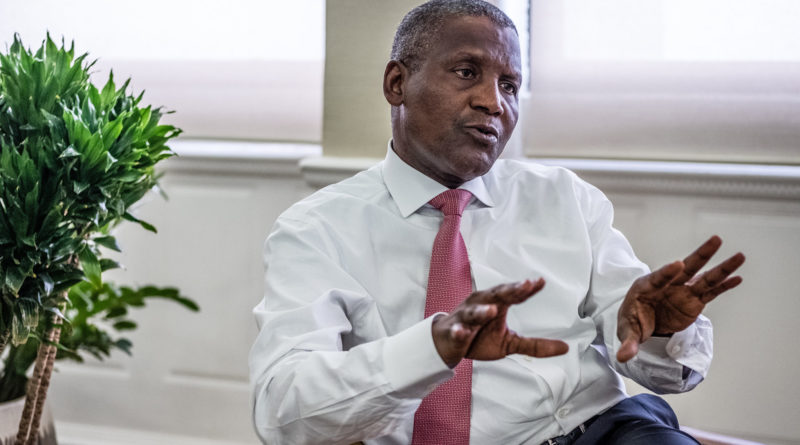
Nigeria’s capital market has long been searching for transformative moments, deals that can shift perception, deepen investor confidence, and signal that the country’s industrial ambitions are finally aligned with financial markets. In 2025, one such moment is looming, as Aliko Dangote, Africa’s richest industrialist, hints at listing a portion of his mega refinery on the Nigerian Exchange, NGX.
This is not just another initial public offering, it is a potential test of Nigeria’s ability to host large, complex industrial investments, to attract both domestic and foreign capital, and to reconcile private enterprise with national energy strategy.
This article will analyze the plausibility of the listing, explore the motives behind Dangote’s strategy, examine the implications for Nigeria’s capital markets, and consider the opportunities and risks, offering a thorough view of what could be one of the most significant financial events in Nigeria’s industrial history.
So, What’s Actually Going On?
Aliko Dangote has publicly declared that he plans to sell 5 to 10 percent of the Dangote Petroleum Refinery on the NGX within the next year. He said he doesn’t intend to retain more than 65 to 70 percent, signalling a shift from a fully controlled business to something more hybrid, with outside partners.
This is not a throwaway plan. Dangote is modeling the listing after what he’s done with other business arms, Dangote Cement and Dangote Sugar Refinery are already public. He also stressed that the shares will be offered gradually, depending on how many investors bite and how strong the market is.
At the same time, Dangote is talking to foreign partners, particularly from the Middle East, to help fund a major expansion of the refinery. He wants strategic partners, not just shareholders, and seems open to letting in big players.
Moreover, the NNPC, Nigerian National Petroleum Company Limited, is said to be increasing its stake. Reports say NNPCL wants to raise its holding up to 20 percent. This has big implications, state entity, private refinery, public listing, complex mix.
Operationally, the refinery is real and productive. Dangote says it began operations around 2024, and he aims to ramp capacity from approximately 650,000 barrels per day to 700,000 soon. But that’s not the endgame, his long term target is 1.4 million barrels per day, which would make it one of the largest single site refineries in the world.
Why Dangote Is Doing This, Not Just Vanity, There’s Strategy
This isn’t just about raising money for expansion, though that’s clearly part of it. Dangote seems very intentional, by floating a minority stake, he brings more skin into the game from public investors, which helps spread risk. He is also signaling seriousness to other institutional and strategic investors, this refinery isn’t a pet project, it’s a long term industrial engine.
The gradual release plan, five to ten percent, gives him flexibility. If demand is weak, he can hold back, if demand is strong, he can lean in more aggressively. He’s not locking himself into one moment.
Bringing in Middle Eastern partners is a smart play, those investors can bring capital, technical knowledge, and possibly access to feedstock or downstream markets. That could help fund the refinery’s growth without forcing Dangote to dilute too much or take on unfavorable debt.
On the state side, a bigger NNPC stake is a double edged sword. On one hand, it aligns the refinery more closely with Nigeria’s national energy strategy, on the other, it raises governance challenges. When a state oil company takes a bigger share, political risk goes up.
What This Means for Nigeria’s Capital Markets
If Dangote does list that 5 to 10 percent as planned, it could be transformative for NGX. Such a listing would be unusually large for a Nigerian industrial company, especially in energy. It would put real weight onto the market, attracting both institutional and retail investors.
The NGX’s leadership clearly believes in this. Umaru Kwairanga, the NGX chairman, has said publicly that the listing of the refinery, and other Dangote units, will significantly boost market capitalization. For NGX, this is not just about one company, it’s about proving that Nigeria’s capital market can handle very large, complex industrial IPOs.
There’s also a political economic narrative here, Dangote is offering ownership to Nigerians, enabling ordinary investors to own a stake in a major national refinery. That’s potentially very powerful in terms of wealth democratization.
From a governance and transparency perspective, a public listing would force Dangote Petroleum Refinery to disclose more of its financials. That could be good for accountability, but it also exposes the refinery to market pressure, investors will demand dividends, or at least a path to profitability, and that may shape management decisions going forward.
On the flip side, this is not risk free for the capital markets. Valuing a refinery is complicated, margins depend on global crude prices, local logistics, operating costs, and regulatory risk. If the IPO is overpriced, retail investors could suffer. If it’s underpriced, Dangote may leave too much money on the table.
There’s also macro risk, Nigeria’s currency, foreign exchange dynamics, inflation, and political stability all matter. For the public to commit to an energy infrastructure business, they need confidence that the macro won’t blow up.
Another issue, liquidity, even if 10 percent is floated, that might not be enough free float to guarantee active trading. If the float is small and most shares are held by Dangote and big partners or NNPC, liquidity could be shallow, limiting price discovery.
What Could Go Wrong, And What to Watch
One risk is that the market simply can’t absorb the shares. Dangote’s plan is phased, but if investor appetite is weak, he may delay or scale back. That would reduce the capital raised and might undermine the very goal of sharing risk and ownership.
Another risk is operational. The refinery is still ironing out technical issues, Dangote himself said not all problems are solved yet. If the refinery has to undergo a long shutdown for maintenance, that hurts cash flow, which in turn would be bad for investor returns.
The labor front is also tense. There are reports, from credible sources, that unions are unhappy about mass sackings and working conditions. Labor disputes could escalate, potentially affecting operations and investor confidence.
There’s also currency risk baked in. Dangote has said in the past that fuel sales in naira were hurting because crude is bought in dollars. That mismatch could erode profits or force price adjustments, which could spook investors.
Then there’s a governance challenge. Once you have state involvement, like NNPC increasing its stake, managing the business becomes more political. Decisions may not be purely commercial. That could lead to conflicts of interest, especially if the refinery is also supposed to deliver some public good, fuel security, national refining ambitions.
Finally, scaling capacity to 1.4 million barrels per day is very ambitious. It’s not just building, it’s maintaining, running efficiently, and competing in a volatile global energy market. If Dangote overreaches, investors could pay a heavy price.
Why This Still Feels Like a Big Win, If It Works
If Dangote pulls this off, it’s not just a win for him, it could reshape Nigeria’s capital markets. A successful refinery IPO could set a template for other industrial giants to list, helping deepen NGX, increase liquidity, and attract long term capital.
For Nigeria as a whole, having a major refinery partly owned by public shareholders strengthens the case for industrial sovereignty. It aligns private capital with national energy infrastructure in a way that past state led refinery projects have struggled to do.
It could also democratize wealth. Ordinary Nigerians could own a slice of one of the most important industrial assets in the country. That matters, not just financially, but symbolically.
Investors, local and foreign, could gain confidence in Nigeria’s markets. If they see that Dangote, a home grown industrialist, is willing to share ownership and operate transparently, that boosts faith in the NGX as a serious platform for big, transformative deals.
In the long run, if the refinery meets its scale up target, it can generate strong cash flows. The expansion to petrochemicals, polypropylene, base oils, and so on, could turn this into more than just refining, into a petro industrial powerhouse. That kind of cash flow could be a real engine for dividends or growth.
My Verdict, It’s Likely, But It’s Risky
Yes, I lean toward the view that Dangote will list part of his refinery on the NGX. The public statements are consistent, the logic is there, and there is market support. But this is not a slam dunk for either Dangote or Nigerians to blindly celebrate.
The upside is massive, capital market deepening, participation, wealth democracy, industrial financing. But the downside is very real, operational risk, currency mismatch, governance complexity, weak float, and macro instability.
For Nigeria’s capital markets, this could be a turning point if done well, but if mis executed, it might just be another IPO that raises expectations but fails to deliver real long term value.