
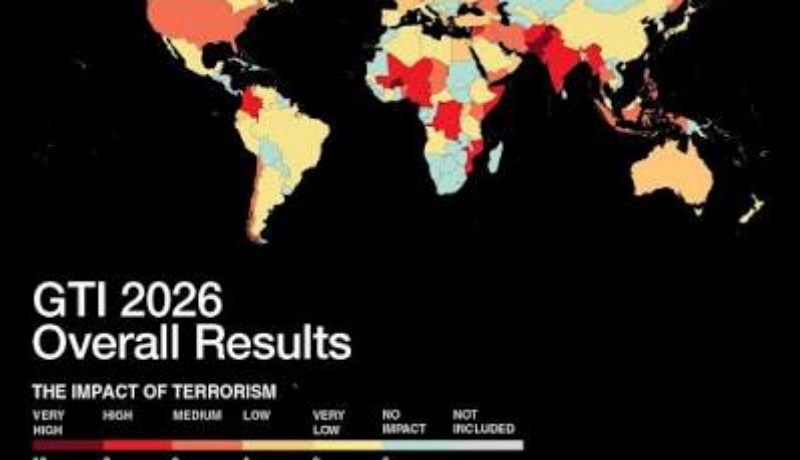
On March 19, 2026, the Institute for Economics and Peace (IEP), ranked Nigeria fourth most terrorised country of the world.
According to the 2026 Global Terrorism Index (GTI) released by the Institute Nigeria experienced the largest year-on-year increase in terrorism-related deaths globally.
This surge, according to their recent report has propelled the country to fourth place on the index, trailing only Pakistan, Burkina Faso, and Niger.
It further revealed that Nigeria rose to fourth place on the index after recording 750 deaths in 2025—a 46 per cent increase from the previous year.
WITHIN NIGERIA findings showed that in their 2025 report, Nigeria was ranked sixth.
However, the recent surge in the ranking could easily be linked to a protracted security crisis characterised by an escalation in terrorism, banditry, and high-profile kidnappings.
Checks showed that the violence has taken a heavy toll on the nation’s security apparatus, with several senior military officers among those killed in recent operations.
According to IEP, “terrorism remains highly concentrated. Just under 70 per cent of deaths from terrorism occurred in only five countries: Pakistan, Burkina Faso, Nigeria, Niger, and the Democratic Republic of the
Congo (DRC).
“Six of the ten countries most impacted by terrorism are in sub-Saharan Africa, now the global epicentre of terrorism.
“For the first time, Pakistan recorded the highest score on the Index and is the country most impacted by terrorism. This follows a sharp
resurgence in terrorist activity driven in part by the Taliban’s return to power in Afghanistan in 2021. Pakistan’s strained relations with its neighbours, combined with rising violence from TTP and the Balochistan Liberation Army (BLA), have created significant
security risks.
“Deaths from terrorism in Pakistan are now at their highest level since 2013, with the country recording 1,139 terrorism deaths and 1,045 incidents in 2025.Nigeria recorded the largest increase in 2025, with fatalities rising
by 46 per cent to 750. Islamic State West Africa Province (ISWAP) and Boko Haram were responsible for 80 per cent of all terrorism deaths in the country.”
Giving more insight, the report further explained that “Five countries in the Sahel recorded falls in both the number of deaths and incidents from the year previous.
“Nigeria is the only country in the region to experience an increase in both categories.
“Burkina Faso, the most impacted country in 2023 and 2024, recorded the largest decrease in deaths globally, with fatalities falling by 686, or 45 per cent.
“Despite this decline, lethality
increased, reflecting a pattern of fewer but deadlier attacks.
“The main driver of the decline was a steep reduction in civilian casualties, which fell by 84 per cent.
The year was marked by the absence globally of large-scale attacks.
“The deadliest attack killed 120 people, compared to 237 in 2024 and over 1,100 in 2023. It was also the only attack in 2025 that killed more than 100 people, compared to five attacks of that magnitude in the prior year. Average lethality also decreased, from
2.1 to 1.8 deaths per attack.”
Groups fueling terrorism in Nigeria
There are three major groups fueling escalation of terrorism in Nigeria.
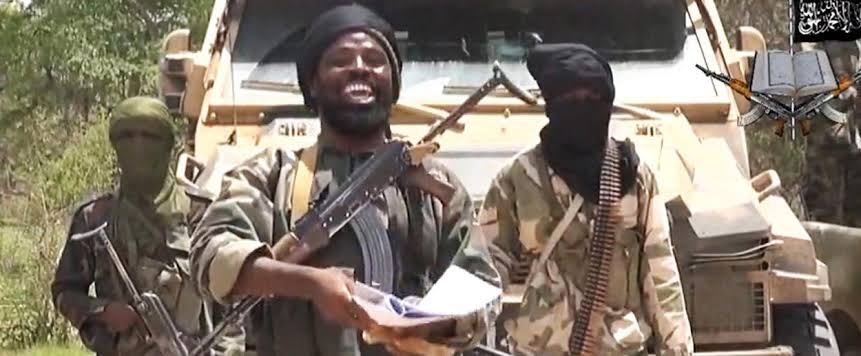
Boko Haram is one of the major terrorist groups in the country. Since its founding in 2009, the activities this group has led to death of so many innocent Nigeria.
Though it has its base in the North West of the country, the terror acts of this group have a lot of collateral damages in other parts of the country.
Islamic State of West African Province is also very much active in Nigeria with its attendant negative security effects. Since its declaration of allegiance to Al-qaeda some years ago, the group has continued to unleash untold mayhem in the zone especially northern part of the country.
In Nigeria, we also have another terror group in the name of Lukarawas. This group emerged barely two years ago and had led to the death of many Nigerians as a result of their terror attacks.

Finally, we have yet another terror group called Wulowulo which emerged some months ago in the northern part of the country. Their terror attacks have continued to send shock waves across the northern region of the country
Reactions trail the report
Barely six hours after the release of the report, there has been plethora of reactions to the report.
Opposition parties in Nigeria have alleged that the report is a manifestation of failure of government of President Bola Ahmed Tinubu.
In any case, reacting to the report, the People’s Democratic Party (PDP), led by Tanimu Turaki, described the findings as a damning indictment of the All Progressives Congress (APC) administration.
The party noted that the report is a sign of the “daily lived reality” of citizens who feel more insecure now than at any other point in the Fourth Republic.
The PDP further alleged that under President Bola Tinubu’s watch, insecurity has evolved into a “lucrative trillion-naira economy.” The opposition criticised the government for what it termed “reactive responses” and called for a “whole-of-society” approach to restore order.
However, the opposition urged the presidency and the security hierarchy to move beyond post-attack communications and evolve policies capable of delivering “negative peace”—defined as the immediate cessation of attacks. This, they argued, must serve as the foundation for “positive peace,” or voluntary harmonious coexistence.
Reminding the administration that the protection of lives and property remains the primary duty of the state, the PDP appealed to the President to deploy his political expertise to stem the tide of violence. “Nigerians are tired of being killed for no reason,” the party stated.
ADC berates Tinubu over Nigeria’s global terrorism index
In its own report, the African Democratic Congress, ADC has linked terrorist-related attacks and increasing civilian deaths in Nigeria to what it described as a breakdown in governance under President Bola Tinubu, citing the 2026 Global Terrorism Index report as evidence of worsening insecurity across the country.
In a press release on Thursday by its National Publicity Secretary, Bolaji Abdullahi, the ADC outlined a three-pronged approach aimed at strengthening intelligence coordination, decentralising policing to enhance community-level security, and transitioning from reactive measures to proactive, intelligence-driven operations.
The ADC described the latest index as a clear indication of the shortcomings of the APC government under Tinubu.
“That is not an abstract statistic. It is a direct reflection of the failure of the Bola Tinubu-led APC government to secure the country.
“At a moment when Nigerians are grieving, and communities across the country are living under constant threat, Tinubu, his National Security Adviser, and the Minister of Defence are abroad. The contrast is clear: a country in crisis, and a leadership that is absent,” the statement partly said.
Stressing further, the party said that “Nigerians should take note of this moment. It raises a fundamental question about Tinubu and the APC’s priorities. At a time that demands focus, discipline, and urgency, the Tinubu government appears more concerned with pageantry, paparazzi, and propaganda—rather than real performance.
“The Global Terrorism Index confirms what Nigerians already know from lived experience. Terror attacks have surged by 43 per cent, rising from 120 incidents in 2024 to 171 in 2025. Violence is increasingly concentrated in Borno State, which now accounts for 67 per cent of attacks and 72 per cent of deaths. Most concerningly, civilians now make up 67 per cent of those killed—a measure of how exposed ordinary Nigerians have become.
“The threat to Nigerian families is also evolving. ISWAP is responsible for over half of all attacks and deaths across the country. Boko Haram remains active and deadly. New groups like Lakurawa are emerging, showing that Tinubu’s national security strategy is not containing the insecurity problem but expanding it.

“These outcomes point to something deeper than isolated security lapses. They reflect a breakdown in governance. The GTI identifies weak governance, internal instability, and economic hardship as key drivers of terrorism. That is not a political talking point—it is the assessment of an independent international body.”
The ADC, however stressed that a government truly focused on protecting its people would demonstrate visible, coordinated leadership during crises, strengthen local security architecture, and address the economic and social conditions that fuel recruitment into extremist groups.
The party said, “Instead, what Nigerians see is a leadership class that is more preoccupied with political positioning than with the urgent business of governance.”