
Electricity has always been central to life in Lagos, powering homes, businesses, and the pulse of a city that never truly sleeps. Yet, in the first quarter of 2026, residents of Nigeria’s largest city have faced a relentless and almost unbearable cycle of blackouts, brownouts, and interruptions that have transformed daily life into a struggle for survival against darkness. The city has become a living testament to a failing national grid that continues to collapse with alarming frequency, leaving entire neighborhoods and commercial centers without reliable power.
These failures are not isolated technical glitches but part of a chronic structural problem that reflects years of underinvestment, inadequate maintenance, and infrastructural decay, which have been compounded by rising population pressures and growing demand for electricity.
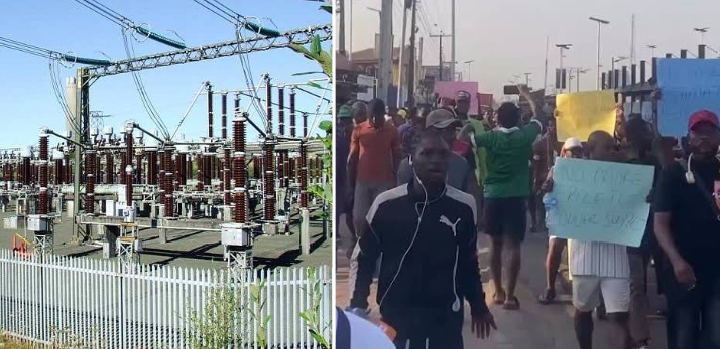
As the outages persist, human frustration has boiled over into street protests, community demonstrations, and social unrest, particularly in areas like Fadeyi and Egbeda, where residents are forced to navigate life in intermittent darkness.
The First Collapse: January 23, 2026
On January 23, 2026, Nigeria witnessed one of the most dramatic power outages in recent memory when the national grid collapsed entirely, cutting electricity supply to zero megawatts and plunging the entire country into darkness. All 11 electricity distribution companies were simultaneously affected, leaving millions of households, offices, and factories without power. This was not the first collapse, as December 2025 had seen a similar nationwide failure, followed by a series of partial system disturbances in early January. Each collapse exposed the fragility of the grid, the lack of redundancy in the system, and the vulnerability of the transmission network, which has suffered decades of neglect.
Engineers from the transmission companies attributed the breakdowns to multiple factors including overloaded lines, technical faults, and a lack of routine maintenance. Citizens across Lagos described the sudden darkness as paralyzing, with families relying on candles and small generators, businesses facing revenue losses, and streets becoming unsafe as traffic signals and lighting failed. The shock of January 23 did not dissipate quickly because it was immediately followed by more sporadic outages, reinforcing the perception that the grid had become unstable and untrustworthy.
Structural Causes Behind the Outages
The technical collapse of the national grid is rooted in systemic challenges that extend far beyond Lagos. Nigeria operates a single national grid, which means that any failure in one region can ripple across the entire country, causing widespread outages. The generation capacity is consistently below demand, with daily electricity consumption in the country estimated at around twelve thousand to fourteen thousand megawatts, while generation averages barely five thousand to six thousand megawatts during periods of full operation. Gas-fired plants often operate below capacity due to disruptions in gas supply, maintenance shutdowns, and equipment failures, while hydroelectric plants are impacted by fluctuating rainfall and environmental conditions.
Transmission lines, many of which were installed decades ago, are overburdened and poorly maintained, and the network is vulnerable to both natural events such as storms and human factors such as vandalism and illegal connections. Distribution companies face their own operational hurdles, including outdated transformers, inaccurate billing systems, and widespread electricity theft, leaving residents to contend with sporadic delivery even when the grid is technically active.
These factors together create a fragile system in which even minor faults or maintenance issues can cascade into full-scale national outages.
The Human Toll: Living in Intermittent Darkness
For the residents of Lagos, the power outages are not abstract statistics or technical failures; they represent daily hardships that disrupt every aspect of life. Families rely heavily on diesel generators, candles, and rechargeable lamps to navigate evenings, facing increased household expenses and health risks due to prolonged generator use in poorly ventilated spaces. Nighttime blackouts interrupt sleep cycles, increase anxiety, and limit the ability to engage in routine domestic activities. Businesses experience halted production lines, closed offices, and disrupted supply chains, which threaten profitability and force many companies to depend entirely on private energy solutions.
Educational institutions and students also suffer, with online classes, research activities, and examination preparations frequently disrupted by the lack of power. Streets become perilous as traffic lights fail, surveillance cameras go offline, and public transport systems encounter delays, creating not only inconvenience but a heightened risk of accidents. Every outage compounds the sense of helplessness and frustration among Lagosians, who are increasingly questioning the competence and accountability of both electricity providers and government authorities.
Rising Protests: The People Demand Action
The frustration and fatigue caused by persistent electricity failures have manifested in organized protests across Lagos, particularly in Fadeyi on March 12, 2026, when residents marched through the streets with placards calling for consistent electricity supply and fair billing practices. The slogan “No Light, No Life” became emblematic of a broader movement demanding transparency and accountability from distribution companies and government regulators. Other protests erupted in Egbeda, where communities staged demonstrations near distribution company offices, drawing attention to long-standing power shortages and erratic billing.
Youth groups and small business owners have been at the forefront, emphasizing the connection between unreliable electricity and broader economic challenges, such as high operational costs, job insecurity, and reduced productivity. The protests have been largely peaceful but highly visible, attracting attention from local media and civil society organizations, and have underscored a critical truth: the failure of the electricity sector is not merely a technical issue but a profound social and economic concern that affects millions of lives daily.
Sequence of Collapse: A Vicious Cycle
The recurring outages in Lagos and across Nigeria follow a recognizable sequence, a cycle of collapse that has repeatedly frustrated citizens and industry observers alike. The cycle begins with grid failure, often triggered by transmission or generation faults. This is followed by load shedding and rationing, with residents receiving electricity for only two to three hours per day in some areas. Public outcry then ensues, taking the form of street protests, petitions, and social media campaigns that demand immediate action. Distribution companies respond with temporary solutions such as emergency repairs or limited power allocations, but these stopgap measures do not address the root causes of instability.
Financial gaps created by unpaid or unreliable electricity bills further hinder long-term infrastructure investment, leaving plants, transmission lines, and substations in states of disrepair. Without systemic investment and consistent maintenance, another collapse becomes inevitable, and the cycle begins again. This pattern has repeated throughout Q1 2026, reflecting structural weaknesses in the power sector that no single short-term intervention can resolve.
Economic Implications: The Cost of Darkness
The repeated blackouts in Lagos have far-reaching economic consequences that extend beyond household inconvenience. Manufacturing facilities and tech hubs have reduced output or shut down entirely during power interruptions, leading to decreased productivity and potential job losses. Retail businesses and small enterprises bear the financial burden of operating diesel generators, which are costly and unsustainable over long periods. Some companies have considered or already executed a complete exit from grid reliance, further straining local economies. The informal sector, which constitutes a large portion of Lagos’ economy, suffers disproportionately, as daily income depends heavily on consistent operational hours.
High costs of electricity alternatives also exacerbate inequality, placing an undue burden on low-income households. Collectively, these economic pressures create a feedback loop where the lack of stable power undermines economic activity, which in turn limits the funds available to improve electricity infrastructure, perpetuating the crisis.
Governance and Accountability Challenges
Efforts to address the power crisis are often slowed by regulatory inefficiencies and fragmented governance structures. Delays in policy implementation and inconsistencies between federal and state authorities hinder the progress of critical reforms. Distribution companies, while partially responsible for service delivery, often face systemic constraints that prevent them from achieving reliable supply, including outdated infrastructure, insufficient funding, and a lack of technical expertise. Public dissatisfaction has been further fueled by perceived opacity in billing practices, sporadic communication from service providers, and a lack of clear timelines for grid stabilization.
The single national grid amplifies every failure, as regional problems rapidly escalate into nationwide blackouts. Authorities are under mounting pressure to modernize plants, upgrade transmission lines, and enforce accountability measures, but achieving these reforms requires sustained investment and coordinated action, which has historically been inconsistent.
Social Consequences: Anxiety and Community Friction
Beyond economic strain, repeated outages have affected social cohesion and daily life. Families face interpersonal stress as the struggle to manage household energy needs intensifies. Neighbors compete for access to functional generators or solar alternatives, and in some cases, disputes have arisen over fuel supplies and billing disagreements. Educational disruptions have affected students’ academic performance, while professionals reliant on remote work experience both productivity and income losses.
Public safety has become a growing concern, as street lighting failures contribute to increased vulnerability to crime and traffic accidents. Health risks are also evident, with prolonged generator use contributing to indoor air pollution and the spread of respiratory illnesses. In this way, the power crisis extends far beyond inconvenience, touching every facet of human life and highlighting the critical link between infrastructure and social wellbeing.
Environmental and Technical Pressures
The ongoing failures are not solely due to human negligence but are also affected by environmental pressures. Hydroelectric plants rely on consistent rainfall, which has been unpredictable due to changing weather patterns and periods of drought. Storms and heavy rains have caused physical damage to transmission infrastructure, including collapsed poles, flooded substations, and eroded access roads.
Vandalism and illegal connections continue to sap electricity from the system, further weakening grid stability. Technical maintenance is hampered by aging equipment and insufficient funding for replacement parts. As the grid ages and demand continues to rise, these environmental and technical pressures will likely intensify unless urgent investment and modernization efforts are undertaken.
The National Context: A Broader Outcry
The unrest in Lagos mirrors a nationwide dissatisfaction with electricity service in Nigeria. Other major cities, including Abuja, Port Harcourt, and Kano, have reported similar instability, though Lagos often bears the brunt due to its population density and economic significance. Labour groups, civil society organizations, and industry bodies have voiced concerns over persistent power outages, linking them to broader economic malaise and governance failures.
Apologies and explanations from power companies, while frequent, have done little to assuage public anger, particularly when promised improvements fail to materialize. Unions have even threatened nationwide strikes or protests to pressure authorities into delivering more reliable service, reflecting the growing recognition that electricity provision is both an economic necessity and a social contract with citizens.
Looking Forward: Suspense and Urgency
Q1 2026 has exposed a critical moment for Nigeria’s electricity sector, highlighting the urgent need for comprehensive reforms and strategic investment. Protests are likely to intensify if authorities fail to stabilize the grid and provide clear, credible plans for improvement. Consumer patience is at a tipping point, with social unrest increasingly tied to systemic inefficiencies rather than isolated incidents. Experts and stakeholders have emphasized the importance of expanding generation capacity, modernizing transmission lines, enforcing distribution accountability, and exploring decentralized energy solutions to reduce reliance on the single national grid.
The situation in Lagos serves as a barometer for national electricity stability, and failure to act could have cascading economic, social, and political consequences, particularly in urban centers that drive the country’s economic engine.
Closeout: Humanity in the Dark
The first quarter of 2026 in Lagos is a story not just of failing infrastructure but of human resilience, frustration, and the quest for dignity in daily life. The protests, demonstrations, and social media campaigns are reflections of widespread discontent, but they also reveal a population unwilling to accept mediocrity in service delivery. Living with two to three hours of electricity a day is not merely inconvenient; it is a fundamental challenge to daily routines, economic survival, and community wellbeing.
The recurring collapses of Nigeria’s national grid reveal deep structural vulnerabilities that demand long-term planning, investment, and accountability. For Lagosians, the cycle of collapse is a lived reality of waiting, hoping, and protesting for reliable light, and it is a story that underscores the urgent need for change in one of Africa’s most dynamic cities.