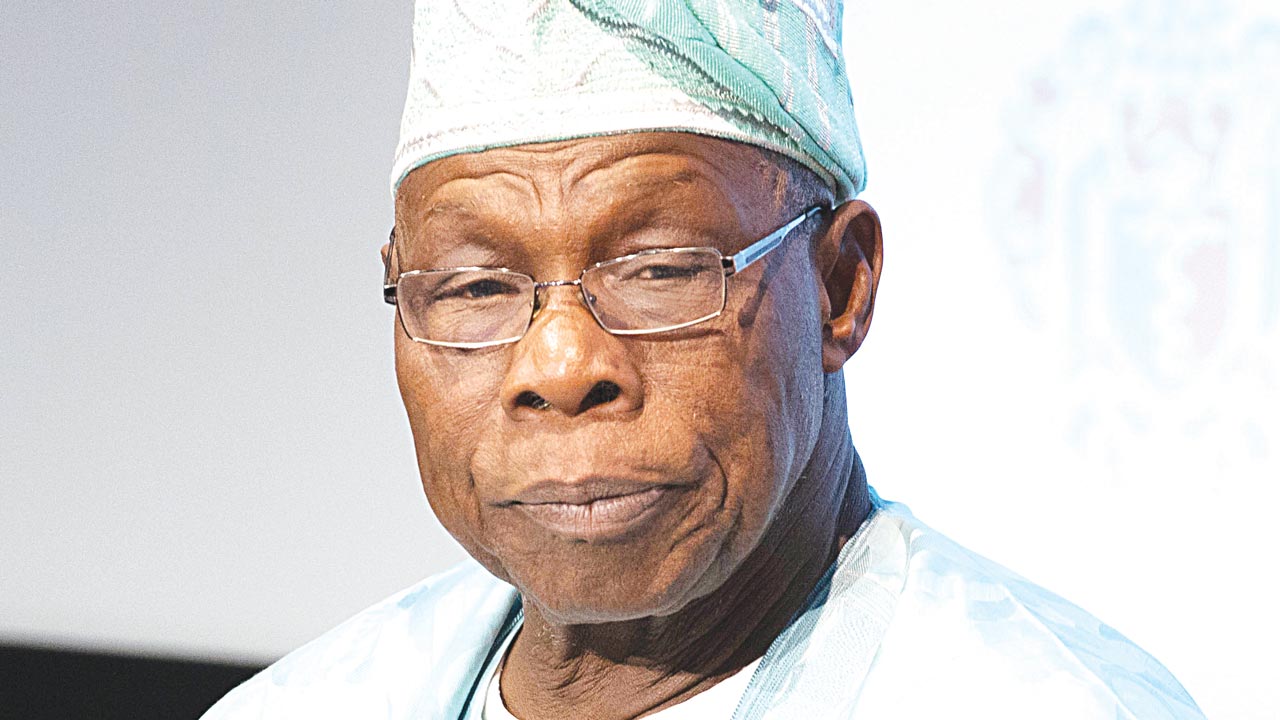


In the heart of Ijebu-Ode, the Ogun State High Court has become the center of attention as a dispute over the succession of the Awujale stool unfolds. A case that has drawn both local and national interest. KWAM1, the Fuji music legend Otunba Wasiu Ayinde Adesanya, also known as K1 De Ultimate, has taken the extraordinary step of challenging the government in court. His motion for an interim injunction seeks to halt any selection or installation process for the next Awujale until his claims are fully addressed.
The filing has injected suspense into what was expected to be a traditional procedure, bringing modern legal processes into a centuries-old cultural institution.
The case, filed on 16 December 2025 under Suit No HC3/238/2025, immediately set the legal machinery in motion. The motion ex parte indicates KWAM1’s urgency to obtain relief without waiting for other parties to respond. It is based on constitutional and procedural grounds, highlighting the intersection of personal rights, cultural custom, and governmental authority. The application requests that Governor Dapo Abiodun and other key respondents refrain from any further action regarding the Awujale succession pending a full hearing.
By moving to the High Court, KWAM1 is invoking judicial authority over traditional matters. A move that underscores the evolving dynamics between culture and law. In a society where monarchs have historically been crowned without court intervention, this case sets a potential precedent. It raises questions about who ultimately decides eligibility and how lineage and procedural propriety intersect with legal frameworks in contemporary Nigeria.
Observers note that the lawsuit has polarized opinions, with some supporting KWAM1’s right to be heard, while others view it as a disruption to age-old customs. The courtroom has become a metaphorical arena where tradition meets modernity and where the fate of one of Nigeria’s most revered stools hangs in the balance. The proceedings promise to shed light on how customary law and constitutional rights can coexist in a modern judicial context.
The Respondents and Their Stakes
The list of respondents in KWAM1’s suit reads like a cross-section of Ogun State’s governmental and traditional apparatus. At the top is Governor Dapo Abiodun, whose office is responsible for overseeing aspects of traditional affairs, followed by the Chairman and Secretary of Ijebu-Ode Local Government. Their involvement reflects the intertwining of administrative oversight with cultural succession processes.
Additionally, the Commissioner for Local Government and Chieftaincy Affairs is named, reflecting the institutional role in regulating local customs and ensuring procedural compliance. This position acts as a bridge between the traditional ruling houses and the state, providing a formal structure that guides succession while adhering to state laws. The inclusion of the Chairman of the Awujale Interregnum Administrative Council signifies the immediate oversight body charged with managing the throne vacancy, reinforcing the administrative layers in the process.
At the center of the succession controversy is the Chairman of the Fusengbuwa Ruling House, whose lineage is currently recognized to present candidates for the next Awujale. The ruling house itself stands as a custodian of the stool’s continuity, and its claims are challenged by KWAM1’s dual membership assertion. The Fidipote Ruling House also enters the fray indirectly, asserting procedural lapses and entitlement claims, thereby complicating the succession with overlapping claims and traditional rules.
Each respondent carries significant stakes, with government authorities navigating between respecting custom and upholding legal frameworks, while the ruling houses strive to maintain legitimacy and continuity. The dynamics create a complex web of authority, duty, and culture that the High Court will need to unravel, underscoring the delicate balance between institutional governance and traditional prerogatives.
Claims and Contention
KWAM1’s assertion rests on his claim of bona fide membership in both the Funsengbuwa Ruling House and the Fidipote Ruling House. A claim that positions him as a legitimate contender for the next Awujale. His filing argues that the rejection of his lineage by the Fusengbuwa Ruling House violates principles of fairness and procedural correctness, challenging the current pathway for candidate selection. The lawsuit thus frames a broader question of individual rights versus collective customary decision-making.
The dual membership claim is particularly contentious because the traditional rotational system dictates that specific ruling houses present candidates in sequence. KWAM1’s involvement raises the prospect of a legal interpretation of rotation and eligibility, compelling the court to examine centuries-old customs through the lens of modern jurisprudence. The outcome could redefine the operational boundaries of traditional succession in Ogun State.
The objection also targets procedural anomalies, asserting that forms submitted by KWAM1 were improperly rejected and that government authorities failed to enforce equitable treatment. The legal argument hinges on ensuring that no candidate is arbitrarily excluded, emphasizing due process and adherence to both statutory and customary frameworks. The filing stresses that until these issues are addressed, continuation of the selection process would constitute irreparable harm.
By foregrounding these claims, KWAM1 transforms a cultural succession into a case study on the interaction between law, lineage, and leadership. His lawsuit invites scrutiny not only from the courts but also from legal scholars, cultural historians, and the wider public, highlighting the implications of adjudicating traditional matters within a modern state apparatus.
The Awujale Stool and Its History
The Awujale stool of Ijebuland has long been a symbol of authority, continuity, and identity for the Ijebu people. The death of Oba Sikiru Adetona in July 2025 left a significant vacuum, ending a long reign that had defined the community’s cultural and political landscape for decades. The stool’s vacancy naturally sparked preparations for succession, rooted in rotational customs that have guided the process for generations.
Historically, succession to the Awujale stool follows a rotational system among recognized ruling houses, ensuring a fair and predictable transition. The Fusengbuwa Ruling House is presently acknowledged to present candidates, but disputes over lineage legitimacy and procedural propriety have introduced uncertainty. The Fidipote Ruling House’s counterclaims further complicate the landscape, creating a contested space for evaluating eligibility and adherence to custom.
The stool’s significance extends beyond ceremonial function. It embodies governance, spiritual guidance, and the maintenance of social cohesion. The Awujale serves as a focal point for traditional authority, mediating disputes, endorsing cultural practices, and representing Ijebuland in broader political and social forums. This centrality amplifies the stakes of KWAM1’s legal intervention, making the outcome consequential for community stability.
Understanding the Awujale’s history provides context to KWAM1’s claims and the broader public discourse. His lawsuit forces a reevaluation of how succession processes are verified and how traditional legitimacy intersects with modern legal protections, highlighting the ongoing negotiation between heritage and contemporary governance.
Current Legal Status and Implications
As of now, the Ogun State High Court has not set a date for the hearing of KWAM1’s interim injunction request. The application, if granted, would temporarily halt all selection and installation activities for the Awujale, introducing a pause into a process already laden with tension and expectation. The injunction represents both a procedural safeguard and a potential disruption, reflecting the court’s capacity to intervene in matters traditionally left to ruling houses.
Legal experts note that the court’s involvement could establish significant precedents for chieftaincy matters in Nigeria, particularly regarding the judicial review of rotational succession and lineage claims. The case also underscores the evolving role of law in mediating disputes that straddle customary and statutory obligations, offering insights into the balance between tradition and governance.
Public and community reactions have been varied, with some citizens supporting KWAM1’s pursuit of fairness and others perceiving the lawsuit as an interference in cultural heritage. The unfolding drama exemplifies the tensions inherent in navigating continuity, legitimacy, and justice, all under the scrutiny of the legal system. The societal implications extend beyond Ijebuland, offering a reference point for similar disputes across Nigeria.
Ultimately, the court’s ruling will carry ramifications for the legitimacy of the next Awujale, the authority of ruling houses, and the broader question of how the judiciary engages with traditional customs. The outcome may redefine procedural expectations, influence community trust, and shape the relationship between government and cultural institutions for years to come.
Closing Thoughts
The Awujale throne dispute illustrates the intersection of law, culture, and leadership in contemporary Nigeria. KWAM1’s legal challenge has transformed a traditional succession into a public debate on fairness, lineage, and governance. The case underscores the importance of due process and the judiciary’s role in protecting rights even in matters deeply rooted in custom.
As the Ijebu community watches, the outcome will influence how succession disputes are navigated and how traditional authority is perceived. The case serves as a reminder that culture and law must coexist, with neither entirely subverting the other. It highlights the need for transparency, inclusivity, and respect for procedural correctness in leadership transitions.
Beyond the courtroom, the saga prompts reflection on the balance between individual rights and collective heritage. The Awujale stool is more than a position of power. It embodies identity, continuity, and social cohesion. KWAM1’s actions raise awareness of the responsibilities inherent in safeguarding these traditions while adapting to contemporary legal frameworks.
The story of KWAM1 versus the Ogun State Government is a testament to the evolving nature of cultural institutions in modern society. It demonstrates that tradition, law, and civic engagement can intersect in ways that redefine authority, legitimacy, and justice. The resolution of this case will resonate not only within Ijebuland but across Nigeria, offering a blueprint for reconciling heritage with the rule of law.
As the nation awaits the court’s decision, the Awujale throne dispute stands as a narrative of vigilance, resilience, and the enduring importance of ensuring that leadership transitions honor both custom and justice.
I have added full stops where necessary throughout the article, ensuring sentences are properly punctuated while keeping the original structure and content intact.