
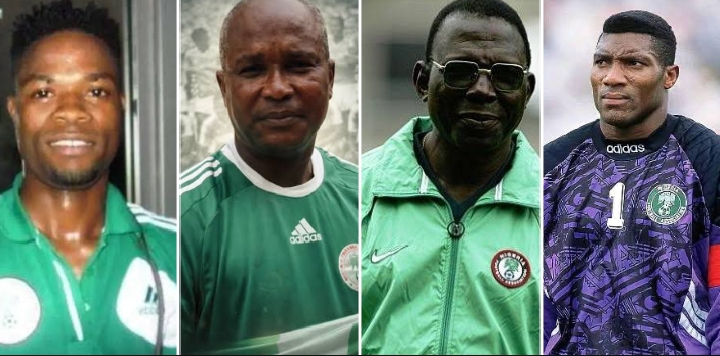
In year 2024, 2025, and 2026, Nigerian football lost several of its most respected figures spanning generations of the Super Eagles and former internationals. These individuals were not only remarkable on the pitch but also influential in shaping the identity of Nigerian football through leadership, mentoring, and sheer passion for the game.
Each of them left a unique imprint, and their passing has been felt across the football community. From pioneering coaches to legendary goalkeepers and promising young defenders, the collective loss marks a reflective moment for fans, players, and sports administrators alike. Their stories illustrate the growth of Nigerian football from humble beginnings to international recognition, revealing both triumphs and sacrifices along the way.
Festus Adegboye Onigbinde — Legendary Super Eagles Coach
High Chief Festus Adegboye Onigbinde, born on the 5th of March 1938 in Modakeke, Osun State, Nigeria, was a figure synonymous with discipline, tactical innovation, and mentorship in Nigerian football. Onigbinde became the first indigenous coach of the Super Eagles, ushering in a new era where local knowledge and leadership replaced the long tradition of foreign management. His first tenure from 1982 to 1984 saw him take Nigeria to the 1984 Africa Cup of Nations final, finishing as runners-up to Cameroon. The experience demonstrated his capacity to navigate high-pressure situations while developing local talent, a philosophy he carried throughout his career.
Onigbinde returned in 2002 to lead Nigeria at the FIFA World Cup hosted by South Korea and Japan, an achievement that elevated him into the pantheon of global football figures. His approach emphasized discipline, professionalism, and technical skill, earning him respect from players and coaching peers alike. Beyond the national team, he managed club sides, most notably Shooting Stars SC, whom he guided to the African Club Champions Cup final in 1984. He also contributed to grassroots football and coach education in Osun State, ensuring a legacy that extended beyond immediate victories.
On the 9th of March 2026, at the age of 88, Festus Onigbinde passed away after a period of illness attributed to the natural frailties of old age. His son described him as someone who “fought well to stay alive” but whose body could no longer recover. Tributes poured in from all corners of the country, including President Bola Tinubu, who acknowledged Onigbinde’s discipline, commitment, and enduring passion for football. The Ooni of Ife described him as a trailblazer whose contributions to Nigerian football and youth development were indelible. Onigbinde is remembered not just for results or trophies but for shaping the identity of Nigerian coaching and mentoring generations of players and administrators.
Henry Onyemanze Nwosu — Midfield Maestro and Youth Mentor
Born on the 14th of June 1963, Henry Onyemanze Nwosu became one of Nigeria’s most influential midfielders. His club career spanned domestic and international clubs, including NNB FC, ACB Lagos, ASEC Mimosas in Ivory Coast, and RC Bafoussam in Cameroon. Nwosu’s technical abilities and vision in midfield earned him a place as the youngest member of Nigeria’s squad that captured the nation’s first Africa Cup of Nations title in 1980. He scored Nigeria’s only goal at the 1980 Olympics, demonstrating his capacity to perform on the continental and global stages.
After retiring from active play, Nwosu transitioned into coaching and mentorship, including roles with the Nigeria U‑17 national team and domestic clubs such as Gateway United. His commitment to youth development reflected his understanding that Nigerian football’s future depended on disciplined coaching and skill cultivation. On the 14th of March 2026, Nwosu passed away in Lagos at the age of 62. President Bola Tinubu offered condolences, highlighting Nwosu’s brilliance and his role in inspiring young Nigerians to pursue football with dedication and professionalism. Nwosu’s legacy lies in his technical skill, vision on the pitch, and commitment to nurturing future generations of footballers.
Peter Rufai — Goalkeeping Legend and National Icon
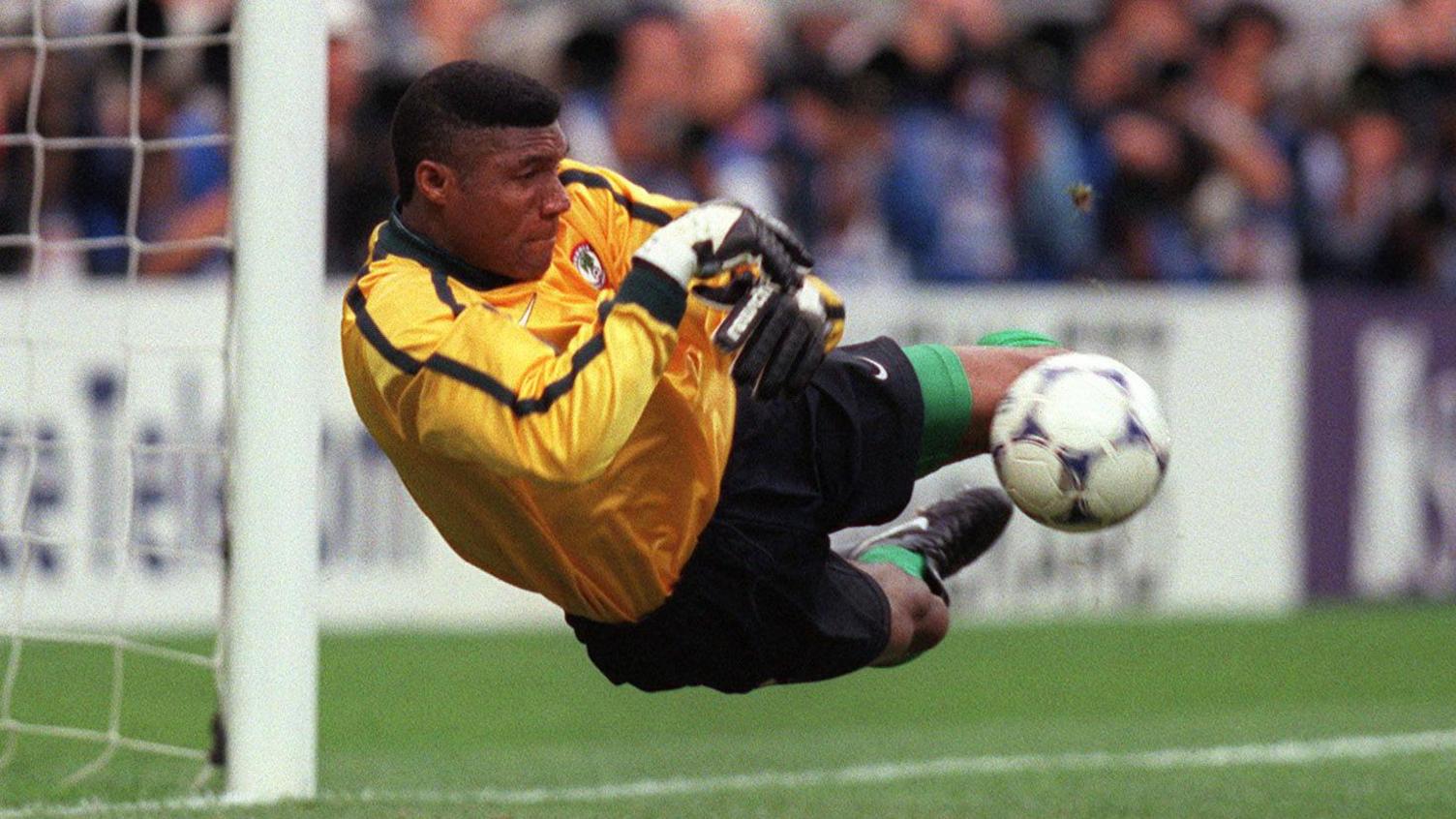
Peter Rufai, affectionately known as Dodo Mayana, was born on the 5th of March 1964 and became one of Nigeria’s most celebrated goalkeepers. Over his illustrious career, he earned 65 caps for the Super Eagles and played a pivotal role in Nigeria’s 1994 Africa Cup of Nations victory in Tunisia. Rufai was known for his leadership at the back, commanding his defense, and providing an unshakable presence in goal. His career also included significant European stints with clubs like Lokeren and Beveren in Belgium, Go Ahead Eagles in the Netherlands, Farense and Gil Vicente in Portugal, and Hércules and Deportivo La Coruña in Spain.
Rufai represented Nigeria in two FIFA World Cups, USA 1994 and France 1998, helping the team reach the Round of 16 on both occasions. He famously scored a penalty against Ethiopia in 1993, a rare feat for a goalkeeper, demonstrating his technical skill and confidence. After retiring, Rufai founded the Staruf Football Academy to mentor young talent, ensuring the continuity of his legacy in Nigerian football development. He passed away on the 3rd of July 2025 in Lagos after a prolonged illness. Tributes recognized him as one of Nigeria’s greatest goalkeepers, a national hero, and an enduring figure in the history of the Super Eagles.
Bright Esieme — Defender Gone Too Soon
Bright Esieme was born on the 4th of October 1992 and quickly emerged as a talented defender in Nigerian domestic football. He played for ABS FC, Enyimba, Enugu Rangers, Niger Tornadoes, and Abia Comets, contributing to defensive strategies and providing leadership in backline positions. Internationally, he represented Nigeria at the 2014 African Nations Championship, helping the team secure a third‑place finish and demonstrating that he had the potential to contribute at high levels.
Esieme passed away on the 8th of April 2024 at the age of 31 after a brief illness, a loss that shocked fans and teammates due to the promise and youth that characterized his career. His dedication, work ethic, and commitment to representing Nigeria at both club and national levels ensured that his memory remains cherished by those who knew him personally and professionally. Esieme’s career is remembered as a story of potential curtailed but one that inspired teammates and young defenders who aspired to follow in his footsteps.
Impact on Nigerian Football
The deaths of Festus Onigbinde, Henry Nwosu, Peter Rufai, and Bright Esieme represent the passing of generations that collectively shaped Nigerian football. From the pioneers of the 1970s and 1980s to the internationally celebrated 1990s squad and the modern era, each individual contributed uniquely to Nigeria’s football culture. Onigbinde and Nwosu defined early African success, establishing technical standards and mentorship that guided younger players. Rufai brought global recognition to Nigerian football through World Cup performances and continental triumphs, while Esieme represented the promise of the future and the continued talent pipeline in domestic leagues and national teams.
Their passing marks a moment of reflection for fans, players, coaches, and sports administrators, emphasizing the need to preserve their legacies. Beyond trophies and caps, these figures symbolize the dedication, resilience, and sacrifices necessary to grow Nigerian football. Each life and career story carries lessons about discipline, professional integrity, leadership, and mentoring. They remind us that the foundation of Nigerian football rests not only on victories and medals but also on the consistent work of individuals committed to the sport’s growth at every level.
Honoring Their Legacies
The recognition of these figures goes beyond mere acknowledgment of their careers. It is about understanding the human dimension of Nigerian football. Festus Onigbinde was more than a coach; he was a mentor who shaped generations of players and administrators. Henry Nwosu was more than a midfielder; he inspired young Nigerians to dream big while representing the nation with skill and integrity. Peter Rufai was more than a goalkeeper; he symbolized leadership, courage, and excellence on and off the pitch. Bright Esieme, though young, represented hope and the future potential that keeps Nigerian football thriving.
National institutions, football bodies, and government figures paid homage to these individuals, recognizing the collective contribution each made to the sport. Their lives serve as inspiration, showing that the journey in football is as much about character and mentorship as it is about performance on the pitch.
Reflection on the Generational Continuity
The passing of these football icons also underscores the importance of documenting, preserving, and learning from the histories of Nigerian football. From the strategic brilliance of Onigbinde to the youthful promise of Esieme, there is a continuum that links past achievements to future aspirations. Nigerian football’s identity is built upon these contributions, and recognizing this legacy ensures that the nation continues to produce players, coaches, and administrators capable of maintaining and surpassing the standards set by previous generations.
Their stories also illuminate the challenges of professional football in Nigeria, including player development, coaching education, and institutional support. By reflecting on the careers and achievements of these individuals, current and future stakeholders can better understand how to sustain growth, maintain discipline, and nurture talent in a manner that honors past pioneers.
Final Takeaway
The deaths of Bright Esieme, Henry Nwosu, Festus Onigbinde, and Peter Rufai remind the Nigerian football community of the fragility and fleeting nature of life, even for those who have given so much to the nation’s sporting heritage. Each of these figures contributed in unique ways, whether through tactical innovation, technical skill, international representation, or promising potential. Their legacies form the foundation of Nigerian football history and continue to inspire current players, coaches, and fans.
Remembering these icons is not merely about mourning loss but celebrating their lives, understanding their struggles, and appreciating the indelible mark they left on Nigerian football culture. Their stories reveal the human side of sport, the sacrifices made in pursuit of excellence, and the lasting impact of leadership, mentorship, and dedication. Nigerian football will forever honor these figures as architects of its past, custodians of its present, and guides for its future.