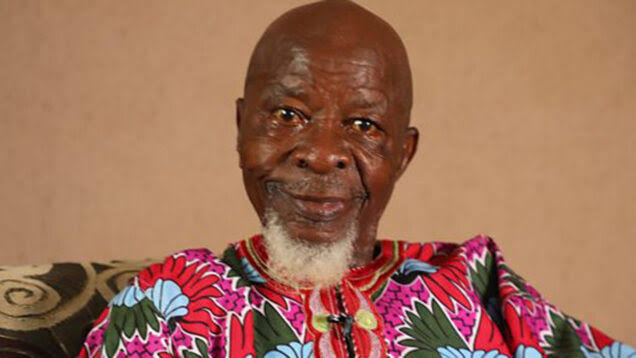


A video, in March 2026, circulated online that brought to light a reality often ignored in Nigerian entertainment. Abiodun Ayoyinka, the veteran actor behind the legendary character Papa Ajasco in the iconic comedy series Papa Ajasco and Company, sat down with popular content creator Lucky Udu for an emotional interview that revealed the hidden challenges tied to playing a character that has become bigger than life. Recorded in a street style documentary format and shared widely on Lucky Udu’s social media platforms, the interview sparked immediate conversation across Nigeria. Clips of Ayoyinka speaking candidly about his personal struggles went viral, prompting both public sympathy and renewed discussion on how Nollywood treats its veteran actors.
The video, which circulated around the 14th of March 2026, did not just recount anecdotes of fame but exposed the harsh realities of intellectual property ownership, typecasting, and the financial limitations that even highly recognized actors face. For many viewers, Papa Ajasco is more than a television character. The bald headed, loud mannered, comedic figure has been a staple in Nigerian households since the 1990s. Millions of fans grew up laughing at the antics of Papa Ajasco and his interactions with Miss Pepeye, Boy Alinco, and Pa James. Yet behind the laughter and recognition, the actor who brought the character to life revealed a stark contrast between public perception and his lived reality.
When and Where the Interview Happened
The interview with Lucky Udu was recorded in March 2026 in an informal setting that allowed Ayoyinka to speak freely without the pressures of a formal television studio. Lucky Udu is known for capturing personal stories on the streets, highlighting the raw and unfiltered perspectives of individuals whose experiences often resonate deeply with the Nigerian public. By visiting people where they are and encouraging candid conversations, Udu has developed a reputation for revealing the human side of stories that would otherwise remain hidden.
Once the video was shared online, it quickly spread across Nigerian social platforms including Instagram, Twitter, and Facebook. Clips of the veteran actor explaining the complexities of owning or performing a character not legally his own resonated with viewers who had grown up watching Papa Ajasco. Media outlets across the country reported on the interview, amplifying its reach and sparking conversations about the intersection of fame, legal rights, and financial security in the entertainment industry.
The Major Revelation – Papa Ajasco Does Not Belong to the Actor
One of the most shocking elements of the interview was Ayoyinka’s revelation that he does not legally own the Papa Ajasco character. The intellectual property rights for Papa Ajasco are held by Wale Adenuga, the producer of the comedy franchise, through his production company. This means that while Ayoyinka is globally recognized as Papa Ajasco, he cannot freely use the character for personal gain.
He explained the limitations clearly during the interview. Any time he is invited to an event, commercial appearance, or advertisement where the expectation is to appear as Papa Ajasco, he must first seek permission from Wale Adenuga. He cannot wear the costume in public for commercial purposes without approval. Ayoyinka described this challenge plainly, emphasizing that the recognition he has earned over decades has not translated into the autonomy to leverage his own fame. In his words, “The major problem is that particular character has been registered by Wale Adenuga. Anybody that wants to use me outside wants me with the character.”
This revelation highlighted a critical and often overlooked aspect of the Nigerian entertainment industry. While audiences and companies often equate the actor with the character, the legal ownership of the character lies with the producer. This discrepancy has tangible consequences for actors like Ayoyinka, who find themselves limited in the ways they can earn from the persona that made them famous.
Why the Character Became a Problem
The immense popularity of Papa Ajasco created opportunities but also unintended complications. Ayoyinka explained that the character’s iconic status resulted in a type of fame that became constraining. Companies and event organizers frequently want him to appear in costume, replicating the character’s bald head, loud voice, and comedic mannerisms. Without formal permission from the rights holder, Ayoyinka cannot legally comply, which in turn restricts the commercial opportunities available to him.
The very fame that made him a household name has paradoxically made it more difficult to profit directly from that recognition. Many of his fans do not see him as Ayoyinka the actor but solely as Papa Ajasco. The public and business expectations limit his ability to perform outside the identity that defined him for decades. This situation demonstrates the complex interplay between brand ownership, intellectual property law, and personal agency in Nollywood, where actors are often at the mercy of production companies for permission to leverage their own likeness in a professional context.
Fame Without Financial Stability
Another emotional revelation from the interview concerned Ayoyinka’s personal life. Despite his legendary status and decades of public recognition, he revealed that fame did not bring financial security. He retired from a government job approximately five years ago and admitted that life has been challenging since then. He does not currently own a house or a car, a stark contrast to public perception of his life as a celebrity.
In his words, “Things have never been okay for years now.” This candid admission underscores a systemic issue within Nollywood and broader Nigerian entertainment where recognition and success on screen do not always translate into wealth or comfort off-screen. Actors who play iconic characters often find themselves financially vulnerable despite their popularity. This is compounded for those who do not own the rights to their most famous roles.
The Challenge of Typecasting
Typecasting is another factor that complicates the lives of actors who become identified with a single role. Ayoyinka’s experience demonstrates how a character can overshadow an actor’s entire career. Because the public associates him so strongly with Papa Ajasco, he finds that opportunities to play other characters are limited. Audiences expect him to appear and behave exactly as Papa Ajasco, which restricts the range of roles producers are willing to offer.
This phenomenon is not unique to Ayoyinka. It is a widespread pattern in Nollywood where actors who excel in one character find it difficult to be accepted in diverse roles. Typecasting is a double-edged sword, providing fame but also constraining the actor’s creative freedom. The strength of the character’s identity creates a situation where public perception is indistinguishable from the actor’s personal identity.
The Background of Papa Ajasco
The Papa Ajasco character originated from the creative vision of Wale Adenuga, whose comedy franchise became one of the most popular television programs in Nigeria during the 1990s and early 2000s. The sitcom included memorable characters such as Miss Pepeye, Boy Alinco, and Pa James. For many Nigerians, the series was more than entertainment; it shaped cultural understanding of humor, morality, and social commentary.
The show’s wide appeal ensured that Papa Ajasco became a household name. Its success was built on exaggerated comedy, slapstick situations, and the distinct personalities of the characters. Ayoyinka’s portrayal was central to the franchise’s impact, yet the fame of the character came with the limitations he described. The audience adored the persona, but the actor behind the mask remained bound by contractual and legal restrictions that prevented him from capitalizing fully on his contributions.
Why the Interview Resonated
The interview gained traction not only because it revealed personal struggles but because it illustrated broader truths about Nollywood. Viewers were confronted with a reality they rarely consider: the actors behind beloved characters often do not have full control over the identities that made them famous. The interview sparked discussions about the value of intellectual property, the financial treatment of veteran actors, and the ethical considerations of typecasting.
Social media users expressed sympathy and outrage, questioning why actors who contribute so significantly to the success of characters like Papa Ajasco remain financially insecure and professionally constrained. The discussion also raised awareness of how producers, rights holders, and the public interact in shaping the careers and lives of actors.
Comparative Cases in Nollywood
Ayoyinka’s experience is mirrored by several other Nollywood actors who became synonymous with specific characters, often at the expense of their personal identity and career diversity. These cases provide context to understand the systemic nature of typecasting and celebrity constraints in Nigeria.
Patience Ozokwor became famous for her portrayal of wicked mothers and manipulative mothers-in-law, earning the nickname Mama G. In an interview with Yes Magazine on the 5th of January 2016, she revealed that she feared audiences might personally dislike her due to her roles. Later, in an interview with Saturday Tribune on the 5th of August 2017, she admitted that some roles were emotionally disturbing, causing her to cry after performing scenes where her characters harmed others. This intense typecasting resulted in Ozokwor being repeatedly cast as a villain, reinforcing public perception of her as wicked off-screen.
Late John Okafor, known widely as Mr Ibu, faced similar challenges. His comedic character, widely adored for exaggerated humor, led many people to treat him like a clown in real life. Over several Nollywood interviews and media appearances throughout the 2010s, Okafor explained that the public’s expectations constrained his professional opportunities, made it difficult to be recognized in roles that deviated from the comedic persona.
Nkem Owoh’s portrayal of Osuofia in the hit film Osuofia in London resulted in audiences equating him with the character’s village life and perceived lack of education. The popularity of the role led some viewers to assume Owoh shared the character’s traits, ignoring his real life experiences, education, and personality.
Hafiz Oyetoro, famous for playing silly and awkward characters in sitcoms, has experienced similar public misconceptions. Audiences often expect him to behave foolishly in public, affecting his interactions outside acting. This persistent association between actor and character reflects the broader pattern of typecasting in Nollywood.
The Mechanism Behind Typecasting in Nollywood
The recurring theme among these actors is typecasting, a phenomenon where an actor becomes inseparably associated with a single character. The audience’s perception merges fiction with reality, and producers reinforce this perception by repeatedly offering roles similar to the actor’s famous character. While this can secure initial employment and fame, it restricts creative expression and limits career opportunities.
Typecasting becomes particularly burdensome when combined with legal and contractual limitations, as seen in Ayoyinka’s case. Actors may be unable to fully monetize the persona that brought them recognition, leading to financial and professional constraints.
Patterns and Implications
The experiences of Abiodun Ayoyinka, Patience Ozokwor, John Okafor, Nkem Owoh, and Hafiz Oyetoro reveal a clear pattern. Fame derived from a specific character can become both an asset and a liability. Actors gain recognition but lose autonomy. Audiences equate them with fictional identities, limiting their ability to explore different roles. Producers prioritize brand recognition over actor versatility, reinforcing typecasting. Financial security is often tenuous, even for those who are cultural icons.
The viral March 2026 interview of Abiodun Ayoyinka by Lucky Udu exposed a truth that has often been hidden from public view. The actor behind Papa Ajasco revealed the consequences of not owning a character that defines one’s career, the limitations of fame without financial security, and the constraints imposed by typecasting. Similar patterns are visible in the careers of other Nollywood legends, demonstrating a systemic challenge within the industry.
Fiction in Nollywood, while entertaining millions, can create real life obstacles for those who breathe life into these stories. Understanding these challenges allows audiences to appreciate actors not only for the characters they portray but also for their personal resilience and dedication. As Nigeria continues to celebrate its entertainment industry, it is crucial to recognize the humanity behind the laughter and acknowledge the sacrifices that actors make to bring their characters to life.
Lessons and Reflections
The stories of these actors provide a humanized perspective on the complexities of Nigerian entertainment. While audiences often celebrate iconic characters, it is easy to overlook the personal and professional limitations actors face as a result. Fame does not guarantee financial stability, legal ownership does not always reside with the performer, and public perception can create lifelong constraints.
Abiodun Ayoyinka’s interview with Lucky Udu in March 2026 serves as a reminder that the success of a character does not always translate into empowerment for the actor. It highlights the importance of understanding intellectual property, advocating for fair treatment, and recognizing the humanity of those who entertain us.
Nollywood actors dedicate their lives to crafting characters that resonate with audiences, but these characters can become cages, restricting growth, choice, and identity. The stories of Ayoyinka, Ozokwor, Okafor, Owoh, and Oyetoro show that beneath the laughter and applause lie struggles that deserve acknowledgment and empathy.