
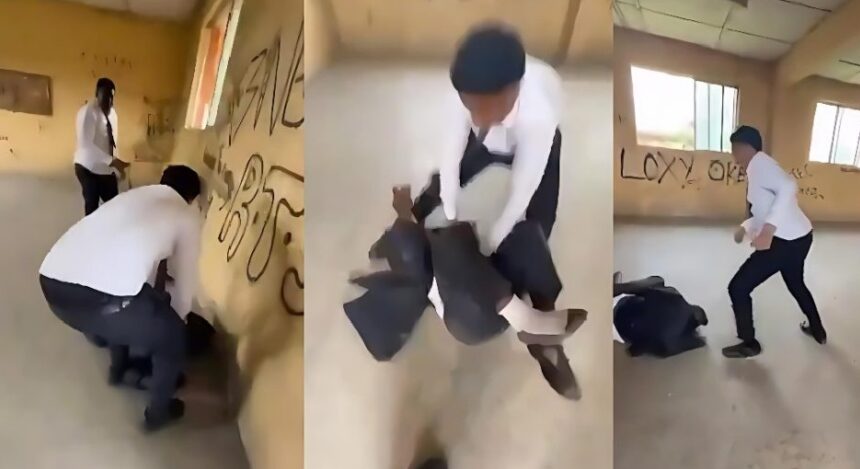
The circulation of a violent video involving students at Igbinedion Secondary School in Benin City, Edo State, on Friday, 13 March 2026, has drawn widespread attention and condemnation across Nigeria. In the footage, a senior student is seen physically assaulting a junior student while another older student joins in, kicking and hitting the junior pupil who appears unable to defend himself. The video was recorded by a bystander who refers to the alleged bully by names like Boss or Choice, highlighting how peer approval and social dynamics often encourage violent behaviour among students. The viral nature of the footage has reignited public discourse on bullying in schools, particularly in private and elite institutions where students often feel pressure to conform to senior peers and sometimes engage in violent rituals.
School authorities at Igbinedion Secondary School acted swiftly by expelling the two senior students involved in the assault. The institution released a statement reinforcing its zero-tolerance stance on bullying, violence, harassment, cultism, and intimidation, emphasizing the protection, dignity, and well-being of all students. Authorities confirmed that the matter had been reported to the appropriate security and child protection agencies, and support services were being provided to the victim and his family. This response aligns with growing expectations from the public and legal frameworks that schools must take direct and decisive action against acts of physical or psychological harm among students.
Social media reactions to the video have been intense, with many Nigerians expressing shock and outrage at the level of violence portrayed. Online commentators, educators, and child protection advocates have stressed that such incidents reflect deeper issues within school cultures, including unchecked authority of senior students, inadequate monitoring, and ineffective enforcement of anti-bullying policies.
The Igbinedion case is not isolated, but part of a worrying pattern of violent bullying that has emerged repeatedly in Nigerian secondary schools over the past decade, raising questions about the systemic safeguards in place to protect children and adolescents in educational settings.
Notable Bullying Incidents in Nigerian Secondary Schools
To understand the context of the Igbinedion incident, it is necessary to review other high-profile cases of bullying and peer violence in Nigerian schools. These cases highlight recurring patterns of abuse, the role of school authorities, and the societal demand for accountability.
1. Lead British International School Bullying Case (2024)
In 2024, a female student named Namtira Bwala at Lead British International School in Gwarinpa, Abuja, was physically bullied by classmates in a viral video. The footage shows Namtira being slapped repeatedly while other students watched and laughed. Public outrage followed swiftly, with many calling for legal action and institutional accountability. Lawyers representing Namtira demanded that the school punish the bullies or face a lawsuit for negligence. Namtira filed a N500 million lawsuit against the school, citing failure to ensure her safety, demanding a public apology, and seeking compensation for the trauma experienced. The case sparked national debates on the adequacy of school policies to prevent bullying and the responsibilities of educators to intervene promptly in such situations.
The Lead British International School incident illustrates how bullying can escalate without proper oversight, especially in environments where peer hierarchies are rigid and social pressures enable violent behaviour. The viral dissemination of videos often compounds the psychological harm, subjecting victims to public scrutiny and humiliation, while prompting broader societal reflection on how schools handle such episodes. It also highlighted gaps in the Nigerian legal system concerning school accountability, showing how victims often have to seek redress through lengthy and costly legal processes to compel institutional responsibility.
2. Alleged Chaining and Bullying at Beautiful Beginning Academy, Abuja (December 2024)
In December 2024, a shocking video emerged from Beautiful Beginning Academy in Abuja showing a male student allegedly chained by senior schoolmates while being verbally taunted. The video quickly circulated online, drawing condemnation from parents, educators, and child protection organizations. Cyber-police and child welfare agencies encouraged parents and guardians to demand immediate investigations and highlighted the need for monitoring systems that prevent abuse in school settings.
The Beautiful Beginning Academy case demonstrates that bullying is not limited to physical assault but can involve methods of restraint, humiliation, and psychological torment. It also reflects the potential dangers when schools fail to enforce supervision or allow senior students unchecked authority. Public pressure following the viral video resulted in the academy being investigated by regulatory authorities, though outcomes of disciplinary measures were not immediately publicized. Cases like these emphasize the systemic need for continuous monitoring, preventive strategies, and enforcement of zero-tolerance policies across Nigerian schools.
3. Death of Sylvester Oromoni at Dowen College, Lagos (December 2021)
One of the most tragic and widely reported bullying cases in Nigeria occurred at Dowen College, Lagos, where 12-year-old Sylvester Oromoni Jr. was allegedly bullied and beaten by senior students for refusing to join a cult group in December 2021. He sustained severe injuries during repeated assaults and later died, sparking national outrage, investigations, and debates about the role of elite schools in enabling violent peer cultures.
The Lagos coroner’s court reviewed the circumstances in 2024 and cited negligence in the care provided to Sylvester, concluding that his suffering could have been prevented. Legal complexities, including lack of sufficient evidence to convict accused seniors, meant no criminal conviction was recorded, but the case prompted stronger calls for anti-bullying legislation and improved child protection measures within schools. Sylvester’s death remains a significant reference point in Nigeria for assessing systemic failures in school safety, the dangers of cultism, and the consequences of unchecked peer violence.
4. Patterns of Bullying Across Nigerian Schools
Research and media reports reveal that bullying is widespread in Nigerian schools, often going under-reported or insufficiently addressed. Studies in parts of Edo State indicate that approximately 78 percent of students surveyed had experienced bullying at least once, including physical assaults, verbal abuse, social isolation, or intimidation by peers.
Even in schools where names are not explicitly reported, common patterns emerge. Students report intimidation, beatings, hazing, and psychological harassment as recurring issues. Schools often fail to respond decisively, and incidents may be downplayed or ignored, leaving victims without adequate support. These trends underscore a systemic challenge in educational institutions regarding student safety, supervision, and enforcement of policies that protect vulnerable students from abuse by peers.
Bullying also contributes to long-term psychological and academic consequences. Victims may develop anxiety, depression, or trauma that can persist into adulthood, while repeated exposure to violence in school normalizes aggression among bystanders and perpetrators. This highlights the importance of proactive anti-bullying measures, regular monitoring, and educational programs aimed at fostering a culture of respect and empathy in schools.
Government and Policy Responses
1. Federal Ministry of Education Initiatives
In response to recurring bullying incidents, the Federal Ministry of Education in Nigeria has launched multiple initiatives to curb violence in schools. These include campaigns promoting awareness of bullying, establishment of anonymous reporting channels, and partnerships with law enforcement agencies to ensure rapid response to incidents. The ministry also encourages schools to collaborate with parents, media, and community organizations to foster safe and inclusive educational environments.
In 2022 and 2023, several pilot programs were implemented in major urban centers to train teachers and school administrators on detecting early signs of bullying, intervening effectively, and supporting victims. These programs aim to reduce incidents of peer violence and ensure that schools are proactive rather than reactive in handling cases of harassment, intimidation, and physical aggression.
2. Institutional Policy Enhancements
Schools, especially private and elite institutions, have been urged to adopt zero-tolerance policies against bullying and related forms of violence. Guidelines emphasize that all students must be treated equally, that senior students cannot exercise unchecked authority over juniors, and that disciplinary measures must be applied consistently. Some schools have introduced mentoring programs, counseling units, and student-led initiatives to foster awareness of the consequences of bullying.
These measures are complemented by regular inspections and audits by educational oversight bodies. Failure to comply with anti-bullying standards can lead to sanctions, closure of facilities, or intervention by child protection agencies. While progress has been made, enforcement remains inconsistent, and high-profile cases such as Igbinedion, Lead British International School, and Dowen College demonstrate gaps between policy and practice.
3. Community and Media Engagement
The role of social media and news outlets in exposing incidents of bullying has been significant. Viral videos often prompt rapid public scrutiny, mobilizing parents, advocacy groups, and legal experts to demand accountability. The community response has pressured schools to act swiftly and transparently, as prolonged inaction can damage institutional reputation and lead to legal consequences.
Media reporting has also contributed to public education about the signs of bullying, the responsibilities of educators, and the importance of timely intervention. High-visibility cases stimulate dialogue around the legal, social, and psychological dimensions of school-based violence, making it clear that bullying is not a private issue but a public concern that requires coordinated action at all levels.
Strategies to Prevent Bullying
1. School-Level Interventions
Effective prevention starts with consistent monitoring, teacher training, and clear communication of rules. Schools are encouraged to establish reporting systems that allow students to confidentially report bullying incidents. Implementing regular workshops on conflict resolution, empathy, and peer support can empower students to intervene safely or seek help when necessary.
Schools may also adopt structural measures such as safe corridors, supervised recreational areas, and rotating class monitors to reduce opportunities for violent encounters. By creating environments where bullying is difficult to conceal and easy to report, institutions can significantly reduce the prevalence of harmful peer behaviour.
2. Parental Involvement
Parents play a critical role in mitigating bullying risks. Open communication channels between children and parents ensure that incidents are reported early. Parents are also encouraged to engage with schools, attend meetings, and understand the policies in place to protect students. This collaborative approach strengthens the support network available to victims and ensures that schools remain accountable.
3. Policy and Legislative Action
Nigeria has increasingly recognized the need for formal anti-bullying legislation. Recommendations include mandatory reporting of severe bullying incidents, structured disciplinary frameworks, and formal counseling requirements for both victims and perpetrators. Comprehensive legal frameworks ensure that schools adhere to standardized protocols and provide mechanisms for victims to seek justice and redress.
Implications and Societal Impact
Bullying in schools is not only an immediate threat to individual students but has broader social implications. It normalizes violence, fosters cultures of fear, and can perpetuate cycles of aggression among youth. Cases like Igbinedion, Dowen College, and Lead British International School highlight how peer violence intersects with issues such as cultism, social hierarchies, and institutional neglect.
Public discourse and legal challenges following viral bullying incidents have catalyzed reforms and raised awareness about student rights. Awareness campaigns, advocacy, and enforcement of anti-bullying policies are essential to ensure that schools provide environments conducive to learning, safety, and emotional well-being.
Leaving With This
The Igbinedion Secondary School video on Friday, 13 March 2026, represents a disturbing continuation of a pattern of bullying in Nigerian schools. Expulsion of the students involved demonstrates institutional accountability, but the broader societal response underscores the need for systemic reform, consistent enforcement, and proactive education about student welfare.
By examining past cases such as Lead British International School, Beautiful Beginning Academy, and Dowen College, it becomes evident that addressing bullying requires coordinated action by schools, parents, government authorities, and communities. The implementation of preventative strategies, clear reporting mechanisms, legal frameworks, and public awareness campaigns are vital to ensuring that Nigeria’s students can learn in safe, supportive, and non-violent environments.
Bullying in schools is a multi-dimensional problem, but with sustained attention, resources, and accountability, it is possible to create educational spaces where students are protected, respected, and empowered to thrive academically and socially. The Igbinedion case is a reminder that vigilance, empathy, and decisive action are essential to safeguarding the rights and dignity of every child in Nigeria’s education system.