In football, lasting tactical change has almost always come from individuals willing to challenge accepted ideas rather than refine them. At different points in the game’s history, certain managers have looked at the same players, the same pitches, and the same rules as everyone else, yet arrived at radically different conclusions about how football should be played. Their impact went beyond winning matches or collecting trophies; they altered how space was used, how players interpreted roles, and how teams organised themselves with and without the ball.
These managers did not simply introduce new formations. They reshaped underlying principles, from pressing and positional play to defensive structure and build-up patterns, forcing opponents, coaches, and even entire leagues to adapt. Many of the tactical concepts now taken for granted were once controversial ideas associated with specific figures who were prepared to accept short-term resistance in pursuit of long-term transformation.
Examining managers who completely reinvented football tactics provides insight into how the game evolves, why certain ideas endure, and how individual thinking can shift collective understanding. It also helps explain why modern football looks the way it does, shaped by tactical revolutions that began with a single coach refusing to follow convention.
What “Completely Reinvented Tactics” Means
The phrase “completely reinvented tactics” is often used loosely in football writing, applied to managers who were successful, innovative, or simply memorable. In this article, it is used far more narrowly. Reinvention is not about winning trophies, improving efficiency, or refining an existing style. It refers to moments when a manager’s ideas altered the structural logic of elite football in ways that could not easily be ignored or reversed.
To keep this list defensible rather than impressionistic, clear criteria are necessary. These criteria are not value judgements about greatness or influence, but analytical benchmarks used to distinguish systemic change from tactical refinement.
A Model That Could Be Reproduced Beyond One Team
A genuine tactical reinvention produces a model that can be applied outside the environment in which it was created. This does not mean every team can replicate it successfully, but it does mean the ideas are clear enough to be copied, adapted, and taught elsewhere.
If a system only works because of a once-in-a-generation squad or an unrepeatable competitive context, it remains an exceptional case rather than a structural shift. Reinvention becomes visible when other teams attempt to implement the same ideas, even if results vary.
A Clear Before-and-After Shift in Elite Football Norms
Reinvention creates disruption. There must be a visible change in what elite football considers standard practice after the idea takes hold. This can be seen in how teams defend space, structure build-up play, press the ball, or manage transitions.
The defining test is reaction. When reinvention occurs, opponents are forced to adjust their behaviour, and previously marginal concepts begin to shape mainstream tactical thinking. The game does not simply absorb the idea; it reorganises around it.
A Change That Affected Both Attack and Defence
Tactical reinvention cannot be one-sided. Systems that alter attacking patterns without reshaping defensive organisation, or vice versa, do not fully redefine how football is played.
Managers who qualify under this definition introduced ideas that changed how teams created chances and how they protected themselves at the same time. The relationship between attack and defence was recalibrated, forcing a new understanding of balance, risk, and control.
A Method That Could Be Coached, Not Just Admired
Perhaps the most important criterion is coachability. Reinvented tactics must be teachable at training-ground level. They must translate into principles, drills, and collective behaviours that players can learn and repeat.
This separates tactical systems from individual genius. Reinvention produces structure. It changes how training sessions are run, how roles are defined, and how collective movement is rehearsed rather than improvised.
What Tactical Reinvention Does Not Mean
Just as important as defining inclusion is setting clear boundaries. Many managers and teams are praised for tactical excellence without meeting the threshold of reinvention.
Success Without Structural Change
Strong man-management, psychological control, and elite leadership can produce sustained success without altering tactical frameworks. These qualities are fundamental to coaching, but they do not constitute reinvention unless they are paired with a structural shift in how teams organise themselves on the pitch.
Winning, by itself, is not evidence of tactical transformation.
One-Off Tactical Masterplans
Football history celebrates isolated tactical masterclasses, particularly in knockout competitions. While these moments can be strategically brilliant, they do not qualify as reinvention if they remain situational responses rather than the foundation of a repeatable model.
Reinvention produces systems that persist across seasons and opponents, not solutions designed for a single problem.
Incremental Evolution Within Existing Frameworks
Many managers improve football by refining pressing triggers, adjusting build-up structures, or modernising training intensity. These contributions matter, but they operate within established tactical languages.
Reinvention occurs when the language itself changes, when teams are forced to rethink how football problems are framed rather than simply how they are solved.
5 Managers Who Completely Reinvented Football Tactics
With those criteria established, the focus narrows to a small group of managers whose ideas did more than win matches or refine existing systems. Each of the figures below introduced a way of organising teams that altered elite football’s baseline assumptions, reshaping how space was used, how pressure was applied, and how teams were coached to behave collectively. Their impact was not limited to a single club or period, but spread across leagues and generations, forcing others to adapt rather than simply compete.
What follows is not a ranking of greatness or influence, but an examination of five managers whose tactical models met the threshold of reinvention. In different eras and contexts, they produced systems that could be taught, copied, and sustained, leaving a visible before-and-after mark on how football is played at the highest level.
-
Herbert Chapman — The W-M System and the Birth of Modern Structure (1920s–1930s)

Herbert Chapman qualifies as a tactical reinvention figure not because he added sophistication to existing ideas, but because he responded to a structural crisis in the game with a new organising logic. The crisis came from the 1925 offside law change, which reduced the number of opponents required between attacker and goal from three to two. Almost overnight, defensive systems that had relied on deeper positioning and reactive marking were rendered unstable, leading to a sharp rise in goals and a sense of disorder across English football.
Chapman’s response was not cosmetic. He recognised that the problem was not individual defending, but balance between lines. The solution that came to be known as the W-M system fundamentally altered how teams distributed players across defensive, midfield, and attacking zones. Rather than relying on a loosely defined half-back line, Chapman repositioned a player deeper into the defensive structure, creating what effectively became a third defender responsible for stabilising transitions and managing space behind the midfield.
The importance of the W-M lies less in its visual shape than in its mechanical logic. Older attacking structures were built on numerical forward superiority and individual match-ups. Chapman’s adjustment redistributed responsibility, reduced chaotic transitions, and created clearer covering relationships. Defenders no longer reacted individually to attackers; they operated within a defined unit with repeatable duties. Midfielders were no longer simply conduits between defence and attack; they became part of a coordinated block that controlled space rather than chasing opponents.
Chapman also normalised ideas that would later be considered foundational to modern coaching. He placed emphasis on spacing between lines, understanding that vulnerability often emerged not from direct duels but from the gaps teams left during transitions. He treated match preparation and opponent analysis as a managerial responsibility rather than something left to on-field leadership, introducing a level of strategic planning that was uncommon at the time.
There remains debate about whether Chapman truly “invented” the W-M or refined concepts already circulating in English football. This disagreement reflects a broader tendency in football history to compress gradual evolution into singular moments and figures. What matters, however, is not originality in isolation, but institutionalisation. Chapman was the figure who systematised the approach, applied it consistently, and demonstrated its effectiveness at scale, most notably at Arsenal.
Chapman’s legacy can be measured by influence rather than imitation. Later formations did not simply replace the W-M; they responded to it. Many subsequent tactical developments can be understood as attempts to solve problems created by its balance and rigidity. At the same time, certain elements did not survive. As athleticism increased, pressing intensified, and ball speed accelerated, rigid line separation became less sustainable. Even so, the idea that football required structural organisation across units, rather than loose individual roles, traces directly back to Chapman’s work.
-
Rinus Michels — Total Football as a System for Space, Pressing, and Positional Exchange (Late 1960s–1970s)

Total Football is often remembered in simplified cultural terms, reduced to the idea that “everyone can play everywhere.” This interpretation misses the core of what Rinus Michels actually constructed. His contribution was not positional freedom for its own sake, but a coherent system built around space management, collective pressing, and positional responsibility shared across the team.
At its core, Michels’ version of Total Football was a response to inefficiencies in static positional play. Instead of treating positions as fixed points, the system treated them as responsibilities that could be temporarily exchanged, provided the team maintained collective balance. When one player vacated a zone, another filled it, not through improvisation, but through trained understanding of spatial relationships.
Pressing and compactness were the system’s organising principles. Without the ball, Michels’ teams sought to compress space aggressively, pushing the defensive line higher and applying pressure collectively rather than individually. This was not about work rate or intensity in isolation, but about synchronisation. Players pressed in relation to one another, reducing passing options and forcing opponents into predictable patterns.
With the ball, the objective was not constant penetration but manipulation. Circulation was used to draw opponents out of position, creating space that could then be attacked decisively. The presence of a roaming focal attacker, most notably Johan Cruyff, was central to this logic. Cruyff’s movement destabilised defensive structures, but the system only functioned because the rest of the team maintained positional coverage, preventing vulnerability during turnovers.
Michels’ teams were historically disruptive because they challenged prevailing assumptions about safety. Defensive security had traditionally been associated with deeper positioning and numerical cover. Michels inverted this logic, trusting spacing, collective movement, and pressing to provide protection. Attacking, meanwhile, became less about direct routes to goal and more about controlling where and when attacks occurred.
The historical record often splits credit between Michels and Cruyff, with Michels described as the system-builder and Cruyff as the system-carrier. This distinction matters. Michels constructed the framework at Ajax and with the Netherlands national team, while Cruyff later embedded its principles into institutional culture, particularly at Barcelona, where they would influence subsequent generations of coaches.
The legacy of Total Football is visible not in copied formations, but in expectations. By the 1990s, concepts such as space control, collective pressing, and positional interchange had become default reference points in elite football. Modern high-pressing possession teams still trace their conceptual roots back to Michels, even when operating with different shapes and personnel.
-
Arrigo Sacchi — Zonal Defending, Coordinated Pressing, and the End of the Sweeper Era (Late 1980s–1990s)

Arrigo Sacchi represents a tactical rupture not because he rejected Italian defensive thinking outright, but because he reframed its underlying logic. Italian defending had long been associated, fairly or unfairly, with man-marking systems and the use of a libero or sweeper. Sacchi’s argument was that defending was not a series of individual duels, but a collective spatial behaviour that could be coached, rehearsed, and standardised.
Sacchi’s core innovations were built around zonal defending and coordinated pressing. In his system, defenders did not track specific opponents across the pitch. Instead, they defended zones collectively, stepping forward or dropping back as a unit in response to triggers. This collective movement was essential. A single defender stepping out of line without coordination would collapse the structure.
Compactness between defence, midfield, and attack became the primary defensive weapon. Sacchi reduced vertical distances, ensuring that the team functioned as a single block rather than disconnected lines. Pressing was not constant, but timed, with rehearsed triggers that prompted the entire unit to advance together.
Training methodology was central to Sacchi’s success. Through extensive use of shadow play and pattern rehearsal, players internalised collective movement to the point where responses became automatic. The team behaved less like a group of individuals and more like a synchronised mechanism, capable of maintaining shape under pressure.
The period between 1987 and 1991 at AC Milan became a reference point not simply because of results, but because the model was visible and transferable. European competition exposed Sacchi’s ideas to a wider audience, making them exportable concepts rather than isolated successes. Coaches could observe, study, and replicate elements of Milan’s defensive line and pressing behaviour in training environments.
There is disagreement in how Sacchi’s legacy is framed. Some narratives position him as an opponent of catenaccio, but this oversimplifies Italian defensive history, which had already undergone multiple evolutions. Sacchi’s distinct contribution was the modernisation of collective pressing and zonal structure at the highest level, not the abandonment of defensive discipline.
His influence remains evident in modern football. Compact mid-blocks, high defensive lines that move in unison, and pressing systems based on spatial control rather than man-orientation all carry Sacchi’s imprint. Even coaches using different formations continue to borrow from his logic, demonstrating that reinvention in football is often about changing how teams think, not just how they line up.
-
Pep Guardiola — Positional Play as a Coaching Language
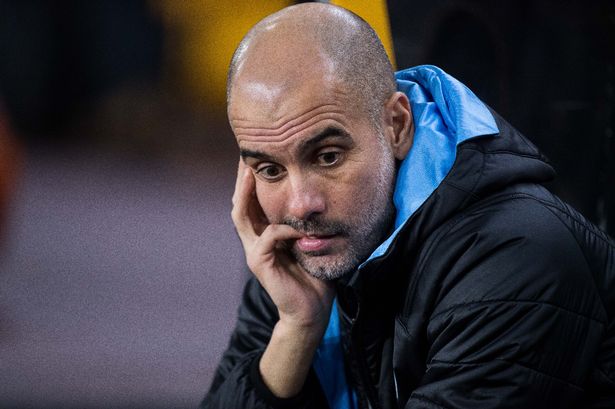
Pep Guardiola’s tactical significance is often misunderstood because it is framed around possession as an outcome rather than positional play as a method. He did not invent possession football, nor did he originate many of the ideas associated with ball dominance. His reinvention lies in turning positional play into a codified coaching language, one that could be taught, repeated, adapted, and exported across leagues, cultures, and player profiles without losing its core logic.
Before Guardiola, positional concepts existed largely as philosophies or inherited traditions. Under Guardiola, they became operational rules. Spacing, orientation, and role responsibility were no longer intuitive ideas left to player interpretation; they were trained behaviours, rehearsed patterns, and non-negotiable principles. This is why Guardiola’s teams look structurally similar even when personnel changes and why the same ideas can manifest differently without collapsing.
Barcelona (2008–2012): Mechanisms That Changed Elite Attacking
At Barcelona, Guardiola formalised positional spacing as a structural tool. The pitch was divided into zones of width and height, with players instructed to occupy specific vertical and horizontal lanes. The objective was not simply to stretch the opponent, but to create predictable passing lanes that allowed the ball to move faster than defensive shifts. Width was provided by wingers holding the touchline, while height was controlled by staggering midfield and forward positions to prevent line compression.
One of the most important mechanisms introduced during this period was the third-man concept, not as a spontaneous combination but as a coached pattern. Guardiola’s teams manufactured triangles deliberately, ensuring that the first pass attracted pressure, the second fixed the defender, and the third exploited the vacated space. These movements were rehearsed, with players trained to recognise cues rather than improvise solutions.
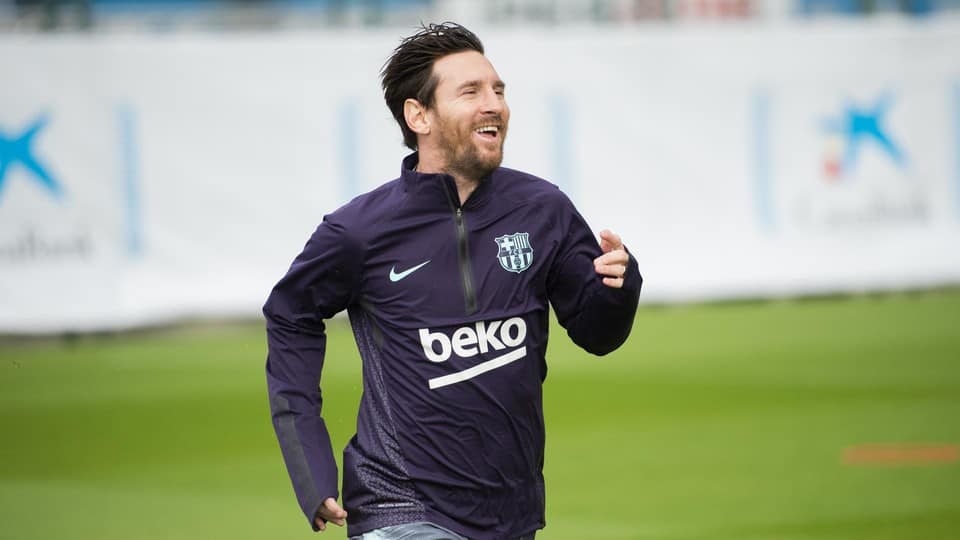
The use of the false nine, most famously through Lionel Messi, was not aesthetic experimentation but a tactical response to central congestion. By removing a fixed striker from the defensive line, Guardiola forced centre-backs into decision-making dilemmas: step out and break the line, or hold position and concede midfield overloads. This recalibrated defensive priorities across Europe, prompting a shift toward compact central midfield blocks and more aggressive stepping from defenders.
Bayern Munich (2013–2016): Adaptation Over Replication
Guardiola’s Bayern Munich period is often misread as less successful tactically because it did not reproduce Barcelona’s dominance in the same visual form. In reality, it demonstrated the transferability of his principles. The Bundesliga context, with its higher tempo, more direct transitions, and different pressing cultures, required adaptation rather than repetition.
At Bayern, positional play became less about sustained circulation and more about control through structure. Guardiola placed greater emphasis on rest defence, ensuring that even during attacks, certain players remained positioned to suppress counters immediately. Fullbacks and midfielders were used interchangeably to maintain numerical superiority behind the ball, slowing opposition transitions before they developed into threats.
The meaning of control evolved. Instead of dominating through possession alone, Bayern controlled matches by reducing the opponent’s ability to counter at speed. This shift highlighted that positional play is not inherently slow or sterile, but responsive to context and opponent behaviour.
Manchester City (2016–Present): Structural Tweaks That Became Mainstream
At Manchester City, Guardiola refined positional play further to address the realities of the Premier League, where transitions are faster and pressing is more aggressive. One of the most influential innovations during this phase has been the use of inverted fullbacks, who step into midfield during build-up phases.
This adjustment served multiple purposes simultaneously. It improved build-up security by creating central overloads, strengthened counter-pressing shape by positioning players closer to likely regain zones, and allowed wingers to stay higher and wider without compromising defensive stability. As a result, City often attacked in a 2–3 or 3–2 structure, with a stable rest-defence shell behind the ball.
Under Guardiola, possession at City functions as a defensive strategy as much as an attacking one. By controlling where players are positioned during attacks, City reduce the opponent’s options immediately after turnovers. The ball is not merely circulated to create chances, but to dictate defensive geometry.
Much of the confusion surrounding Guardiola’s work stems from the media label “tiki-taka,” which compresses a complex tactical framework into a stylistic caricature. Juego de posición is not about short passes or possession volume; it is about spatial order, role clarity, and collective responsibility. Shorthand terminology obscures the fact that Guardiola’s teams are among the most structurally disciplined in modern football.
Legacy
Guardiola’s lasting influence is evident in recruitment profiles across elite football. Press resistance, positional discipline, and ball security are now baseline requirements rather than luxuries. While his ideas trace lineage to Dutch football thinkers such as Michels and Cruyff, influence should not be confused with imitation. Guardiola’s contribution lies in systematisation, not originality alone.
-
Jürgen Klopp — Gegenpressing as an Attacking Method and the Revaluation of Transition

Pressing existed long before Jürgen Klopp, but his reinvention was conceptual rather than technical. Klopp reframed counter-pressing as an attacking phase. The moment of ball loss became an opportunity to create chances, not merely a defensive emergency. This shift altered how teams evaluated transitions and why pressing could be a primary route to goal creation.
Crucially, Klopp’s model scaled globally because it was teachable and repeatable. Unlike possession dominance, which often requires elite technical control across the squad, counter-pressing relies on synchronisation, compactness, and collective effort. This made it accessible to clubs without overwhelming individual talent advantages.
Borussia Dortmund: Disruption as System
At Dortmund, Klopp built a system based on compactness and verticality. The team defended in tight blocks, deliberately steering opponents into wide or crowded zones where pressing traps could be activated. Once possession was regained, Dortmund attacked immediately, often within seconds, exploiting disorganised defensive shapes.
Pressing traps were not chaotic chases but directional tools. Opponents were guided into areas where recovery was most likely, turning defensive pressure into offensive opportunity. The model demanded extreme physical output and mental intensity, which influenced recruitment toward athletic, aggressive profiles and required careful rotation to sustain performance.
Liverpool: Evolution Into Controlled Intensity
Klopp’s Liverpool evolved significantly over time. Early iterations leaned heavily into transition football, with relentless counter-pressing and rapid attacks following regains. As opponents adapted and Liverpool’s squad matured, the system incorporated longer possession phases and more controlled circulation.
Pressing became a situational switch rather than a constant state. Fullbacks played advanced roles, wide forwards provided vertical threat, and central midfielders focused on coverage and balance rather than chance creation. This adjustment allowed Liverpool to manage games more efficiently while retaining the core identity of aggressive regain-focused football.
Media narratives often reduce Klopp to emotion and Guardiola to intellect, a framing that obscures tactical reality. The real distinction lies in two theories of control. Guardiola seeks control through the ball and positional order. Klopp seeks control through regains and transitional dominance. Both are coherent, structured systems, not expressions of temperament.
Legacy
Klopp’s impact is visible in how pressing is now treated as a recruitment and analytics problem rather than a motivational one. Physical output, recovery speed, and transition efficiency are measured and valued systematically. Many clubs have since adopted press-first identities or hybrid systems that blend positional build-up with aggressive counter-pressing, reflecting the enduring influence of Klopp’s reinvention of transition football.
Conclusion
Football tactics rarely change all at once. Most of the time, they evolve through small adjustments, borrowed ideas, and gradual refinements. What separates the managers discussed here from the wider field is not simply success, but the depth of the change they introduced. Each of them altered how teams understood structure, space, and collective behaviour, forcing the game to reorganise itself in response.
These reinventions did not replace football’s past so much as reshape its future. Chapman gave the game its first sense of modern structure. Michels reframed space and movement as collective responsibilities. Sacchi turned defending into a rehearsed, spatial system. Guardiola formalised positional play into a transferable coaching language. Klopp redefined transition moments as attacking opportunities rather than defensive emergencies. In each case, the impact extended beyond trophies or eras, embedding itself in how football is coached, analysed, and played.
Modern football is, in many ways, a conversation between these ideas. Teams combine positional structure with pressing, control with transition, discipline with flexibility. That synthesis is only possible because the tactical ground was broken earlier by managers willing to challenge what was considered normal, workable, or safe at the time.
Understanding these reinventions is not about nostalgia or hero worship. It is about recognising that football’s biggest shifts come when ideas change how teams think, not just how they line up. The game continues to evolve, but it does so on foundations laid by those who once forced it to move in a new direction.