Nigerian footballers have become a structural constant in European football, not as occasional success stories but as reliable components of squad-building across multiple leagues. The pathway from West Africa into European professional systems now operates at industrial scale, moving hundreds of players annually through a network of academies, agents, and satellite clubs that has matured considerably over the past two decades. What began as opportunistic scouting has evolved into systematic recruitment infrastructure, with clubs from Portugal to Belgium positioning themselves explicitly as entry points for Nigerian talent before onward movement to bigger markets.
The concentration of Nigerian players in Europe matters because it shapes how clubs approach squad construction, particularly in leagues where financial constraints make buying established talent prohibitive. Mid-tier clubs in France, Belgium, and Portugal have learned to offset limited budgets by importing young Nigerian players at low cost, developing them within European systems, and either retaining them as first-team contributors or selling them at profit. This model has created identifiable patterns in where Nigerian players end up, which positions they occupy, and how their careers unfold once embedded in European football. The top tier of this export pool, the players performing at the highest levels, reveals not just individual quality but the systemic efficiency of the pipeline itself.
Understanding which Nigerian players currently operate at the top end of European football, where they are positioned within their clubs, and what that distribution says about broader recruitment and development trends provides a clearer picture of how talent migration functions in practice. The players who have secured roles at major clubs or become indispensable at competitive mid-tier sides represent the successful output of a much larger filtration process, one that continues to reshape both Nigerian football development and European squad planning.
Top 10 Nigerian Exports in Europe (2026)
Nigerian footballers have become a structural constant in European football, not as occasional success stories but as reliable components of squad-building across multiple leagues. The pathway from West Africa into European professional systems now operates at industrial scale, moving hundreds of players annually through a network of academies, agents, and satellite clubs that has matured considerably over the past two decades. What began as opportunistic scouting has evolved into systematic recruitment infrastructure, with clubs from Portugal to Belgium positioning themselves explicitly as entry points for Nigerian talent before onward movement to bigger markets.
The concentration of Nigerian players in Europe matters because it shapes how clubs approach squad construction, particularly in leagues where financial constraints make buying established talent prohibitive. Mid-tier clubs in France, Belgium, and Portugal have learned to offset limited budgets by importing young Nigerian players at low cost, developing them within European systems, and either retaining them as first-team contributors or selling them at profit. This model has created identifiable patterns in where Nigerian players end up, which positions they occupy, and how their careers unfold once embedded in European football. The top tier of this export pool, the players performing at the highest levels, reveals not just individual quality but the systemic efficiency of the pipeline itself.
The top 10 Nigerian exports in Europe represent a specific subset: players who combine market value, competitive league placement, regular playing time, and sustained performance levels. These rankings prioritize current form and club status over reputation, meaning a player thriving at a mid-tier club in a major league can rank above a benched player at a bigger name. This approach reveals which Nigerian exports have secured genuine relevance in European football rather than simply occupying squad spaces.
-
Victor Osimhen — Galatasaray (Turkey)

Victor Osimhen’s trajectory from Nigerian football through Belgium, France, and Italy to his permanent €75 million transfer to Galatasaray (completed July 31, 2025) represents the most complete expression of Nigerian export success in Europe. The four-year deal through 2029 made him Turkish football’s most expensive ever signing. His 2025/26 output has been exceptional: 15 goals in 21 appearances across all competitions, including 9 in the Süper Lig and 6 in the Champions League. His physical profile, positional intelligence, and finishing consistency have translated seamlessly into the Süper Lig, and he remains the highest-valued Nigerian player in Europe at €75 million despite being outside the traditional top five leagues.
What separates Osimhen from other Nigerian exports is not just his goal output but his capacity to function as the focal point of attacking systems across multiple tactical frameworks. At Napoli, he operated in a structured 4-3-3 under Luciano Spalletti, exploiting vertical space and combining with wide forwards. At Galatasaray, he has adapted to a more direct approach, playing as a target forward in transition-heavy sequences while retaining the ability to stretch defensive lines with runs in behind. His versatility within the striker role, combined with his ability to produce in high-pressure matches, has made him the benchmark against which other Nigerian forwards are measured.
Osimhen’s symbolic importance extends beyond his individual performances. He represents proof that Nigerian players can reach the absolute peak of European club football, win major trophies, and sustain that level across multiple seasons. His Serie A title with Napoli in 2023 was the first major league championship won by a Nigerian striker since the 1990s, and his continued relevance in 2026 demonstrates that Nigerian exports can maintain elite status well into their mid-twenties without fading from top-level competition. For younger Nigerian players entering European systems, Osimhen’s career provides a template for how sustained tactical development, physical conditioning, and smart career moves can combine to produce lasting success.
-
Ademola Lookman — Atlético Madrid (Spain)

Ademola Lookman’s €35 million transfer from Atalanta to Atlético Madrid, completed on February 2, 2026, marked a significant shift in how Nigerian attackers are positioned within European football’s competitive hierarchy. His 2025/26 season has been split across two clubs: 3 goals and 2 assists in 19 appearances at Atalanta (where form declined after a blocked summer move), followed by his Atlético debut goal in a 5-0 Copa del Rey win over Real Betis on February 5. His combined season total stands at 4 goals and 2 assists in 21 appearances. The 4.5-year contract (through 2030) places him in La Liga, a league that demands technical security and tactical discipline in ways that Serie A does not.
At Atlético, Lookman operates primarily as a left-sided forward in Diego Simeone’s structured 4-4-2 or 5-3-2 systems, where his role emphasizes off-ball movements, pressing triggers, and counter-attacking patterns rather than individual creativity. This differs significantly from the positional fluidity he enjoyed at Atalanta under Gian Piero Gasperini, where wide forwards could interchange and drift inside without rigid responsibilities. His early adaptation to Atlético’s tactical demands demonstrates the maturity and intelligence required when moving to clubs with rigid tactical identities.
What makes Lookman’s career particularly relevant to understanding Nigerian exports in Europe is that his success has been built on system fit rather than raw physical dominance. He is not the fastest player in La Liga, nor the most physically imposing, but his technical security, decision-making under pressure, and ability to perform specific tactical functions reliably have made him valuable in one of Europe’s most demanding tactical environments. His career shows that Nigerian players can succeed at the highest level not just by relying on athleticism or pace but by developing complete tactical profiles that allow them to integrate into complex systems. For clubs scouting Nigerian talent, Lookman’s trajectory suggests that players with strong technical foundations and tactical adaptability represent better long-term investments than those who rely solely on physical attributes.
-
Alex Iwobi — Fulham (England)
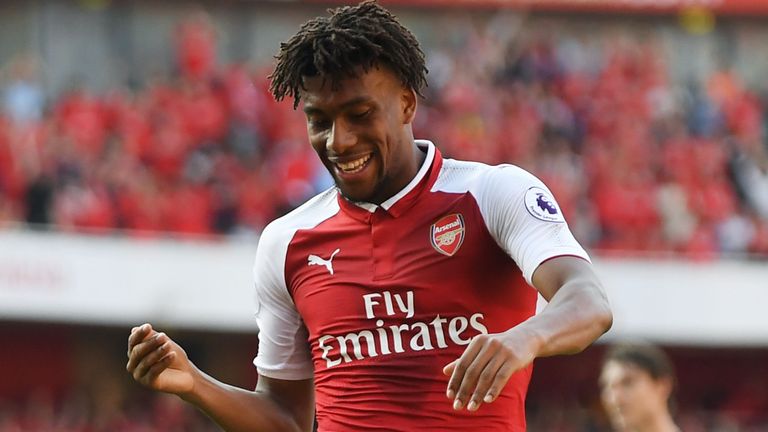
Alex Iwobi’s sustained presence in the Premier League across multiple clubs and tactical roles represents a different kind of export success than headline transfers or record-breaking fees. At Fulham (five-year contract through June 2028), he has recorded 19 Premier League starts in 2025/26 with 2 goals and 2 assists, plus 28 chances created and 768 successful passes at 85.5% accuracy. His move to Fulham in 2023 allowed him to operate as a central midfielder rather than the wide forward role he occupied earlier in his career, which has been critical to his longevity in English football by leveraging his technical ability, spatial awareness, and passing range in ways less dependent on pace or explosiveness.
At Fulham, Iwobi functions as an eight in Marco Silva’s 4-2-3-1 or 4-3-3 systems, operating in the left half-space and connecting defensive transitions to attacking sequences. His role requires constant movement between lines, receiving passes under pressure, and circulating possession quickly to maintain tempo. This is a tactically demanding position that requires both discipline and creativity, and Iwobi’s ability to perform it consistently has made him one of Fulham’s most important players. His defensive contributions, particularly in covering ground and pressing intelligently, have also improved significantly compared to his time at Arsenal, showing that Nigerian exports can develop complete midfield profiles when placed in the right developmental environments.
What makes Iwobi’s career particularly instructive for understanding Nigerian exports is that his success has come through adaptation and longevity rather than peak performance or individual brilliance. He has never been the most talented Nigerian player in Europe, but he has been one of the most reliable, consistently producing performances that justify his selection and maintaining fitness levels that allow him to play 30-plus matches per season. For Nigerian players entering European football, Iwobi’s career demonstrates that sustained relevance at a high level is often more valuable than short-term brilliance, and that players who can evolve their game to meet changing tactical demands will outlast those who rely on fixed skill sets.
-
Wilfred Ndidi — Beşiktaş (Turkey)

Wilfred Ndidi’s €8–9.5 million transfer from Leicester City to Beşiktaş, completed on August 8, 2025 (3+1 year contract), represented a significant shift in his career trajectory. Named vice-captain within two months and Nigeria captain for AFCON 2025, Ndidi has registered 18 appearances with 1 goal and 1 assist across all competitions in 2025/26. His role at Beşiktaş has been central to their defensive structure, operating as a single pivot in a 4-3-3 or as the deeper of two central midfielders in a double-pivot system, where his primary responsibilities involve breaking up opposition attacks, covering defensive transitions, and distributing possession to more creative players.
Ndidi’s career illustrates the importance of durability and tactical reliability as export values for Nigerian players. Over nine seasons in European football, he has established himself as one of the most consistent ball-winning midfielders in the game, with tackle and interception statistics that consistently rank among the highest in any league he has played in. His physical conditioning has allowed him to maintain high-intensity defensive work across full 90-minute performances, and his positional discipline has made him a trusted figure for coaches who need defensive stability without sacrificing possession circulation. At Beşiktaş, these qualities have translated seamlessly, with Ndidi providing the defensive foundation that allows more attacking players to take risks in possession.
What makes Ndidi’s move to Turkey particularly relevant to understanding Nigerian exports is that it demonstrates how established players can extend their careers and maintain competitive relevance by moving to leagues that offer Champions League or Europa League participation without the physical and tactical intensity of the Premier League. Turkey has become an increasingly attractive destination for Nigerian players in their late twenties, offering competitive wages, European competition, and tactical systems that suit physically robust midfielders and defenders. Ndidi’s success at Beşiktaş suggests that Nigerian exports can maintain high-level careers beyond the traditional top five leagues, and that players willing to move laterally rather than upward can find environments where their experience and reliability are highly valued.
-
Calvin Bassey — Fulham (England)

Calvin Bassey’s pathway from Rangers through Ajax to Fulham represents one of the most instructive defensive export careers in recent Nigerian football history. At Fulham (contract through June 2027 with a club option for an additional year), Bassey has recorded 17 Premier League appearances with 1 goal and 3 clean sheets in 2025/26, backed by strong defensive metrics: 33 tackles, 66 clearances, 78 duels won at 59.1%, and 88.3% pass completion. Inter Milan made a strong January 2026 approach that Fulham rejected, with the club prioritizing European qualification ambitions. Bassey’s rise came during Rangers’ Europa League run in 2022, where his performances as a left-sided centre-back demonstrated physical robustness, pace, and composure that attracted a €23 million move to Ajax, one of the highest fees paid for a Nigerian defender.
At Fulham, Bassey operates primarily as a left-sided centre-back in Marco Silva’s back four, where his responsibilities include defending wide areas, stepping out to press high attackers, and initiating build-up play from deep positions. His physical profile: tall, quick, and strong in duels, makes him well-suited to the Premier League’s demands, and his technical comfort on the ball has allowed Fulham to build possession from the back without relying solely on midfield drops. Bassey’s defensive positioning has improved significantly since his time at Rangers, showing greater anticipation and better decision-making about when to step forward and when to hold his line, which has reduced the defensive errors that occasionally marked his earlier performances.
What makes Bassey’s career particularly significant for understanding Nigerian defensive exports is that it demonstrates how physical profiles and tactical versatility can create pathways into elite European leagues for defenders who might not possess the technical refinement of defenders developed in major European academies. Nigerian defenders have historically struggled to secure long-term roles at top clubs, often being viewed as physically capable but tactically unreliable. Bassey’s success at Fulham challenges this perception by showing that Nigerian defenders can develop complete tactical profiles when given consistent playing time and proper coaching. For clubs scouting Nigerian talent, Bassey’s trajectory suggests that defenders with strong physical attributes and tactical coachability represent viable investments, particularly for teams that prioritise defensive solidity and direct build-up patterns.
-
Raphael Onyedika — Club Brugge (Belgium)

Raphael Onyedika’s role at Club Brugge exemplifies why Belgium remains a critical platform for Nigerian players combining development with continental exposure. Despite intense January 2026 transfer interest (Galatasaray reached personal terms, Aston Villa enquired, and Wolfsburg submitted a €20 million deadline-day bid, all rejected), Onyedika remains at Brugge (contract through June 2027). His 2025/26 output includes 28 appearances, 2 goals, and 1 assist across all competitions, including 5 Champions League league-phase appearances (1 goal) as part of the double pivot that powered Brugge’s qualification for knockout rounds. His responsibilities include screening the defence, breaking up opposition attacks in midfield, and providing simple passing options to more creative teammates.
What distinguishes Onyedika from other Nigerian exports operating in smaller European leagues is his consistency across both domestic and European competition. Many Nigerian players perform well in mid-tier leagues but struggle to replicate that form in Champions League or Europa League matches, where the tactical intensity and technical quality of opposition increases significantly. Onyedika has shown no such drop-off, maintaining his defensive effectiveness and positional discipline against elite opponents, which has kept him on the radar of bigger clubs while also ensuring Brugge can compete credibly in Europe. His market value has steadily increased since joining Brugge, with reports suggesting interest from clubs in England, Germany, and Italy monitoring his development.
Onyedika’s career trajectory illustrates why leagues like Belgium continue to matter for Nigerian exports despite not being among Europe’s wealthiest or most prestigious competitions. Belgium offers regular European competition, tactical systems that allow midfielders to develop complete profiles, and a transfer market structure that facilitates moves to bigger leagues when players demonstrate consistent quality. For Nigerian players entering Europe in their early twenties, Belgium provides a platform where they can play regularly, develop tactically, and gain Champions League experience without the immediate pressure of competing in the Premier League or La Liga. Onyedika’s success at Brugge demonstrates that this pathway remains viable and that Nigerian players willing to accept intermediate steps can build careers that eventually lead to bigger opportunities.
-
Moses Simon — Paris FC (France)

Moses Simon’s €7 million transfer from Nantes to newly promoted Paris FC (completed June 25, 2025, three-year contract through 2028) represents a different kind of export success than high-profile transfers or rapid upward mobility. Paris FC, backed by the Arnault family and Red Bull, returned to Ligue 1 for the first time since 1979 and currently sit 13th. Simon has contributed 3 goals and 2 assists in 18 appearances in 2025/26, operating as a left winger in systems that rely on his pace, dribbling ability, and capacity to create chances in isolated situations. His role has remained consistent despite the mid-table positioning, with coaches recognizing that Simon’s individual quality allows the team to generate attacking opportunities even when overall possession and territorial control are limited.
What makes Simon’s career particularly relevant is that it demonstrates the value of sustained mid-table European relevance. He has never moved to a top-five club or competed for major trophies, but he has remained consistently employed at a competitive level in one of Europe’s strongest leagues, earning regular wages, playing 30-plus matches per season, and maintaining international relevance for Nigeria. This kind of stability is often undervalued in discussions about export success, which tend to focus on upward mobility and headline transfers, but for most Nigerian players in Europe, Simon’s career trajectory represents a realistic and valuable outcome.
Simon’s longevity at Nantes also illustrates how certain leagues and clubs can maximise specific Nigerian profiles. Ligue 1’s tactical structure, which often emphasises defensive solidity and counter-attacking, suits Nigerian wingers who possess pace and dribbling ability but may not have the technical refinement or tactical discipline required in more possession-oriented leagues. Nantes has benefited from Simon’s individual quality without needing to build a complete tactical system around him, and Simon has benefited from consistent playing time and a role that allows him to express his strengths. For clubs scouting Nigerian talent, Simon’s career suggests that players with clear individual strengths can provide sustained value in mid-table European environments, even if they never reach the absolute peak of the game.
-
Paul Onuachu — Trabzonspor (Turkey)

Paul Onuachu’s career across Belgium, England, and Turkey illustrates how specific leagues maximize certain Nigerian profiles and why striker exports often require precise league matching to succeed. Following his permanent €5.67 million transfer from Southampton to Trabzonspor in June 2025 (contract through 2028 plus option year), Onuachu has emerged as the Süper Lig Golden Boot leader with 15 league goals in 18 appearances, 16 goals in 20 matches across all competitions. His physical dominance, aerial ability, and clinical finishing established him as one of Europe’s most prolific strikers at Genk, where he scored 85 goals in 134 appearances between 2019 and 2023, operating as a traditional target forward in a system built around delivering crosses into the penalty area.
His move to Southampton in January 2023 exposed the limitations of this profile when transferred to a league with different tactical demands. The Premier League’s defensive intensity, compressed spaces, and requirement for forwards to contribute to build-up play and pressing did not suit Onuachu’s skill set, and his lack of mobility and technical refinement in tight spaces limited his effectiveness. His subsequent loan move to Trabzonspor in 2023, which became permanent in 2024, placed him back in an environment where his strengths could be maximised. Turkish football’s tactical structure, which often prioritises directness, physicality, and aerial duels, has allowed Onuachu to return to high-level scoring output, operating as Trabzonspor’s primary attacking focal point.
What makes Onuachu’s career particularly instructive for understanding Nigerian striker exports is that it demonstrates the importance of tactical fit over raw ability. Onuachu’s physical and technical profile has not changed significantly across his moves between Belgium, England, and Turkey, but his effectiveness has varied dramatically based on whether the league and club system suited his strengths. For clubs scouting Nigerian forwards, Onuachu’s trajectory suggests that physical strikers with limited mobility require specific tactical environments to succeed, and that moving such players to leagues or systems that do not prioritise their strengths will likely result in failure regardless of their proven scoring record elsewhere.
-
Maduka Okoye — Udinese (Italy)

Maduka Okoye’s role as Udinese’s first-choice goalkeeper represents a different export pathway shaped by the unique demands of goalkeeper development in European football. Following a two-month FIGC suspension (August 18–October 19, 2025) for a betting-related fair play violation, Okoye has reclaimed the number-one jersey and posted 16 appearances with 4 clean sheets and 44 saves (68.8% save percentage) in 2025/26. Okoye joined Udinese in 2022 after developing in the Netherlands with Sparta Rotterdam, and his contract through 2028 has positioned him as Serie A’s primary Nigerian goalkeeper. Serie A’s tactical structure, which emphasizes defensive organization, positional discipline, and goalkeeper distribution, allows Okoye to showcase his shot-stopping ability, command of his penalty area, and capacity to initiate attacks from deep positions.
Goalkeepers represent a fundamentally different export profile than outfield players because their development timelines, transfer market dynamics, and performance evaluation metrics operate differently. Outfield players are often judged on immediate statistical output; goals, assists, tackles, passes, while goalkeepers are assessed on consistency, decision-making, and their ability to organise defensive structures. Okoye’s success at Udinese has been built on these qualities rather than spectacular individual saves, with his positioning, communication with defenders, and reliability in routine situations forming the foundation of his value to the club.
What makes Okoye’s career particularly significant for understanding Nigerian goalkeeper exports is that it demonstrates how trust and consistency shape their European careers more than individual brilliance. Nigerian goalkeepers have historically struggled to secure long-term roles at major European clubs, often being viewed as athletic but inconsistent, prone to errors, or lacking the tactical understanding required to function in highly organised defensive systems. Okoye’s sustained role at Udinese challenges this perception by showing that Nigerian goalkeepers can develop complete profiles when given consistent opportunities and proper coaching. For clubs scouting Nigerian goalkeeping talent, Okoye’s trajectory suggests that players with strong physical attributes, technical security, and coachability can succeed in demanding tactical environments, provided they are placed in systems that allow them to develop gradually rather than being thrust into high-pressure situations prematurely.
-
Zaidu Sanusi — FC Porto (Portugal)

Zaidu Sanusi’s time at Porto illustrates why Portugal remains a critical gateway league for Nigerian players entering or sustaining European careers, though his role has diminished significantly following his 2023 ACL injury and 10-month absence. His 2025/26 output reflects a backup role: 8 Liga Portugal appearances (just 2 starts, 347 minutes), 4 Europa League appearances, 1 goal, and 1 assist. Sanusi joined Porto from Santa Clara in 2020 and operates as the club’s backup left-back on a contract through June 2027 (€50 million release clause), competing in both domestic competition and European fixtures when called upon.
What makes Portugal particularly significant for Nigerian exports is its combination of competitive domestic football, regular European participation, and a transfer market structure that facilitates movement to bigger leagues. Portuguese clubs, particularly Porto, Benfica, and Sporting, have built business models around importing young talent from Africa and South America, developing them within structured systems, and selling them to wealthier clubs at significant profit. This model has created clear pathways for Nigerian players to enter European football at a competitive level while also positioning themselves for future moves to top-five leagues. Sanusi’s career at Porto exemplifies this pathway, with consistent reports linking him to clubs in England, Italy, and Spain based on his Champions League performances and established role within Porto’s system.
Sanusi’s sustained presence at Porto also demonstrates the importance of tactical adaptability for Nigerian defenders. Porto’s system requires full-backs to function as hybrid players, contributing defensively while also providing width in attacking phases and participating in build-up sequences. This tactical complexity has forced Sanusi to develop a more complete profile than he might have needed in a less demanding league, improving his technical security, positional discipline, and decision-making under pressure. For Nigerian players entering Europe through Portuguese clubs, this developmental environment provides tactical education that prepares them for moves to bigger leagues, making Portugal not just a gateway but a genuine developmental platform.
Patterns by Destination Leagues and Roles
The distribution of Nigerian exports across European leagues reveals clear patterns in positional demand and environmental suitability. The Premier League has historically attracted Nigerian attacking players and midfielders, with players like Iwobi and Bassey demonstrating that technical security and tactical adaptability are prerequisites for sustained success in English football. La Liga, represented here by Lookman, demands similar technical qualities but places greater emphasis on positional discipline and tactical intelligence within rigid systems. Serie A’s inclusion of Okoye shows that Italian football values reliability and organisational capacity in defensive positions, while Turkey’s prominence as a destination for Osimhen, Ndidi, and Onuachu reflects the league’s capacity to accommodate physically dominant players within direct, transition-heavy systems.
Belgium and Portugal continue to function as entry points and developmental platforms, with Onyedika and Sanusi demonstrating how these leagues provide regular European competition and tactical education while maintaining transfer market pathways to bigger clubs. France, through Simon’s sustained presence at Nantes, shows that Ligue 1 remains a viable destination for Nigerian wingers who possess pace and dribbling ability but may lack the complete tactical profiles required elsewhere. The positional distribution across these leagues also reveals patterns, with defensive midfielders and centre-backs finding opportunities across multiple leagues, while strikers and goalkeepers require more specific tactical fits to succeed.
These patterns matter because they shape how Nigerian players and their representatives approach career planning. A physically dominant striker like Onuachu is better served by moving to Turkey or Belgium than attempting to establish himself in the Premier League, while a technically secure midfielder like Iwobi requires placement in a league that values possession and tactical complexity. Understanding these patterns allows clubs to scout more effectively, agents to position players more strategically, and Nigerian academies to develop players with profiles suited to specific European environments.
Age, Valuation, and Contract Structures Shaping Nigerian Exports
The economic structures underpinning Nigerian exports to Europe operate on specific timelines and valuation mechanisms that shape where players move and how long they remain relevant. Most Nigerian players enter European football between the ages of 18 and 22, arriving through initial transfers that typically range from €500,000 to €5 million depending on the league and club. These initial moves are often structured with sell-on clauses that allow the selling club to benefit from future transfers, creating incentive alignment between Nigerian clubs, intermediary European clubs, and eventual destination clubs. Players like Osimhen and Lookman, who command valuations above €50 million, represent the successful endpoint of this process, but they are statistical outliers in a market where most Nigerian exports never exceed €10 million in transfer value.
Contract structures also shape career trajectories in ways that are not immediately visible through transfer fees or playing time. Nigerian players entering Europe typically sign contracts of three to five years, with performance-related extensions and wage increases built into these agreements. Players who establish themselves quickly, like Bassey at Fulham or Onyedika at Brugge, can renegotiate contracts or attract interest from bigger clubs within two to three seasons. Those who struggle to establish themselves, or who suffer significant injuries, often find their contracts running down without renewal offers, forcing them to accept moves to lower leagues or return to less competitive environments.
The resale logic driving these transfers creates specific patterns in how Nigerian exports are deployed. Clubs in Belgium, Portugal, and France often purchase Nigerian players with explicit intentions of selling them within three to four years, which means these players are given opportunities to develop and showcase themselves in ways that might not occur at clubs focused solely on immediate competitive results. This creates a tension between developmental patience and immediate performance demands, with some Nigerian players benefiting from extended development periods while others are discarded prematurely when they fail to meet market expectations. Understanding these economic structures is essential for explaining why certain Nigerian players succeed in Europe while others with similar talent levels fail to establish long-term careers.
What These Exports Mean for Nigerian Clubs and Development Pathways
The success of Nigerian exports in Europe creates both opportunities and challenges for clubs within Nigeria’s domestic football system. On one level, the proven pathways to European football provide financial incentives for Nigerian clubs to invest in youth development, scouting infrastructure, and coaching quality. Clubs that can consistently produce players who attract European interest can generate transfer revenue that sustains operations, funds facility improvements, and supports broader youth development programmes. The success of players like Osimhen and Lookman validates these investments and demonstrates that Nigerian clubs can compete in the global talent market despite limited resources compared to European academies.
However, the export model also creates structural vulnerabilities within Nigerian football. The constant outflow of talent means that domestic competitions often lack the quality required to maintain high competitive standards, as the best players leave for Europe before reaching their peak years. This creates a cycle where domestic football struggles to retain commercial and fan interest because the most talented players are consistently removed from the system, which in turn limits revenue generation and further reduces the domestic game’s capacity to retain talent. Nigerian clubs are often forced to operate as feeder systems for European football rather than as competitive entities capable of building sustained success around stable squads.
The developmental pathways themselves are also becoming increasingly systematised, with European clubs establishing formal partnerships with Nigerian academies, sending scouts to Nigerian youth competitions, and in some cases funding youth development infrastructure in exchange for first-refusal rights on talented players. These arrangements can provide resources and expertise that Nigerian clubs would not otherwise access, but they also shift control over player development away from Nigerian institutions and toward European commercial interests. The long-term sustainability of Nigerian football depends on finding structures that allow the domestic game to benefit from export revenue while also maintaining competitive integrity and developmental capacity within Nigeria itself.
Risks, Misplacement, and Stalled European Careers
Not all Nigerian exports succeed in Europe, and understanding why players fail or stall is as instructive as examining successful careers. The most common form of failure is tactical misplacement, where players are signed by clubs whose systems do not suit their profiles. This was evident in Onuachu’s move to Southampton, where his physical striker profile did not align with the Premier League’s tactical demands. Similar misplacements occur when technically limited players are signed by possession-oriented clubs, or when physically slight players are placed in leagues that prioritise physicality over technical refinement. These mismatches often result in limited playing time, loan moves to lower leagues, and eventual contract terminations.
Adaptation challenges also limit Nigerian exports, particularly for players who struggle to adjust to the cultural, linguistic, and social environments of European football. Players who arrive in Europe without established support networks, language skills, or cultural knowledge often experience isolation, which can affect training performance, tactical understanding, and overall wellbeing. Clubs vary significantly in the support structures they provide to foreign players, with some offering comprehensive integration programmes while others leave players to navigate these challenges independently. Nigerian players who succeed in Europe often do so partly because they are placed in environments with established Nigerian communities or support networks that ease the adaptation process.
Injury disruptions represent another significant risk factor, particularly for players whose value is built primarily on physical attributes like pace or power. Nigerian exports who suffer serious injuries early in their European careers often struggle to regain form or secure new contracts, as clubs are reluctant to invest in players with injury histories when alternatives are available. The short-term nature of many European contracts means that injured players can find themselves without clubs when contracts expire, forcing them into lower leagues or effectively ending their European careers. These risks underscore the precariousness of the export model for individual players, where success depends not just on talent but on timing, health, and external factors beyond their control.
Conclusion
The top Nigerian exports in Europe in 2026 are defined not by the volume of players moving between continents but by the quality of placement, tactical fit, and sustained relevance achieved by a small group of elite performers. Players like Osimhen, Lookman, and Iwobi represent the successful output of a much larger filtration process, one that moves hundreds of Nigerian players into European systems annually but produces far fewer long-term successes. What separates these successful exports from those who fail or stall is often not raw talent but the combination of tactical adaptability, physical durability, and strategic career management that allows them to navigate the complex structures of European football.
The leagues and clubs where these players operate reveal clear patterns in how European football values Nigerian talent. Turkey has emerged as a destination for physically dominant players who can function in direct, transition-heavy systems. The Premier League rewards technical security and tactical intelligence, while Belgium and Portugal continue to serve as developmental platforms that combine competitive football with clear pathways to bigger leagues. Understanding these patterns allows for more effective scouting, better career planning, and more realistic assessments of which Nigerian players are likely to succeed in European environments.
Looking forward, the sustainability of Nigerian exports depends on whether domestic football can benefit from this talent flow without being hollowed out by it. The export model generates revenue and validates investment in youth development, but it also creates structural challenges for Nigerian clubs struggling to retain competitive squads and maintain fan interest. The next cycle of Nigerian football development will need to balance the economic benefits of European exports with the competitive and institutional needs of the domestic game, finding structures that allow Nigerian football to develop talent for export while also sustaining a viable domestic competition. The players operating at the top level in Europe in 2026 represent the current peak of this system, but their continued success depends on the health of the developmental infrastructure they emerged from.