A video clip featuring former president, Olusegun Obasanjo, has circulated widely on social media platforms with claims that it reflects recent criticism of the administration of President Bola Tinubu.
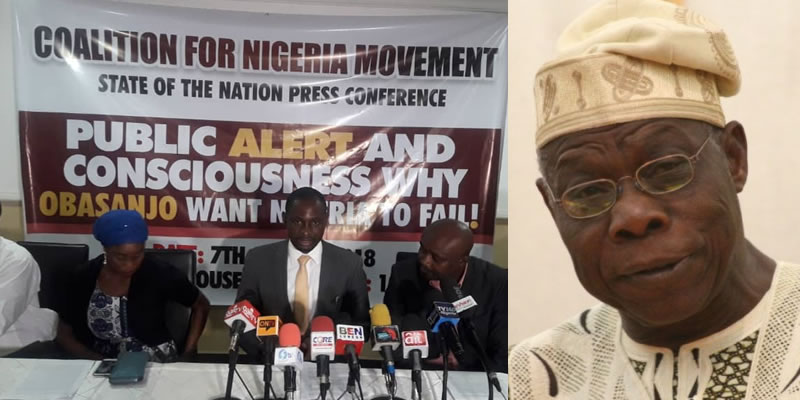
The footage shows Obasanjo describing the Federal Government as “ineffective and incompetent” while urging citizens not to support failure in leadership.
Several users who shared the clip suggested that the remarks were directed at the current administration, thereby presenting the content as a recent political statement.
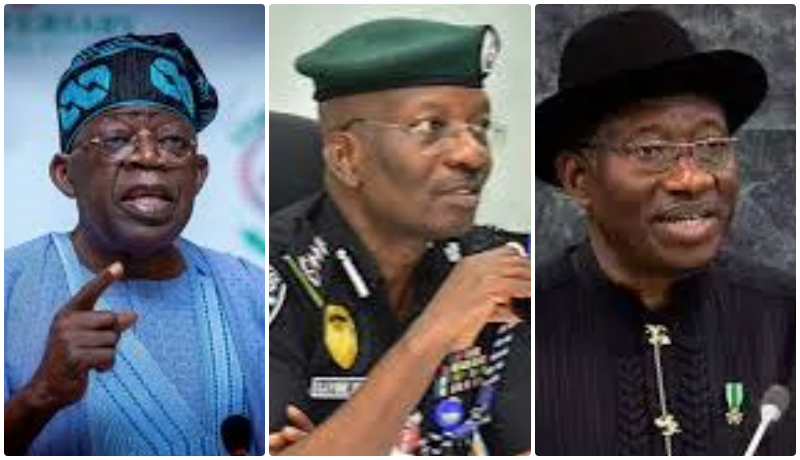
A Nigerian blogger, Tunde Ednut, posted a version of the video on Instagram where an image of Tinubu was inserted into the background of the clip.
The post, captioned “Hmmmmmmmmmmmm!!!!”, attracted thousands of interactions, including reposts, likes, comments, and shares within a short period.
On X, a user identified as @ejykmykel1 shared the same video alongside the caption “H.E Olusegun Aremu Obasanjo. Well spoken ? APC won’t like this”.
Another X user, @ukocarter, posted the footage with the claim ““Tinubu has failed, his incompetence has made many businesses die. Don’t let him come back for a 2nd term” — OBJ”.
VERIFYING THE CLAIM
However, a closer review of the viral content shows that Obasanjo did not mention Tinubu at any point in the video.
Checks conducted using reverse image search tools indicate that the clip has been available online since April 2018.
Multiple uploads of the same footage were traced to that period, confirming that the video predates the current administration.
Reports by established media organisations, including Channels Television and Punch Newspapers, also documented the remarks at the time.
The event captured in the video occurred when Obasanjo hosted members of the New Nigeria Group at the Olusegun Obasanjo Presidential Library.
The gathering took place in Abeokuta, the capital of Ogun State, during a period of political discourse ahead of the 2019 general election.
At the meeting, Obasanjo addressed concerns about governance and economic conditions under the leadership of former president, Muhammadu Buhari.
He stated that Nigerians were experiencing the consequences of what he described as poor management and ineffective leadership at the time.
Buhari served as Nigeria’s president from 2015 until 2023, preceding the current administration.
Prior to the remarks captured in the video, Obasanjo had publicly expressed reservations about Buhari’s leadership in an open letter released in January 2018.
In that correspondence, he advised Buhari not to seek re-election in 2019, citing concerns about governance and national development.
The former president’s position formed part of broader political debates that characterised the period leading up to the 2019 presidential election.
The resurfacing of the 2018 video in a different political context has contributed to its misinterpretation by some social media users.
The addition of Tinubu’s image to the clip and the accompanying captions has further reinforced the misleading narrative associated with the footage.
Despite the claims attached to the viral posts, there is no evidence linking the statements in the video to the current administration.
Available records consistently show that the remarks were made in reference to the economic and governance situation during Buhari’s tenure.
The timing and original context of the video remain central to understanding its meaning and preventing misrepresentation.
Observers note that such instances highlight how older political content can be recirculated in ways that alter its original intent.
Digital verification tools and archived reports provide clarity by tracing the origin and timeline of widely shared media materials.
In this case, the evidence confirms that the video reflects commentary made in April 2018 and not a recent statement about present-day governance.
The reappearance of the clip illustrates how edited visuals and captions can influence public perception when original context is not provided.
FINAL RESULTS
The findings establish that the claims linking the remarks to Tinubu’s administration are inaccurate and not supported by verifiable records.