The early hours along the Iseyin to Oyo road carried the kind of calm that usually hides nothing unusual, traders moving slowly, riders navigating familiar routes, security operatives stationed at their routine checkpoints without expectation of what the day would later become. Yet somewhere along that same stretch in May, a confrontation unfolded between a commercial motorcyclist and a team of security personnel, setting off a chain of events that would later ripple through communities, ignite tension across the Iseyin axis, and draw urgent attention from authorities in Oyo State. What began as what many assumed would be a routine stop turned into a fatal encounter, and from that moment, every passing hour carried heavier consequences than the last, as questions replaced certainty and grief slowly transformed into public anger.
The story did not remain confined to the exact point of contact. It traveled fast through word of mouth, through riders gathered at motor parks, through voices at roadside shops, and through community networks that quickly turned confusion into mobilization. By the time official statements began to surface, the narrative had already split into different interpretations, each carrying emotional weight, each shaping perception in ways that made calm resolution more difficult.
The death of the rider became the center of a larger storm that no longer felt like an isolated incident, but a reflection of deeper tensions between citizens and security structures operating in sensitive corridors of the state.
Iseyin corridor tension: Context before May
The Iseyin to Oyo axis has long been a route where commerce, transport activity, and security surveillance intersect in daily rhythm. Commercial motorcyclists form a major part of that movement, carrying passengers across short and long distances, often interacting directly with checkpoints established to manage movement and maintain order. Over time, this relationship has been shaped by both cooperation and friction, depending on how individual encounters unfold on any given day.
Before the incident in May, conversations within some local circles already carried undertones of concern about how stop and search interactions were being conducted. While many of these interactions ended without incident, occasional disputes had contributed to a growing sensitivity within transport communities. Riders often described feeling exposed to unpredictable outcomes during routine checks, while security personnel maintained that enforcement was necessary for safety and compliance. This underlying tension created a backdrop where any escalation, even a brief one, could quickly gain significance beyond its immediate context.
The encounter at the checkpoint: Sequence of events
According to accounts released by security sources, the motorcyclist was approached during a routine stop along the Iseyin to Oyo road in May. The purpose of the stop, as described, was standard inspection and verification. The rider was expected to comply, proceed with questioning, and continue his journey if cleared. However, the interaction reportedly took a different direction when resistance or disagreement arose during the engagement.
Security personnel stated that the rider became uncooperative during the process, leading to a physical struggle. During this confrontation, force was allegedly applied, resulting in the rider falling and sustaining injuries. He was subsequently transported to a medical facility, where he was later confirmed dead. That sequence, while presented in official terms as an operational incident, immediately became the focal point of public interpretation, as communities attempted to reconstruct what happened in real time using fragmented eyewitness accounts and emotional retellings.
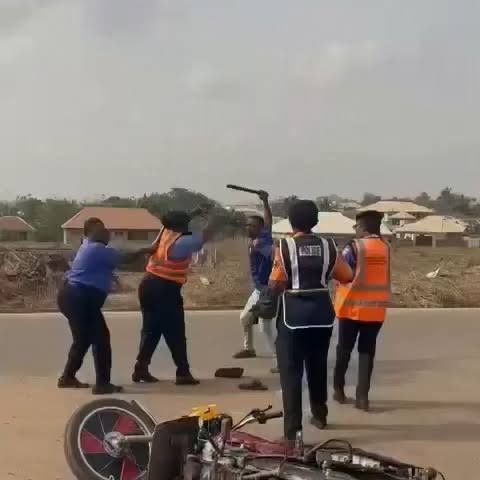
Community accounts, however, introduced a different emotional framing. Some residents and fellow riders described the encounter as excessive in nature, suggesting that the level of force used did not match the situation. These perspectives spread quickly across local networks, shaping early reactions that framed the incident as more than just a routine enforcement interaction gone wrong. The divergence between official explanation and community perception became the first major fault line in the unfolding crisis.
News spreads through Iseyin axis
By the afternoon in May, news of the rider’s death had already reached key transport hubs across the Iseyin axis. Motorcycle riders who shared professional and community ties with the deceased began gathering in clusters, discussing what had happened and what steps should follow. The emotional tone of these gatherings was shaped by grief, but also by concern over whether the incident would be properly addressed by authorities.
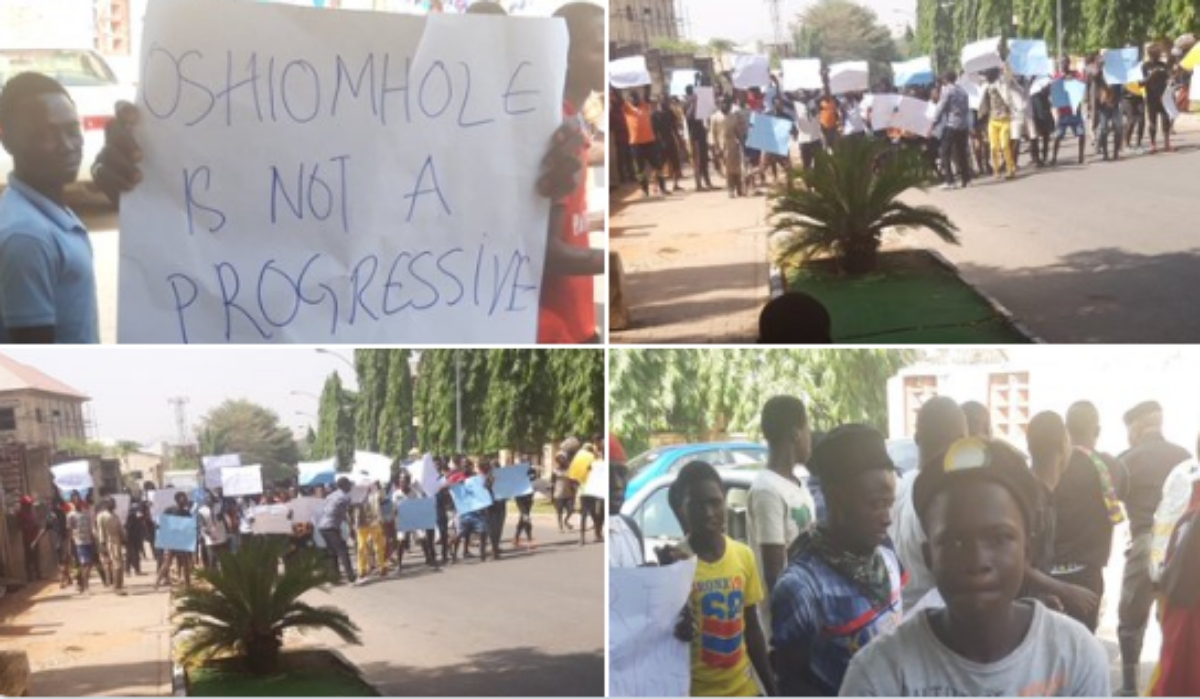
As discussions continued, movement began to shift from conversation to action. Roads in certain parts of Iseyin were temporarily obstructed as riders expressed their dissatisfaction. The protest was not initially structured as a large organized demonstration but emerged as a spontaneous response driven by shared identity and perceived injustice. This early phase was marked by confusion as well as urgency, with participants seeking clarity while also demanding accountability.
Some reports indicated that access routes were blocked, affecting movement of vehicles and commuters within parts of the axis. This disruption drew immediate attention from local security formations, who began monitoring the situation while coordinating response measures. At this stage, the situation had not yet escalated into widespread unrest, but the emotional intensity suggested that it could expand if not carefully managed.
Community mobilisation, demands for accountability
As the situation developed, the protest began to take clearer shape around specific demands. Central among them was the call for full investigation into the circumstances surrounding the rider’s death. Community members wanted clarity on the actions taken during the encounter, identification of officers involved, and assurance that any use of force would be properly reviewed within the framework of accountability.
The presence of motorcycle riders in large numbers gave the protest both visibility and urgency. Their mobility allowed rapid spread of information across different points of the axis, ensuring that developments in one location were quickly known in another. This connectivity contributed to the speed at which the protest gained momentum, even without centralized leadership.
Local leaders and elders within the community reportedly began engaging with protesters to encourage restraint while also acknowledging the emotional weight of the incident. These interventions aimed to prevent further escalation while ensuring that grievances were communicated through formal channels. However, trust remained fragile, as many participants waited for official confirmation that the matter would not be dismissed or downplayed.
Police response
Following the escalation, the Oyo State Police Command had begun deploying reinforcements to the affected areas. The objective was to restore order, prevent expansion of road blockages, and stabilize movement across the Iseyin axis. Security presence increased visibly, signaling that authorities were treating the situation as a developing incident requiring immediate attention.
Official communication from the police emphasized that the matter was under investigation. It was stated that officers involved in the encounter were being reviewed internally and that appropriate disciplinary or legal procedures would follow depending on findings. The assurance also included reference to medical and forensic examination to determine exact cause of death, a step intended to provide clarity on contested narratives.
Despite these assurances, tension remained present within sections of the community. Trust in institutional processes was being tested against the immediacy of grief and the speed at which information had already circulated. This gap between official procedure and public expectation became one of the defining challenges of the moment.
Community solidarity response
One of the most significant aspects of the incident was the rapid emergence of community solidarity among Hausa residents and commercial motorcyclists within the axis. The identity of the deceased rider played a central role in shaping the collective response. What might have remained an individual case within a different context quickly transformed into a shared concern, as many interpreted the incident through the lens of recurring interactions between security forces and transport workers.
This dynamic did not necessarily indicate organized ethnic confrontation, but rather reflected how communities often respond collectively when a member is perceived to have suffered injustice. The protest therefore carried both emotional and symbolic meaning, representing not just grief for a single individual but concern over broader patterns of treatment during security encounters.
Community leaders later emphasized the importance of calm, while also insisting that the incident required transparency. Their involvement helped reduce the risk of further escalation, particularly as security agencies maintained presence across key points to prevent breakdown of order.
Investigation pathway
Following the initial unrest, authorities confirmed that investigation processes were being activated. This included internal review of officers involved, gathering of eyewitness accounts, and preparation for examination to determine medical cause of death. The structured nature of this response was intended to address both legal and procedural dimensions of the incident.
As calm gradually returned across the affected corridor following intervention by security agencies and community leaders, monitoring continued. Road access was gradually reopened, and movement resumed in most areas. However, underlying tension had not fully disappeared, as many within the community continued to await final conclusions from the investigation.
The handling of such incidents often depends not only on official action but also on how communication is maintained during sensitive periods. In this case, authorities faced the challenge of balancing operational security with public reassurance, while community members sought timely answers to prevent speculation from filling information gaps.
Wider implications for security relations in Oyo State
The Iseyin incident sits within a broader context of recurring discussions about security engagement with civilians in Oyo State. Over recent periods, there have been multiple instances where enforcement encounters have led to public concern, particularly in relation to transport corridors and rural routes where checkpoints are frequent.
This has contributed to ongoing debate about methods of engagement, training protocols, and accountability mechanisms within field operations. While security agencies maintain that such checkpoints are necessary for maintaining order and preventing criminal activity, communities often emphasize the need for restraint, communication, and proportional response during interactions.
The incident therefore became more than an isolated confrontation. It became part of a continuing conversation about trust, safety, and responsibility in public space interactions. That broader context is what gave the protest its intensity and made its resolution dependent not only on immediate investigation but also on long term institutional reflection.
Closing reflection: A moment that echoes across Iseyin axis
As calm gradually returned to the Iseyin to Oyo corridor following intervention by security agencies and community leaders, the memory of the incident remained present within conversations across transport hubs and local settlements. The rider’s death continued to symbolize unresolved questions about how routine encounters can escalate within seconds and how quickly public emotion can reshape the landscape of an entire area.
The events in May demonstrated how fragile equilibrium can be in spaces where civilians and security forces interact daily. It also highlighted how rapidly information, perception, and grief can merge into collective action when communities feel directly affected. While official investigation processes continue to determine exact circumstances, the incident has already left a lasting imprint on public consciousness within the axis, reinforcing the need for clarity, accountability, and careful engagement in every future encounter along that route.