Recently, the Nigerian National Petroleum Company Limited (NNPC Ltd) signed a Memorandum of Understanding (MoU) with two Chinese companies for a Technical Equity Partnership (TEP) to support completion and operation of Port Harcourt and Warri Refineries.
According to reports, the MoU was signed with Sanjiang Chemical Company Limited and Xingcheng (Fuzhou) Industrial Park Operation and Management Co. Ltd.
WITHIN NIGERIA gathered that the deal was signed by the Group CEO of NNPC Ltd, Mr Bashir Ojulari; Chairman of Sanjiang Chemical Company, Guan Jianzhong; and Chairman of Xinganchen (Fuzhou) Industrial Park Operation and Management Co. Ltd, Bill Bi, in Jiaxing City, China.
Explaining details of MoU after the signing, Ojulari stated that the potential framework would cover completion of outstanding work at the two refineries, together with operating and maintaining both facilities to achieve best-in-class, sustainable performance.
In a statement issued by Andy Odeh Ojulari, Chief Corporate Communications Officer, NNPC Ltd, said the planned expansion and upgrades would elevate both facilities to cleaner, more profitable product standards.
According to him, “the potential collaboration also contemplates expanding the refineries’ petrochemical capacities and harnessing gas and downstream opportunities through the development of co-located, gas-based industrial hubs.
“The MoU execution is a significant milestone, following more than six months of concerted engagement between the technical and management teams of NNPC and the two Chinese partners, Sanjiang and Xinganchen.
“All parties recognise mutually beneficial opportunities for the development and long-term sustainable profitability of NNPC’s refining assets in Nigeria, and the collective weight required for success,” Ojulari said.
He went further to stress that the MoU was an important step on the journey towards identifying potential technical equity partner(s) to restart and expand NNPC’s refineries and to explore opportunities in co-located petrochemical and gas-based industries.
However, a lot of mixed reactions have continued to trail the signing of the MoU with the Chinese companies by the NNPCL.
WITHIN NIGERIA findings showed that this stemmed from the fact that for decades, the two refineries have become a source huge expenditure with no positive result.
It is on record that many see it as a conduit pipe to siphone Nigeria scarce finance by each administration.
A breakdown of the previous contracts awarded on the refineries showed that the country has lost hundreds of billions of dollars to revitalization of these refineries with nothing to show for it.
Catalogue of repairs
Since 1999, Nigeria has spent over $7.4 billion to 18 billion on repairs, rehabilitation, and “Turn Around Maintenance” (TAM) for its four refineries, yet they have remained largely unproductive or inactive for significant periods.
The refineries involved are the Port Harcourt Refining Company (PHRC) I & II, Warri Refining and Petrochemical Chemical (WRPC) and Kaduna Refining and Petrochemical Company (KRPC).
Catalogue of Refinery Repairs and Spending (1999–2026)
1999–2007 (Obasanjo Administration): Approximately $800 million was spent on maintenance, but the refineries did not function at optimal capacity.
2007–2010 (Yar’Adua Administration): Around $257 million was spent on repairs.
2010–2015 (Goodluck Jonathan Administration): About $495 million was spent on TAM.
2013–2017: Roughly $396 million was reported spent on maintenance during this period.
2015–2023 (Muhammadu Buhari Administration): The administration saw massive investments, with reports of over $2.39 billion spent.
2021: A $1.5 billion contract was awarded for the rehabilitation of the Port Harcourt refinery.
2023: $741 million and $492 million contracts were awarded for the rehabilitation of the Kaduna and Warri refineries, respectively, to Daewoo Engineering.
2023–Present (Bola Tinubu Administration): Reports indicate an additional $2.8 billion has been committed to rehabilitation efforts.
Port Harcourt (Old & New): As of early 2026, the plant was inactive after shutting down in May 2025 following a partial restart in November 2024.
Warri Refinery: Underwent major rehabilitation with Daewoo Engineering as of 2023–2025.
Kaduna Refinery: Underwent repairs by Daewoo Engineering, with goals to reach 60% capacity.
In any case, WITHIN NIGERIA gathered that despite these expenditures, the refineries have continued to operate well below capacity or remain inoperative, with the country heavily relying on private importers and the new Dangote refinery.
Atiku slams President Tinubu
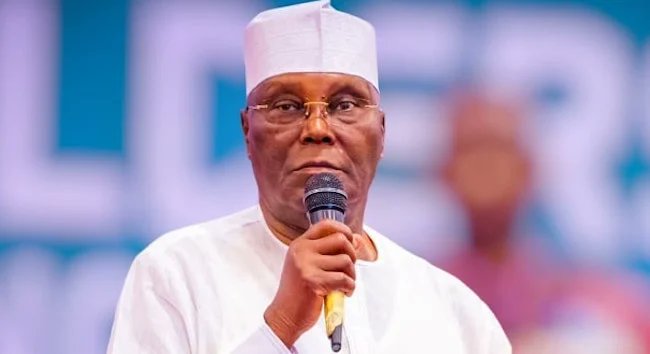
A former Vice President, Atiku Abubakar, on Friday called for the immediate suspension and public scrutiny of the “Technical Equity Partnership” recently announced by the Nigerian National Petroleum Company Limited involving two Chinese firms, Sanjiang Chemical Company Limited and Xingcheng (Fuzhou) Industrial Park Operation and Management Co. Ltd.
Atiku, in a statement issued by his Senior Special Assistant on Public Communication, Phrank Shaibu, described the deal as “another dangerous gamble” with Nigeria’s economic future.
The chieftain of the African Democratic Congress accused the administration of President Bola Tinubu of attempting to mortgage critical national assets through opaque arrangements allegedly lacking technical credibility, transparency, and accountability.
He said, “We are demanding an immediate suspension and public scrutiny of the “Technical Equity Partnership announced by the Nigerian National Petroleum Company Limited involving two Chinese firms, Sanjiang Chemical Company Limited and Xingcheng (Fuzhou) Industrial Park Operation and Management Co. Ltd.
“It is both shocking and insulting that after wasting over $2.5 billion on endless refinery rehabilitation scandals, the NNPC is once again asking Nigerians to trust another experiment built on secrecy and questionable competence.”
According to him, independent assessments of the two Chinese firms involved in the Memorandum of Understanding indicated that neither company possesses the pedigree, technical depth, or global reputation associated with the rehabilitation and management of complex crude oil refineries such as those in Port Harcourt and Warri.
The statement noted that Sanjiang Chemical, though a legitimate petrochemical company, primarily specialises in surfactants, ethylene oxide, methanol-to-olefins, and light hydrocarbon processing rather than crude oil refining.
“There is no publicly available evidence anywhere in the world showing that Sanjiang has ever built, operated, or managed a full-scale crude oil refinery of the magnitude and complexity of Port Harcourt or Warri refineries.
“Processing petrochemical derivatives is not the same as running an ageing national refinery burdened with decades of operational decay,” Atiku stated.
He also questioned the competence of the second company, Xingcheng (Fuzhou) Industrial Park Operation and Management Co., Ltd., alleging that available corporate and industry records did not show verifiable experience in petroleum engineering, refinery operations, or hydrocarbon processing.
“By every available corporate and industry record, Xingcheng is essentially an industrial park and infrastructure management company — the equivalent of handing over a hospital’s intensive care unit to a real estate developer simply because they can construct buildings,” the statement added.
The former Vice President further queried why the Federal Government and the Nigerian National Petroleum Company Limited would bypass globally established refinery engineering and EPC firms in favour of entities whose backgrounds, he said, raised “more questions than confidence.”
He warned that the administration risks turning Nigeria’s refineries into “another expensive black hole of failed promises, reckless experimentation, and opaque transactions.”
“It is unacceptable that after years of failed Turnaround Maintenance scams, billions of dollars squandered, and repeated lies about refinery functionality, Nigerians are now being told to celebrate a Memorandum of Understanding signed with companies whose core expertise does not align with the technical realities of refinery rehabilitation,” the statement said.
Atiku also cited what he described as troubling financial indicators surrounding Sanjiang Chemical, alleging that reports pointed to declining revenues, shrinking profitability, and significant short-term debt exposure.
“This raises a fundamental question: if a company is already battling financial compression and liquidity concerns in its own operations, how exactly does it intend to shoulder the burden of reviving two of Africa’s most troubled refineries?” he queried.
The former VP argued that the entire arrangement bore “the disturbing fingerprints of another hurried and poorly scrutinised deal designed more for headline propaganda than sustainable national interest.”
He said, “Nigerians must not allow the same people who destroyed the refineries through incompetence and corruption to now hide behind vague Chinese partnerships to continue the cycle of deception.
“The era where NNPC signs opaque agreements abroad and expects Nigerians to clap blindly is over. National assets are not toys for bureaucratic experimentation. The Port Harcourt and Warri refineries are too strategic to be surrendered to uncertainty, obscurity, and corporate guesswork.”
NUPENG Lauds FG
As the criticism continues to mount, the Nigeria Union of Petroleum and Natural Gas Workers, (NUPENG) on Thursday commended the federal government and the Nigerian National Petroleum Company Limited (NNPC Ltd.) over the agreement reached with Chinese firms aimed at reviving the Warri and port Harcourt refineries.
In a release, the National President of the union, Salimon Oladiti gave the commendation, urging all parties involved in the partnership to ensure transparency, accountability, professionatism, and timely execution of the agreement.
He described the development as a significant step towards addressing what he described as the long-standing challenges in Nigeria’s petroleum sector and reducing the country’s heavy dependence on imported petroleum products despite its position as a major oil-producing nation.
In his words, “the agreement with the Chinese firms presents an opportunity for the country to reposition its oiI and gas sector, restore public confidence in the nation’s refining capacity, create employment opportunities, encourage industrial growth, strengthen energy security, and reduce the economic pressure associated with fuel importation,” he added.
Oladiti further stressed that Nigerians are now tired of repeated refinery rehabilitation promises and projects that consume huge public resources without delivering lasting results.
He therefore urged all parties involved in the partnership to ensure transparency, accountability, professionatism, and timely execution of the agreement.
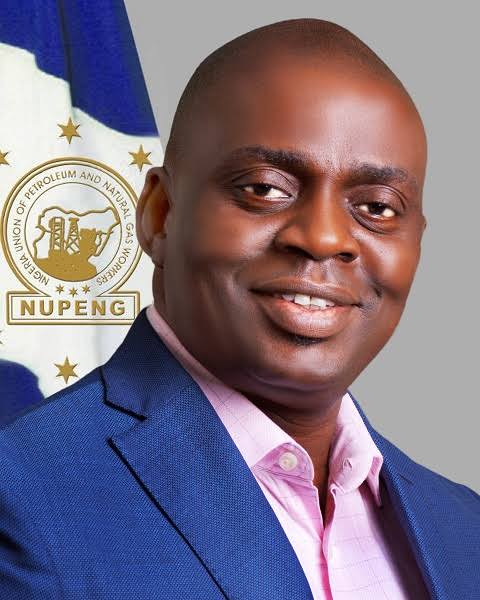
The NUPENG president further emphasised that the revival of the Warri and Port Harcourt refineries must not end as another political announcement but should translate into real economic relief and tangible benefits for Nigerians already battling difficult economic realities.
He called on the federal government and NNPC to remain committed to policies and partnerships that prioritise national development, economic stability, and the welfare of the Nigerian people.