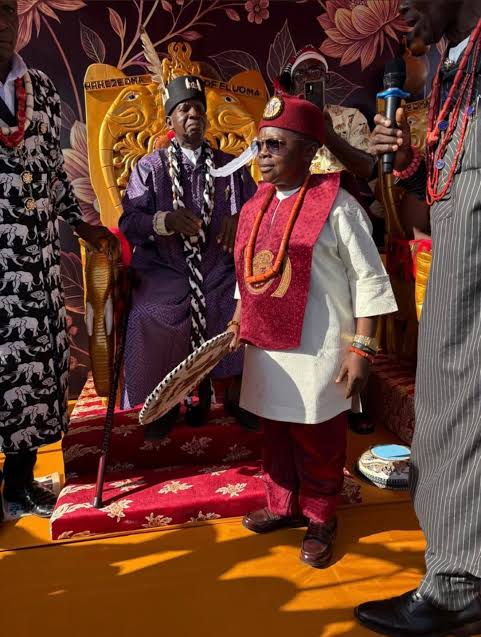
Something significant unfolded quietly in a familiar corner of Abia State on 23 May 2026, drawing attention not through controversy or noise but through heritage, recognition, and a return to roots that many often forget once fame arrives. A moment that brought together culture, memory, and achievement began to take shape in Eluoma, Uzuakoli axis, where traditions still carry deep meaning and where titles are never just names but symbols of belonging.
At the center of it all stood Chinedu Ikedieze, a man whose face has been part of Nigerian cinema for decades, now stepping into a different kind of spotlight that speaks less about screen presence and more about ancestral honor.
The atmosphere carried anticipation that built gradually, not from spectacle, but from the quiet weight of what it means when a community decides to recognize one of its own in a permanent cultural way. What followed was not just a ceremony but a layered moment of identity, pride, and collective memory that reflected both the past and the present in one gathering.
Arrival Atmosphere: Eluoma Community Grounds
The day began with a calmness that slowly transformed into visible activity as guests, elders, and community members gathered across Eluoma in Uzuakoli axis of Abia State. The environment reflected a blend of tradition and celebration, with cultural markings, greetings, and familiar communal energy filling spaces that have long served as the heart of local customs. By the morning of 23 May 2026, the venue had already started receiving notable presence, including family members, cultural custodians, and representatives of the autonomous community leadership structure. Every movement carried intention, from the seating arrangements to the ceremonial preparation, showing that this was not an ordinary social event but a structured recognition rooted in tradition.
As the hours progressed, the anticipation around the arrival of Chinedu Ikedieze became the center of subtle conversation. People spoke in tones that reflected pride rather than excitement alone, as though the moment had already been spiritually acknowledged long before it physically unfolded. His arrival was marked by greetings from elders and community representatives, each gesture layered with respect that comes from shared origin rather than celebrity status. The environment was neither rushed nor chaotic, but deeply coordinated in a way that reflected how seriously the community regarded the occasion.
Sequence of Traditional Entry Process
Traditional ceremonies in Igbo land follow a pattern that blends symbolism with structure, and this occasion in Eluoma maintained that cultural rhythm. The entry process involved acknowledgments from designated elders who served as custodians of the ceremony, ensuring that each stage aligned with customary expectations. As Chinedu Ikedieze moved through the reception space, he was guided through cultural protocols that emphasized humility, recognition, and belonging.
Every step taken during the entry carried meaning, not because of spectacle but because of what it represented to the people watching. The gathering observed as chants, greetings, and structured welcomes unfolded in sequence, each reinforcing the importance of returning home regardless of external fame or global recognition. The atmosphere remained grounded in tradition, ensuring that the ceremony did not lose its cultural identity even with the presence of a widely recognized figure in Nigerian entertainment.
Conferment Moment Of Ihe 1 Of Eluoma
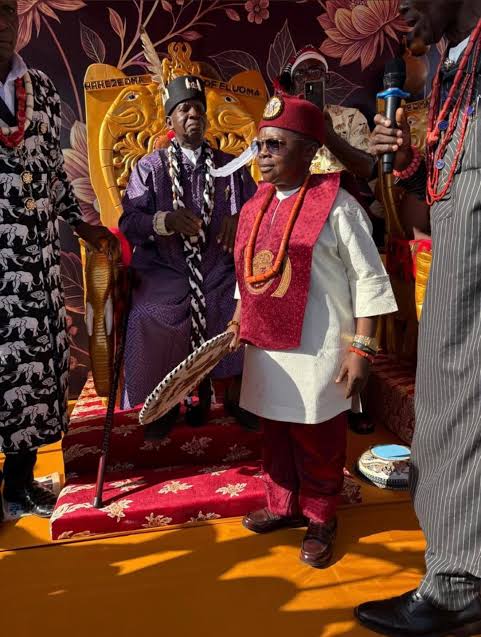
The most defining moment of the day came during the official conferment of the chieftaincy title, where Chinedu Ikedieze was installed as Ihe 1 of Eluoma Uzuakoli Autonomous Community. The announcement was made in a structured traditional format, led by community authorities who explained the significance of the title within the cultural framework of the area. The designation Ihe carries deep symbolic meaning in Igbo interpretation, often associated with light, value, and distinction, and the number 1 emphasizes his position as the first recipient of that specific honor within the community structure.
The moment of installation was marked by ceremonial gestures that signified acceptance into a symbolic leadership class within the community. Traditional items of recognition were presented as part of the process, reinforcing the cultural weight of the title. The atmosphere during this moment shifted from anticipation to reflection, as attendees observed the formal acknowledgment of a son of the soil who had achieved recognition far beyond his local roots but was now being formally embraced in a permanent cultural role.
A statement shared during the ceremony captured the emotional tone of the moment, as a community representative reportedly declared, this honor is a reflection of what it means when excellence returns home, where recognition is not borrowed but rooted in origin. The statement resonated across the gathering, reinforcing the symbolic depth of what had just taken place.
Meaning Of Ihe 1 Of Eluoma Identity Symbolism
The title Ihe 1 of Eluoma Uzuakoli Autonomous Community carries layers of interpretation that go beyond surface recognition. In Igbo linguistic and cultural context, Ihe often refers to light, value, or something that stands out as significant within a collective space. When combined with the designation of number 1, it reflects the idea of pioneering recognition within that category of honor. It is not a political office, nor does it carry administrative authority, but instead serves as a symbolic bridge between achievement and cultural belonging.
For Chinedu Ikedieze, this recognition places his journey within a framework that connects his professional accomplishments to his ancestral identity. It represents a formal acknowledgment from his community that his influence in entertainment has contributed to how the region is perceived beyond its geographical boundaries. Such titles often serve as a reminder that success in external spaces does not remove one from local identity but can instead strengthen it when acknowledged at home.
Community Celebration Atmosphere: Eluoma Gathering
Following the installation, the atmosphere within Eluoma shifted into celebration that reflected both pride and cultural unity. Music, traditional expressions, and communal interactions filled the space as attendees engaged in shared acknowledgment of the moment. The celebration was not only about the individual receiving the title but also about what the recognition symbolized for the community itself.
Elders, youths, and visiting guests participated in different ways, each contributing to the collective energy of the day. Conversations revolved around memories of Chinedu Ikedieze’s early career, particularly his rise through Nollywood alongside his longtime screen partner in the iconic duo Aki and Pawpaw. The sense of pride was not isolated but shared across generations who had followed his journey from early film appearances to his current status as a veteran actor in Nigerian cinema.
Career Legacy: Nollywood Impact Journey
The career of Chinedu Ikedieze remains one of the most recognizable in Nigerian entertainment history. Emerging prominently in the early 2000s, he became widely known through his comedic roles that resonated with audiences across Nigeria and beyond. His partnership in the Aki and Pawpaw era of Nollywood established him as a defining figure in family centered comedy storytelling, where humor was used to reflect everyday Nigerian life.
Over the years, his presence in the industry has evolved, but his influence has remained consistent. He has featured in numerous productions that shaped the direction of Nigerian film culture during its rapid expansion. His recognition with national honors, including Member of the Order of the Federal Republic, further reflects the institutional acknowledgment of his contribution to arts and entertainment in Nigeria.
The chieftaincy title in Eluoma now adds another layer to that legacy, linking professional achievement with cultural identity in a way that reinforces both personal history and communal pride.
Cultural Weight: Igbo Traditional Recognition System
Chieftaincy titles in Igbo culture carry a significance that is deeply rooted in tradition, respect, and communal validation. They are not political positions but symbolic recognitions awarded to individuals who have made notable contributions in various fields including culture, development, leadership, and public influence. The process often involves consultations among elders and traditional rulers who evaluate the impact of the individual being honored.
In many cases, these titles serve as a bridge between modern achievement and ancestral heritage, ensuring that success is not detached from origin. The recognition of Chinedu Ikedieze as Ihe 1 of Eluoma reflects this cultural principle, where accomplishment is acknowledged not only in public spaces but also within the community that shaped early identity. It reinforces the idea that cultural roots remain central regardless of how far an individual’s career has reached.
Public Reaction: Social Media Reflection Wave
Following the ceremony on 23 May 2026, reactions began circulating across social platforms where many expressed admiration for the recognition. The tone of responses reflected appreciation for cultural acknowledgment rather than controversy or debate. Many highlighted the symbolic importance of honoring individuals who have contributed significantly to national entertainment while still maintaining ties to their ancestral communities.
Discussions also revisited iconic moments from his film career, with references to his early comedic roles and the lasting impact of his performances on Nigerian pop culture. The ceremony became a reference point for conversations about how traditional institutions continue to play a role in recognizing contemporary achievement.
Closing Reflection: Homecoming Recognition Meaning
The conferment of Ihe 1 of Eluoma on Chinedu Ikedieze represents more than a ceremonial title, it reflects a cultural affirmation that bridges personal success with communal identity. It shows how recognition can travel full circle, from global screens back to ancestral soil, where meaning is not measured by fame alone but by belonging and legacy.
The event in Eluoma on 23 May 2026 stands as a reminder that achievement often finds its deepest validation not in applause from afar but in acknowledgment from home, where every name carries history and every honor carries memory.