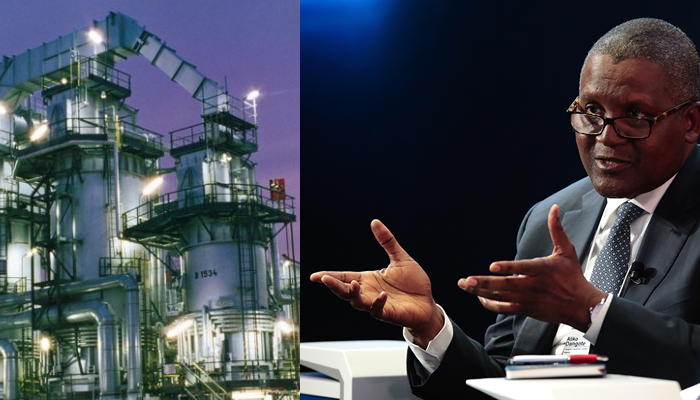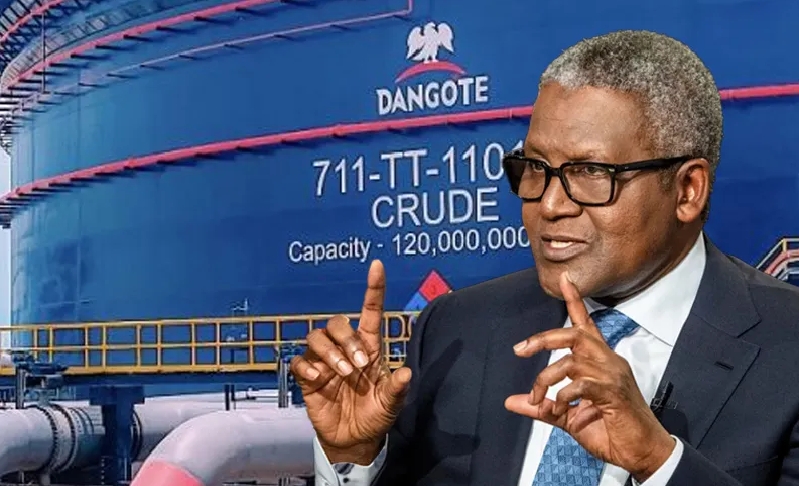
The conversation around the Dangote Refinery becoming a publicly traded asset has grown louder than almost any other market story in Nigeria as 2026 unfolds, yet the most interesting part is not the excitement itself but the tension sitting underneath it, a tension shaped by anticipation, official silence, and carefully timed signals from one of Africa’s most powerful industrial groups. What is unfolding around the refinery is not a sudden announcement or a completed financial event, but a slow moving buildup that has pulled in investors, analysts, and everyday Nigerians who are trying to understand when speculation becomes reality. The expectation of a public listing has created a kind of waiting room in the financial ecosystem, where money decisions are being delayed, repositioned, or prepared quietly without full confirmation from the source that matters most.
At the center of this story is the massive industrial asset operated by Dangote Group, which owns and operates the refinery under its energy expansion portfolio. The refinery itself, Dangote Refinery, has already changed how global energy conversations about Nigeria are framed, even before any public share offering begins. The idea that a portion of such a large asset could enter the Nigerian Exchange has created expectations that extend beyond finance into national economic identity, retirement fund planning, and foreign investment interest. Yet despite the noise, what remains consistent is the absence of a formal public offering announcement, a detail that continues to shape how serious investors interpret every new report.
Early Signals From Corporate Structure Adjustments
Interest in a possible listing began gaining momentum as market observers noticed increasing structural clarity around the refinery’s operational reporting lines and financial organization. Large infrastructure assets rarely move toward public listing without long preparation, often involving internal valuation exercises, governance alignment, and advisory appointments. Reports circulating through 2025 and into early 2026 suggested that financial advisers had been engaged to evaluate listing readiness, although none of these developments were presented as a finalized offer to the public. This distinction matters because advisory activity often signals preparation rather than execution.
By February 2026, speculation intensified after discussions around potential listing strategies began appearing in financial circles tied to the Nigerian Exchange NGX. Analysts interpreted these signals as part of a broader capital market strategy that could allow partial public ownership while preserving majority control within the Dangote Group structure. However, the company maintained a consistent position that no formal IPO documentation had been submitted or approved, reinforcing the idea that preparation does not equal launch. This duality created the current environment where anticipation is high but official confirmation remains absent.
Valuation Expectations Market Speculation Pressure
One of the most widely discussed aspects of the refinery listing story is its estimated valuation, which has been repeatedly placed in the range of 20 billion dollars to 25 billion dollars, with some projections stretching toward 50 billion dollars depending on production scaling and revenue stabilization assumptions. These figures are not official pricing statements but market derived projections based on capacity, infrastructure scale, and regional energy demand potential.
The refinery is designed with a capacity of 650,000 barrels per day, positioning it among the largest single train refining facilities globally. That scale alone has made it a focal point for valuation modeling, especially among institutional investors who track energy infrastructure as long term yield assets. However, valuation expectations often move faster than corporate disclosure timelines, which is why analysts continue to caution that pre IPO excitement does not always translate into initial listing pricing.
The pressure created by these expectations is two sided. On one side, it attracts early interest from pension funds and sovereign wealth observers who want exposure to energy infrastructure in Africa. On the other side, it increases the risk of inflated assumptions that may not align with eventual offering terms once regulatory approvals are finalized.
Official Position – No Launch Confirmed
Despite increasing speculation, the clearest statement that continues to guide market interpretation remains simple and direct from the company side. The refinery leadership has repeatedly emphasized that no public share sale has been officially launched. That position has not changed even as media coverage and market commentary have expanded.
“No IPO has been officially launched”
This statement continues to act as the anchor point for investors trying to separate confirmed fact from projected possibility. It is important because it resets expectations every time speculation accelerates beyond official communication channels. While preparation activity may be underway, formal regulatory submission and listing approval remain the only triggers that would move the story from anticipation to execution.
Timeline Projections Market Forecasts 2026 Window
Most credible market projections place the potential listing window around mid 2026, particularly between June 2026 and July 2026, depending on regulatory readiness and market conditions within Nigeria’s capital markets. These projections are not official deadlines but rather forecasting models based on typical listing preparation cycles for assets of similar scale.
Capital market listings of this magnitude require alignment between internal corporate valuation, external auditing confirmation, regulatory compliance under the Securities and Exchange Commission framework, and exchange level approval from the Nigerian Exchange NGX. Each of these stages carries its own timeline variability, which is why analysts avoid fixed commitments until formal filings appear.
The 2026 timeline also reflects broader macroeconomic considerations, including oil price stability, investor sentiment toward emerging market infrastructure, and liquidity conditions in domestic equity markets. Any delay or acceleration in these areas could shift the final listing schedule significantly, making timing one of the most fluid elements in the entire process.
Ownership Structure Expected Distribution Model
If the listing proceeds as currently speculated, the structure is expected to involve a minority public offering rather than a full divestment. Estimates suggest that between 5 percent and 10 percent of the refinery equity could be made available to public investors, while the majority stake would remain under the control of Dangote Group entities.
This model is typical for large infrastructure IPOs where founders or core investors maintain strategic control while allowing market participation to unlock capital efficiency and broaden ownership. Under such a structure, Dangote Group would likely retain between 65 percent and 70 percent control, ensuring operational continuity and long term strategic direction remains unchanged.
For investors, this structure signals limited float availability, which can influence demand dynamics during initial offering phases. Smaller public floats often lead to higher competition among institutional buyers, particularly when the underlying asset is perceived as strategically important.
Economic Significance: National Market Impact
The potential listing of Dangote Refinery carries implications that extend beyond corporate finance into national economic positioning. As one of the largest refining complexes in Africa, with a production capacity of 650,000 barrels per day, the refinery represents a structural shift in how Nigeria engages with refined petroleum supply chains.
From a capital market perspective, the listing could become one of the largest public offerings in Nigerian financial history, potentially reshaping liquidity levels within the Nigerian Exchange NGX. Large scale listings typically attract institutional capital inflows, particularly from pension funds, insurance portfolios, and international frontier market funds seeking exposure to energy infrastructure.
The broader economic narrative also includes the possibility of increased local ownership participation in critical energy infrastructure. This aligns with ongoing policy discussions around deepening domestic capital markets and reducing dependence on external financing structures for strategic assets.
Sources of Confusion: Media Speculation Cycle
The confusion surrounding the IPO story is not accidental but structural, driven by the way financial information circulates in high interest environments. Once a major asset becomes associated with a potential listing, media interpretation often expands beyond confirmed facts, especially when advisory activity or valuation discussions become public knowledge.
Another layer of complexity comes from the communication strategy of Dangote Group, which has consistently emphasized formal disclosure channels over informal commentary. This creates a gap between market curiosity and official announcements, which is often filled by speculation.
Investor enthusiasm also contributes to accelerated narratives. When demand for information is high, even small signals such as executive interviews, infrastructure updates, or production milestones are interpreted as listing indicators, even when no regulatory filing exists.
Investor Preparation: Market Positioning Behavior
Even without a confirmed launch, investors have begun positioning themselves in anticipation of the possible offering. Institutional investors are particularly active in preparing compliance readiness, capital allocation frameworks, and internal approval processes that would allow rapid participation once the IPO window opens.
Retail investors, on the other hand, are largely observing from the sidelines while learning about subscription mechanisms, brokerage account requirements, and allocation processes within the Nigerian Exchange NGX system. This preparatory behavior reflects a broader pattern seen in large anticipated listings, where readiness begins long before official opening dates.
Market participants are also assessing potential volatility risks associated with early trading periods. Historical patterns suggest that newly listed infrastructure assets often experience sharp price movements in initial sessions, driven by demand imbalance and price discovery dynamics.
Strategic Importance – Energy Infrastructure Shift
Beyond financial markets, the refinery represents a strategic repositioning of Nigeria within global energy infrastructure. A domestic refining capacity of this scale reduces import dependency and increases domestic control over petroleum processing value chains. This structural shift is part of what makes the listing conversation particularly significant for both policymakers and investors.
If the IPO proceeds, it will not only be a financial event but also a symbolic transition toward broader public participation in energy infrastructure ownership. This is why the story continues to attract attention even in the absence of formal launch confirmation.
The combination of scale, timing, and market anticipation ensures that every update related to the refinery is treated as potentially significant, even when official positions remain unchanged.
Closing Position: Waiting State Reality
The Dangote Refinery shares story currently exists in a defined waiting state, where preparation activity is visible but execution has not been triggered. Investors are responding to signals, analysts are building models, and media narratives continue to expand, yet the only binding reality remains the absence of an official IPO filing.
What makes this moment unique is not just the size of the asset but the psychological buildup around it, where expectation has become almost as influential as confirmation. Until formal documentation enters the Nigerian Exchange NGX approval pipeline, the story remains one of anticipation rather than transaction.
For now, the market continues to wait, watch, and recalibrate, holding attention on one of Africa’s most closely followed potential listings, while the final decision still rests behind corporate doors that have not yet opened.