On Tuesday, May 19, 2026, former Nigerian Head of State, General Yakubu Gowon (rtd) presented his decades-long-awaited memoir, My Life of Duty and Allegiance.
WITHIN NIGERIA gathered that the event which was held in Abuja was indeed a gathering of those who govern memory, and of course who had have one political assignment or the other in Nigerian political space
The memoir, My Life of Duty and Allegiance is Gowon’s personal narration of his journey from military officer to Head of State.
It is also his sudden emergence as head of state after the crises of 1966, his prosecution of the Nigerian Civil War.

It also captured his overthrow in 1975, exile, academic life and, later, peace-building initiatives. Its central argument is familiar.
The message the octogenarian former head of state wants to pass across is simple; that throughout his military regime which was indeed characterized with 30 months of civil war of Nigeria/Biafra, he acted out of duty, not malice; allegiance, not ambition; national necessity, not ethnic hatred.
The memoir presented Gen. Gowon as a mere tool to stabilize Nigeria in time of political crisis which eventually degenerated into full blown war which saw millions of Easterners lost their life.
However, since the presentation of the memoir, there has been a lot criticism and divergent views on the issues raised by the retired general.
In any case, while many see the memoir as a living tissue of facts and figure presented by an actor in the whole scene of horror especially during the Nigeria/Biafra war, others saw it as at best, a failed attempt to open an old wound by the retired general.
As a matter of fact, many Nigerians have continued to question the relevance of this memoir, almost sixty years after the war.
Be that as it may, some many prominent Nigerians have also made their opinions known about the memoir.
Gowon is distorting the history-Aloy Ejimakor
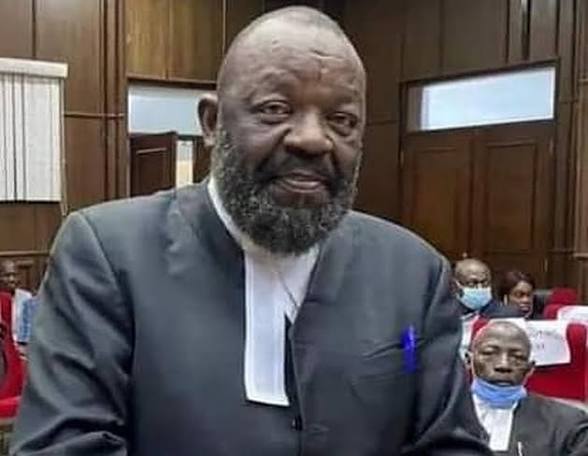
Nnamdi Kanu’s lawyer has criticised the memoir especially his account if civil war.
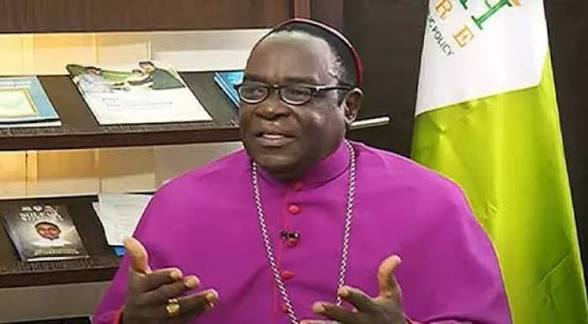
Ejimakor said the publication had resurrected debates surrounding the conflict and the collapse of peace efforts before the outbreak of war.
In a statement shared on Thursday, the lawyer accused Gowon of presenting a distorted version of history by blaming Biafra leader, Chukwuemeka Odumegwu Ojukwu entirely for the failure of peace negotiations.
“The publication of Yakubu Gowon’s memoir has predictably reignited debates over the Nigerian Civil War. By claiming that Odumegwu Ojukwu ‘deliberately and effectively thwarted every effort’ at peace, Gowon presents a false history,” he said.
Ejimakor argued that Gowon’s government failed to implement the Aburi Accord reached in Ghana in January 1967.
He said the agreement represented the best opportunity to prevent the civil war following the anti-Igbo killings of 1966.
“In January 1967, both leaders met in Aburi, Ghana, agreeing to a loose confederation to de-escalate tensions following the horrific 1966 anti-Igbo pogroms.
“Upon returning to Lagos, Gowon succumbed to pressure from federal civil servants and British diplomats who feared a loss of central power. Gowon unilaterally issued Decree No. 8, which stripped the core elements of the Aburi agreement.
“By reneging on this signed framework, Gowon destroyed political trust, leaving the Eastern Region isolated and handing Ojukwu the political capital to declare secession in good faith,” he said.
Criticising the post-war policies of the Federal Government, including the flat payout given to former Biafran bank depositors, Ejimakor stressed that this is a mark of stigmatization
“Post-war economic policies — such as the controversial £20 flat-payout given to Biafran bank depositors regardless of their pre-war savings — deeply alienated the Igbo population, institutionalizing a sense of marginalization,” he said.
The lawyer said the continued ethnic tensions and pro-Biafra agitations in Nigeria reflect unresolved structural issues from the civil war era.
“The persistent ethnic tensions and neo-Biafran agitations that convulse Nigeria today serve as living proof that the underlying structural defects of the federation were never resolved,” he said.
He went further to say that Gowon’s memoir appeared more focused on defending his administration than presenting an objective historical account.
“All in all, Gowon’s memoir reads less like an objective historical record and more like an effort to absolve his administration of its broken promises and strategic blunders.
“By placing the entire burden of failure on Ojukwu, Gowon dodges accountability for a war that saved the map but fractured the soul of the Nigeria forever,” he stated.
At the same time, Pat Onukwuli, a political analyst has said that the memoir lacks coherence and consistence especially with the event Nigeria/Biafra war.
“Yet, for Ndigbo, this memoir arrives not merely as literature, but as a moral summons. It is not simply the recollection of an old soldier; it is the delayed testimony of the Commander-in-Chief under whose authority Biafra was bombed, blockaded, starved, defeated and then rhetorically embraced. Gowon had, at over 90 years of age, perhaps his last great opportunity to move from explanation to expiation, from defence to repentance, from national heroism to moral courage. He reneged.”
Explaining further, Mr. Onukwuli stated that “here lies the painful contradiction. Gowon has spent decades praying for Nigeria, but prayer without atonement is a ceremony without cleansing. In both Christian and traditional moral imagination, supplication must be accompanied by restitution. The gods do not heed libation poured over concealed bones. Heaven does not accept incense rising from an altar beneath which injustice remains buried. Nigeria may pray, but Nigeria must also confess.”
Tinubu, Kukah, others hail Gowon
President Bola Ahmed Tinubu, described the autobiography as a vital national document that offers enduring lessons on leadership, reconciliation, regional cooperation and the preservation of Nigeria’s unity.
He particularly praised Gowon’s post-civil war reconciliation policy, especially the declaration of “No victor, no vanquished,” describing it as one of the defining principles that helped preserve Nigeria’s unity after the civil war.
Tinubu also called for the memoir to be widely circulated across the country, describing it as part of Nigeria’s civic inheritance that should guide future generations.
Speaking at the public presentation of the book at the Bola Ahmed Tinubu International Conference Centre, Abuja, the President, represented by Vice President Kashim Shettima, said the reflections of leaders who witnessed defining moments in the country’s history remain crucial to strengthening democratic stability and national cohesion.
He warned that nations that fail to preserve their historical memory risk repeating past mistakes and drifting into uncertainty and division.
“A nation that misplaces its memory soon begins to quarrel with its own reflection. A society without memory becomes an orphan in time,” the President said.
Citing the National Youth Service Corps(NYSC) as one of the enduring legacies of Gowon’s administration, Tinubu noted that the scheme helped bridge ethnic, cultural and religious divides across generations.
Earlier, Gowon had said he wrote the memoir to tell his side of history rather than sit in judgment over events or individuals.
He said his personal story became inseparable from Nigeria’s history, making it necessary to document his experiences and stewardship.
Reviewing the book, Bishop of the Catholic Diocese of Sokoto, Matthew Kukah described it as a vivid account of Nigeria’s turbulent history, the civil war and Gowon’s personal journey through periods of national crisis.
He noted that while autobiographies reflect personal perspectives, the memoir offered valuable insights into events during Gowon’s administration and remains important as Nigeria navigates similar challenges.
Kukah also prayed for Nigeria’s continued unity and progress, expressing optimism about the country’s future.