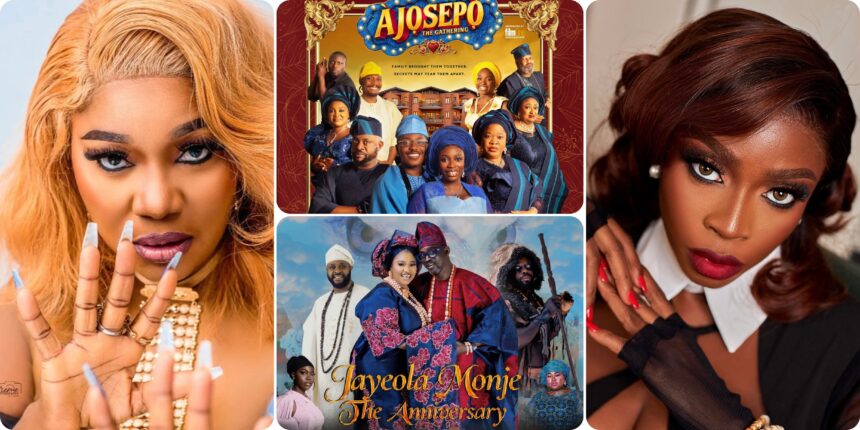
For days, Nollywood movie lovers have been focused on the success of Bolaji Ogunmola’s latest cinema project, Ajosepo: The Gathering. But the conversation soon shifted from box office numbers to an unexpected controversy after veteran actress Jaiye Kuti publicly expressed frustration over the cinema showtime allocated to her own movie, Jaiye Monje: The Anniversary.
Although Jaiye Kuti never directly mentioned Bolaji Ogunmola, netizens were quick to connect the dots. Before long, what was a complaint about cinema scheduling had evolved into allegations of favouritism, whispers of industry politics and claims that one filmmaker was benefiting at the expense of another.
But was Jaiye Kuti truly shading Bolaji Ogunmola, or did the internet turn a business complaint into a celebrity feud?
The Movie That Started the Conversation
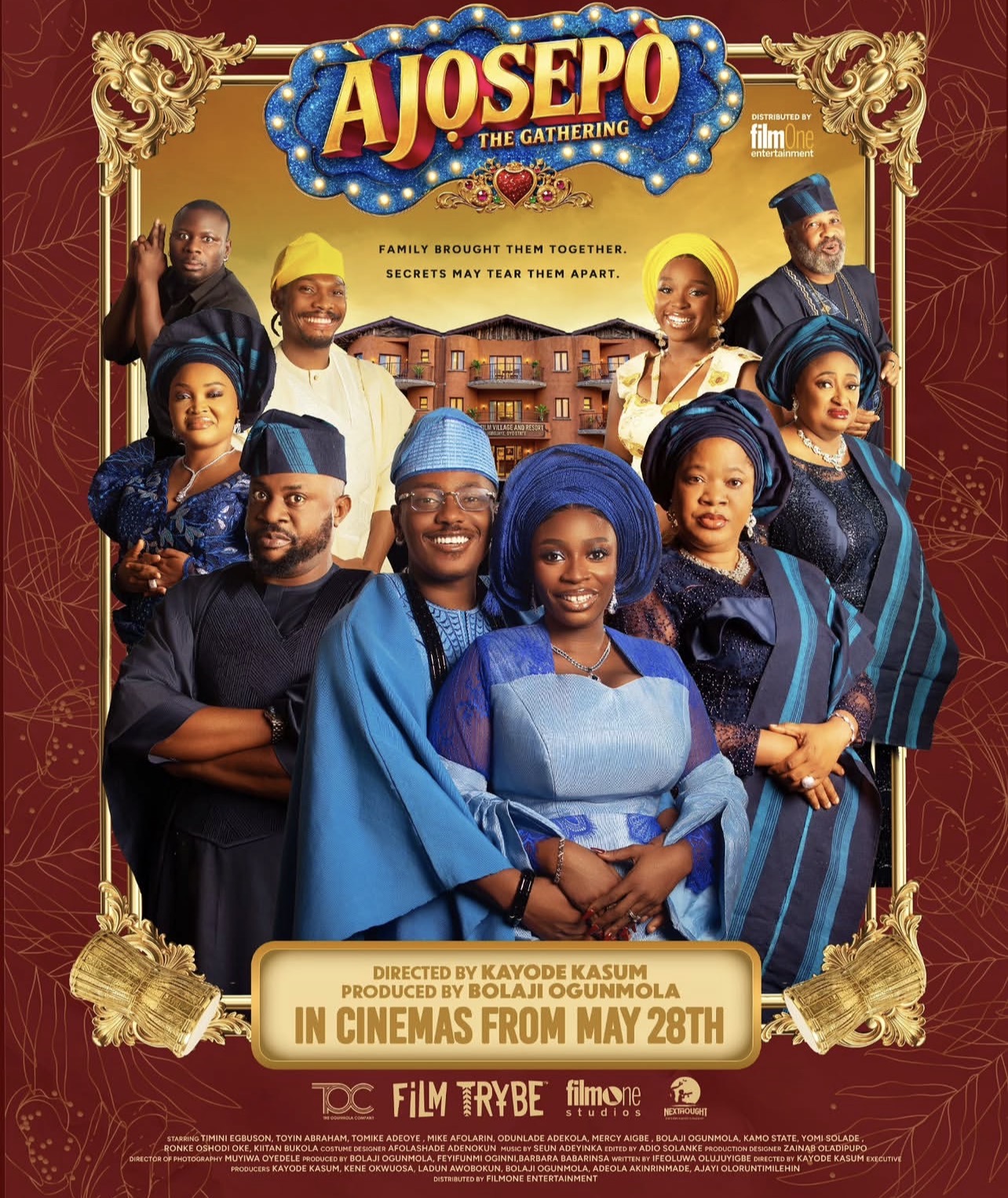
The controversy can be traced back to Ajosepo: The Gathering, the highly anticipated sequel produced by Bolaji Ogunmola and directed by Kayode Kasum.
Long before the film reached cinemas, its promotional campaign had become one of the most visible in Nollywood. Rather than relying solely on traditional publicity, Ogunmola and her team embraced a digital-first strategy designed to keep the film constantly in public conversations.
One of the campaign’s biggest attractions was the #Skit2Screen challenge, which invited creators, actors, voice-over artists and animators to recreate scenes from the movie for a chance to win ₦500,000 and secure a role in a future FilmOne production.
The campaign also benefited from collaborations with popular content creators and celebrities, including Toyin Abraham and Taaoma, helping the movie reach audiences far beyond traditional cinema circles.
Offline, the publicity push was equally ambitious. From influencer gifting campaigns to a glamorous premiere at IMAX Lekki, Ajosepo: The Gathering maintained a strong presence both online and offline.
While many praised the campaign’s creativity, others questioned whether modern filmmakers were becoming too dependent on elaborate marketing tactics to sell movies. That debate would soon take center stage.
Jaiye Kuti’s Comments and the Shade Allegations

The conversation intensified when Jaiye Kuti shared a screenshot of the showtimes allocated to Jaiye Monje: The Anniversary on Sunday, May 31, 2026. Frustrated by what she considered unfavorable scheduling, the actress wrote:
“AJOSEPOWA tifebaje !!! I’m just a week old at the cinemas, and I’m already out of showtime? Hmmm ? Please, who comes to the cinema at this time of the day to watch movies? #cinemaowners”
The post immediately sparked speculation. Many netizens focused on her use of the word “AJOSEPO” and interpreted it as a reference to Ajosepo: The Gathering, which was enjoying a strong cinema run at the time. Some even suggested she was accusing cinema operators of favouring Ogunmola’s film over others.
However, Jaiye Kuti quickly denied the interpretation. According to her, the post was never directed at Bolaji Ogunmola or her movie.
“I wrote in my language, Yoruba “AJOSEPO” which could mean many things, what I meant was our collaboration with cinemas, yet some people twisted it to mean a movie.”
She maintained that her concerns were about cinema scheduling and distribution, not another filmmaker’s success.
Why Fans Connected the Dots
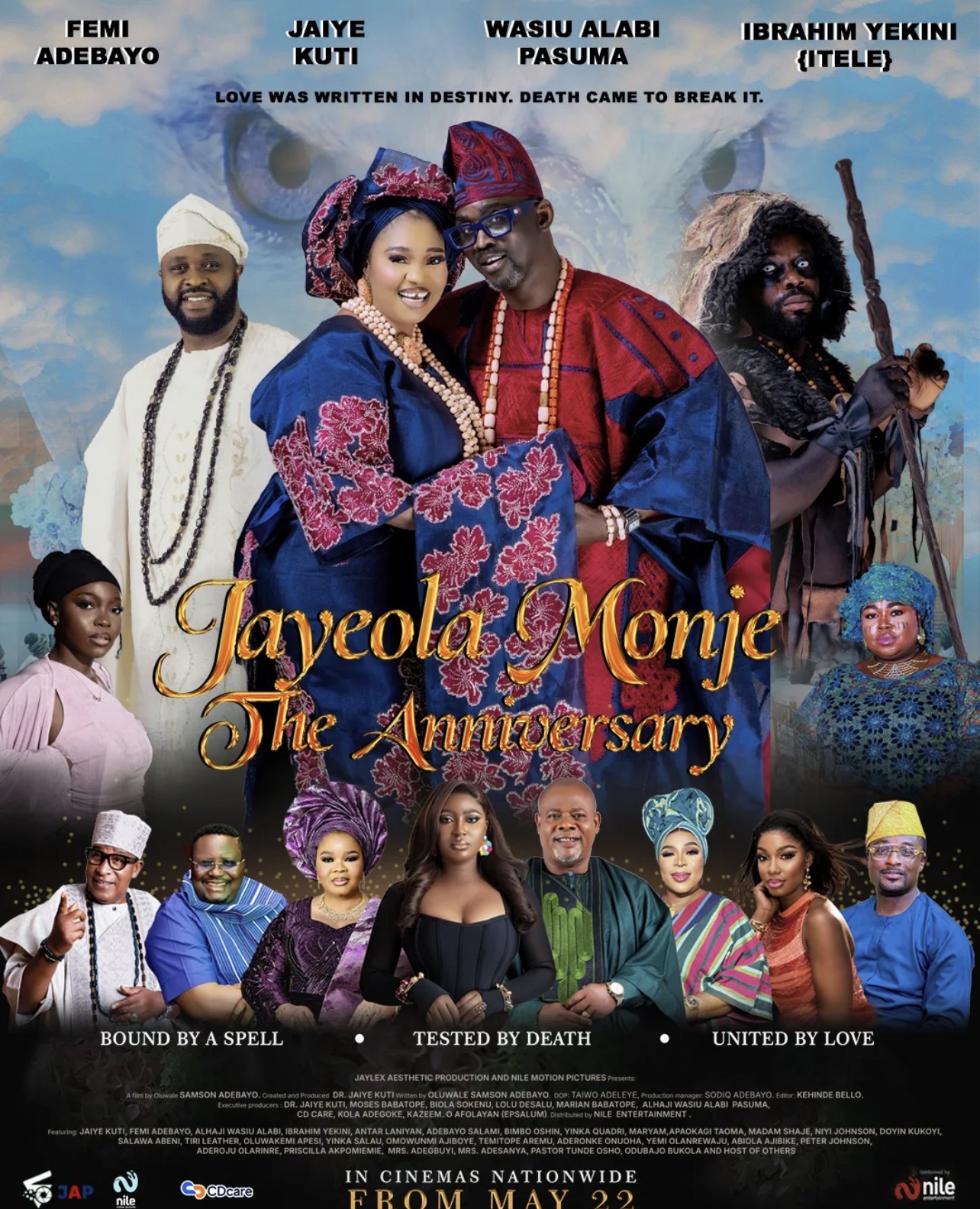
Despite Jaiye Kuti’s clarification, the speculation refused to die down. The timing of her post played a major role. At the time, Ajosepo: The Gathering was one of the most talked-about films in cinemas, supported by an aggressive promotional campaign and strong visibility across social media.
Cinema showtimes have also become an increasingly sensitive topic within Nollywood. With several movies competing for limited screening slots, many filmmakers believe that favourable schedules can significantly influence box office performance. As a result, fans quickly linked Jaiye Kuti’s frustration to the success of Ajosepo, even though she never directly mentioned the film.
Bolaji Ogunmola’s Response

As the conversation gained momentum, Bolaji Ogunmola addressed the allegations directly. In a video shared on Instagram, she denied claims that Ajosepo: The Gathering was receiving preferential treatment from cinema operators.
“So many things has been going on and really honestly, I have been quiet because there’s no need. Let’s just focus on the goal. But I also understand that it’s an issue of public perception.”
According to Ogunmola, cinema schedules are determined by audience demand, reviews and projected performance rather than personal relationships.
“The way the showtimes are done is based off of how we perceive the film will do well, how people are talking about the film in the media space and how people are reviewing and reacting to the film. It has nothing to do with favouritism.”
She also rejected suggestions that she was trying to undermine any filmmaker’s project.
“I have not actually tried to sabotage anybody’s film.”
Shade or Misunderstanding?

At the center of the controversy is a simple question: Did Jaiye Kuti actually shade Bolaji Ogunmola? Based on the public record, there is no direct evidence that she did.
Jaiye Kuti never mentioned Ogunmola by name and later clarified her remarks. Bolaji Ogunmola also denied receiving special treatment and insisted her focus was on promoting her own film. Yet the timing, the wording of the post and the ongoing debate about cinema scheduling made the situation ripe for speculation.
Whether it was shade or a misunderstanding ultimately depends on interpretation. What is certain is that social media amplified the controversy far beyond its original context.
The Bigger Nollywood Debate
Beyond the alleged feud, the episode exposed a growing challenge within Nollywood. As competition for cinema audiences intensifies, filmmakers are investing more money and creativity into marketing campaigns, influencer partnerships and social media promotions. At the same time, concerns about cinema showtimes and distribution fairness continue to surface.
In recent months, several producers have publicly questioned how screening slots are allocated and whether some films receive more favourable treatment than others.
The reality is that making a good movie is no longer enough. Visibility has become just as important as quality, forcing filmmakers to fight for attention in an increasingly crowded entertainment landscape.
Conclusion
What began as a complaint about cinema scheduling quickly became a trending issue online. While many interpreted Jaiye Kuti’s comments as a subtle jab at Bolaji Ogunmola and Ajosepo: The Gathering, both actresses have consistently maintained that there was no personal feud.
In the end, the story says less about rivalry and more about the pressures facing modern filmmakers. From securing favourable showtimes to funding expensive marketing campaigns, the competition for audience attention has become one of Nollywood’s biggest battles.
And if this controversy proved anything, it is that in today’s entertainment industry, a single social media post can spark a conversation far bigger than anyone intended.