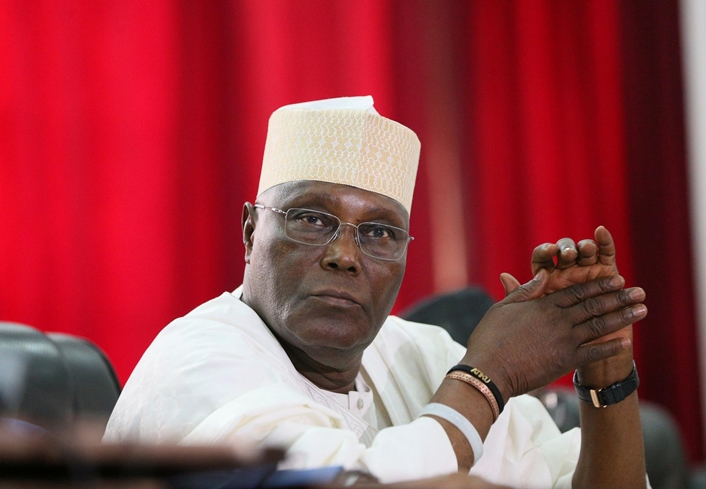
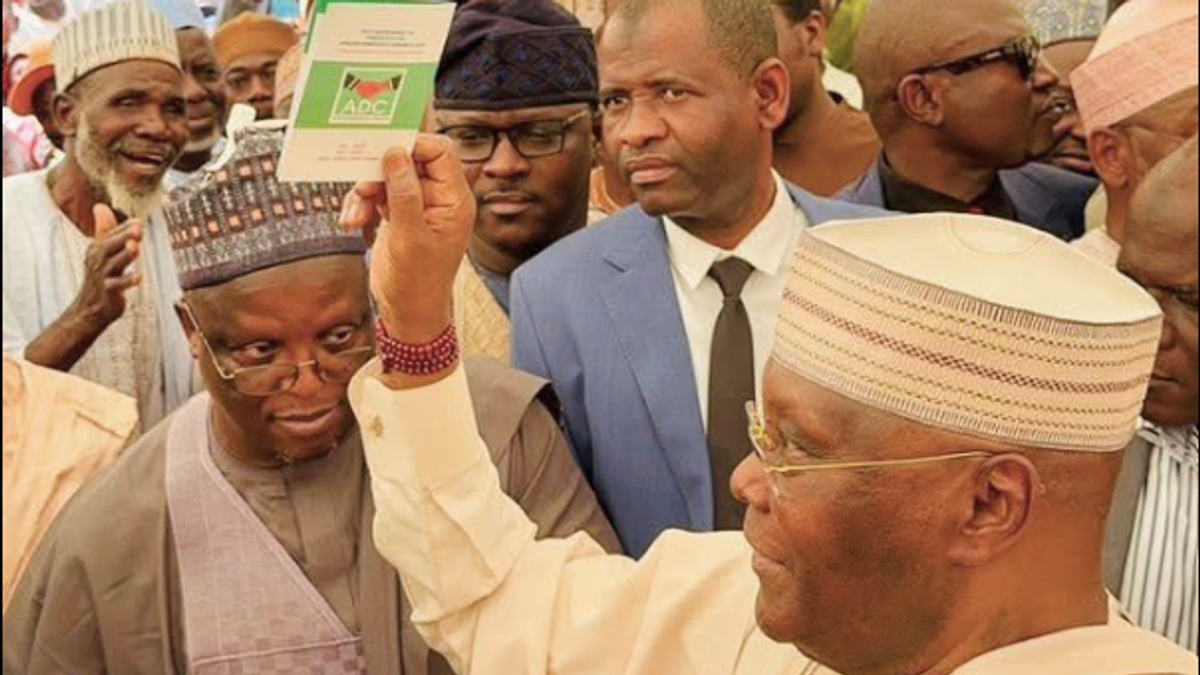
In July 2025, Atiku Abubakar sent a letter to the chairman of his ward in Jada Local Government Area, Adamawa State. The letter was brief but consequential. After more than two decades, Nigeria’s most persistent presidential contender formally ended his membership of the Peoples Democratic Party. Months later, he collected his membership card with the African Democratic Congress. On May 14, 2026, he submitted his presidential nomination form at the ADC’s national secretariat in Abuja, describing the moment as “a firm and decisive step forward.”
The move is not simply about one politician switching parties. It is a marker of one of the most significant structural shifts in Nigeria’s opposition landscape since the formation of the APC in 2014, and it raises real questions about whether the ADC can do what the PDP could not: present a credible unified challenge to President Bola Tinubu’s administration.
Why Atiku Abubakar Left PDP for ADC in Nigeria’s Opposition Realignment
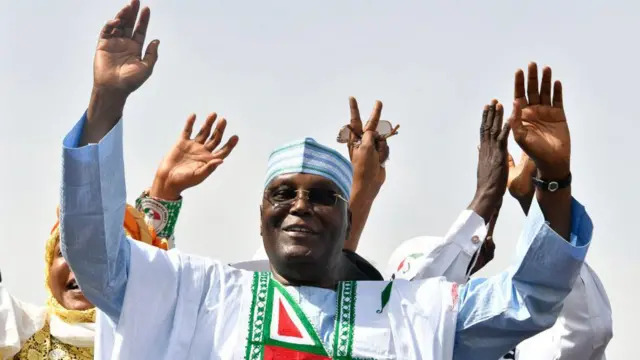
The story of Atiku Abubakar’s move from PDP to ADC in Nigeria’s opposition realignment of 2025 and 2026 is rooted in years of compounding party dysfunction, personal political calculation, and a shared conviction among key opposition figures that the PDP was no longer a viable platform for defeating the APC. Understanding why this happened, and what comes next, requires looking at the evidence across multiple fronts.
A Party in Freefall: What Happened to the PDP
The PDP that Atiku left in 2025 was barely recognisable as the organisation that once governed Nigeria for 16 consecutive years. The party had been sliding toward dysfunction for years, but the 2023 election was the break point. Atiku secured the PDP presidential ticket that year in a primary that left deep wounds. The main grievance among many party stakeholders was his decision to seek the ticket despite a widely held understanding that the presidency should rotate to the South following eight years of a northern president in Muhammadu Buhari.
Former Rivers State Governor Nyesom Wike had explicitly called for a southern ticket. When Atiku won the primary and declined to select Wike as his running mate, choosing Delta State Governor Ifeanyi Okowa instead, Wike formed what became known as the G5 or Integrity Group. The five PDP governors in that bloc worked against their own party’s candidate during the 2023 election, and Wike himself accepted a ministerial appointment in Tinubu’s cabinet. Atiku finished second with approximately 6.98 million votes behind Tinubu’s 8.79 million, according to figures declared by INEC.
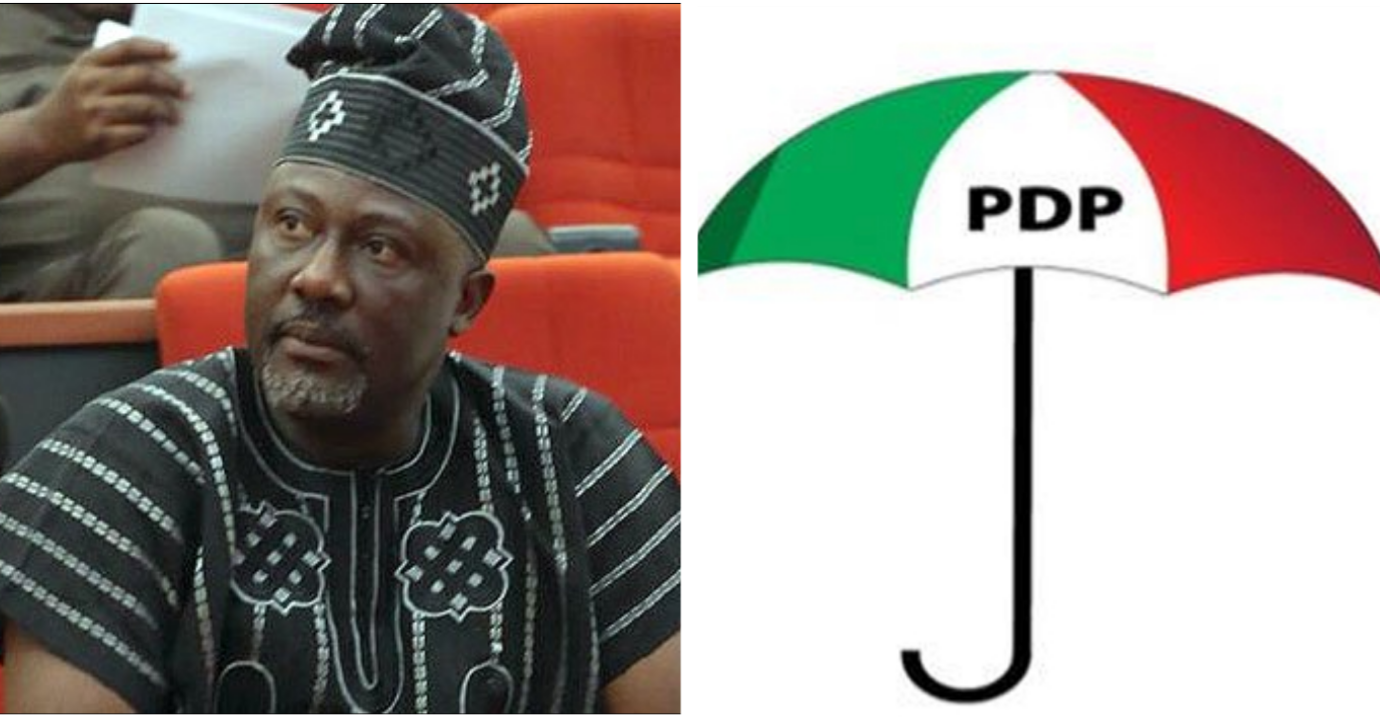
After the election, the PDP did not reconcile. It fractured further. A leadership dispute between the faction aligned with Wike and a rival group backing Oyo State Governor Seyi Makinde produced two competing claims to the party’s national chairmanship by late 2025. A convention held in Ibadan in November 2025 was subsequently nullified by the Federal High Court, which ruled it violated a subsisting court order. The Supreme Court upheld that nullification in April 2026. For a period, INEC declined to formally recognise either faction’s elected officers, describing the matter as still before the courts. At one point, the PDP’s national secretariat at Wadata Plaza in Abuja was physically closed off amid the dispute, requiring police intervention to restore access.
It was inside this environment that Atiku sent his resignation letter. He cited “irreconcilable differences” and said the party had drifted too far from its founding principles. In his letter, addressed to the Jada 1 Ward chairman in Adamawa, he described the decision as “heartbreaking” but final.
The ADC and the Idea of a Broad Coalition
The African Democratic Congress was not a new party, but it became something different in early 2025. In March of that year, a group of prominent opposition figures, including Atiku, former Senate President David Mark, former Kaduna Governor Nasir El-Rufai, former APC National Chairman Abdullahi Adamu, and former minister Rotimi Amaechi, began forming a coalition with the stated objective of defeating Tinubu in 2027. By July 2025, the group formally adopted the ADC as its vehicle. Former Labour Party presidential candidate Peter Obi joined the platform, as did former Kano Governor Rabiu Kwankwaso, who moved from the New Nigeria Peoples Party in March 2026. David Mark took on the role of ADC national chairman, while former minister Rauf Aregbesola became national secretary.
The argument for the ADC, at its core, was structural. The PDP and Labour Party had each demonstrated in 2023 that a fragmented opposition could not defeat an incumbent with federal resources and a consolidated political machine. The calculation behind the coalition was that pooling Atiku’s northern networks, Obi’s urban and south-eastern support base, and Kwankwaso’s Kano stronghold under one party could produce a combined vote total large enough to overcome the APC. For that model to work, the three principals needed to agree on a single presidential ticket.
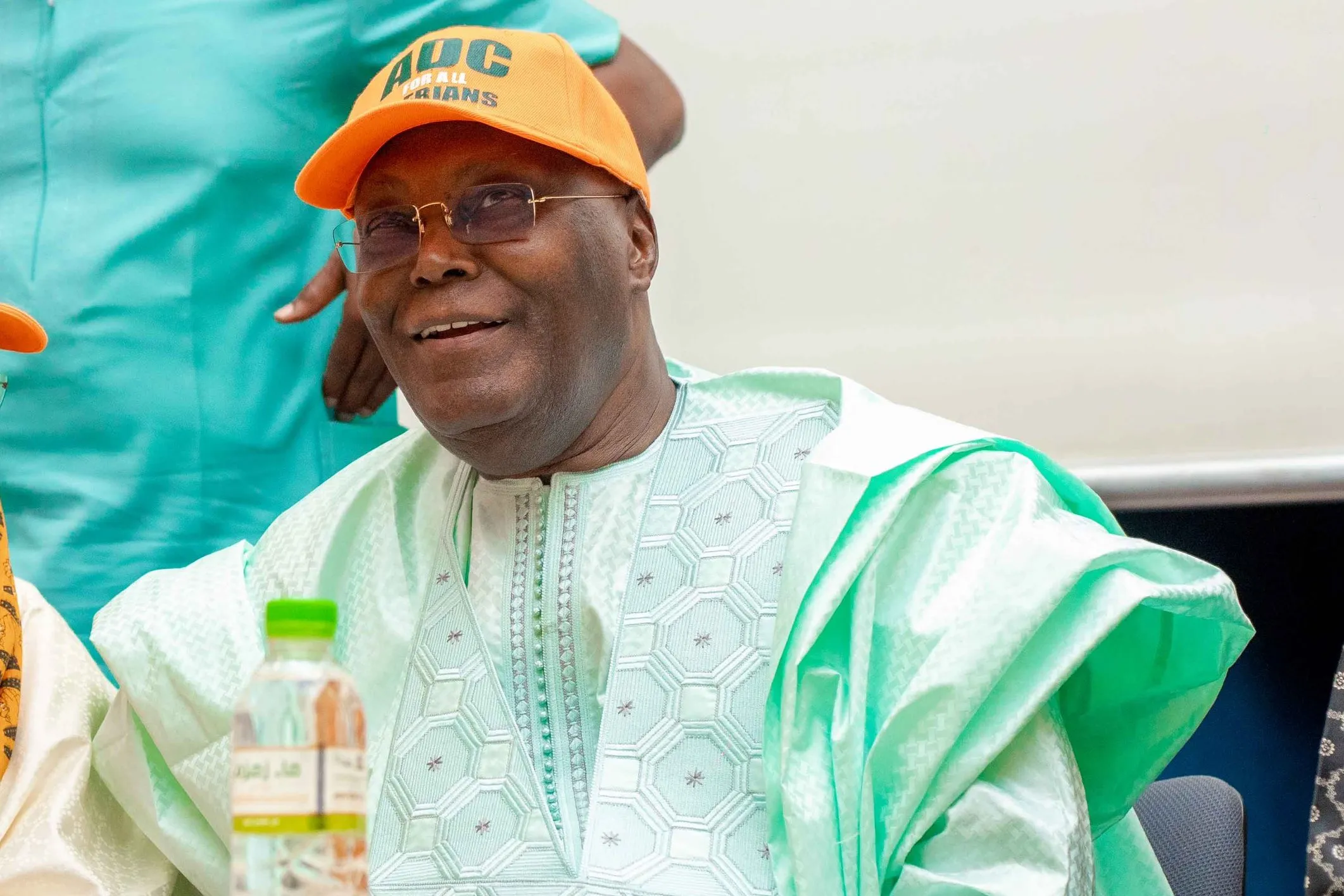
That agreement never fully materialised. By early May 2026, Obi’s camp accused Atiku’s team of attempting to financially influence ADC delegates ahead of the party’s presidential primary, a charge that Atiku’s supporters denied. The Obidient Movement had stated as far back as 2025 that their principal would not participate in what they called a “dollarised” primary. The breakdown was swift. Obi and Kwankwaso departed the ADC and picked up membership cards with the Nigerian Democratic Congress, a different party altogether. The original grand coalition fractured before the primary was held.
Atiku’s Own Calculation: A Seventh Presidential Bid
Atiku Abubakar’s decision to move to the ADC cannot be separated from his individual presidential ambition. He has now contested Nigeria’s presidency six times, in 1993, 2007, 2011, 2015, 2019, and 2023. He was born on November 25, 1946, which makes him 79 years old. His submission of ADC nomination forms on May 14, 2026, signals a seventh attempt is underway.
Within the PDP, Atiku’s situation had become structurally difficult. The party’s internal chaos made a clear path to a seventh ticket uncertain. The Wike-aligned faction was openly hostile to him, and the broader PDP ecosystem had no settled leadership capable of managing a primary process that would produce an uncontested result. For a candidate of his experience, the ADC offered something the PDP could no longer provide: a platform where, as the most prominent figure, he could exercise enough influence to secure the presidential ticket without fighting the party’s internal wars at the same time.
The political analysts and commentators who criticised this approach argued that Atiku was repeating a pattern, using party structures for personal ambition rather than building durable institutions. Nyesom Wike, reacting publicly, described it as a familiar pattern and questioned whether Atiku’s constant movement across parties served any purpose beyond personal advancement. His SSA on Media, Lere Olayinka, was more blunt. Those close to Atiku offered a different framing: that the PDP had become ungovernable, and that the decision to move was not opportunism but a rational response to a party that had effectively collapsed as an electoral vehicle.
The Broader Realignment: What Shifted in Nigerian Opposition Politics
Atiku’s departure from PDP and arrival at ADC is one piece of a larger restructuring that is redefining the opposition landscape ahead of 2027. The established two-and-a-half party system that has structured Nigerian elections since 2015, built around the APC, the PDP, and a rotating third force, is being replaced by something more fragmented and more unpredictable.
The APC remains in government with access to federal patronage, infrastructure funding, and incumbency advantage. Against it, at least three distinct opposition platforms are now positioning for 2027. The PDP, despite its institutional crises, retains significant state-level presence through sitting governors and National Assembly members. The ADC, under Atiku’s banner, is positioning as the primary northern opposition vehicle and has attracted figures like Rotimi Amaechi and former banker Mohammed Hayatu-Deen, who have also obtained ADC nomination forms. The NDC, now carrying Peter Obi and Kwankwaso, is building its own platform around southern urban constituencies and the remnants of the Labour Party coalition from 2023.
The risk of this fragmentation is not new. In 2023, the split between Atiku, Obi, and Kwankwaso running on separate platforms was central to why none of them defeated Tinubu. There were enough combined opposition votes across PDP, Labour Party, and NNPP to theoretically overwhelm the APC total, but divided across three tickets, none was sufficient individually. The premise behind the 2025 coalition attempt was to avoid that outcome. The collapse of the Atiku-Obi-Kwankwaso alliance before the primary has revived the same concern.
What the ADC’s Position Means for the 2027 Race
Despite the departure of Obi and Kwankwaso, the ADC under Atiku is not a marginal player. His nationwide recognition, extensive northern networks, decades of electoral experience, and personal resources give the party a level of organisation that few opposition platforms can match. When he submitted his nomination forms on May 14, 2026, the Supreme Court had recently restored the legitimacy of David Mark’s leadership structure within the ADC, providing a relatively stable legal foundation for the party’s internal processes heading into its primary.
Other high-profile individuals exploring the ADC presidential ticket include Rotimi Amaechi and Mohammed Hayatu-Deen. Their presence means the ADC primary itself will be contested. Whether the party manages that process without the kind of implosion the PDP experienced in 2022 is an open question, and one that analysts watching the 2027 race are following closely.
For Nigerian voters, and particularly northern voters, Atiku’s entry into the race under ADC shifts the competitive landscape in the region. The north has been one of Tinubu’s more complicated zones since 2023, given his narrow victory margin and the cumulative effect of economic hardship, fuel subsidy removal, and security challenges in the region. An organised Atiku candidacy backed by ADC’s party machinery represents a genuine electoral threat in the states he has won before, including Adamawa, Gombe, Sokoto, Kebbi, Katsina, and Kaduna.
The Pattern Behind the Party Switch
Critics of Atiku’s move often frame it as serial opportunism. The record shows he has moved between the PDP, Action Congress, APC, back to PDP, and now ADC. Each switch, his detractors argue, reflects presidential ambition rather than ideological conviction. His departure from the PDP in 2006 followed a falling-out with then-President Olusegun Obasanjo, not a principled policy disagreement. His return to the PDP in 2017 came when the APC primary had closed off his path to the presidency. His exit now came when the PDP’s dysfunction made another PDP ticket structurally unpredictable.
His supporters make a counter-argument: that Nigerian political parties are not ideological organisations in any meaningful sense, that they are platforms shaped by the people who lead them, and that navigating across them in pursuit of governance goals is not unique to Atiku. In a system where the APC itself was formed from a merger of multiple parties and where governors routinely cross the aisle without consequence, the rules governing political loyalty are applied unevenly. The sharper question, in this view, is not whether Atiku switched parties but whether the ADC can produce a competitive national campaign.
Conclusion: A Defining Moment for Nigeria’s Opposition
Atiku Abubakar’s resignation from the PDP and his formal entry into the ADC mark a turning point in Nigerian opposition politics, though not necessarily a clean one. His departure confirmed what many had observed for years: that the PDP’s internal dysfunction had made it an unreliable vehicle for any serious presidential challenge. His arrival at the ADC, on the back of a broad coalition attempt that has since partially unravelled, leaves the opposition fragmented across at least three platforms heading into 2027.
What comes next depends on whether the remaining ADC coalition can hold together long enough to stage a credible primary, whether Atiku wins that primary, and whether the resulting ticket can attract enough cross-regional support to compete with both the APC’s incumbency and the NDC’s mobilisation of urban and southern voters. The structural challenge is real and familiar. Nigeria’s opposition has faced it before and failed. Whether 2027 produces a different outcome will depend, in part, on whether the lessons of 2023 have been absorbed, or simply repeated under different party colours.