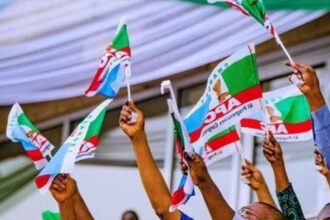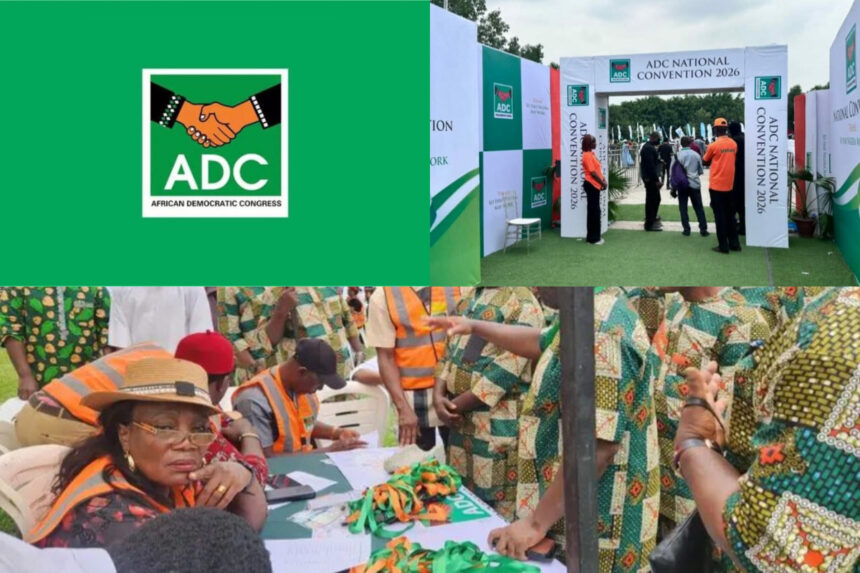
The African Democratic Congress held its much-anticipated national convention today, April 14, 2026, at the Rainbow Events Centre in Abuja. If anything captures the state of Nigerian opposition politics right now, it is the sheer drama that surrounded getting this event off the ground in the first place.
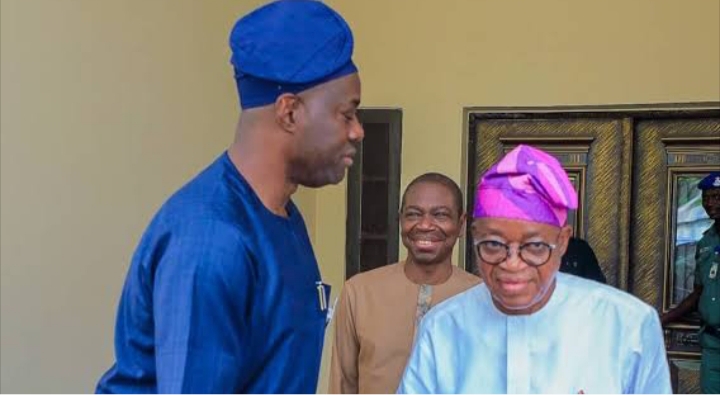
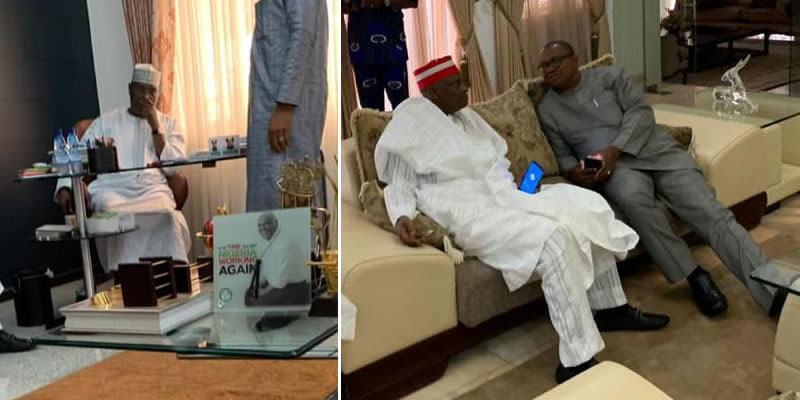
Over 3,000 delegates from all 36 states and the FCT attended. Peter Obi was there. Atiku Abubakar was there. Rabiu Kwankwaso showed up. So did Rotimi Amaechi and Rauf Aregbesola, the man who now serves as the party’s National Secretary. Sitting at the head of it all was David Mark, former Senate President and embattled ADC National Chairman, presiding over a convention his critics, and at least one court, say he has no business running.
Welcome to the ADC convention. Pull up a chair.
How the ADC Convention Almost Didn’t Happen
Twenty-four hours before the convention was due to begin, the ADC didn’t have a venue.
The party had approached Eagle Square, the grand national venue where presidential inaugurations happen. Denied. They tried the Moshood Abiola National Stadium Velodrome. Also denied. Then came the hotels. According to the party’s National Organising Secretary, Chinedu Idigo, venue after venue turned them down, not for any shortage of space, but because operators allegedly feared repercussions once they found out who was booking.
“We approached several venues, including hotels and event centres, but once they realised it was ADC, they declined,” Idigo said, adding that even the Rainbow Events Centre, where the convention was eventually held, tried to pull out after what he described as external threats, before the party insisted on proceeding since payment had already been made.
FCT Minister Nyesom Wike denied blocking Eagle Square, saying no formal application ever landed on his desk. The ADC showed what it claimed was a written request. Both sides dug in, the argument over who said what to whom was still going on the morning of the convention.
None of this deterred the party. By late Monday night, a tweet from the ADC confirmed Rainbow Events Centre as the new venue. By Tuesday morning, delegates in colourful attire were streaming through security checkpoints, accreditation was underway, and the convention was alive.

What Was on the Agenda
The event’s theme was “So the Nation May Work”, a statement that reads less like a slogan and more like a diagnosis of a country that many Nigerians feel has stalled under the current administration.
The agenda was substantive. According to party officials, the convention was set to:
- Ratify a new National Working Committee (NWC) under David Mark’s leadership structure
- Adopt a new party constitution, replacing the existing framework
- Conclude outstanding state congresses that had been left unfinished
- Set the stage for party primaries ahead of the 2027 election cycle
- Formalise the party’s coalition positioning as the primary opposition vehicle to challenge the APC
The coalition angle is worth dwelling on. The ADC was formally adopted as an opposition coalition platform in July 2025, bringing together forces from the Labour Party, PDP, NNPP and independent politicians who had grown frustrated with their respective parties. The gathering of Obi, Atiku and Kwankwaso on the same floor today was the most visible expression yet of that coalition ambition, three men who ran against each other in 2023 now occupying the same tent.
The Leadership Crisis Hanging Over Everything
Here is the part that complicates the whole story.
The convention proceeded despite a live and unresolved leadership dispute that has split the party into factions. On one side: David Mark’s group, which has been steering the party since July 2025, following the announced resignation of the previous National Working Committee under Ralph Nwosu. On the other hand, Nafiu Bala Gombe, the party’s former Acting National Chairman, has consistently maintained that he never resigned and remains a serving officer of the ADC.
Bala filed suit at the Federal High Court in Abuja in September 2025, seeking to stop Mark’s group from presenting themselves as party leaders and asking INEC to recognise him instead. When Mark’s faction challenged aspects of the case on appeal, the Court of Appeal dismissed the appeal on March 12, 2026, holding it lacked merit. The appellate court, led by Justice Uchechukwu Onyemenam, held that there was no substantive decision from the lower court to support the appeal.
INEC, watching all of this, did the only sensible thing an electoral commission can do when courts are still talking: it suspended recognition of both factions, maintaining the status quo until the matter is judicially resolved. The Supreme Court was also billed to hear a related appeal on the same day as the convention.
A third splinter, aligned with Dumebi Kachikwu, has openly rejected the Mark-led convention process and is charting an entirely separate course.
Dr Jide Ojo, a development consultant and public affairs analyst, questioned the timing plainly. “If they are assuming that the case coming up at the Supreme Court will be decided today, what if that case is not decided in their favour? They could have shifted the convention by even 24 hours,” he said.
That did not happen. The convention went ahead anyway.
Who Was in the Room and What It Signals
The attendance list at today’s ADC convention tells a story that goes beyond party administration.
Peter Obi’s presence is significant. Since his Labour Party run in 2023, Obi has remained the most galvanising figure among Nigeria’s urban opposition voters, particularly young Nigerians in the south. His appearance at an ADC convention is a concrete signal that the coalition arrangement is real, not just press-release politics.
Atiku Abubakar brings the north and the PDP establishment crowd that has been searching for a credible home since 2023. The former vice-president has lost multiple presidential bids, but his networks across the northern states remain deep and functional.
Kwankwaso leads the NNPP base in Kano and the northwest. Amaechi brings Rivers State connections. Aregbesola, now the party’s National Secretary, brings the southwest, particularly the Osun State base he cultivated during his governorship.
Put it all together, and the ADC convention today was not just a party administrative exercise. It was a public demonstration that this coalition can put major names in the same room. Whether that translates into an electoral force in 2027 is a very different question.

What the Convention Decided — and What Remains Unsettled
Based on reporting from inside the event, the convention ratified the NWC structure under David Mark and approved a new party constitution. Delegates from all 36 states were formally processed through an accreditation system managed by a sub-committee chaired by Austin Akobundu. The party’s organising secretary confirmed that each state’s delegate allocation was tied to its size to ensure proportional representation.
The new constitution, once adopted, gives the party a cleaner legal foundation for running primaries, which is the next major step before 2027.
What remains unsettled is everything tied to the court cases. The INEC recognition question is unresolved. The Bala faction is not going away. The Kachikwu bloc has rejected the process. Until the Supreme Court speaks, the party technically has three groups, each claiming some version of legitimacy.
Dr. Abdulkareem, who has followed the crisis closely, put it plainly: “Before attempting to take over the structure of a political party, there are clearly defined legal and constitutional procedures. What should have been done was to allow internal processes to play out, including conventions where leadership transitions can be legitimately effected. Skipping these procedures creates instability.”
He was not wrong. And the Mark faction did not really dispute the principle, they just concluded that waiting was no longer an option as 2027 approached.
What This Means for Nigeria’s 2027 Opposition
There is a real story here beyond the internal drama, and it matters for anyone watching Nigerian politics.
Nigeria has not had a credible, unified opposition since 2015, when the APC itself was the opposition coalition that toppled a sitting president. Since then, the PDP has fractured, the Labour Party’s 2023 momentum has faded, and the NNPP has remained largely regional. The ADC convention today is an attempt, messy, legally contested, drama-soaked, to build something that could actually challenge the Tinubu administration at the ballot box.
Whether it works depends on three things. First, the courts: if the Supreme Court rules against Mark’s faction, today’s convention could be voided and the party thrown back into crisis. Second, INEC: without formal recognition of a unified ADC leadership, the party cannot properly run primaries or present candidates. Third, the coalition itself: Obi, Atiku and Kwankwaso sharing a room is one thing. Agreeing on a single presidential candidate and campaign structure is something else entirely.
Former Attorney General Abubakar Malami, who attended in a show of support, said the ADC has built “a formidable platform to unseat the APC.” Perhaps. But the party holding today’s convention is also one that couldn’t secure a venue until the night before, whose chairman the appeal court has effectively questioned, and whose own House of Representatives caucus called for INEC’s chairman to be prosecuted in the buildup to the event.
That is both the strength and the vulnerability of the ADC in April 2026. The will to fight is clearly there. The room was full. The big names showed up. Now comes the hard part: turning a convention into a campaign, and a coalition into a contender.

Key Takeaways
- The ADC national convention held on April 14, 2026 at Rainbow Events Centre, Abuja, with over 3,000 delegates
- Peter Obi, Atiku Abubakar, Rabiu Kwankwaso, Rotimi Amaechi and Rauf Aregbesola were among attendees.
- The convention ratified a new NWC under David Mark and adopted a new party constitution
- A leadership dispute between Mark and Nafiu Bala Gombe factions remains unresolved in the Supreme Court
- INEC has suspended recognition of either faction pending judicial resolution
- The ADC is positioning itself as the primary opposition coalition for the 2027 general elections