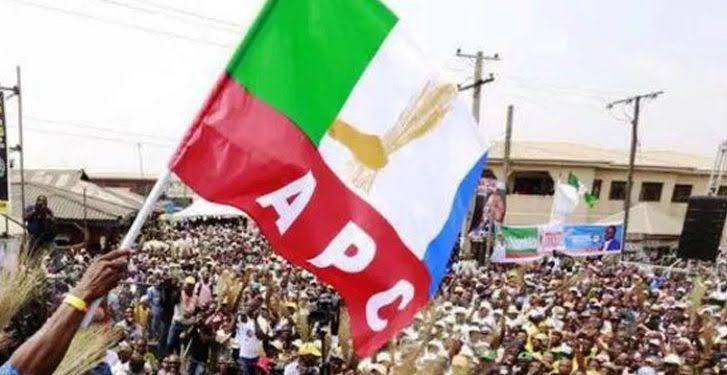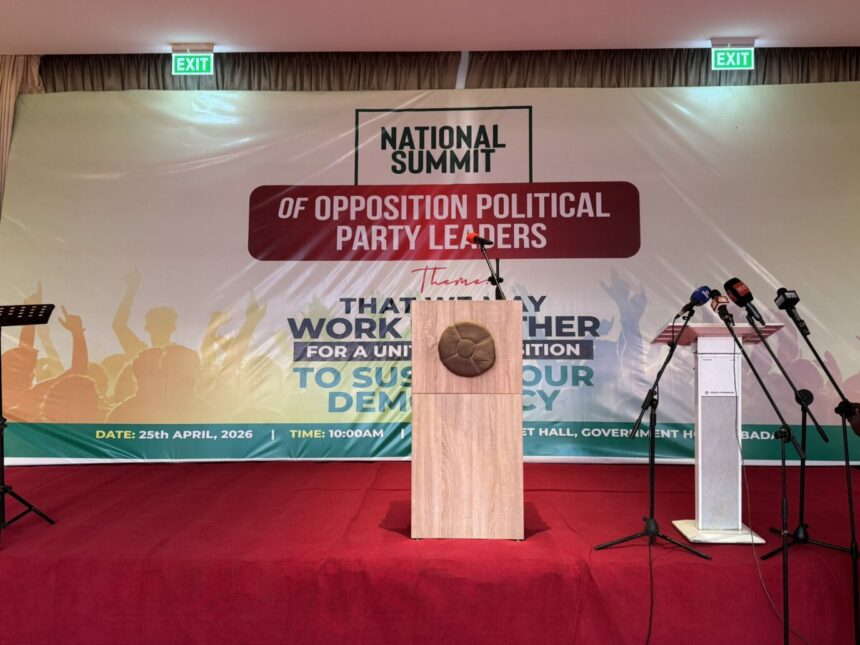
Political parties in Nigeria had, on April 25, converged in Ibadan with a firm declaration to unite behind a single presidential candidate ahead of the 2027 general election in a bid to unseat President Bola Tinubu of the ruling All Progressives Congress (APC).
The meeting was widely described as a strategic effort by opposition forces to consolidate their strength and avoid repeating the fragmented approach that contributed to their defeat in the 2023 presidential election.
Leaders at the gathering argued that a divided opposition would only strengthen the ruling party’s political dominance and pledged to prioritise collective ambition over individual aspirations.
However, barely five weeks after the Ibadan agreement, the unity arrangement has collapsed, giving way to multiple presidential candidates across different opposition platforms.
The African Democratic Congress (ADC) already produced former Vice-President Atiku Abubakar as its presidential candidate following its primaries.
The Allied Peoples Movement, on its part, is said to have nominated Governor Seyi Makinde of Oyo State as its flagbearer for the 2027 presidential election.
The Labour Party has also chosen governance and policy expert Chibuzo Okereke as its presidential candidate after its internal consultations.
The Nigeria Democratic Congress have settled for former Governor Peter Obi of Anambra State as its candidate ahead of the election.
The Peoples Democratic Party, under the leadership of Kabiru Turaki, is also reported to have selected former President Goodluck Jonathan as its presidential standard-bearer.
What was originally conceived as a unified front against what opposition leaders described as attempts by the All Progressives Congress to establish a dominant political system has now fractured into separate political blocs driven by competing ambitions.
Analysts have described the breakdown of the consensus arrangement as evidence of the persistent difficulty in reconciling personal ambition with collective political strategy within Nigeria’s opposition politics.
THE LESSON FROM 2023
The Ibadan meeting was largely influenced by the outcome of the 2023 presidential election, where a divided opposition split its votes among Atiku, Obi and Rabiu Kwankwaso.
That division enabled Tinubu of the APC to secure victory with a plurality of votes, despite not obtaining an outright majority of ballots cast nationwide.
Opposition strategists had therefore argued that a united front in 2027 would significantly increase their chances of defeating the ruling party.
The political understanding reached in Ibadan was built on that calculation, with organisers warning that continued fragmentation would weaken their electoral strength.
However, developments following the meeting suggest that internal disagreements and individual ambitions have once again disrupted efforts to build a common platform.
Atiku is said to remain convinced that his political experience and nationwide network position him as the strongest contender against President Tinubu.
Peter Obi, on the other hand, continues to enjoy strong support among younger voters and urban populations who view him as a symbol of political change and reform-oriented leadership.
These competing claims to electoral viability have contributed to the difficulty in sustaining a unified opposition structure.
Political commentators note that while opposition leaders have frequently raised concerns about the possibility of Nigeria drifting towards a one-party political system, the most significant divisions appear to exist within the opposition itself.
Observers argue that the absence of a single coordinated challenger may once again hand a strategic advantage to the ruling All Progressives Congress in the upcoming election cycle.
THE ROAD AHEAD
Although the 2027 presidential election remains some time away, political developments indicate that the race is already taking shape across multiple party platforms.
The emergence of several high-profile candidates, including Atiku, Obi, Makinde and Okereke, suggests a return to a highly competitive but fragmented opposition landscape.
If the current situation persists, analysts warn that the opposition may struggle to match the consolidated electoral machinery of the ruling All Progressives Congress.
In such a scenario, the dynamics that influenced the outcome of the 2023 election could repeat themselves, with a divided opposition potentially easing the path for the incumbent party.
For now, the collapse of the Ibadan consensus marks a significant turning point in the early build-up to 2027, leaving Nigeria’s political future once again shaped by shifting alliances and competing ambitions.