The 2026 FIFA World Cup will not only be remembered for its unprecedented size and unique hosting arrangement but also for a series of rule changes that could significantly influence how matches are played and officiated.
Scheduled to be staged across the United States, Canada and Mexico, the tournament will become the first World Cup jointly hosted by three countries and the first to feature 48 participating nations.
The expansion to 48 teams and 104 matches marks the largest edition in the competition’s history and is expected to create fresh challenges for players, coaches, referees and organisers.
Beyond the logistical changes, FIFA and the International Football Association Board are set to use the tournament as a testing ground for several amendments to the Laws of the Game.
Some of the adjustments had previously been introduced, while others were recently highlighted by FIFA’s Chief Refereeing Officer, Pierluigi Collina.
‘Prestianni Law’ targets hidden insults
One of the most notable changes concerns players who cover their mouths while engaging in confrontations with opponents.
Under the new regulation, any player found covering their mouth during such exchanges could face a red card.
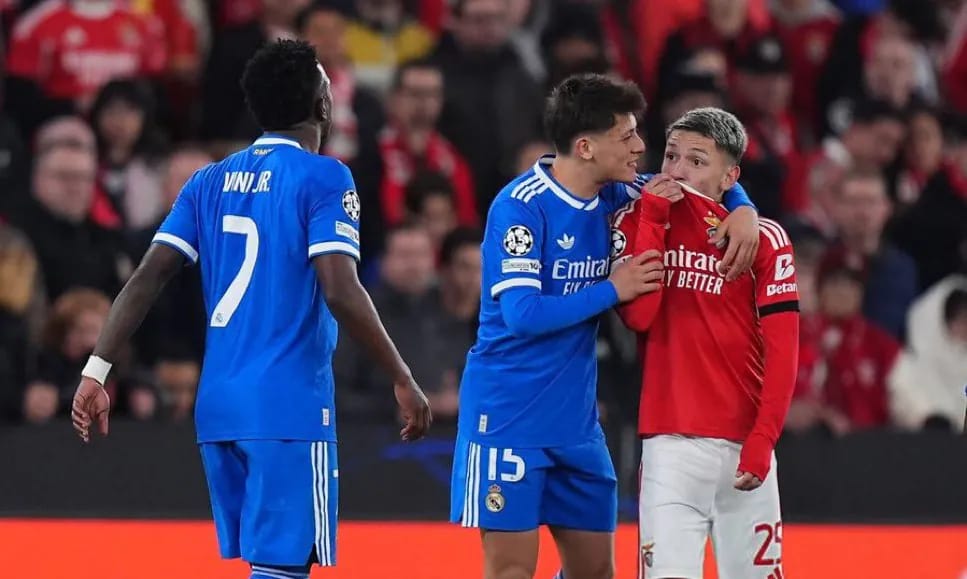
The amendment follows an incident involving Benfica winger Gianluca Prestianni and Real Madrid forward Vinicius Junior during a UEFA Champions League match earlier in the season.
During the altercation, Prestianni covered his mouth while speaking, making it difficult for match officials to determine exactly what had been said.
Vinicius subsequently informed the referee that a racial slur had been directed at him, while Prestianni denied making any racist remark.
A definitive conclusion regarding the alleged racial language could not be reached because the player’s mouth had been concealed during the exchange.
Prestianni later received a six-match suspension after admitting to using a homophobic slur during the incident.
The new rule, however, applies only to confrontations with opponents and will not affect players covering their mouths while communicating with teammates.
Expanded powers for VAR
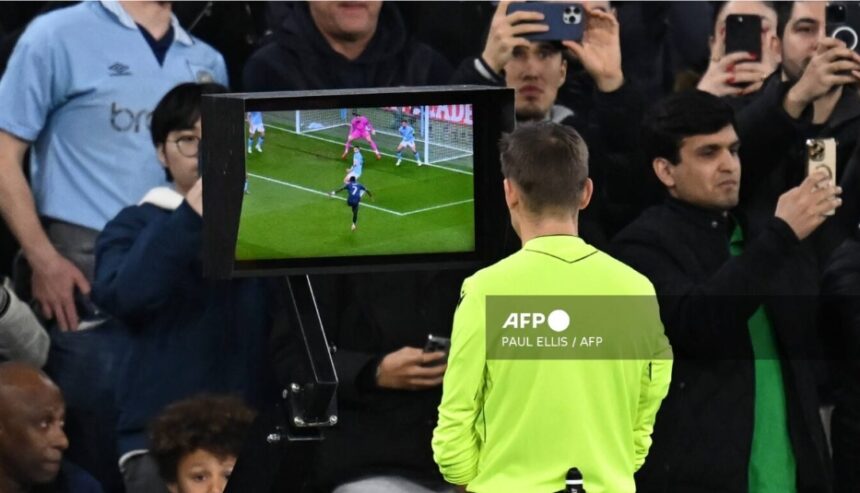
The Video Assistant Referee system is also set to assume a broader role during the tournament.
For the first time, VAR will be permitted to review second yellow-card decisions that result in a player’s dismissal.
Previously, VAR intervention was restricted to incidents involving direct red cards, penalties, goals and mistaken identity.
The amendment means players sent off after receiving a second caution could have the decision overturned if video review determines the booking was incorrect.
Another significant adjustment allows VAR to review corner-kick decisions.
Match officials will now have the option of using video technology to determine whether a corner kick was awarded correctly.
‘Arsenal Law’ addresses set-piece incidents
FIFA will also introduce a rule designed to prevent attacking teams from benefiting from off-the-ball fouls before set pieces are taken.
The amendment has informally been labelled the “Arsenal Law” due to the growing use of blocking and screening tactics during corners and free kicks, particularly in the English Premier League.
Under the new approach, VAR can intervene if an attacking player commits a foul before the ball is put into play and the sequence subsequently leads to a goal.
The change represents a departure from previous practice, where incidents occurring before the restart of play often escaped video review.
Tougher measures against time-wasting
Officials will also adopt stricter measures aimed at reducing delays during matches.
Players taking throw-ins will be required to restart play within five seconds or risk possession being awarded to the opposition.
Goalkeepers will also face sanctions for excessive delays during goal kicks.
If a goalkeeper exceeds the permitted time before taking a goal kick, the opposing team could be awarded a corner kick.
The adjustment is intended to discourage deliberate attempts to slow down the pace of matches.
Faster substitutions required
Another rule change focuses on player substitutions.
Footballers leaving the pitch after being substituted will have a maximum of 10 seconds to exit the field.
Failure to comply with the time limit will prevent the replacement player from entering the pitch for at least one minute.
During that period, the team making the substitution will temporarily play with one fewer player.
Restrictions on tactical injury breaks
FIFA is also moving to prevent teams from using goalkeeper injuries as unofficial tactical timeouts.
Under the revised rule, outfield players will no longer be allowed to gather around the technical area while treatment is being administered to a goalkeeper.
Instead, players must remain in their positions on the field until play resumes.
The measure is designed to limit opportunities for coaches to deliver tactical instructions during unscheduled stoppages.
With the introduction of these changes, the 2026 World Cup is set to serve not only as football’s biggest tournament but also as an important testing ground for rules that could shape the future of the game.