Every year, thousands of Nigerian traders make the trip to Guangzhou, Yiwu, or Shenzhen, or simply open Alibaba on their phones, spend money on goods, and then watch that money erode somewhere between the port of departure and Apapa wharf. The problem is rarely the goods themselves. It is the process: the paperwork nobody explained, the duty rate nobody calculated, the agent who disappeared after collecting clearing fees.
Importing from China to Nigeria is genuinely viable. China accounts for a significant share of Nigeria’s total imports, covering electronics, textiles, machinery, household goods, construction materials, and fashion. The supply chain is mature, the freight options are diverse, and the regulatory framework, while demanding, is learnable. What separates importers who build profitable businesses from those who lose money on their first or second shipment is almost always knowledge of the full landed cost and a firm grip on the documentation sequence.
This guide breaks down every stage of that process, from identifying what you can legally import, to calculating what it will actually cost by the time goods reach your warehouse.
A Guide to Importing Goods from China to Nigeria Without Losing Money

Importing goods from China to Nigeria involves more than placing an order and waiting for a container. The process runs through a specific chain of regulatory steps administered by the Nigeria Customs Service, the Standards Organisation of Nigeria, and your bank, and every link in that chain carries its own cost. Understanding these costs before you commit capital is the difference between a profitable import trade and a shipment that eats its own margin.
What Nigeria Allows and Prohibits: Starting With the Right Goods
Before anything else, you need to confirm that your intended goods are legally importable. The Nigeria Customs Service maintains two prohibition lists. The first covers goods whose importation is absolutely prohibited and cannot be cleared under any circumstances. The second is a list of restricted goods that can only enter Nigeria with a special waiver issued by the Federal Ministry of Finance, and these waivers are rarely granted to new importers.
Among the items on the restricted import list that frequently catch traders off guard: refined vegetable oils and fats, bagged cement, spaghetti and noodles, tomato paste in retail packs, fruit juice in retail packs, footwear and bags, used clothing, and used motor vehicles more than twelve years old from the year of manufacture. These items can exist in Nigerian markets because of waivers held by large, established players, not because they are freely importable by anyone.
The absolute prohibition list includes counterfeit goods, indecent materials, weapons, and items bearing religious inscriptions in certain contexts. Attempting to import absolutely prohibited goods exposes you to seizure, prosecution, and permanent blacklisting from the Nigerian trade portal system.
Electronics, clothing (provided it is new, not second-hand), machinery, auto parts, beauty and skincare products, construction materials, furniture, and toys are among the broad categories that can be imported legitimately. However, beauty products and food-adjacent goods will require regulatory clearances from NAFDAC in addition to standard customs documentation. Manufactured goods that fall under the Standards Organisation of Nigeria’s regulated product list will need SONCAP certification.
Understanding the Real Cost: What You Are Actually Paying
The most common and expensive mistake Nigerian importers make is calculating cost based only on the supplier’s price. Landed cost, meaning the total amount you spend before goods reach your hands in Nigeria, typically runs between 40% and 80% above the supplier’s quoted price depending on what you are shipping, how you ship it, and what duty category it falls under.
Landed cost is made up of the following components: supplier cost, international freight, Nigerian customs duty, VAT, clearing and agent fees, and inland delivery from the port to your location.
Customs duty in Nigeria is assessed on the CIF value of your goods, which means the combined cost of the goods, the international insurance, and the freight charge. Duty rates range from 5% to 35% of that CIF value depending on the HS code (Harmonized System code) classification of your product. Luxury goods and consumer items with local production equivalents tend to attract the higher end of that range. Raw materials and industrial inputs attract lower rates.
On top of customs duty, a 7.5% Value Added Tax applies to the CIF value. There are also levy charges on certain product categories, so your total tax burden for a given shipment can exceed the duty percentage alone once surcharges are factored in.
Clearing agent fees for standard commercial shipments typically fall between 1% and 1.5% of the total goods value, though this varies. Port handling charges, terminal fees, and demurrage, which is a penalty charged for leaving goods at the port beyond a permitted free period, add further unpredictable costs if your paperwork is not ready on time.
As a rough planning framework only: if your supplier quotes $10,000 for goods, you may expect to pay an additional $1,500 to $4,000 in freight, $750 to $3,500 in duties and VAT (depending on duty rate), and $200 to $600 in agent and port fees. These are illustrative ranges, not guarantees. Your actual figure depends on the HS code of your goods, the freight method, and the current NCS exchange rate applied to your consignment.
The Document Chain: What You Need and in What Order
Nigerian import regulation runs on a specific sequence. Skipping steps or submitting documents in the wrong order causes delays that generate demurrage, and demurrage can cost significantly more than the original duty bill for importers caught unprepared at the port.
The sequence begins with the Form M. This is the mandatory statutory document for all commercial imports into Nigeria. It is opened on the Nigerian Single Window trade platform by your authorised dealer bank, which is any CBN-licensed commercial bank. The Form M captures the proforma invoice from your supplier, your insurance certificate from a Nigerian insurance company (local insurance is compulsory for all imports), and for regulated goods, the SONCAP Product Certificate.
Once the NCS reviews and accepts your Form M, you forward a copy to your supplier in China. Your supplier then contacts an accredited Independent Accredited Firm (IAF), which is a body authorised by the Standards Organisation of Nigeria to conduct pre-shipment inspection and issue the SONCAP Certificate. Two types of SONCAP certificates are involved: the Product Certificate (PC), which covers product compliance and is obtained before any shipment, and the Shipment Certificate (SC), which is issued per consignment after inspection. As of March 2026, the Nigerian government migrated all SONCAP certification processes to the National Single Window platform, which means both the PC and SC are now managed through that portal.
With the Shipment Certificate in hand, your supplier can ship the goods. Once the goods are in transit, you activate the SONCAP Certificate on the trade portal and apply for the PAAR, which is the Pre-Arrival Assessment Report. The PAAR is submitted through the Nigeria Integrated Customs Information System (NICIS II). A valid PAAR approved by NCS is legally required to clear goods at any Nigerian port. There is no workaround for this: without a PAAR, your goods do not move.
At the port, your clearing agent files the Single Goods Declaration (SGD) on NICIS II. Customs officers inspect, classify, and value the goods based on the declared CIF. Duty payments are processed through the Remita platform. Only after duties are confirmed paid does physical release happen.
Shipping Methods: Sea Freight, Air Freight, and DDP
Three primary shipping modes are available for importing from China to Nigeria, and each suits a different situation.
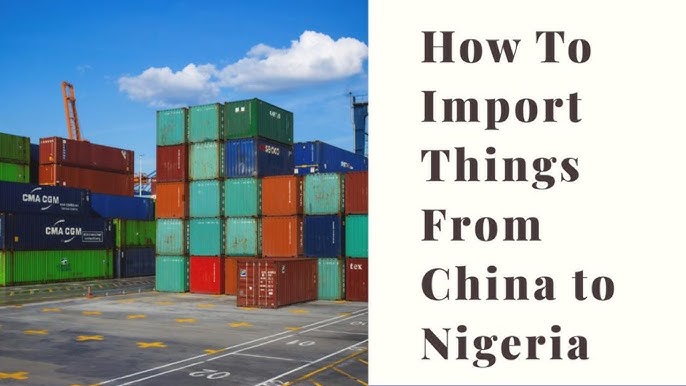
Sea freight is the standard choice for bulk commercial cargo. Full Container Load (FCL) shipping, using either 20-foot or 40-foot containers, offers the lowest per-unit shipping cost and is suitable when your cargo fills most or all of a container. A 20-foot container has a usable capacity of approximately 25 to 28 CBM; a 40-foot container offers around 60 to 65 CBM. Published FCL rates from major Chinese ports to Lagos range from approximately $2,200 to $4,500 for a 20-foot container and $2,700 to $5,500 for a 40-foot container, though these figures fluctuate with fuel costs, global shipping demand, and seasonal peaks. Treat any rate you see published as a starting point, not a fixed price.
Less than Container Load (LCL) shipping, where your cargo shares container space with other importers, is priced per cubic meter. Published LCL rates from China to Nigeria have ranged from approximately $85 to $200 per CBM, depending on the freight forwarder and route. LCL is appropriate when your shipment is too small to justify a full container but the timeline is not urgent.
Sea freight from major Chinese ports (Shanghai, Ningbo, Shenzhen, Guangzhou) to Lagos takes approximately 35 to 45 days in transit. Port Harcourt and Calabar routes may vary.
Air freight is faster, taking 5 to 10 days from most Chinese cities to Lagos or Abuja, but significantly more expensive. Rates per kilogram from China to Nigeria range from approximately $4 to $12 depending on the forwarder, route, and volume. This mode is practical for high-value goods where capital is tied up in the shipment, for time-sensitive merchandise, or for sending samples ahead of a larger commercial order.
Delivered Duty Paid (DDP) shipping is a service model, not a transport mode. Under DDP, your freight forwarder or logistics company takes responsibility for the entire movement from pickup in China through customs clearance in Nigeria to delivery at your warehouse. You pay a single all-in price that includes freight, duties, VAT, clearing fees, and final delivery. DDP removes the documentation burden from the importer and eliminates many of the risks associated with customs complications, but the quoted price is higher than doing the process independently. It is particularly useful for first-time importers, small and medium businesses, or situations where the importer does not have a Nigerian TIN, CAC registration, or authorized dealer bank relationship yet.
Finding and Verifying Chinese Suppliers
Most Nigerian importers source through one of three channels: direct factory sourcing in cities like Guangzhou, Yiwu, Shenzhen, or Foshan; wholesale markets within those cities; or online platforms like Alibaba, 1688 (the domestic Chinese version of Alibaba), or Made-in-China.
1688 typically offers lower prices than Alibaba because it targets domestic Chinese buyers rather than international ones, but transactions require either a Chinese bank account or a third-party purchasing agent based in China. Many Nigerian importers working at scale use sourcing agents in Guangzhou or Yiwu who consolidate orders from multiple suppliers and handle quality inspection before goods are packed for export.
When evaluating a supplier, verify their business license (they should be able to provide a Chinese business registration document), ask for product samples before committing to a full commercial order, request factory audit reports or third-party inspection certificates where relevant, and confirm they can produce the documentation Nigeria requires: a clean commercial invoice, packing list, certificate of origin, and the ability to cooperate with your SONCAP inspector.
Trade fraud targeting Nigerian importers is well documented. The common patterns include suppliers who accept payment for a large order and then either disappear or ship inferior substitutes. Escrow-style payment arrangements through platforms like Alibaba Trade Assurance provide some protection for verified buyers and sellers. Outside of platforms, importing via letters of credit offers contractual protection but adds banking costs. For new supplier relationships, sending partial payment upfront with balance on document presentation is more cautious than sending full payment in advance.
Freight Forwarders and Clearing Agents: How to Use Them Without Getting Used
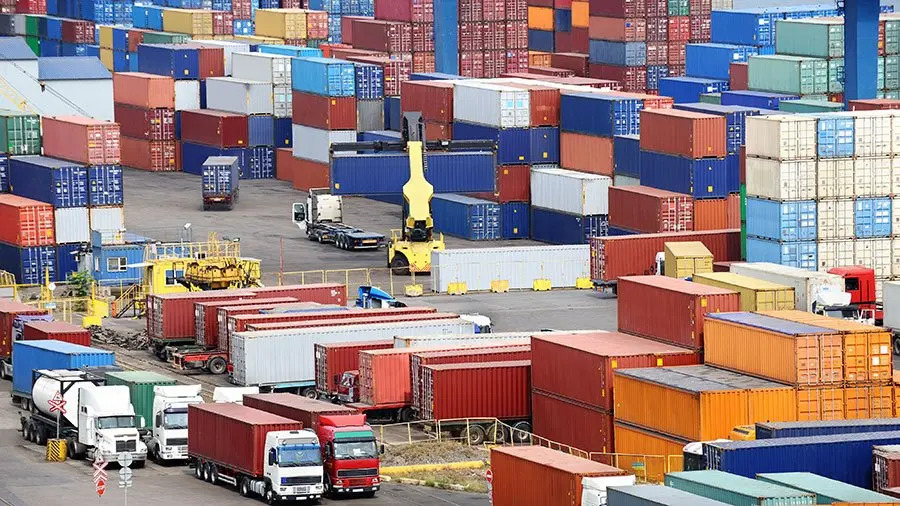
You will almost certainly need a freight forwarder in China and a clearing agent in Nigeria, and ideally they should be coordinated. A clearing agent is legally authorized to interact with NCS on your behalf, file your SGD, and manage your goods through the port.
The Nigerian ports, particularly Apapa and Tin Can Island in Lagos, have a well-known reputation for agent fraud and unofficial charges. Importers should request a full cost breakdown from their clearing agent before goods arrive, including every known charge at the terminal. Any agent who cannot provide a written quote, or who suggests that certain fees are best left unspecified, is a risk. Agents registered with the Customs Agents Association of Nigeria (CAAN) are operating within a professional framework, though registration alone is not a guarantee of honesty.
Demurrage is one of the clearest financial exposures in the process. Once your vessel docks and the free period expires, typically seven to fourteen days depending on the shipping line, daily charges accrue on uncleared containers. At busy periods these fees can exceed 50,000 naira per day per container. Having your PAAR and all clearing documents ready before the vessel arrives eliminates this risk almost entirely.
Practical Steps Before Your First or Next Shipment
Register your business with the Corporate Affairs Commission before importing. A CAC-registered business is not legally required for all import scenarios, but it makes every regulatory interaction easier: opening a Form M with your bank, obtaining a TIN, registering on the trade portal, and establishing the paper trail that protects you in a dispute.
Know your HS code before you negotiate freight rates or calculate a business case. The HS code determines your duty rate, and a misclassification can result in either underpayment (which triggers penalties and seizure) or overpayment that eats your margin. Nigeria Customs has an online tariff search tool, and clearing agents familiar with your product category can help identify the correct code.
Build a landed cost spreadsheet for every shipment. Include supplier cost, freight, insurance, customs duty at the correct rate on CIF value, the 7.5% VAT on CIF, clearing agent fee, terminal handling, and inland delivery. Run the numbers before you confirm the order. If the margin disappears at that stage, the market is telling you something before you lose real money.
For regulated products falling under the SONCAP programme, begin the Product Certificate process with your Chinese supplier before you open a Form M. The PC takes time, inspections may be required, and submitting a Form M before you have the PC in hand or in progress is a sequencing error that delays everything downstream.
Finally, treat the first shipment of any new product as a test, not an investment. Smaller volume, higher per-unit cost, but full visibility into the process before you commit significant capital. Every experienced Nigerian importer operating profitably today learned the customs system on a shipment small enough that the mistakes were recoverable.
The Honest Case for Getting This Right
China to Nigeria is one of the most active import corridors in Africa, and it remains profitable for traders who approach it methodically. The paperwork is real, the costs are real, and the risks of working with bad agents or unverified suppliers are real. None of these are arguments against importing. They are arguments for preparation.
The difference between an importer who builds a sustainable business and one who loses money on their first container is almost always traceable to the same gap: they calculated the supplier cost but not the landed cost, they shipped before their documents were ready, or they relied on an agent who treated their naivety as an opportunity. Understanding the Form M sequence, knowing your HS code, and pricing every cost component before committing to a shipment does not make importing easy, but it does make it survivable, and for most goods, genuinely profitable.