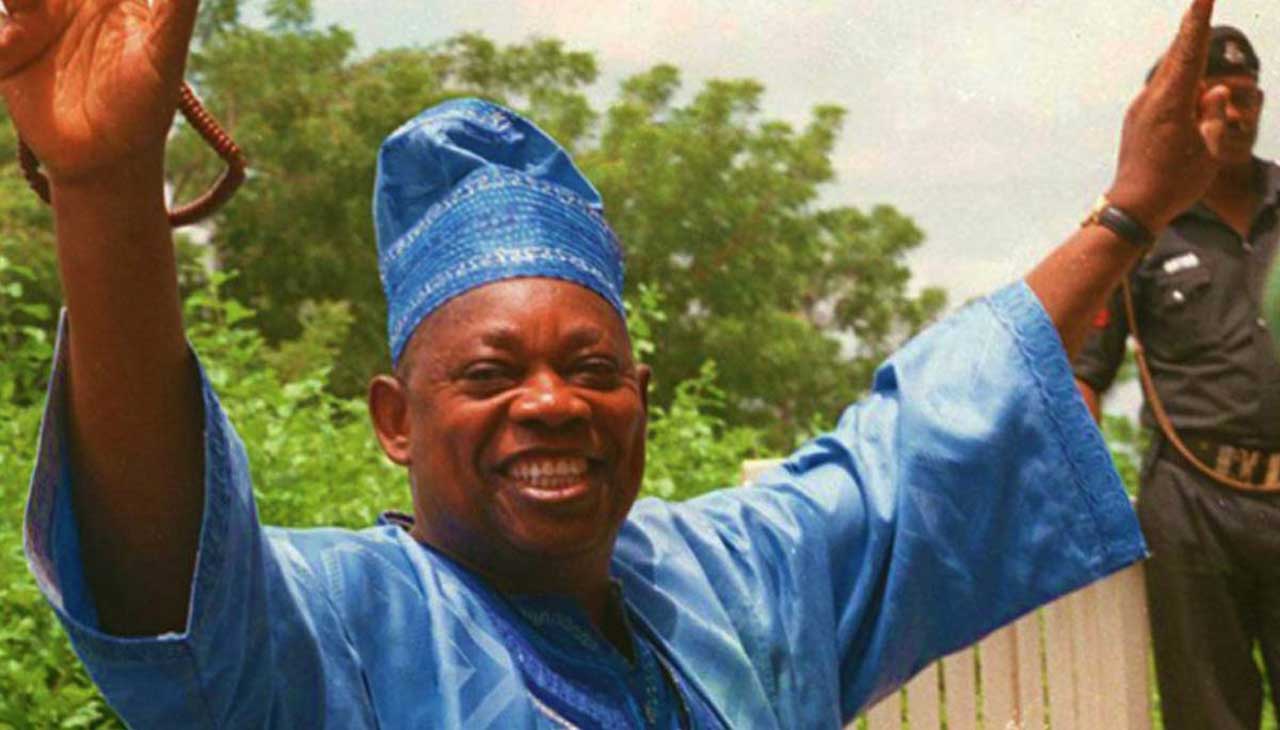
Nigeria’s democracy didn’t appear out of nowhere. It was built by business leaders, activists, politicians, and ordinary citizens who pushed for change when the cost was high. As the country’s democracy matures, their sacrifices deserve to be remembered.
As Harry S. Truman put it: “The only thing new in the world is the history you do not know.”
With that in mind, WITHIN NIGERIA revisits a defining moment from June 11 in Nigeria’s history.
ABIOLA DECLARES HIMSELF PRESIDENT AT EPETEDO RALLY
On June 11, 1994, Chief Moshood Kashimawo Olawale Abiola stood before thousands of supporters in Epetedo, Lagos Island, and declared himself the duly elected president of the Federal Republic of Nigeria.
Addressing the crowd in the predominantly Yoruba area, Abiola said the move was necessary to “rescue Nigeria from the grip of dictatorship” and to uphold the mandate Nigerians gave on June 12, 1993.
“I stand before you today as the president you elected,” he told the cheering crowd. “The election of June 12 was free, fair, and conclusive. No one, no matter how powerful, can annul the will of 14 million Nigerians.”
The 56-year-old businessman and publisher had just returned from a trip abroad, where he lobbied Western governments and international organizations to pressure the military regime into recognizing the annulled result.
Abiola accused General Sani Abacha’s military government of trampling on democracy and called its refusal to honor the election “an affront to the Nigerian people.”
He urged civil servants, workers, and the armed forces to recognize his authority and begin a peaceful transition to civilian rule.