Constitutional amendment is a periodic exercise in any democratic nation, aimed at altering and amending the set of rules and laws that govern a country to reflect the prevailing realities of its people and redefine the order and structure that underpin the socio-economic needs, legal, and political framework of a country and its people. Since the return to democracy in Nigeria, the Nigerian constitution has undergone amendment more than eight times.
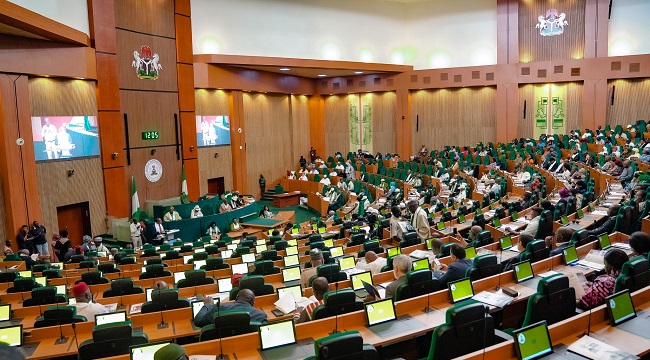
Last week, the national assembly took a decisive and consequential step in the ongoing constitutional amendment by prioritising 37 bills, which include electoral reforms, judicial reforms, state police, local government autonomy, devolution of powers, women’s representation, fiscal reforms, and traditional institutions. These bills are meticulously and thoroughly selected from the 260 constitution review proposals that passed second reading. The bills are given priority because of how their passing or otherwise is seen as crucial to Nigeria. If passed, they have the potential to transform the nation’s governance.
Among the key proposals are the establishment of state police, independent candidacy, creation of an electoral offences commission, special legislative seats for women, constitutional recognition of traditional rulers, citizenship by investment, and local government autonomy
Electoral and Judicial Reforms
Three electoral bills seek to amend laws and regulations guiding electoral activities.
It seeks to reform State Independent Electoral Commissions (SIECs), widely considered as an appendage of governors used for political leverage and to consolidate power. It also wants to establish an Electoral Offences Commission and introduce independent candidacy, which would allow Nigerians to contest elections without needing a political party.
On the judicial side, three bills aim to streamline the number and type of appeals the Supreme Court can entertain. They seek to block ridiculous and time wasting appeals from getting to the apex court while expediting election petition proceedings, and push for broader administrative efficiency.
These judicial reforms are geared towards the acceleration of justice dispensation and delivery of judgment, particularly on electoral cases.
Security: decentralisation of the policing system
The bill seeks to decentralise the nation’s overly centralised policing system. It is coming at a time when Nigeria is facing an unprecedented level of insecurity.
Three bills deal with the establishment of state police, one to create State Police Service Commissions to oversee them, and one to deepen cooperation between federal and state security forces. A fourth bill proposes placing funding of the armed forces on the first-line charge, hence it automatic deduction before revenue sharing.
For years, there have been strident calls for the decoupling of policing and letting the states take charge and have a say on matters of insecurity in their domain. The House of Representatives has already passed a state police bill and the Senate is expected to follow suit in July. The amendment process under Section 9 of the 1999 Constitution, which requires approval by two-thirds of state assemblies, will follow.
The inclusion of three related bills here signals the legislature intention to build a more robust legal and formidable structural and operational framework around the decentralisation of police, rather than just rubber stamping a single law.
Women’s Representation and Citizenship
The bills are a form of affirmative action. The three bills proposed reserved legislative seats for women in the Senate, the House of Representatives, and state assemblies. A fourth bill seeks to make citizenship available to those who have made a substantial investment in the country.
Nigeria consistently ranks among the lowest in Africa for female representation in government. Special seats would clear the electoral and political obstacles women frequently encounter when vying for public office, though critics and observers say the proposals are largely symbolic as they ignore the deeper problem of internal party discrimination.
Local Government Autonomy
Three bills want to unshackle local government from the manacles of state government. It seeks to deepen local government financial and constitutional autonomy. They would guarantee direct disbursement of allocation to councils and codify their recognition as the third tier of government into the constitution.
This is a long-running battle: governors have historically treated local government funds as extensions of state finances.
Fiscal Accountability
Four bills seek to tackle fiscal indiscipline and improves public finance transparency. One of the bills will compel government agencies to submit financial statements on time, mandating the publication of audit reports, and strengthening the Office of the Auditor-General. These bills seek to codify these proposal into the constitution as there absence from the current constitution has allowed fiscal opacity and indiscipline to persist across all tiers.
Legislature and Devolution of Powers
Two bills seek to institutionalise legislative bureaucracy and strengthen legislative independence and capacity, protecting it from the excesses of an overbearing executive. On power devolution, a bill proposes moving tourism from the exclusive legislative list to the concurrent legislative list and another bill seeks to give additional powers to states
Human rights and Strengthening institutions
Three bills target strengthening constitutional protection of rights, expanding access to justice and constitutional remedies, and enhancing protection of vulnerable groups. Time and again, weak and malleable institutions have been cited as an albatross to Nigeria’s democracy. To change this three bills have been introduced. They seek to separate the legal fate of governors and deputy governors regarding qualification and disqualification, the second bill wants to strip the executive of certain law-making powers and the third bill seeks to strengthen institutional checks and balances.
Traditional institutions
Two bills seek to pull in traditional institutions into the broader governance framework. One wants to establish state councils of traditional rulers while the second bill seeks to grant constitutional recognition to traditional institutions.
Creation of states and local governments/corrections
The bills seek to rename the existing local government
1. Bill to correct the name of Ibeno Local Government Area to Ibono.
2. Bill to correct the name of Aiyekire Local Government Area to Aiyedire.
3. Bill to correct the name of Jaba Local Government Area to Ham.
4. Bill to correct the name of Ibadan Central Local Government Area to Ibadan North-East.
The bills will still require passage by the national assembly and approval by at least two-thirds of state houses of assembly before becoming part of the constitution