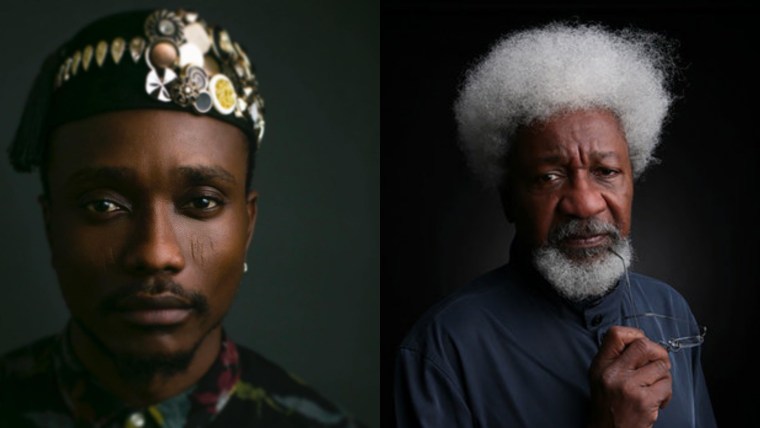
The conversation surrounding Èṣù within Yoruba spirituality has always carried layers of history, belief, interpretation, plus tension between tradition and imported religious frameworks that continue to shape modern understanding. When a respected literary figure revisits the subject with long standing conviction, while a popular musician offers a sharply different interpretation, the result extends beyond personal opinion into a wider cultural reflection that touches identity, language, theology, plus historical memory.
What emerges is not a simple disagreement but a reopened window into centuries of translation, belief formation, plus contested meanings that still influence how millions interpret spiritual concepts today.
Historical Frame: Yoruba Spiritual Foundations
Yoruba cosmology predates colonial contact by many centuries, with oral traditions, rituals, plus philosophical systems that describe a universe governed by balance, consequence, plus interconnected spiritual forces. Within this system, Èṣù occupies a central role as a divine messenger associated with movement between realms, communication between deities plus humans, plus the enforcement of moral consequences through natural order. Records of Yoruba oral traditions preserved across generations in the nineteenth century plus earlier periods consistently describe Èṣù as complex rather than purely benevolent or malevolent.
During the nineteenth century, the arrival of Christian missionaries introduced new linguistic frameworks that sought equivalents for Biblical concepts within Yoruba language. This translation process became one of the earliest points of tension between indigenous belief systems plus imported religious narratives. The term Èṣù was gradually aligned with the Christian concept of Satan in early Yoruba Bible translations, a decision that would shape religious interpretation for generations across the twentieth century plus into modern Nigeria.
Missionary Translation: Influence Nineteenth Century Impact
The nineteenth century missionary translation period played a decisive role in how spiritual vocabulary was reshaped. Translators working to render Biblical texts into Yoruba faced the challenge of finding linguistic counterparts for concepts that did not exist in the same form within traditional Yoruba belief systems. The concept of Satan as an absolute embodiment of evil presented particular difficulty, leading to the adoption of Èṣù as a functional equivalent in early translations.
This decision, while linguistically practical at the time, created long term interpretive consequences. Over time, readers of Yoruba language Bible texts began associating Èṣù with moral corruption, temptation, plus opposition to divine order as defined within Christian theology. The original Yoruba understanding of Èṣù as a neutral or balanced force within spiritual communication gradually became overshadowed by this imported interpretation.
Scholars studying this period in the twentieth century later argued that translation choices made during the nineteenth century were not neutral acts but cultural reinterpretations that reshaped indigenous spiritual vocabulary. The effects of those decisions continue to influence religious education, public perception, plus cultural debates across Nigeria today.
Wole Soyinka’s Position Cultural Reinterpretation
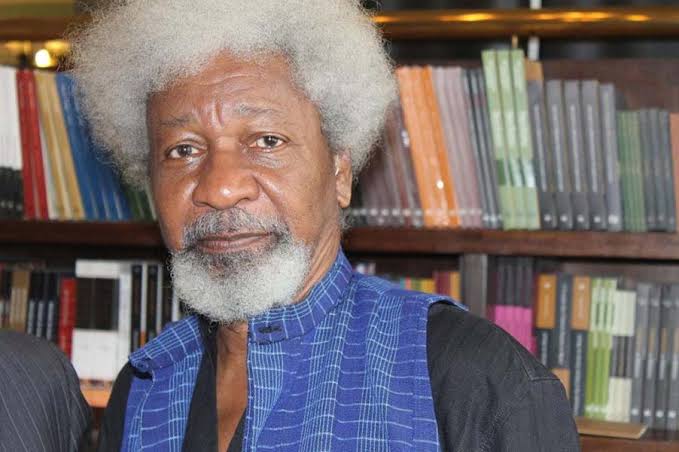
Wole Soyinka has consistently maintained that Èṣù in Yoruba cosmology bears no direct equivalence to the Christian concept of Satan. His position is rooted in literary analysis, cultural history, plus personal engagement with Yoruba oral traditions that predate missionary influence. He argues that equating the two concepts represents a distortion introduced through colonial religious translation rather than an authentic reflection of Yoruba belief systems.
According to his interpretation, Èṣù functions as a metaphysical intermediary responsible for communication between spiritual forces plus human beings. Within this framework, Èṣù is not an embodiment of evil but rather a necessary agent of balance, choice, plus consequence. The idea of moral duality within Yoruba cosmology does not align with the absolute binary of good versus evil found in Christian theology, making direct equivalence problematic from his perspective.
Soyinka has also referenced early Bible translation practices in the nineteenth century as a key source of confusion. He highlights how linguistic substitution during missionary activity led to long lasting misconceptions that shaped religious education across Yoruba speaking regions. His argument consistently returns to the importance of restoring indigenous concepts to their original philosophical context without imposing external theological categories upon them.
Brymo’s Position Spiritual Equivalence Claim
The counter position emerged publicly through statements during a philosophical and religious conversation aired on Yanga 89.9 FM, by Nigerian singer Brymo, who expressed a direct equivalence between Èṣù and Satan within his personal interpretation of spiritual reality. His claim suggested that while religious traditions may use different names, the underlying force represented by both concepts is fundamentally the same within a broader spiritual framework.
Brymo’s argument focused on perceived similarities related to deception, temptation, plus moral testing within human experience. He suggested that human actions often reflect traits associated with these spiritual figures, reinforcing his belief in conceptual overlap across religious traditions. His position reflects a comparative theological approach that seeks alignment between different belief systems rather than strict separation.

This interpretation immediately placed him in contrast with scholars plus cultural historians who view Yoruba spirituality as a distinct system requiring independent interpretation. His remarks also amplified ongoing debates about how modern individuals interpret inherited religious language within contemporary society, particularly when multiple belief systems coexist within the same cultural space.
Colonial Translation Debate: Linguistic Conflict
The central point of contention between both perspectives rests on translation history from the nineteenth century. Missionaries working during this period attempted to construct Yoruba language equivalents for Biblical concepts, often prioritizing functional meaning over cultural accuracy. The choice to equate Èṣù with Satan became one of the most influential linguistic decisions of that era.
Critics of this translation argue that it imposed external moral frameworks onto an indigenous system that already possessed its own complex ethical structure. Within Yoruba cosmology, spiritual entities operate within a system of balance rather than absolute moral categorization. Èṣù, within that system, is not defined by inherent evil but by role within cosmic order.
Supporters of the translation approach argue that religious concepts often adapt when crossing linguistic boundaries, and that equivalence is sometimes necessary for comprehension. This perspective suggests that readers naturally interpret spiritual terms through their own moral frameworks, regardless of original cultural context.
Cultural Identity Debate: Modern Nigeria
The disagreement between Soyinka plus Brymo reflects a broader conversation about cultural identity within modern Nigeria. Questions surrounding how indigenous belief systems should be interpreted continue to influence academic discourse, religious practice, plus public debate. The issue extends beyond theology into language preservation, historical interpretation, plus cultural sovereignty.
During the twentieth century, Yoruba intellectual movements increasingly sought to reclaim pre colonial understanding of spiritual concepts. This effort involved re examining oral traditions, reconstructing historical narratives, plus challenging interpretations introduced through missionary education systems. The debate surrounding Èṣù became a symbolic representation of this broader cultural restoration effort.
Modern interpretations now exist across multiple layers. Some communities maintain Christian influenced definitions, others preserve traditional Yoruba cosmological meanings, while academic circles continue to analyze both perspectives through historical research. This diversity of interpretation reflects the complexity of cultural continuity within a post colonial society.
Social Media Amplification: Public Response Patterns
The modern phase of this debate gained intensity through digital platforms where statements by public figures quickly circulate across wide audiences. Reactions to Brymo’s remarks spread rapidly, generating commentary from cultural analysts, religious voices, plus general audiences engaged in discussions about identity plus belief systems.
Public responses often reflected two dominant interpretations. One emphasized the importance of preserving Yoruba cosmology from external reinterpretation, while the other focused on perceived similarities between spiritual archetypes across global religions. Both perspectives highlighted how deeply personal belief systems influence interpretation of cultural concepts.
The visibility of figures like Soyinka plus Brymo amplified the conversation beyond academic or religious circles, transforming it into a mainstream cultural discussion that intersects with entertainment, literature, plus social identity.
Religious Interpretation Frameworks: Comparative Views
Religious studies scholars often approach the Èṣù debate through comparative frameworks that examine how different cultures represent moral forces. Within this approach, similarities between spiritual archetypes are acknowledged while differences in structure, symbolism, plus function are also emphasized.
Yoruba cosmology presents a system where spiritual forces interact within a dynamic balance rather than a strict moral binary. Christian theology, particularly in its traditional interpretations, often defines spiritual forces within a clear distinction between good plus evil. These structural differences form the foundation of interpretive disagreement.
Understanding these frameworks requires careful attention to historical context, linguistic evolution, plus cultural transmission. Without these elements, symbolic figures can easily be misinterpreted or simplified in ways that remove their original meaning.
Academic Reflection: Historical Continuity
Academic discussions on the subject often return to the importance of historical continuity. The nineteenth century translation period remains a key reference point because it represents the moment when Yoruba spiritual vocabulary was first systematically mapped onto Christian theological structures. This mapping process continues to influence interpretation across generations.
Research in twentieth century anthropology plus linguistics further reinforced the idea that translation is not merely linguistic but cultural. Every translated concept carries embedded assumptions that shape how meaning is received. Èṣù became one of the most cited examples in discussions about translation influence on indigenous belief systems.
The ongoing debate demonstrates how historical decisions continue to shape modern understanding, even when original contexts are re examined or challenged.
Broader Cultural Reflection: Ongoing Conversation
The conversation between Soyinka’s interpretation plus Brymo’s opposing view ultimately reflects a broader cultural tension between preservation of indigenous meaning plus adaptation to global religious frameworks. It highlights how language carries historical memory, how translation shapes belief, plus how public figures influence cultural discourse.
Èṣù remains a powerful symbol within this conversation, not only as a spiritual figure but as a representation of how cultures interpret themselves through time. Whether viewed through the lens of Yoruba cosmology or comparative theology, the discussion continues to evolve as new voices contribute to an ongoing reflection on identity, history, plus belief.
The absence of a universally accepted conclusion ensures that the debate remains active, shaped by history, influenced by language, plus sustained by the continuing effort to understand how meaning travels across generations without losing its depth or complexity.