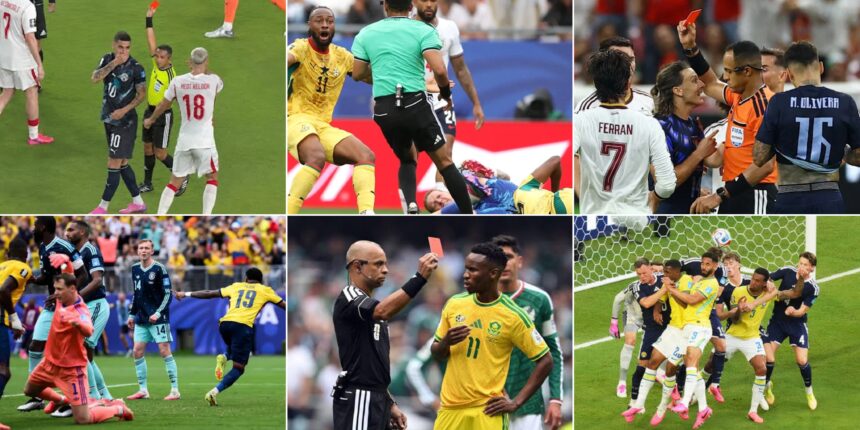
Football at the World Cup 2026 group stage has unfolded in a way that feels tightly wound around moments that arrive suddenly, shift direction instantly, and leave entire stadiums replaying seconds that no longer belong to the flow of the match. Between June 11 2026 and June 26 2026, group matches have carried a consistent tension where decisions taken in review rooms, gestures interpreted under new rules, and penalties denied or awarded have shaped the structure of qualification tables across multiple continents. Each fixture has contributed to a growing sense that matches are no longer decided only by goals, but also by interpretation, timing, and authority exercised at critical points of play.
What makes this phase of the tournament particularly striking is how often similar patterns reappear across different groups, where video assistant referee interventions, disciplinary escalations, and contested officiating moments occur within minutes of decisive turning points. Teams positioned within mid table brackets have found themselves most exposed to these swings, where a single incident becomes the difference between advancement and elimination. As group standings tighten, every decision gains weight that extends beyond the pitch into national expectations and tournament survival.
Mexico vs South Africa Group A, June 11 2026
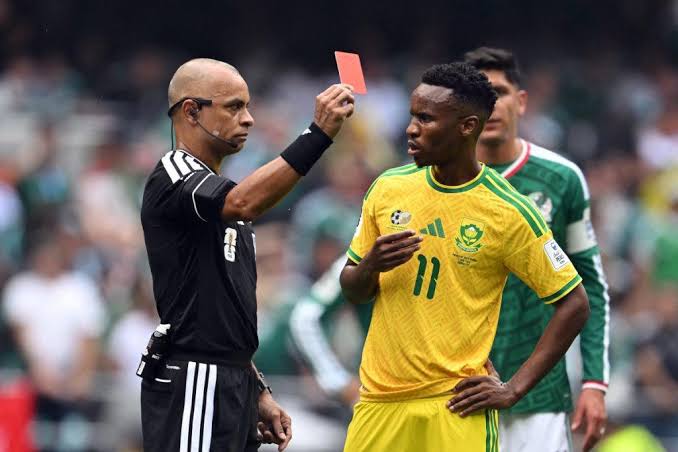
The Group A encounter between Mexico and South Africa played on June 11 2026 ended with a 2 to 0 victory for Mexico in a match defined by a decisive disciplinary review that reshaped the entire flow of play. The central moment arrived when a challenge initially judged as a standard foul was later upgraded to a red card following video assistant referee intervention, leaving South Africa with ten players during a phase where the match remained evenly balanced.
The numerical disadvantage immediately altered spatial control across midfield zones, allowing Mexico to increase possession dominance and stretch South Africa’s defensive structure across wider channels. As pressure accumulated, Mexico converted sustained attacking phases into two goals that reflected structural imbalance rather than isolated finishing brilliance. South Africa attempted to reorganize defensively but struggled to recover control of transitions once reduced in numbers.
Qualification implications became significant following the result recorded on June 11 2026, where Mexico moved toward a dominant position in Group A standings with three wins and 9 points. South Africa remained in contention for qualification due to goal difference strength, while South Korea’s mathematical pathway toward the top two positions weakened after the group hierarchy stabilized.
Brazil vs Scotland Group C, June 13 2026
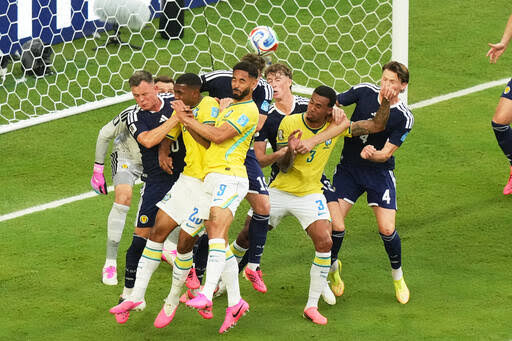
The match between Brazil and Scotland on June 13 2026 concluded with a 3 to 0 result in favor of Brazil, though attention centered on a disallowed goal that shaped early momentum in the contest. Brazil believed they had taken an early advantage, but the goal was ruled out following review of a buildup infringement that interrupted attacking progression.
Scotland adjusted their defensive positioning after the ruling, attempting to close central passing lanes and limit Brazil’s ability to penetrate through structured midfield combinations. Despite these adjustments, Brazil maintained sustained pressure, gradually increasing attacking intensity until three goals were scored through controlled sequences that exploited positional gaps in defensive transitions.
Qualification implications recorded after June 13 2026 placed Brazil as group leaders with comfortable progression secured. Morocco advanced into second position based on consistent point accumulation, while Scotland remained in third place with qualification probability reduced to a narrow statistical range estimated around 1 to 2 percent depending on remaining group results.
Ghana vs England Group L, June 23 2026
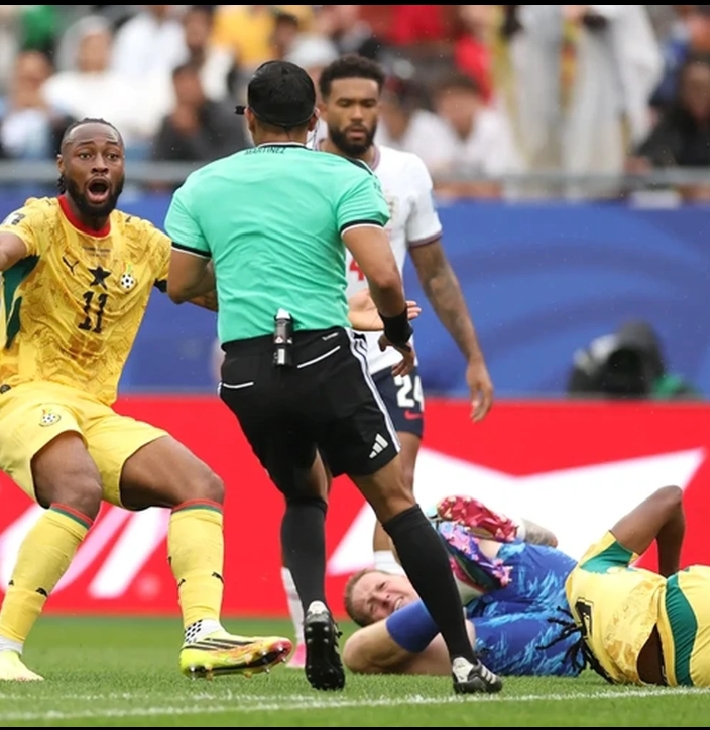
The Group L fixture between Ghana and England played on June 23 2026 ended 0 to 0 in a match defined by a late penalty appeal that did not receive intervention from video assistant referee officials. Ghana’s appeal came during the closing phase of the match following a challenge inside the penalty area, yet play continued without overturn or review escalation.
England maintained longer possession phases throughout the match, controlling tempo through midfield distribution and structured buildup patterns. Ghana responded with compact defensive organization and counterattacking attempts that created intermittent pressure without producing a decisive breakthrough.
Following the match date of June 23 2026, England confirmed qualification as group leaders. Croatia secured second place after a late shift in group standings across final fixtures. Ghana’s position remained uncertain but ultimately resulted in elimination or dependency on external group outcomes that did not favor progression scenarios.
Uruguay vs Spain Group H, June 26 2026
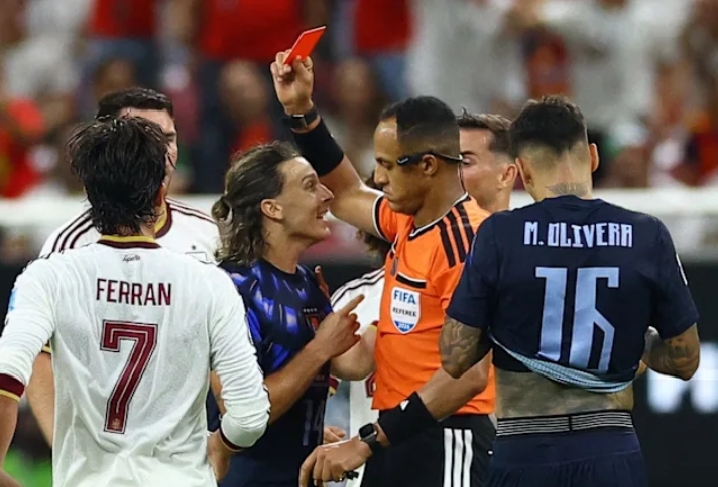
The Group H fixture played on June 26 2026 ended with Spain defeating Uruguay 1 to 0 in a match defined by a first half decisive goal and late disciplinary escalation. The winning goal was scored by Álex Baena around the 41 to 42 minute mark following structured attacking movement that broke Uruguay defensive shape during a controlled phase of possession.
Spain maintained structured midfield control throughout the match, focusing on possession retention and measured progression into attacking zones. Uruguay attempted to respond through compact defensive lines and transitional counterattacks, yet struggled to generate sustained penetration in the final third against organized defensive spacing.
A late red card in stoppage time added disciplinary tension to the closing phase, though the result had already shaped qualification direction. Following June 26 2026, Spain confirmed top position in Group H with 7 points and secured advancement. Uruguay concluded group participation with 2 points and exit from the tournament after failing to secure sufficient results across group fixtures. Cape Verde advanced alongside Spain as surprise qualification from the group based on overall points accumulation.
Paraguay vs Turkey Group D, June 19 2026
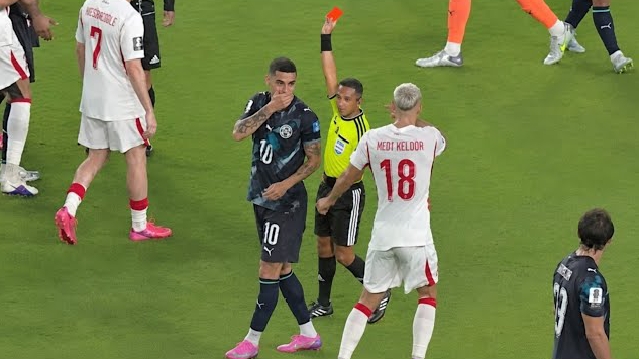
The Group D encounter on June 19 2026 saw Paraguay defeat Turkey 1 to 0 in a match defined by a disciplinary incident involving a new rule interpretation related to player conduct gestures. Miguel Almirón received a red card following what officials interpreted as a mouth covering violation under updated enforcement guidelines regarding dispute related behavior.
Despite reduced numbers, Paraguay maintained defensive organization and focused on transition opportunities, managing to secure a decisive goal during a structured attacking sequence. Turkey attempted to exploit numerical advantage but struggled to convert possession dominance into clear scoring opportunities.
Following June 19 2026, Paraguay secured qualification due to earlier results within the group. United States confirmed group leadership with strong performance across fixtures. Turkey was eliminated after failing to accumulate sufficient points following the defeat.
Ecuador vs Germany Group E, June 25 2026
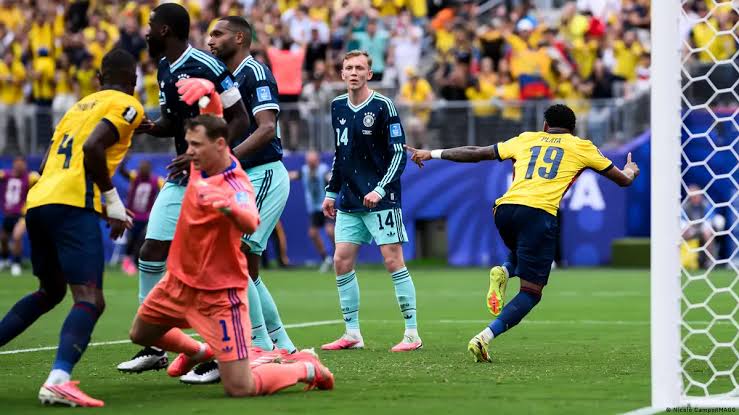
The Group E match played on June 25 2026 produced a major upset when Ecuador defeated Germany 2 to 1 in a fixture defined by a disputed buildup phase leading to the winning goal. Germany argued that an earlier foul should have halted play, but video review did not overturn the referee decision, allowing the goal to stand.
Ecuador executed efficient transitional attacks that exploited space behind Germany’s advanced defensive positioning. Germany controlled possession for extended periods but struggled to convert territorial dominance into defensive stability during counter phases, particularly in wide defensive recovery zones.
After June 25 2026, Ecuador strengthened its qualification position significantly, moving closer to progression within the group. Germany faced increased pressure and required favorable results from remaining fixtures to maintain realistic advancement probability.
Netherlands vs Tunisia Group F, June 20 2026
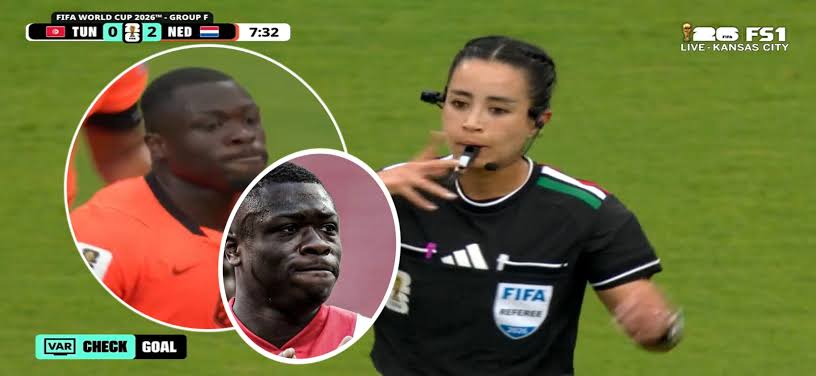
The Group F match played on June 20 2026 ended in a 3 to 1 victory for Netherlands over Tunisia in a match where an own goal and timing of video review became focal points of discussion. Tunisia conceded under sustained defensive pressure that resulted in an own goal during a congested penalty area sequence.
Video review timing generated debate regarding interruption flow and match rhythm, as delays affected momentum during key phases of play. Netherlands maintained structured attacking patterns and controlled possession phases that led to additional goals beyond the own goal incident.
Following June 20 2026, Netherlands secured qualification as group leaders. Japan also advanced based on consistent performance across group fixtures. Tunisia was eliminated after failing to secure sufficient points to remain in contention.
Structural Pattern Across Group Stage Matches
Across fixtures played between June 11 2026 and June 26 2026, group stage matches reveal a repeated structural pattern where disciplinary interpretation, video assistant referee intervention, and timing of decisions consistently influence match direction. Several matches experienced turning points that occurred within single incidents, while others were shaped by cumulative officiating decisions across multiple phases of play.
Mid table teams experienced the greatest volatility across groups, particularly Scotland, Germany, Ghana, and Uruguay, where qualification outcomes were directly influenced by isolated match incidents. These moments created tight margins across group standings where progression depended on fine differences in goal difference, timing of goals, and disciplinary outcomes.
Leaving With This
The World Cup 2026 group stage between June 11 2026 and June 26 2026 has developed into a sequence of matches defined by narrow margins, structured tactical battles, and decisive moments shaped by officiating interpretation. From Mexico’s early advantage in Group A on June 11 2026 to Spain’s controlled qualification against Uruguay on June 26 2026, each fixture contributed to a broader tournament narrative where qualification paths were shaped as much by regulatory decisions as by on pitch execution.
The group stage ultimately reflects a competition environment where control of matches extends beyond players alone, creating a tournament phase where timing, interpretation, and critical incidents define progression across multiple groups.