Conversations surrounding Nollywood productions often begin with excitement over a new release, a star studded cast, or a storyline that promises to capture viewers’ attention. Every so often, however, the spotlight moves beyond the screen as questions emerge about how history, culture, or religion has been portrayed. When those concerns involve beliefs that many people regard as sacred, the discussion can quickly extend far beyond the entertainment industry.
That was the atmosphere that developed in the closing days of June 2026 after actress and filmmaker Yetunde Barnabas unveiled promotional materials for her latest movie, Olokun Mermaid. Rather than focusing solely on the film itself, attention soon turned to its title, the characters it appeared to depict, and the cultural meaning attached to them. Within a short period, the conversation had moved from social media into formal complaints submitted to regulatory bodies, drawing national attention to a dispute that blended filmmaking, tradition, and religious identity.
Although the controversy has generated widespread debate, the central issues remain tied to specific allegations raised by custodians of the Yoruba traditional religion. Those concerns prompted engagement from relevant authorities, placing the movie under review while leaving many observers eager to understand how a single film title became the centre of one of Nollywood’s most talked about cultural controversies.
Movie Unveiling
The controversy began in late June 2026 when Yetunde Barnabas announced her new movie, Olokun Mermaid, through promotional materials released ahead of its planned debut. Like many Nollywood productions, the announcement was expected to generate curiosity about the storyline, cast members, and themes explored by the film. Early attention largely centred on the title, which referenced one of the best known deities within Yoruba traditional spirituality.
Interest surrounding the production quickly expanded as promotional images circulated across social media platforms. While many viewers focused on the entertainment value of the project, others paid closer attention to the title itself and the way it appeared to present an important figure within Yoruba religious tradition. That interpretation would soon become the foundation of a growing controversy.
Rather than remaining an ordinary discussion about an upcoming movie, the conversation developed into a broader debate concerning cultural representation. Questions soon emerged over whether the film’s title accurately reflected Yoruba traditional beliefs or whether it introduced concepts that practitioners believed belonged to an entirely different tradition.
Complaint Emerges
Public attention intensified after Abiola Rosanwo, who identifies herself as Yeye Owonrin Ojose Isara Remo and a custodian of the Yoruba Isese tradition, publicly challenged the movie’s title. According to her, the description used in the film promoted an understanding of Yoruba deities that differed from the beliefs held within the traditional religion.
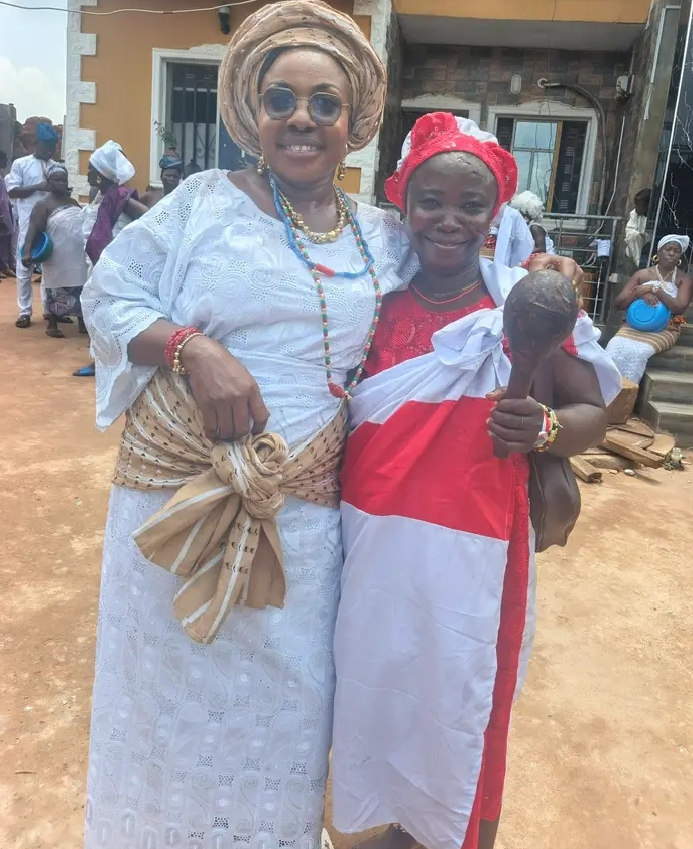
Rosanwo argued that Olokun should not be described as a mermaid because the deity occupies a distinct position within Yoruba spirituality. She also maintained that Yemoja is not a mermaid, explaining that both deities possess separate identities, histories, and spiritual responsibilities within traditional belief. According to her, presenting either deity as a half human, half fish figure reflected ideas drawn from foreign mythology rather than authentic Yoruba religious teachings.
Her position extended beyond the title of a single movie. She argued that Nollywood productions over many years had repeatedly associated Yoruba water deities with concepts such as mermaids or Mammy Water, creating what she described as a misunderstanding of indigenous spirituality. According to her, those portrayals had gradually shaped public perception in ways that differed from traditional teachings passed down through generations.
Those statements marked the beginning of the controversy and formed the basis of the formal complaint that later followed.
Traditional Belief
Central to the concerns raised by Rosanwo was the distinction between several prominent Yoruba deities. According to her explanation, Olokun, Yemoja, and Osun are separate Orisha, each possessing unique identities within Yoruba spirituality. Although all are associated with water in different ways, she maintained they should never be presented as interchangeable figures or merged into a single mythical concept.
She further argued that the widespread use of the word mermaid in relation to Yoruba deities reflects ideas borrowed from Western folklore rather than indigenous Yoruba belief. According to her account, generations of films have contributed to that misunderstanding by repeatedly portraying sacred figures through imagery commonly associated with foreign myths instead of traditional religious understanding.
Those concerns highlighted why the issue attracted attention beyond the entertainment industry. For practitioners of the Yoruba traditional religion, the discussion centred on religious identity and cultural preservation rather than simply the creative direction of a Nollywood production. That distinction became one of the defining features of the controversy as it continued to develop during the final days of June 2026.
Yetunde Barnabas’ Response
Following the growing attention surrounding the movie’s title, Yetunde Barnabas offered an explanation regarding the decision to name the production Olokun Mermaid. According to her, the project was originally titled Yemoja during its early stages of production before that title was eventually changed.

She explained that the decision became necessary after discovering that certain YouTube channels had already used her image to promote another production bearing the title Yemoja. According to her account, retaining the original name could have created confusion among viewers who might mistakenly associate her movie with unrelated content already circulating online.
That explanation clarified why the title changed during production, yet it also introduced another issue raised by the complainant. Rosanwo argued that changing the title from Yemoja to Olokun created another concern because the 2 deities are regarded as entirely different spiritual figures within Yoruba tradition. According to her position, substituting one name for the other suggested a misunderstanding of their individual identities rather than merely a change in branding.
Those differing explanations ensured that public attention remained fixed on the movie even after the title change had been explained by the filmmaker.
Petition Reaches Authorities
The controversy moved beyond online discussions when Rosanwo and other traditionalists formally escalated the matter by submitting petitions to relevant organisations responsible for Nigeria’s film industry. Rather than limiting their concerns to public statements, they sought official review of the production before its release.
The petition was submitted to the National Film and Video Censors Board, widely known as the NFVCB, as well as the Theatre Arts and Motion Pictures Practitioners Association of Nigeria, commonly referred to as TAMPAN. According to the complainants, the purpose of the petition was to request that the movie be carefully reviewed over concerns relating to cultural and religious misrepresentation.
By taking the matter to recognised industry bodies, the controversy entered a new phase. Attention was no longer focused solely on public reactions to the film’s title but also on how the relevant authorities would respond to concerns raised about the portrayal of sacred figures within Yoruba traditional religion.
Authorities Begin Review
Attention quickly turned toward the response from the organisations that received the petition. According to Abiola Rosanwo, officials from both the National Film and Video Censors Board, known as the NFVCB, and the Theatre Arts and Motion Pictures Practitioners Association of Nigeria, TAMPAN, acknowledged the complaint shortly after it was submitted. Their response marked the beginning of an official engagement with the issues raised concerning the movie.
Rosanwo publicly expressed appreciation to both organisations, stating that they responded promptly after receiving the petition. According to her, discussions had begun regarding the concerns surrounding the portrayal of Yoruba deities in the production. Those developments signalled that the complaint had progressed beyond public debate into a formal review process involving the relevant industry bodies.
Although the engagement attracted widespread attention, neither organisation publicly announced disciplinary action against the movie at that stage. No statement was issued directing the production to be withdrawn, while no announcement suggested that penalties had been imposed on the filmmaker. The matter therefore remained under review as discussions continued.
That response became an important turning point because it confirmed that the concerns raised by the complainants had been formally received and were being considered through the appropriate channels.
Questions About Federal Government’s Position
As the controversy gathered momentum across social media and news platforms, many people began asking whether the Federal Government had already intervened by stopping the movie’s release. The growing attention surrounding the petitions led to widespread speculation that regulatory authorities might have taken immediate action against the production.
The position as of June 29, 2026, remained clear. There was no official announcement confirming that the Federal Government had banned Olokun Mermaid. No public directive ordered the movie’s withdrawal from circulation, while no statement instructed cinemas, streaming platforms, or distributors to halt its release.
Those facts remained important because much of the public discussion was driven by reports that authorities had become involved after receiving the complaint. While engagement with the petition had begun, the review process had not resulted in any publicly announced ban or suspension of the production as of June 29, 2026.
That distinction separated verified developments from speculation, allowing the focus to remain on the complaint itself rather than claims that had not been officially confirmed.
Cultural Significance
The issues raised throughout the controversy reflected concerns extending beyond the title of a single Nollywood production. According to practitioners of the Yoruba traditional religion, Olokun occupies a sacred position within Yoruba spirituality and is associated with the depths of the sea, wealth, hidden mysteries, and spiritual abundance. Those attributes have formed part of traditional beliefs passed down through generations.
Yemoja also holds an important place within Yoruba tradition, although practitioners describe the deity as separate from Olokun. Within those beliefs, Yemoja is associated with motherhood, rivers, fertility, nurturing, and family life. While both deities have connections to water, traditional custodians maintain that each possesses a distinct identity that should not be merged with the other.
Osun represents another separate Orisha within Yoruba spirituality. Traditional practitioners similarly reject attempts to combine the identities of these deities or portray them through concepts that originate outside indigenous Yoruba belief. According to the complainants, preserving those distinctions forms an essential part of protecting the integrity of their religious tradition.
Those explanations illustrate why the controversy developed into a broader discussion about cultural representation rather than remaining focused solely on the entertainment value of a movie.
Core Allegations
At the centre of the petition were several specific allegations concerning the movie’s title and its apparent portrayal of Yoruba spirituality. According to Rosanwo, describing Olokun as a mermaid introduced a concept that does not exist within authentic Yoruba traditional belief. She maintained that the image of a half human, half fish being is associated with foreign mythology rather than indigenous Yoruba religion.
Another allegation centred on the relationship between Olokun and Yemoja. According to the complainant, presenting the 2 deities as interchangeable figures creates a false impression because each occupies a unique position within Yoruba spiritual practice. She argued that replacing one deity’s name with another reflects a misunderstanding of their individual identities.
The petition also alleged that repeated portrayals of Yoruba water deities as mermaids across several films have gradually distorted public understanding of traditional beliefs. According to Rosanwo, those portrayals have contributed to confusion by blending indigenous spirituality with concepts that originate from Western folklore and the popular Mammy Water narrative.
Those allegations remain the central issues currently under consideration by the organisations reviewing the complaint.
Movie Title Remains Central
Although several aspects of the production attracted discussion, the title itself has remained the focal point of the controversy. According to Yetunde Barnabas, the decision to rename the movie followed concerns about confusion with another production already circulating online under the title Yemoja. That explanation addressed the practical reason behind the change while also becoming part of the wider discussion.
For the complainants, however, the title represented more than a marketing decision. They argued that choosing Olokun Mermaid created another layer of concern because it combined the name of a revered Yoruba deity with terminology they believe belongs to an entirely different cultural tradition. According to their position, the issue therefore involved religious representation rather than branding alone.
Those contrasting explanations illustrate why the controversy has continued attracting attention. One side views the title as part of the creative identity of a fictional movie, while the other considers it a description carrying significant cultural and spiritual implications.
That difference in interpretation has remained one of the defining features of the dispute from the moment the promotional materials were released.
Current Position
As of June 29, 2026, Olokun Mermaid remains the subject of public discussion following the petition submitted by Yoruba traditionalists. The complaint has been acknowledged through engagement by the National Film and Video Censors Board and TAMPAN, confirming that the concerns raised are receiving official attention through the appropriate channels.
No public announcement has confirmed a ban on the movie, while no directive has ordered its withdrawal from release. Discussions relating to the complaint are reportedly continuing, with the matter remaining under review as authorities engage with the issues presented by the petitioners.
At this stage, the controversy is defined by the allegations submitted by the complainants, Yetunde Barnabas’ explanation regarding the movie’s title, and the ongoing review by the relevant organisations. Whether additional developments emerge will depend on the outcome of those discussions, but as of June 29, 2026, no official decision has been announced preventing the movie’s release.