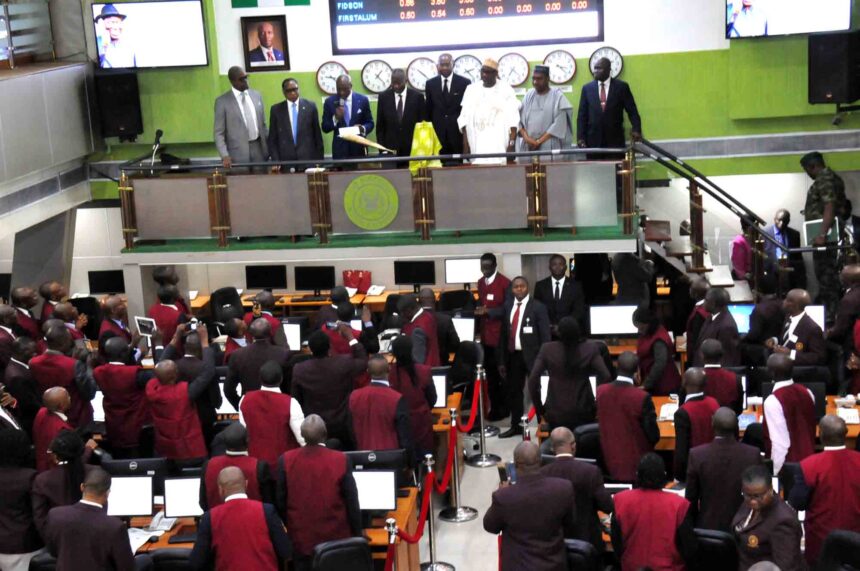
Confidence in the stock market is often built over time through steady gains, rising share prices, and growing optimism about future returns. That confidence can also be tested within a matter of days when investor sentiment changes and selling pressure begins to outweigh buying activity. Such a moment unfolded on the Nigerian Exchange during the final full trading week of June 2026, turning what had been an impressive run for equities into one of the market’s biggest stories of the year.
Trading floors, investment firms, and private investors watched closely as the market’s upward journey encountered powerful selling pressure. Every trading session appeared to add another layer to the unfolding story, with market values slipping lower while investors carefully assessed whether the decline represented a temporary adjustment or the beginning of a more prolonged period of weakness. Attention quickly turned to the movement of major stocks, daily trading figures, and the broader forces influencing investor decisions.
By the close of trading on Friday, June 26, 2026, the Nigerian stock market had recorded one of its sharpest weekly declines of the year. Billions of naira disappeared from investors’ portfolios each trading day, leaving many market participants reviewing their positions while analysts closely examined the factors responsible for the sudden reversal.
Remarkable Rally Before The Decline
Weeks before the market experienced its sharp correction, the Nigerian Exchange had enjoyed one of its strongest rallies in recent years. Share prices climbed steadily across several sectors, rewarding investors who had entered the market earlier in the year with substantial capital appreciation. Banking stocks, industrial companies, oil related firms, and several other large capitalisation equities contributed significantly to the impressive performance recorded throughout the opening months of 2026.
Growing investor confidence was reflected in the continuous rise of the NGX All Share Index, while market capitalisation expanded to record levels as listed companies gained value. Positive corporate earnings, improved investor participation, and sustained demand for equities combined to create favourable conditions that encouraged further buying activity. Many investors viewed the market as one of the strongest performing investment destinations during that period, attracting both institutional participants and retail investors seeking better returns.
Those impressive gains also created another reality that experienced investors understand very well. Whenever markets climb rapidly over an extended period, many participants eventually begin considering the right moment to secure their profits. Selling after a prolonged rally is a common feature of financial markets because investors seek to protect returns already earned before conditions become less favourable.
Selling Pressure Builds
That transition gradually became visible during the trading week that ended on Friday, June 26, 2026. Rather than witnessing fresh buying activity across the market, investors increasingly chose to sell shares that had appreciated significantly during the previous months. As more market participants adopted similar strategies, selling pressure began outweighing demand, placing downward pressure on stock prices across several sectors.
Large capitalisation companies, often referred to as blue chip stocks because of their significant influence on the broader market, became some of the earliest casualties of the sell off. Since those companies carry substantial weight within the NGX All Share Index, declines in their share prices quickly translated into broader market losses. Every trading session reflected the growing impact of those sales as investors continued adjusting their portfolios.
Momentum soon gathered pace as additional investors joined the wave of profit taking. Rather than waiting to see whether prices would recover immediately, many preferred securing gains already achieved during the market’s impressive rally. That collective decision accelerated the decline, allowing selling activity to spread across numerous listed companies before the week came to an end.
N5.64 Trillion Disappears
By the conclusion of trading for the week, investors had collectively lost approximately N5.64 trillion in market value. That figure represented one of the largest weekly declines recorded on the Nigerian Exchange during 2026, highlighting the speed with which market conditions had changed over only a few trading sessions.
Market capitalisation, which reflects the combined value of all listed companies on the Exchange, dropped sharply as declining share prices reduced the overall worth of the market. Wealth that had accumulated steadily over previous months was significantly reduced within a single week, reminding investors that stock markets can experience periods of rapid correction even after extended rallies.
Although the weekly loss attracted widespread attention because of its sheer size, the decline affected investors differently depending on the composition of their portfolios. Those with significant exposure to large capitalisation equities experienced some of the biggest reductions in portfolio value because many of those stocks led the broader market downward during the week.
Key Market Figures
Several important indicators illustrated the scale of the market’s decline during the week ending Friday, June 26, 2026. The NGX All Share Index recorded a weekly loss of 3.59 percent, closing at 235,941.27 points after consecutive sessions of sustained selling pressure. That movement reflected broad weakness across numerous sectors rather than isolated declines affecting only a handful of companies.
Market capitalisation also recorded a substantial decline, closing the week at approximately N151.33 trillion. Compared with the previous week’s valuation, the reduction represented trillions of naira in lost shareholder value within only 5 trading days. Such a movement immediately attracted attention because of its significance relative to earlier gains recorded throughout the year.
Those figures demonstrated that the correction extended beyond individual companies. Rather than affecting only selected industries, the decline reflected widespread selling activity that influenced the overall direction of the Nigerian stock market. Investors therefore focused not only on individual stocks but also on broader market indicators capable of revealing whether the correction would continue into the following trading week.
Friday Deepens The Decline
The final trading session of the week proved especially significant because it extended losses that had already accumulated during previous sessions. Trading on Friday, June 26, 2026, closed with another broad decline, reinforcing the negative momentum that had developed across the market.
Investors lost an additional N982.96 billion during Friday’s session alone, further reducing overall market value before the weekend. The NGX All Share Index declined by 0.66 percent to close at 232,049.02 points, while market capitalisation slipped again to approximately N148.91 trillion. Those figures confirmed that selling pressure remained dominant throughout the day’s trading activities.
Friday also marked the 3 consecutive trading day of losses, strengthening the impression that investors were becoming increasingly cautious after months of remarkable gains. Rather than seeing bargain hunters reverse the downward trend before the week’s close, sellers maintained the upper hand, allowing the market to finish the week on one of its weakest notes of 2026.
The reasons behind that intense selling activity became clearer as analysts examined investor behaviour, sector performance, valuation concerns, and the broader economic environment influencing decisions throughout the week.
Profit Taking Emerges
Market corrections rarely happen without a trigger, and analysts pointed to profit taking as the dominant force behind the week’s sharp decline. After enjoying months of strong gains, many investors reached the point where preserving profits became more important than waiting for additional upside. Selling shares after a sustained rally is a familiar pattern in financial markets because investors often seek to protect returns before prices begin to weaken.
That pattern became increasingly visible throughout the trading week ending Friday, June 26, 2026. Large volumes of shares that had delivered impressive gains earlier in the year entered the market as investors locked in profits. As supply continued rising faster than demand, prices naturally moved lower across several sectors, creating downward pressure on the broader market.
Profit taking gathered momentum because each wave of selling encouraged additional investors to reassess their own positions. Some market participants preferred securing returns while prices remained relatively high, believing a correction could provide opportunities to buy back shares later at more attractive valuations. That combination of decisions contributed significantly to the overall decline recorded during the week.
Although the sell off erased trillions of naira from market value, analysts generally viewed the movement as part of the normal cycle experienced by equity markets after prolonged rallies. Strong advances are frequently followed by periods of correction as investors rebalance portfolios before establishing new positions.
Blue Chip Stocks Lead Decline
Large capitalisation companies carried much of the weight during the market’s downturn because their movements have a significant influence on the NGX All Share Index. Once selling pressure intensified in those stocks, the broader market quickly reflected the impact through declining index levels and falling market capitalisation.
Among the notable decliners during Friday’s trading session was Aradel Holdings, which recorded the maximum daily loss permitted by market rules. That decline drew considerable attention because of the company’s size and influence within the market. Heavy selling in such a stock naturally affected overall market performance while contributing to weaker investor confidence.
Several major banking stocks also came under pressure as investors reduced exposure to the sector. Shares of GTCO, First HoldCo, Access Holdings, and Zenith Bank all declined during the period, adding further weight to the broader market correction. Because banking equities occupy an important position within the Nigerian Exchange, their combined losses amplified the downward movement recorded across the market.
Selling activity was not limited to a single industry. Industrial companies, oil related firms, and other heavily traded equities also experienced declining prices as investors continued reducing positions. That broad participation confirmed the correction was affecting much of the market rather than remaining concentrated within one sector.
Confidence Weakens
Investor sentiment also played an important role throughout the week as sustained selling gradually influenced market psychology. Financial markets often react not only to economic data but also to expectations regarding future price movements. Once investors observed consecutive trading sessions ending in negative territory, many adopted a more cautious approach toward new investments.
Rather than aggressively purchasing additional shares during the decline, numerous investors preferred monitoring developments before committing fresh capital. That cautious behaviour reduced buying activity at a time when sellers remained active, allowing downward pressure to continue through successive trading sessions.
Global market uncertainty also formed part of the broader backdrop influencing investor decisions. Although the Nigerian market’s correction was largely attributed to domestic profit taking, participants remained aware of international economic developments capable of affecting investment flows, valuations, and broader market confidence.
Those combined factors encouraged a wait and see approach among many investors. Until stronger buying interest returned, sellers continued to exert greater influence over daily market movements, contributing to one of the weakest trading weeks recorded during 2026.
Market Performance Stays Positive
Despite the magnitude of the weekly decline, the broader performance of the Nigerian Exchange remained positive when viewed over a longer period. Months of strong gains earlier in 2026 meant the market still stood well above the level at which it began the year, even after losing approximately N5.64 trillion during the week ending Friday, June 26, 2026.
One of the clearest indicators of that resilience was the market’s year to date return. Although the correction pushed the figure below the 50 percent mark for the first time during 2026, the Nigerian Exchange still maintained a positive return of approximately 49.12 percent. That performance continued reflecting the strength of the rally recorded before the recent decline gathered pace.
Those figures suggested that the market’s long term performance remained considerably stronger than the losses recorded during a single week. While investors experienced a significant reduction in portfolio values over several trading sessions, earlier gains continued providing an important cushion against the impact of the correction.
Market participants therefore viewed the broader picture with careful balance. The immediate losses were substantial, yet the market continued reflecting months of positive performance that had positioned the Nigerian Exchange among the stronger performing equity markets during the year.
Next Phase
Attention has now turned toward developments that could influence the market’s direction during the coming weeks. Institutional investors remain one of the key groups being closely watched because their buying activity often provides important signals regarding confidence in future market performance. Strong institutional participation could help stabilise prices if investors begin viewing the correction as an opportunity to accumulate quality stocks.
Corporate earnings expected during the second quarter and half year reporting season will also play a significant role. Financial results from listed companies will offer investors fresh information about profitability, revenue growth, operational performance, and future business prospects. Strong earnings could encourage renewed buying interest across sectors that experienced heavy selling during the recent correction.
Interest rate expectations remain another important consideration because changes in borrowing costs often influence investment decisions across financial markets. Investors will also monitor the level of foreign participation on the Nigerian Exchange, since increased international investment can strengthen liquidity while supporting overall market confidence.
Another area attracting attention involves fundamentally strong companies whose share prices declined alongside the broader market. Some investors may view the correction as an opportunity to accumulate quality stocks at lower prices, particularly if they believe long term business fundamentals remain unchanged despite the recent sell off.
Bottom Line
The Nigerian stock market‘s loss of approximately N5.64 trillion during the week ending Friday, June 26, 2026, stands as one of the largest weekly declines recorded on the Exchange during the year. Consecutive trading sessions dominated by profit taking, widespread selling across blue chip companies, weaker investor sentiment, and reduced buying activity combined to erase trillions of naira from market value within only 5 trading days.
Although the correction produced significant losses for investors, analysts generally described the movement as a profit taking phase following months of exceptional market gains rather than evidence of a broader market collapse. Earlier advances continued leaving the Nigerian Exchange well above its opening level for the year, with the market still maintaining a positive year to date return of approximately 49.12 percent despite the week’s sharp decline.
The coming trading sessions are expected to provide a clearer indication of whether buying interest returns strongly enough to stabilise prices or whether selling pressure continues influencing the market’s direction. Until then, the events of the final full trading week of June 2026 serve as a reminder that periods of remarkable growth can quickly give way to equally significant corrections, making disciplined investment decisions an essential part of participating in the equity market.