Nigeria’s opposition parties are confronting a new challenge ahead of the 2027 general election as legal disputes surrounding two emerging political platforms threaten to reshape the race before campaigns fully gather momentum.
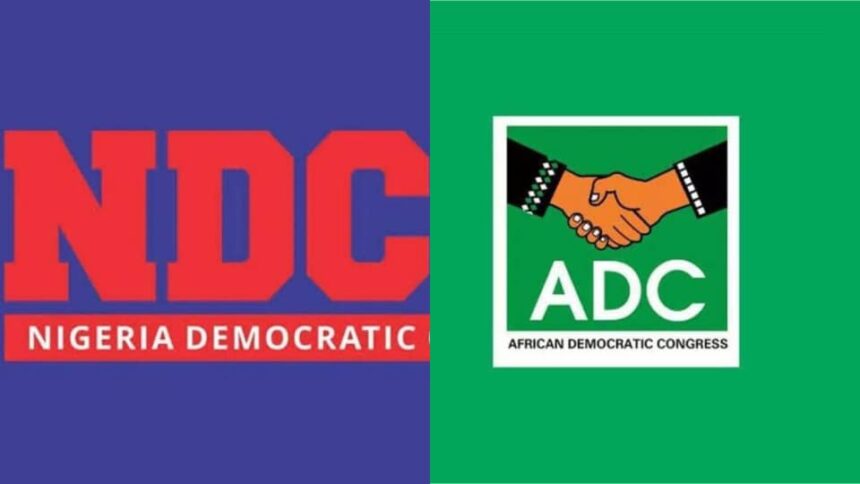
The recent decision of the Federal High Court in Lokoja to vacate its earlier order directing the Independent National Electoral Commission to register the Nigeria Democratic Congress has placed the party’s future in fresh uncertainty.
The court ruled that the Peace Movement Party was denied fair hearing over a dispute relating to the party’s logo and consequently ordered that the matter begin afresh, leaving the NDC’s legal status unresolved.
The ruling has significant implications because the NDC had become the political platform adopted by Labour Party’s former presidential candidate, Peter Obi, and former Kano State Governor, Rabiu Kwankwaso, following its earlier court-backed registration.
If the party eventually loses the substantive suit together with any subsequent appeals, its registration could be invalidated, potentially leaving its candidates without a recognised platform ahead of the general election.
With INEC operating within strict electoral timelines, such an outcome could leave little opportunity for new party registrations, political realignments or fresh nominations before the polls.
The development has therefore shifted attention from conventional political campaigns to legal proceedings that may ultimately determine which parties are eligible to participate in the election.
A similar legal cloud also hangs over the African Democratic Congress, where internal disagreements and court cases continue to generate uncertainty despite assurances from the faction led by former Senate President, David Mark.
The party remains embroiled in litigation over its leadership and legal status, while another suit seeking its deregistration has further complicated its political outlook.
Should the ADC fail to prevail in the pending legal processes, prominent figures aligned with the party, including former Vice-President, Atiku Abubakar, and former Minister Of Transportation, Rotimi Amaechi, could also face challenges regarding the platform on which they intend to contest.
The parallel legal troubles confronting both the NDC and ADC have highlighted the organisational risks facing opposition parties despite months of coalition-building and political negotiations.
Although considerable attention has focused on forging alliances capable of challenging the ruling All Progressives Congress, the legal stability of those platforms has emerged as an equally critical factor.
With electoral deadlines approaching, prolonged litigation could narrow political options for affected parties and complicate preparations for the presidential election.
In contrast, the APC enters the contest with an already established platform that is not currently facing comparable registration disputes.
While that circumstance does not predetermine electoral outcomes, it removes one layer of uncertainty that continues to confront its major rivals.
Some observers may interpret the ongoing court cases as obstacles capable of disrupting opposition preparations for the polls.
Others, however, argue that judicial intervention remains an essential safeguard to ensure political parties comply with constitutional provisions and due process before participating in elections.
From that perspective, the courts are expected to resolve competing legal claims fairly while strengthening confidence in Nigeria’s democratic institutions rather than weakening them.
The unfolding legal battles have also reinforced the importance of institutional certainty in an election cycle where compliance with electoral laws may prove as decisive as campaign strategies.
As the 2027 contest gradually takes shape, the fortunes of some opposition parties may depend not only on voter support but also on the eventual outcome of judicial proceedings that will determine the legitimacy of their political platforms.
With both the NDC and ADC awaiting crucial legal decisions, Nigeria’s courts have assumed an increasingly significant role in a political landscape where the first major contest may ultimately be decided before ballots are cast.