Osun has entered the final stretch of a governorship contest that has gradually become much larger than the names printed on the ballot paper, with family loyalty, political ambition, celebrity influence, campaign rhetoric, election administration and powerful personalities now converging around a single Saturday vote, while every fresh statement appears to open another chapter in a contest that was already carrying considerable political weight before the latest drama began.
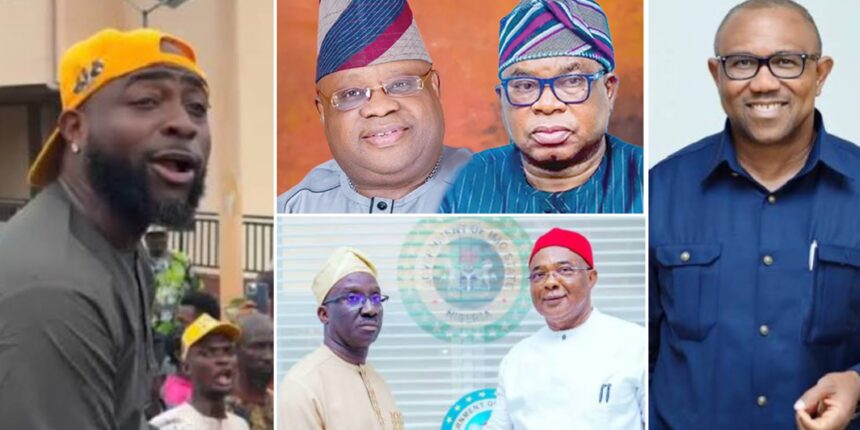
At the centre of the unfolding story is Davido, whose connection to Osun politics is deeply personal because Governor Ademola Adeleke is his uncle, yet the singer’s role has increasingly moved beyond the familiar territory of celebrity support, placing him directly inside a political conversation involving Peter Obi, Imo Governor Hope Uzodimma, Edo Governor Monday Okpebholo, APC candidate Bola Oyebamiji and the machinery surrounding the August 15, 2026 election.
The latest development involving Davido and Peter Obi has therefore attracted attention for a reason that goes beyond the short message exchanged between 2 prominent Nigerians, because behind those few words lies a much longer sequence of events that has already included campaign appearances, appeals for peace, accusations, political responses, a disputed document, questions over electoral deployment and an increasingly heated battle over who controls the political narrative in Osun.
The family connection that placed Davido inside Osun politics
Davido’s involvement did not begin with Peter Obi’s statement on August 14, 2026, nor did it begin with the latest exchange involving the governors, because his connection to the Osun election has been visible for months through his relationship with Ademola Adeleke, the incumbent governor seeking another term in office under Accord Party, making the singer one of the most recognisable public figures openly associated with the governor’s re election effort.
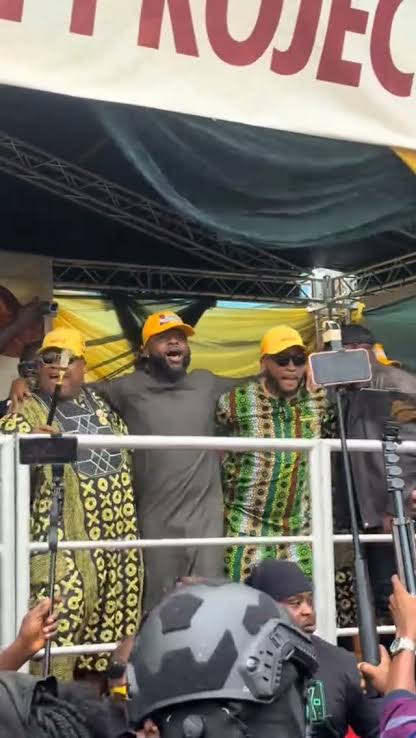
The relationship between the 2 men is well known, with Adeleke being Davido’s uncle, and that family connection has naturally given the singer a personal stake in the political contest, although his public participation has gone beyond private family support, as Davido has appeared alongside Adeleke during political engagements and has urged voters to support the governor while highlighting what he described as his uncle’s record in office.
That involvement became particularly visible during the campaign period when Davido appeared at a political engagement with Adeleke and spoke directly to voters, giving the election an unusual entertainment dimension because one of Nigeria’s biggest music stars was no longer merely watching events from a distance but actively using his enormous public platform to support a candidate standing for another term.
The situation also explains why attacks directed at Adeleke have repeatedly drawn responses from Davido, because the singer has treated the contest as both a political matter and a family matter, creating a situation where comments made by rival campaign figures can quickly move from an Osun rally to national social media conversations within minutes.
The contest facing Adeleke
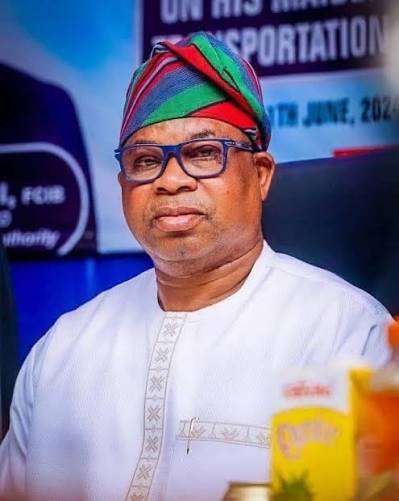
Ademola Adeleke entered the August 15 election as the incumbent governor, with the Peoples Democratic Party and its allies seeking to retain control of Osun while the opposition has presented the election as an opportunity to change the political direction of the state, putting considerable pressure on both sides as the campaign moved into its final days.
The APC candidate is Bola Oyebamiji, popularly known as AMBO, a former Commissioner for Finance in Osun State whose campaign has attracted the backing of several senior figures within the APC, including prominent governors and national political figures who have travelled into the state to campaign for the party’s candidate.
The contest has consequently developed into a direct struggle between Adeleke’s bid for another term and the APC’s effort to return the state to its political fold, with campaign messages increasingly focusing on governance, leadership style, development, political experience and the personality of the incumbent governor.
The presence of 15 candidates in the race has added another layer to the contest, although public attention has largely centred on the battle involving Adeleke and Oyebamiji, particularly because both major political camps have succeeded in drawing national figures into the campaign.
That wider involvement matters because Osun is not simply choosing between 2 individuals, the result will also be interpreted as a test of political strength for the parties and personalities supporting each side, especially at a time when Nigeria’s political alignments are changing rapidly ahead of the next major electoral cycle.
August 5 opened another chapter
Davido’s campaign for peace became more pronounced on August 5, 2026, when he appealed to the candidates contesting the Osun election to respect the electorate’s decision and allow the people to determine who would govern the state.
The appeal was significant because it placed Davido’s public message beyond the simple instruction to vote for his uncle, showing that he was also presenting himself as someone concerned about the conduct of the election and the atmosphere surrounding the contest.
His message became even more pointed when he directed an appeal towards Hope Uzodimma, the Governor of Imo State and chairman of the APC national campaign council for the Osun governorship election, asking him to use his influence to promote a peaceful, free and credible election.
That decision brought Davido directly into contact with one of the most senior political figures campaigning for the opposition candidate, turning what might have remained a general appeal for peace into a much more personal political exchange.
The Uzodimma episode
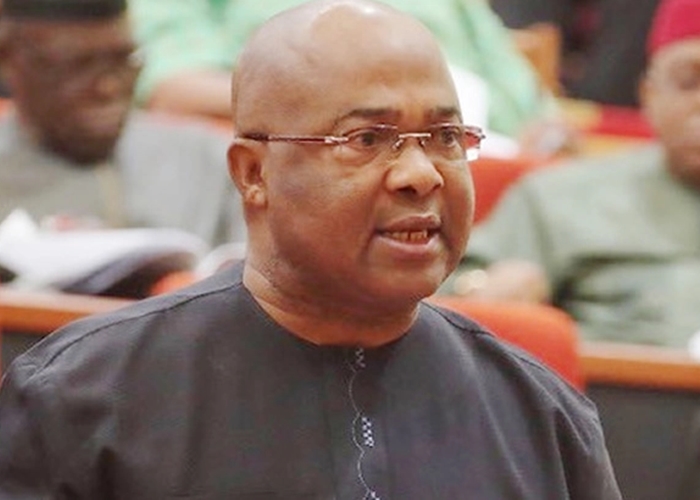
Hope Uzodimma occupies an important position in the Osun contest because his role as chairman of the APC national campaign council placed him at the centre of the party’s campaign strategy, making any direct message from Davido to him considerably more consequential than an ordinary exchange between a celebrity and a politician.
The response that followed came through Ambrose Nwogwugwu, an aide to Uzodimma, whose comments were interpreted as a sharp response to Davido and included a suggestion that the singer should be preparing his uncle for life after office rather than concerning himself with the election.
That statement immediately changed the tone of the exchange because the conversation was no longer simply about peaceful voting, it had moved into personal political territory involving Davido’s family relationship with Adeleke and the governor’s future beyond the election.
Yet the story did not end there because Uzodimma subsequently distanced himself from the comments attributed to his spokesman, making it clear that he had not authorised Nwogwugwu or anyone else to speak on his behalf in that manner.
Uzodimma then used a striking phrase when he described Davido as his son, creating an unexpected twist in an episode that had appeared to be developing into a direct confrontation between the singer and the Imo governor.
He also pointed out that Davido was not an Osun voter and explained his presence in the state through his political involvement and support for Adeleke, a clarification that showed how carefully the political actors were beginning to frame the singer’s role in the election.
Okpebholo enters the picture
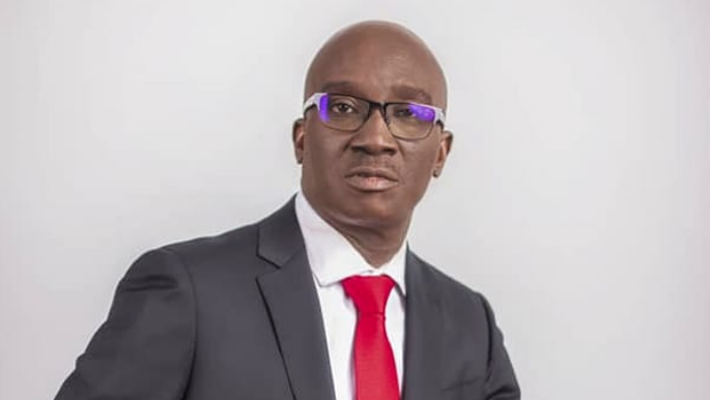
The political drama widened when Edo Governor Monday Okpebholo became involved during APC campaign activities in Osun, where he criticised Adeleke’s style of leadership and mocked the governor’s well known dancing image.
Okpebholo’s remarks were delivered within the wider APC campaign for Bola Oyebamiji, meaning they were not isolated comments about entertainment or personality but part of a political argument aimed at persuading Osun voters to reconsider the leadership of the incumbent governor.
The dancing issue has followed Adeleke for years and has become one of the most recognisable elements of his public image, but during the campaign it was turned into a political weapon, with Okpebholo questioning whether voters were satisfied with a governor whose dancing had become such a prominent part of his public identity.
Davido responded in a manner that immediately changed the conversation again, posting on social media what appeared to be a WAEC result attributed to Okpebholo.
The post quickly attracted attention because educational records are highly sensitive in Nigerian political discourse, especially when they are presented during an election campaign involving a sitting governor and a rival political camp.
Yet the document must be treated carefully because the reliable material surrounding the controversy has not established that the alleged WAEC result was officially authenticated by WAEC or independently verified as genuine.
The accurate description is therefore that Davido shared an alleged WAEC result attributed to Okpebholo, rather than stating as fact that he exposed a genuine examination record belonging to the Edo governor.
That distinction becomes especially important when the story is presented as a fact based political feature because the existence of the social media post is established while the authenticity of the document remains unconfirmed.
The apology demand
The WAEC controversy did not remain confined to social media because lawyer Timothy Tugbiyele subsequently called on Davido to apologise to Okpebholo, arguing that the singer should have exercised greater restraint when engaging a sitting governor.
The demand added another dimension to the story because the dispute had now moved from political campaign exchanges into a question of conduct and responsibility, with Davido’s enormous public platform making every response capable of reaching millions of people within a short period.
The episode also demonstrated how quickly the Osun election had become a national conversation, because a comment made during an APC campaign could trigger a response from a global Nigerian music star, which could then produce another political reaction and another wave of public attention.
The Ebonyi REC controversy
The most serious development came on August 14, 2026, just 1 day before voters were scheduled to go to the polls, when Davido raised questions about Pauline Ugoyenka, a Resident Electoral Commissioner associated with Ebonyi State, reportedly being present in Osun.
Davido questioned why she was in Osun and alleged that she had been sent by Uzodimma to manipulate the election, but that claim remains an allegation made by Davido and should not be presented as an established fact.
The distinction is crucial because an allegation concerning election manipulation is fundamentally different from evidence proving that an election official has been deployed for an illegal purpose.
The Adeleke campaign organisation also questioned Ugoyenka’s presence and sought clarification from INEC over who authorised the deployment, turning the issue into a formal electoral question rather than leaving it entirely within the realm of social media speculation.
One report cited an INEC letter dated August 3, 2026, concerning RECs from 15 contributing states and argued that Ebonyi was not among the states listed, which became part of the reason for the questions surrounding Ugoyenka’s presence in Osun.
That development created one of the most sensitive moments of the campaign because questions about electoral officials immediately touch on public confidence in the process, particularly when they arise less than 24 hours before voting begins.
Still, there is no established evidence in the material presented that Uzodimma personally ordered a rigging operation, and the allegation must remain clearly separated from confirmed facts about electoral deployment.
Peter Obi arrives at the moment
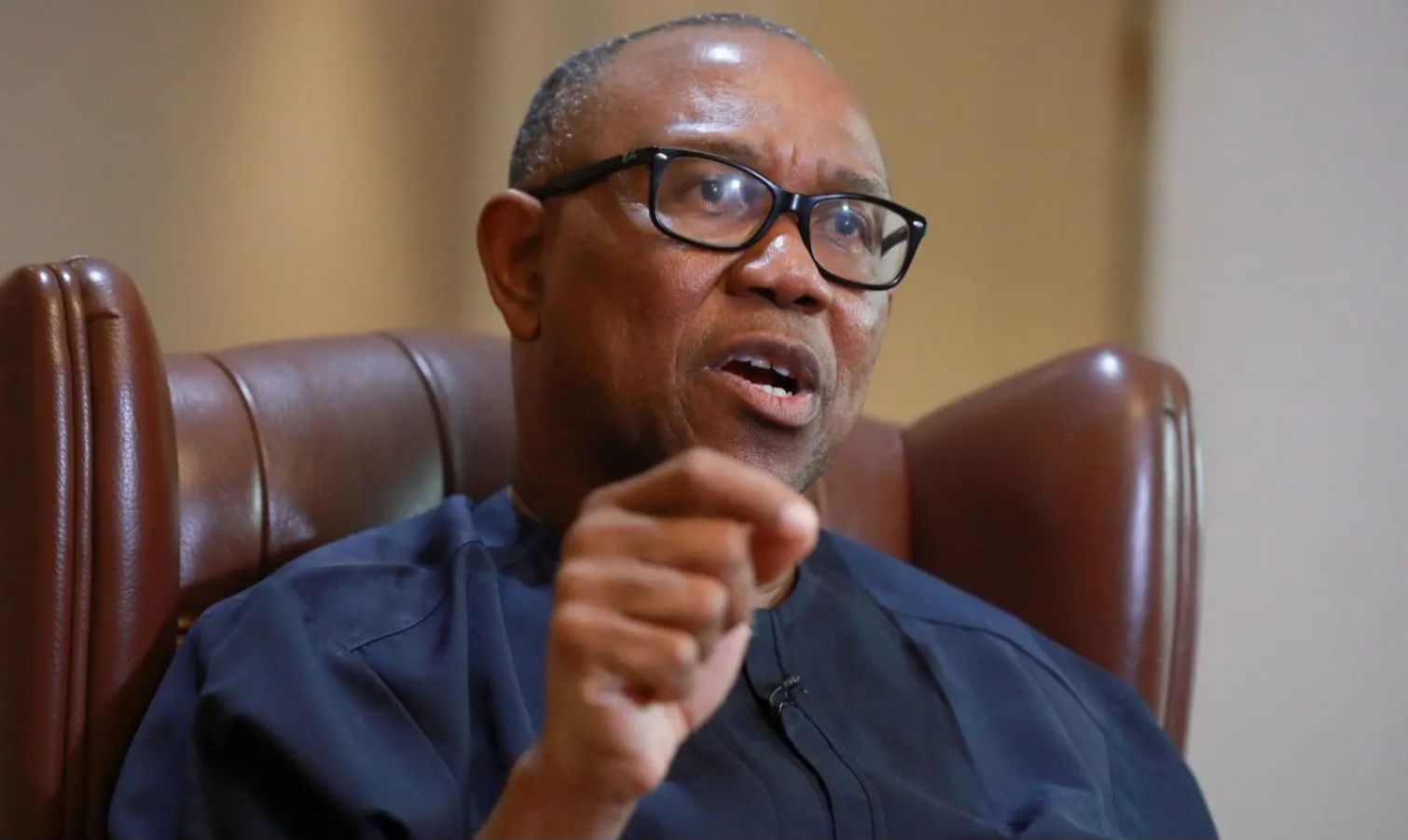
Against that already heated background, Peter Obi issued his message, calling for a peaceful and credible Osun governorship election.
Obi’s intervention was broader than the immediate rivalry between Adeleke and Oyebamiji because his message focused on INEC, security agencies, political parties and other stakeholders, urging them to ensure that voters could exercise their constitutional rights without intimidation or interference.
“Osun belongs to its people. Therefore, I call on the Independent National Electoral Commission, security agencies, political parties, candidates, government institutions, civil society organisations, religious and traditional leaders, the media, and every stakeholder to act with the highest degree of neutrality, professionalism, and restraint,” Obi said in parts
“The people of Osun must be allowed to vote freely, safely, and without intimidation. Their votes must be counted transparently, protected faithfully, and announced according to the genuine will of the electorate,” he added.
The timing was important because the statement arrived just few days before voting, when political tensions were already elevated and when Davido had been publicly raising concerns about the conduct of the election.
Davido then responded directly to Obi on X with a short message that became one of the most discussed moments in the entire political drama.
“Thank you so much Your Excellency.”
Those words were enough to create a fresh wave of political interpretation, largely because Davido had openly supported Adeleke while Obi was now publicly calling for a peaceful and credible election in the same state.
Yet the facts do not support turning that exchange into an announcement of political allegiance.
There is no evidence in the material presented that Davido joined Obi’s NDC or endorsed Obi for the presidency through that message, and the safer reading is that Davido publicly appreciated Obi’s intervention concerning the Osun election.
The significance of the moment therefore lies less in an alleged political alliance and more in the unusual convergence of 2 major public figures around the principle of a peaceful election.
The Peter Obi moment in context
Davido’s response to Obi becomes more understandable when placed beside his earlier messages because the singer had already been demanding a peaceful election before Obi made his statement.
That sequence matters because it shows that Davido’s position on peaceful voting did not suddenly emerge because Obi spoke, rather Obi’s statement landed inside an issue Davido had already been discussing publicly.
The 2 men therefore found themselves speaking about the same electoral principle from different political positions, while Davido remained openly committed to Adeleke’s re election campaign.
That is why the phrase Davido Peter Obi moment captures the development without necessarily proving a political partnership between them.
Obi’s message concerned the integrity of the election, while Davido’s response expressed appreciation, and the distinction becomes important in a campaign where even a short social media post can be interpreted as a political declaration.
Oyebamiji at the centre of the APC campaign
While much of the public drama has focused on Davido and the governors, Bola Oyebamiji remains the APC candidate whose campaign is at the heart of the opposition’s effort to defeat Adeleke.
Oyebamiji has benefited from the presence of heavyweight APC figures who have travelled to Osun to campaign on his behalf, including Okpebholo, Uzodimma, Kogi Governor Usman Ododo, Minister of Works David Umahi and former Osun Governor Gboyega Oyetola.
Their involvement demonstrates the seriousness with which the APC is approaching the election because the party has assembled senior political figures to strengthen the campaign for its candidate and challenge Adeleke’s attempt to retain power.
The resulting contest has therefore become a meeting point between state politics and national political influence, with the major parties using Osun as a battleground where political alliances, campaign networks and public personalities can all influence the atmosphere surrounding the election.
Adeleke’s battle for another term
Adeleke’s position is equally significant because he is defending an office he already controls while also carrying the expectations of the political structure that brought him to power.
His campaign has repeatedly emphasised the importance of allowing voters to decide freely, while the Osun State Government has maintained that the people’s votes must count.
Davido’s involvement has amplified that message because his public support gives Adeleke access to a huge entertainment audience that may not normally follow political rallies or traditional campaign events.
The family connection also means that Davido’s involvement cannot easily be separated from the personal stakes surrounding Adeleke’s re election effort, especially when opponents attack the governor’s personality or record.
That dynamic has made Davido one of the most visible unofficial voices around the election, even though he is not a candidate and does not hold an electoral office.
The Edo Government responds
The dispute later widened beyond Okpebholo himself after Davido appealed to United States President Donald Trump and the international community to pay attention to the Osun election.
The Edo State Government criticised Davido over that appeal, effectively arguing that the singer should concentrate on his music rather than seeking international attention around the Nigerian election.
That response transformed the story yet again because the debate was no longer simply about an Edo governor criticising an Osun governor or a singer defending his uncle.
The argument now involved the role of celebrities in elections, the boundaries of political speech, international attention on Nigerian electoral processes and the question of whether public figures should use international platforms when they believe an election requires closer scrutiny.
The election numbers
The stakes are substantial because INEC’s current figures put Osun’s registered voter population at 2,339,233, while approximately 1.906 million Permanent Voter Cards had been collected, making the election one of the major state contests attracting national attention.
Voting is scheduled for Saturday, August 15, 2026, with 15 political parties and candidates in the contest following the addition of another candidate to the ballot.
Security preparations have also been significant, with reports indicating that approximately 15,000 police personnel are expected to provide security for the election.
Those figures provide context for the political tension because the election involves millions of registered voters, thousands of polling locations and a substantial security operation designed to protect the process.
The size of the electorate also explains why every major statement from a governor, presidential candidate, celebrity or political campaign can have consequences far beyond the immediate personalities involved.
The sequence behind the drama
The story becomes easier to understand when the events are placed in order because the latest Peter Obi exchange did not happen in isolation.
Davido first established himself as a visible supporter of Adeleke’s re election campaign, using his celebrity platform to encourage support for his uncle while speaking about the governor’s performance in office.
On August 5, Davido publicly appealed to the candidates to respect the voters’ decision and allow the election to remain peaceful, establishing a clear public message before the final days of the campaign.
He then appealed directly to Uzodimma, the APC campaign council chairman, asking him to use his influence to promote a free, peaceful and credible election.
A statement attributed to Uzodimma’s spokesman responded sharply, bringing Adeleke’s political future and Davido’s family connection into the exchange.
Uzodimma subsequently distanced himself from those remarks and said Davido remained his son, while also explaining Davido’s role in Osun as a political supporter of his uncle.
Okpebholo later criticised Adeleke’s dancing during APC campaigning, creating another confrontation between the opposition campaign and the governor’s camp.
Davido responded by sharing an alleged WAEC result attributed to Okpebholo, after which lawyer Timothy Tugbiyele called for an apology.
The controversy then moved into electoral administration when Davido questioned the presence of Pauline Ugoyenka, a REC associated with Ebonyi State, in Osun and alleged that she had been sent to manipulate the election.
The Adeleke campaign also demanded clarification over the REC’s presence, while the allegation of a rigging operation remained unproven.
The Edo State Government subsequently criticised Davido after his appeal to Donald Trump and the international community concerning the election.
Finally, Peter Obi called for a peaceful and credible election, prompting Davido’s public response, “Thank you so much Your Excellency.”
That sequence explains why the Peter Obi exchange became so prominent despite consisting of only a few words.
What remains unproven
Several claims surrounding the drama require careful wording because the election has produced a mixture of confirmed political activity and allegations circulating through social media.
Davido’s support for Adeleke is confirmed, his campaign appearance is confirmed, Peter Obi’s call for a peaceful and credible election is confirmed and Davido’s response to Obi is also confirmed.
Uzodimma’s role as chairman of the APC Osun campaign council is established, while his statement that Davido remains his son has also been reported.
Okpebholo’s criticism of Adeleke’s dancing has been reported, while Davido’s social media post containing an alleged WAEC result attributed to Okpebholo is also established as a social media event.
The authenticity of that document, however, has not been established by reliable independent verification in the material presented.
Likewise, the reported presence of Pauline Ugoyenka in Osun and the questions raised over her deployment are legitimate matters of political and electoral interest, but Davido’s allegation that she was sent by Uzodimma to rig the election remains an allegation rather than a proven fact.
There is also no evidence from the material presented that Davido joined the NDC or endorsed Peter Obi for the presidency through his August 14 message.
Keeping those distinctions clear is essential because the final hours before an election are particularly vulnerable to rumours, partisan claims and social media interpretations that can quickly be mistaken for established facts.
Why the final hours matter
Osun voters are now approaching an election in which the campaign has generated unusually high national visibility, with a sitting governor seeking another term, an opposition candidate backed by powerful APC figures and a celebrity family member whose interventions have repeatedly pushed campaign disputes into the national conversation.
The presence of Peter Obi adds another layer because his call for a credible election has placed another nationally recognised political figure inside the final stage of the Osun contest without necessarily making him an ally of Adeleke.
Uzodimma remains a major APC campaign figure, Okpebholo remains a prominent supporter of Oyebamiji, Adeleke remains the incumbent fighting to retain power and Davido remains one of the loudest public personalities backing the governor.
Every one of those roles matters because the election is no longer being discussed solely through traditional campaign speeches and rallies, it is being followed through social media posts, political statements, official responses and disputes involving personalities whose influence stretches well beyond Osun.
The central issue now is straightforward despite all the surrounding drama, voters are scheduled to choose their governor on August 15, 2026, and the credibility of that choice will depend on whether the electoral process remains peaceful, transparent and trusted by the competing camps.
The bigger political battle
What began as Davido’s support for his uncle has gradually become a broader political confrontation involving some of the most recognisable names connected to the Osun election.
Adeleke is fighting to remain governor, Oyebamiji is seeking to take the office for the APC, Uzodimma is helping lead the APC campaign effort, Okpebholo is campaigning against Adeleke’s administration, Davido is using his public platform to defend his uncle and Obi is calling for an election in which voters can exercise their rights freely.
Each development has added another layer without removing the original question facing Osun voters.
Who will govern Osun after the votes are counted?
That question cannot be answered by Davido’s social media posts, Peter Obi’s statement, Okpebholo’s campaign remarks, Uzodimma’s responses or the growing online arguments surrounding the election.
The answer belongs to the voters and to the electoral process that will translate their choices into the official result.
That is also why the final hours are so important because the political drama surrounding Davido, Adeleke, Oyebamiji, Okpebholo, Uzodimma and Obi may dominate social media, but the real test will come when voters arrive at polling units, cast their ballots and wait for the result to emerge.
For Davido, the election is deeply personal because his uncle is on the ballot, for Oyebamiji it is an opportunity to take power for the APC, for Adeleke it is a battle to secure another term, for Uzodimma and Okpebholo it is part of the wider APC campaign effort and for Obi it is another opportunity to insist that elections should be peaceful and credible.
Osun now stands at that decisive point where campaign words must give way to ballots, political personalities must give way to voters and social media arguments must eventually give way to an official result.
The drama has already produced enough twists to make the August 15 election one of the most closely watched state contests of 2026, but the most important chapter is still waiting to be written when Osun voters make their choice.