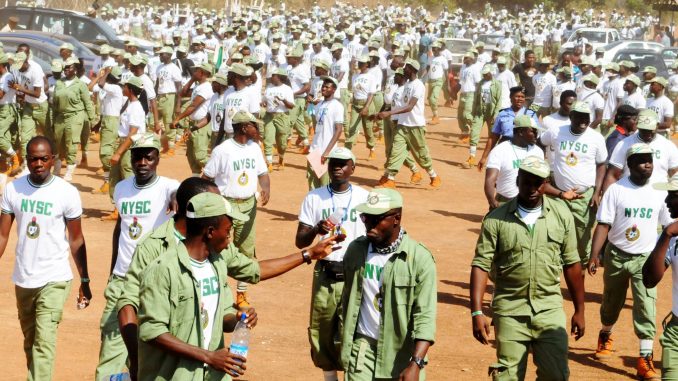
For more than five decades, the National Youth Service Corps (NYSC) has served as a defining stage in the lives of Nigerian graduates, fostering national integration while exposing young people to communities beyond their states of origin.
Established in 1973 in the aftermath of the civil war, the scheme has deployed over 6.4 million corps members across the country, where they have contributed to education, healthcare, agriculture, legal services and community development.
Despite its enduring relevance, concerns over corps members’ welfare, security, employability and administrative processes have fuelled increasing calls for a comprehensive review of the programme.
Many serving corps members believe the scheme should evolve to reflect changing economic realities and technological advancements.
A corps member who was mobilised in July 2025 said the weekly Community Development Service meetings had become burdensome due to rising transportation costs, particularly in Lagos.
“I was mobilised on July 30, 2025. I expected the scheme to introduce me to a world of experience. In terms of people and skills. I find the weekly Community Development Service (CDS) meetings unnecessary and cumbersome, especially in the current economic realities of Nigeria. Transportation, especially in Lagos, is not only expensive but also stressful,” the corps member said.
She also welcomed aspects of the proposed reforms while expressing concern over the extension of the orientation programme.
“I believe that technology has evolved so much that the process of clearance and CDS can be improved.
“I am relieved to not be a part of the reform because of the increase in the orientation programme from three weeks to six.
“Three weeks was already very long for me; I can’t imagine staying in camp for six weeks. Absolutely not.”
The federal government has now approved what it describes as the first comprehensive overhaul of the NYSC since its establishment 53 years ago.
The reforms, approved by the Federal Executive Council, are designed to reposition the scheme from a deployment-focused programme into one that prioritises employability, entrepreneurship and workforce development.
Under the new structure, the NYSC will operate under civilian leadership, while the military will continue providing security support for corps members.
The reforms also align the service year with the Federal Government’s broader objective of developing the skilled workforce required to support its ambition of building a $1tn economy.
The special adviser to the president on policy coordination, Hadiza Bala Usman, said the reforms were intended to strengthen human capital development and prepare young Nigerians for future economic opportunities.
“According to her, there was a need for us to intervene to build the present ambition of a $1 trillion economy by repositioning the NYSC as a civilian-led, skill-oriented, productivity-driven, and youth-empowering national institution.
“These, we need to strengthen the human capital development to enhance the workforce that is needed for us to promote and align with our national development,” she said.
One of the centrepieces of the reforms is the introduction of 11 specialised service streams that will allow corps members to align their service year with their academic qualifications, professional interests and career aspirations.
The proposed streams will cover agriculture, education, healthcare, legal services, technology and digital innovation, public service, infrastructure, enterprise, the green economy, the creative industry, and paramilitary and security services.
The orientation programme will also undergo significant changes, with the first two weeks devoted to civic education, leadership and national values, followed by financial literacy, business planning and career development before participants receive specialised training based on their selected streams.
The minister of youth development, Ayodele Olawande, described the reforms as a strategic investment in Nigeria’s youth population.
“The approved reforms will reposition the NYSC as a skills-driven, productivity-focused and youth-empowering institution that aligns with President Bola Ahmed Tinubu’s vision of building a $1 trillion economy,” he said.
Beyond skills development, the NYSC continues to play a vital role in national assignments, including elections, where corps members have become an important component of electoral operations.
Nearly 850,000 corps members served as ad hoc officials during the 2023 general elections, while the Independent National Electoral Commission is expected to mobilise more than 1.4 million personnel, largely drawn from the scheme, for the 2027 polls.
Although the reforms have generated differing opinions, they reflect growing efforts to balance the NYSC’s nation-building mandate with the realities of an increasingly digital and competitive economy.
As the scheme enters a new phase, the familiar khaki uniform is expected to remain a symbol of national unity while increasingly representing skills acquisition, innovation and career development for future generations of Nigerian graduates.