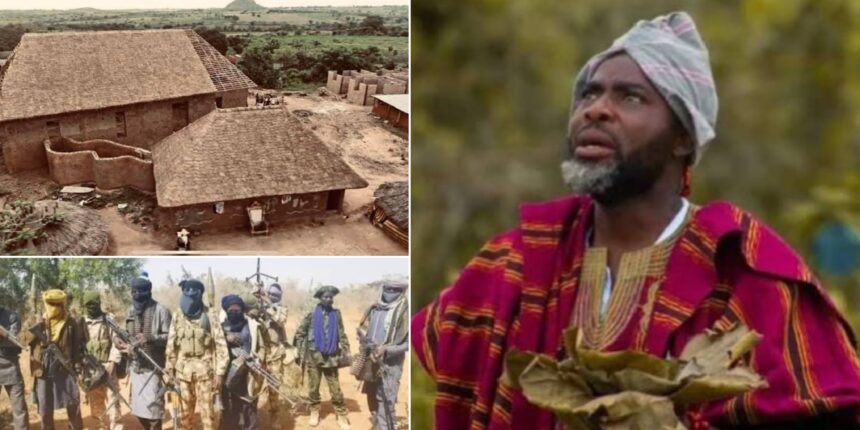
Every unforgettable epic film begins with a journey into places where history still feels alive. Dense forests, ancient palace grounds, dusty village paths, towering rocks, wide open fields, every location carries a story that cameras alone cannot recreate. These breathtaking landscapes have helped Nigerian filmmakers produce some of the country’s most celebrated historical movies, earning praise from audiences across Africa and beyond.
Yet behind the spectacular scenes that appear on screen, another reality has quietly begun to influence how these productions are made. Decisions that were once based on artistic vision are now increasingly shaped by safety concerns, forcing filmmakers to reconsider where they can work, how they can work, even whether certain stories can still be told in the way they were originally imagined.
That growing concern has now been brought into public focus by veteran actor, filmmaker, producer, director, horse breeder, Ibrahim Chatta, whose recent remarks have opened a wider conversation about the future of one of Nollywood’s most respected genres. His revelations paint a picture of an industry gradually adjusting to circumstances far beyond cameras, costumes, scripts, or budgets, raising fresh questions about what lies ahead for historical storytelling in Nigeria.
Epic films’ unique production demands
Epic movies occupy a special place within Nollywood because they recreate life before modern Nigeria, allowing audiences to experience the traditions, leadership systems, customs, beliefs, wars, celebrations, royal ceremonies, that defined various kingdoms across different regions of the country.
Unlike contemporary dramas that can easily be filmed inside cities, office buildings, hotels, residential estates, restaurants, shopping malls, schools, or studios, historical productions depend almost entirely on locations that have remained untouched by modern development. Thick forests, remote villages, ancient shrines, become essential parts of the storytelling because they help audiences believe every scene they watch.
Producing such films therefore requires transporting hundreds of people together with expensive equipment across difficult terrain. Actors, directors, cinematographers, logistics teams, all have to spend days or sometimes weeks working far away from major cities where emergency services, communication, accommodation, transportation, may not be easily available.
This production style has helped deliver acclaimed films such as Jagun Jagun, House of Gaa, Iyalode, Labake Olododo, productions that have received praise both within Nigeria, internationally, while introducing millions of viewers to Yoruba history, culture, traditions, leadership systems, legendary warriors, ancient kingdoms.
Security fears reshape production decisions
Nigeria’s security challenges have increasingly affected many sectors over the past several years, with concerns over kidnappings, banditry, attacks on travelers, violence along certain highways, becoming important considerations for businesses, institutions, families, entertainment professionals.
Film producers are not exempt from these realities because every production begins with assessing possible risks before selecting shooting locations. Places that previously attracted filmmakers because of their natural beauty are now sometimes viewed through an entirely different lens, one that focuses first on the safety of everyone involved before artistic considerations are discussed.
Rather than exposing hundreds of workers to uncertain conditions, many producers have begun reconsidering projects that require long periods inside forests or isolated communities. Decisions that once revolved around scenery, historical accuracy, visual quality, have gradually expanded to include security planning, emergency response arrangements, transportation strategies, accommodation, communication systems.
These changing priorities are gradually influencing the types of stories reaching audiences because practical considerations now play a much bigger role during pre production planning than they did several years ago.
Ibrahim Chatta breaks the silence
Veteran actor, filmmaker, horse breeder, Ibrahim Chatta recently shared details that illustrated how security concerns are affecting epic filmmaking from his own experience. Speaking about developments within the industry, he explained that conversations with fellow professionals revealed growing anxiety whenever productions involve remote locations.

According to Chatta, “Taofeeq Abisogun called me, and we started talking about how actors are now scared of acting in epic films. Actors based in Lagos, if you tell them a movie will be shot in Ibadan, they won’t want to come because of the Oyo incident. Everyone is scared of filming in the forest, and nobody can be blamed.”
He continued, “So, he told me an incident had happened in Moniya. That’s what I wanted to check on social media when I came across the controversy over the video where I mentioned that I had lost 48 horses.”
Those remarks attracted widespread attention because they connected security concerns directly to creative decisions inside Nollywood. Rather than discussing theoretical possibilities, Chatta described fears that have become part of everyday conversations among actors, producers, directors, location managers, crew members responsible for organizing large scale productions.
His comments also highlighted how developments outside the entertainment industry are now influencing decisions made within film production circles, creating challenges that extend beyond scripts, acting, directing, cinematography.
Horses reveal the hidden economic impact
Chatta’s film village has become widely known for maintaining horses, camels, donkeys, other animals used to recreate historical scenes in Yoruba epic films. These animals have become valuable production assets because they contribute greatly to authenticity whenever filmmakers recreate royal processions, military campaigns, traditional festivals, palace ceremonies, messenger journeys, legendary battles.
Discussing how the industry has changed, Chatta revealed, “I currently have about 27 horses, my lowest number since I started operating the film village. I used to buy my horses from the north, from communities along the border with the Niger Republic.”
He added, “The fewest horses I ever bought at once was 10. I usually bought 15 at a time, but now my colleagues are scared of bandits and kidnappers because of what’s happening in Oyo state, so they no longer come to shoot epic films.”
According to Chatta, demand for horses has declined because fewer productions now require them. That reduced demand has affected his willingness to expand his stable despite previously making regular investments to support future productions across the industry.
Investment plans change course
Growing uncertainty has influenced not only current productions but also long term investment decisions made by suppliers who support epic filmmaking. Businesses naturally expand when demand continues rising, yet hesitation often replaces growth whenever future opportunities become less predictable.
Chatta explained, “So, I wasn’t motivated to buy more horses. I used to buy horses before and after Eid al Kabir, when my staff returned home for the festival. But I didn’t buy any this year because there’s no money.”
He also disclosed, “Those who used to rent horses also no longer shoot movies because they’re afraid of being kidnapped while filming in the forest. I now buy cows instead.”
His experience demonstrates how changing production patterns extend beyond movie sets. Decisions affecting one part of the industry gradually influence suppliers, breeders, transporters, handlers, workers whose livelihoods depend on maintaining resources required for historical filmmaking.
According to Chatta, he has lost 49 horses over the years. He currently keeps about 27 horses, representing the smallest number since establishing the facility. Previous purchases typically ranged between 10 to 15 horses whenever demand remained strong across the industry.
Why horses remain essential
Historical films strive for realism because audiences quickly recognize details that reflect authentic traditions. Horses have long occupied an important place within many Nigerian kingdoms where they symbolized authority, courage, leadership, military strength, prestige.
Scenes involving kings arriving before their subjects often depend on horses to communicate royal status without requiring lengthy dialogue. Warrior commanders leading armies, palace guards escorting dignitaries, traditional messengers delivering urgent information, festival processions celebrating important occasions, all become more believable through the presence of properly trained animals.
Removing horses from these productions would significantly reduce historical accuracy because many stories being portrayed originated during periods when horses played central roles within governance, warfare, transportation, ceremonial activities throughout different kingdoms.
Chatta’s facilities have supplied animals for productions including Jagun Jagun, House of Gaa, Iyalode, Labake Olododo, illustrating how one supplier can contribute to numerous successful projects over several years.
Oyo state’s growing concern
Oyo State has traditionally remained one of the most important centres for Yoruba language filmmaking because of its cultural heritage, experienced actors, accessible historical locations, strong creative community.
Recent security concerns, however, have encouraged many filmmakers to exercise greater caution before committing resources to productions requiring extended periods within some remote parts of the state. Chatta specifically referred to fears surrounding kidnappings, bandit related incidents, while discussing why colleagues increasingly hesitate whenever filming schedules include forest locations.
Although many productions still take place across Oyo State, security has become an important consideration during planning meetings. Producers now spend more time evaluating possible risks before confirming locations, particularly whenever stories require extended outdoor filming far away from urban centres.
Careful planning has therefore become part of routine production management because protecting cast members, crew members, equipment, investors, remains every producer’s primary responsibility before creative ambitions are pursued.
Rising production costs
Security concerns influence filmmaking financially because every additional precaution requires funding. Budgets originally prepared around artistic requirements must often be revised to accommodate protective measures that previously received little attention.
Many productions now allocate resources toward hiring private security personnel capable of accompanying cast, crew throughout filming schedules. Security escorts for transportation have become another consideration whenever journeys involve routes considered more vulnerable than before.
Alternative travel plans may require longer journeys through safer roads, increasing transportation expenses, accommodation costs, fuel consumption, production schedules. Equipment movement also becomes more complicated because valuable cameras, lighting systems, generators, costumes, props, animals, require additional coordination throughout each stage of production.
Insurance, contingency planning, emergency communication arrangements, location assessments, all contribute further expenses that can substantially increase the overall cost of producing large scale historical films.
Ripple effect across Nollywood
Epic filmmaking supports an extensive network of professionals whose contributions rarely receive public attention despite being essential to successful productions.
Horse owners invest years raising, training, maintaining animals specifically suited for historical films. Costume designers carefully recreate traditional clothing representing different kingdoms, social classes, historical periods. Prop makers manufacture shields, swords, staffs, drums, crowns, royal furniture, weapons, ceremonial objects based upon extensive cultural research.
Traditional drummers provide authentic musical performances during festivals, palace ceremonies, battle preparations. Stunt performers undergo specialized training before recreating ancient combat sequences. Makeup artists transform actors into believable historical figures while local artisans construct huts, palace structures, village settings reflecting earlier generations.
Rural communities also benefit economically whenever film productions arrive because accommodation providers, food vendors, transport operators, labourers, craftspeople, receive temporary employment opportunities that circulate income throughout surrounding areas. Fewer productions therefore affect many families whose livelihoods depend directly or indirectly upon the success of epic filmmaking.
Urban stories become attractive alternatives
Filmmakers constantly balance artistic ambition with practical realities. Whenever one production approach becomes increasingly difficult, alternatives naturally receive greater consideration because businesses must remain sustainable despite changing circumstances.
Urban settings generally provide easier access to accommodation, hospitals, police stations, transportation networks, electricity, communication infrastructure, making them more convenient for production planning. These advantages reduce logistical uncertainty while helping producers manage schedules more efficiently.
Romantic dramas, family stories, crime thrillers, comedy series, corporate themed productions often require fewer remote locations, making them comparatively easier to organize under current conditions. Existing buildings, offices, hotels, residential estates, restaurants, public spaces, frequently provide suitable filming environments without requiring lengthy travel into isolated communities.
Although these genres continue enriching Nollywood through different forms of storytelling, they cannot fully replace historical epics because each genre serves unique cultural, educational, entertainment purposes.
Cultural heritage faces growing pressure
Epic films perform an important cultural function beyond entertainment because they preserve memories that might otherwise fade across generations.
Viewers regularly encounter indigenous languages spoken naturally throughout dialogue, traditional greetings exchanged during ceremonies, leadership structures guiding ancient kingdoms, customs governing marriages, festivals celebrating harvests, conflict resolution practices, religious beliefs, oral traditions, legendary heroes, historical events.
Young audiences who may never personally experience these traditions often develop greater appreciation for Nigerian history after watching carefully produced epic films. International viewers likewise gain insight into cultures that extend far beyond stereotypes frequently associated with Africa.
Reducing opportunities for authentic historical filmmaking could gradually limit visual documentation of traditions that continue shaping cultural identity throughout many communities today.
Earlier security concerns within Nollywood
Chatta’s observations reflect concerns that have surfaced within the Nigerian film industry during recent years following incidents affecting actors, production crews, entertainment professionals working outside major cities.
Reports involving kidnappings, attacks, security threats directed toward travelers have encouraged greater caution whenever productions require extended outdoor schedules across isolated locations. Every widely reported incident naturally influences future planning because producers carry responsibility for everyone participating throughout filming.
Experience has therefore taught many filmmakers to prioritize preventive measures before commencing large productions, particularly whenever scripts demand weeks inside forests, villages, mountains, remote landscapes where immediate assistance may prove difficult during emergencies.
Those realities continue shaping conversations within Nollywood as professionals search for practical ways to preserve historical storytelling while ensuring every production remains as safe as reasonably possible.
Why this conversation matters
Epic films have become one of Nollywood’s strongest international calling cards because they combine compelling storytelling with spectacular visuals rooted deeply within Nigerian history. Productions such as Jagun Jagun, House of Gaa, Iyalode, Labake Olododo have demonstrated that audiences around the world remain eager to experience authentic African stories told through local languages, traditions, customs, historical settings.
Chatta’s remarks therefore represent more than personal business challenges. They highlight broader questions about how security conditions influence creative industries whose success depends upon unrestricted access to authentic environments. Every postponed production, every abandoned location, every cancelled investment, carries consequences extending far beyond one filmmaker or one company.
Preserving Nigeria’s historical storytelling tradition requires environments where creativity can flourish alongside confidence, careful planning, responsible security measures. Epic films remain powerful reminders of the country’s cultural richness, resilience, remarkable heritage, making every effort to sustain the genre important not only for Nollywood but also for future generations who will continue discovering Nigeria’s history through the stories brought to life on screen.