Every chapter of history, marked by its triumphs and its failures, shapes the identity of the generation that inherits it. In sharing these stories, we carry their legacy forward—a reminder that our daily choices form the footprints we leave behind for the future.
Driven by a commitment to education and cultural awareness, WITHIN NIGERIA revisits two defining milestones in our nation’s journey that took place on July 11.
The 1991 Hajj Jet Disaster
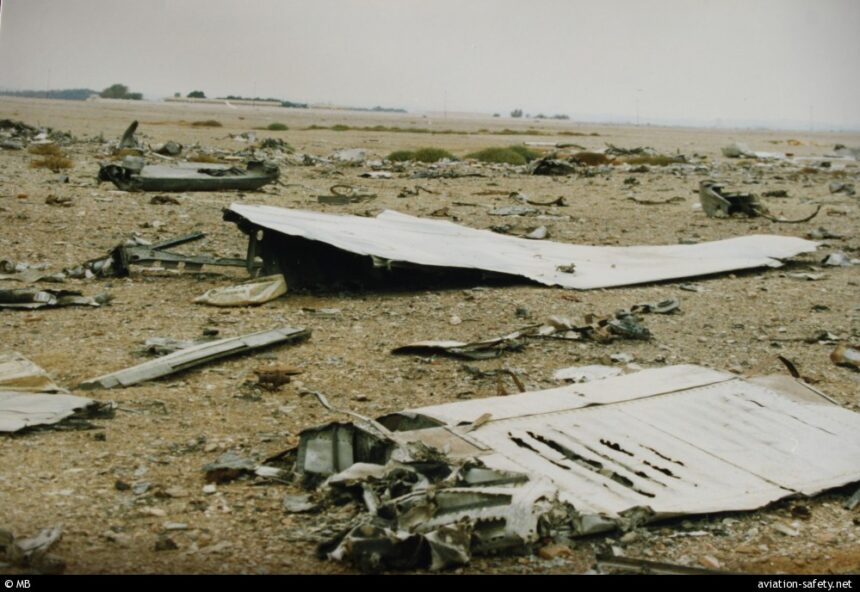
On July 11, 1991, a chartered McDonnell Douglas DC-8 carrying Nigerian Muslim pilgrims home from the annual Hajj pilgrimage crashed in a ball of fire yesterday morning just moments after taking off from King Abdulaziz International Airport.
All 261 people on board—247 passengers and 14 Canadian crew members—were killed in the disaster.
The flight, Nigeria Airways Flight 2120, was bound for Sokoto, Nigeria, when the flight crew reported a severe mid-air fire and attempted a desperate emergency return to the runway.
The burning aircraft disintegrated and plunged into an empty desert lot just under three kilometers short of the tarmac.
The passengers were predominantly elderly worshippers and young families returning from Mecca after fulfilling their lifelong religious duties.
The flight had been chartered from Nationair Canada, a Toronto-based operator acting on behalf of Nigeria Airways to manage the massive influx of Hajj seasonal travel.
Witnesses on the ground described a horrifying scene as the aircraft rose into the bright morning sky already trailing a heavy wake of dark smoke.
”The plane was completely engulfed in flames before it even hit the ground,” said one airport ground worker who watched the disaster unfold. “Pieces were falling from the sky.”
According to Saudi civil aviation officials, the aircraft took off normally at 8:28 a.m. local time. Within three minutes, Captain William Allan, an experienced former Royal Canadian Air Force pilot, contacted air traffic control to report multiple system failures and a rapidly developing fire.
2010 NUJ Kidnapping
On July 11, 2010, four journalists were kidnapped at gunpoint while travelling back from a media conference in neighboring Akwa Ibom State.
According to reports, armed gunmen in three vehicles ambushed their bus at a junction in Abia State.
While several occupants managed to flee the chaos, the attackers seized four media professionals and their driver, forcing the vehicle into the surrounding forests.
The hostages—identified as members and regional executives of the Nigeria Union of Journalists (NUJ)—were stripped of their belongings, blindfolded, and forced to sleep under open tents amidst heavy rain as their captors constantly shifted locations to evade authorities.