Nigeria’s growing economic pressure has continued to place conversations around poverty, social support, and responsibility at the centre of national discussions. A recent appeal from First Lady Oluremi Tinubu has brought some of the country’s biggest entertainment figures into that conversation, raising fresh attention about the role wealthy Nigerians can play in supporting vulnerable communities.
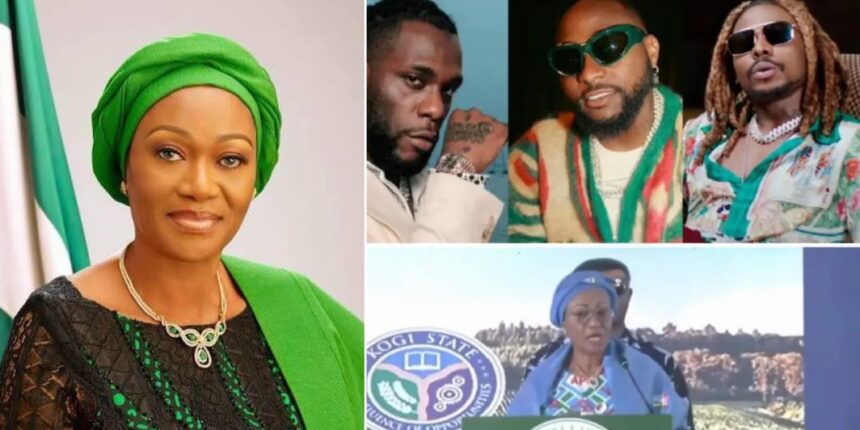
The message was directed at some of the biggest names in Afrobeats, including Burna Boy, Davido, and Asake, whose influence extends far beyond Nigeria’s borders. The First Lady’s call was not focused on their music careers alone but on how their financial strength, popularity, and public influence could be channelled toward structured charitable efforts aimed at helping people facing difficult economic conditions.
The remarks have generated interest because they touch on a wider question surrounding Nigeria’s social challenges, the responsibility of wealthy individuals, and the limits of government intervention. While public institutions continue running different empowerment and welfare programmes, Oluremi Tinubu argued that the scale of the country’s needs requires support from other sectors of society.
Her appeal came during the launch of a government initiative focused on improving food access for vulnerable Nigerians. The event provided the platform for a message that connected celebrity wealth, philanthropy, and community support, creating a conversation that goes beyond entertainment.
Venue of the First Lady’s appeal
Oluremi Tinubu delivered the remarks on Saturday, July 11, 2026, during the launch of the National Community Food Bank Programme in Lokoja, Kogi State. The initiative was introduced as part of the Renewed Hope Initiative, a programme associated with the First Lady’s office focusing on areas such as poverty reduction, women empowerment, and food security.
The National Community Food Bank Programme is designed to support vulnerable Nigerians by improving access to food and strengthening community based assistance systems. The initiative reflects broader government efforts aimed at addressing economic difficulties affecting many households across the country.
The Lokoja event brought together government officials, community representatives, and stakeholders involved in social intervention programmes. During the occasion, the First Lady expanded the discussion beyond government projects by highlighting the possible contribution of wealthy Nigerians, especially entertainers with significant financial resources.
Her remarks focused on the idea that solving social problems requires cooperation between government, private individuals, businesses, and influential personalities who have the ability to provide support through organised initiatives.
Message behind the support appeal
Speaking during the programme, Oluremi Tinubu addressed wealthy Nigerians who have benefited financially from their success and encouraged them to consider establishing foundations dedicated to helping people facing hardship.
She explained that Nigeria has many successful individuals whose resources could contribute to improving the lives of less privileged citizens. According to her, government programmes remain important, but the level of social needs across the country requires additional support from people with financial capacity.
The First Lady emphasised that entertainment figures with large audiences have a unique opportunity to create lasting impact beyond their careers. Through charitable foundations, she argued, celebrities can support areas such as education, healthcare, food assistance, and community development.
Her message was directed particularly at young entertainers who have achieved significant success through the global growth of Afrobeats. She referenced some of Nigeria’s biggest music stars while encouraging them to build organised platforms that can support vulnerable Nigerians.
The central point of her appeal was that personal success and social responsibility can exist together, with wealthy individuals enjoying the rewards of their achievements while also contributing to communities that need assistance.
Burna Boy, Davido, Asake mentioned
The First Lady specifically mentioned Burna Boy, Davido, and Asake during her remarks because of their global recognition, financial success, and influence among millions of Nigerians and international audiences.
The 3 artistes represent different stages of Afrobeats’ international growth. Their careers have taken Nigerian music to major global platforms, creating significant commercial success through music, performances, endorsements, and business ventures.
Oluremi Tinubu encouraged them to establish foundations that would focus on helping poor Nigerians, similar to the philanthropic models used by some international entertainers who have invested in education, healthcare, community development, and humanitarian projects.
She stated:
“We have a lot of wealthy people. But our priorities are different. I want to appeal to young ones in the entertainment industry. I’ll use a music icon, Akon, who does a lot of great charity work.”
She continued:
“Asake, Davido, the Burna Boys of this world, and all of them. We want to see you with one foundation or the other, helping the poor with your money.”
The appeal placed attention on the possibility of Nigerian entertainers using their influence to create structured charitable programmes rather than relying only on occasional personal donations.
Akon’s example during speech
While making her appeal, Oluremi Tinubu referenced Senegalese American musician Akon as an example of an entertainer who has invested in humanitarian causes across Africa.
She highlighted his charitable activities as a model of how successful musicians can use their resources and public recognition to support communities. The mention was aimed at encouraging Nigerian entertainers to consider long term philanthropic efforts.
Akon has previously been associated with projects focused on areas such as energy access and community development across parts of Africa. His example was presented by the First Lady as an illustration of how entertainment success can be connected with social impact.
The comparison formed a major part of her message because she was encouraging Nigerian artistes to think beyond personal achievements and consider creating institutions that can continue helping people over time.
Her appeal suggested that foundations provide a more organised approach to charity by creating systems capable of supporting communities consistently rather than through occasional interventions.
The Maybach, Rolls Royce statement
One of the most discussed parts of the First Lady’s speech was her reference to luxury vehicles owned by wealthy Nigerians, especially celebrities.
She acknowledged that enjoying expensive possessions is part of personal success but argued that wealth can also be used to support people facing hardship.
She said:
“Good cars are good. A Maybach is good. A Rolls Royce is good, but still you can help.”
The statement attracted attention because luxury lifestyles among Nigerian celebrities have often become part of public conversations. Expensive cars, designer items, and international lifestyles frequently appear in entertainment discussions, especially involving some of the country’s biggest artistes.
Oluremi Tinubu’s point was not that celebrities should avoid enjoying the rewards of their success, but that personal achievements could exist alongside efforts to improve the lives of others.
The comment connected directly with her broader appeal that wealthy Nigerians should consider creating foundations and supporting social causes.
Connection to recent empowerment debate
The appeal to entertainers came weeks after another public discussion involving the First Lady’s comments about small businesses and poverty reduction.
Her earlier advocacy for petty trading initiatives, including businesses such as akara selling, pepper selling, vegetable trading, melon selling, and kulikuli production, attracted public attention.
Some Nigerians questioned whether encouraging small scale businesses adequately addressed larger economic challenges such as unemployment, inflation, and limited job opportunities.
Oluremi Tinubu defended the approach, arguing that legitimate small businesses can provide income, create employment, and help families become financially stable when properly supported.
Her latest appeal to celebrities followed a similar message, focusing on the idea that different sectors of society can contribute toward improving economic conditions.
The First Lady’s position remains that empowerment, whether through small businesses or charitable foundations, can create opportunities for people facing financial difficulties.
The Abuja graduate story behind her argument
Oluremi Tinubu also used the story of a university graduate in Abuja to explain why she believes small businesses can become meaningful sources of income when people receive the right support.
According to the First Lady, the young woman struggled to secure formal employment after completing her education and eventually began selling akara as a means of survival. Rather than viewing the business as a temporary solution, her office provided support that helped the venture grow.
She explained that the business expanded beyond a personal income source and eventually created opportunities for other people. According to her account, the entrepreneur now employs 12 workers, showing how a small business can develop into a source of employment when properly encouraged.
The example formed part of her broader argument that economic empowerment does not always begin with large companies or corporate jobs. She maintained that smaller businesses, when supported with funding and resources, can help individuals become financially independent while also creating employment for others.
The First Lady’s message was that dignity exists in all forms of legitimate work, regardless of the size of the business. She used the story to defend her earlier comments about petty trading initiatives and to explain why she believes community based support programmes remain important.
₦50,000 grants for traders
During the Lokoja event, Oluremi Tinubu also disclosed that her office had previously provided financial support to petty traders through empowerment programmes.
She stated that ₦50,000 grants were distributed to 2,000 petty traders in Jigawa State as part of efforts aimed at supporting small businesses and improving livelihoods.
The grants were presented as part of wider interventions designed to assist individuals who operate small scale businesses and require financial support to expand their activities.
According to the First Lady, similar empowerment initiatives would continue despite criticism surrounding the promotion of businesses such as food selling, trading, and other small ventures.
Her argument remains that many Nigerians require practical support that can immediately improve their income situation, especially people who may not have access to formal employment opportunities.
The grant programme also reflects a wider approach often used by governments and organisations where small financial assistance is provided to individuals to help them establish or strengthen income generating activities.
Why entertainers became part of the conversation
The decision to mention Burna Boy, Davido, and Asake placed Nigerian entertainers at the centre of a discussion that usually involves government agencies, businesses, and humanitarian organisations.
Afrobeats has become one of Nigeria’s biggest global exports, with leading artistes earning significant income through music sales, streaming platforms, international concerts, endorsements, and brand partnerships.
The First Lady’s appeal was based on the belief that entertainers with such influence can create social programmes capable of reaching large numbers of people.
She argued that successful individuals can maintain their lifestyles while also dedicating part of their resources toward helping communities facing hardship.
The suggestion that celebrities establish foundations reflects a growing trend globally where entertainers create charitable organisations focused on areas such as education, healthcare, youth development, and poverty reduction.
Her message encouraged Nigerian artistes to consider long term structures that can continue operating beyond individual donations or occasional acts of kindness.
Government’s role versus private support
The central issue behind the First Lady’s remarks is the relationship between government responsibility and private support.
Oluremi Tinubu acknowledged that government remains responsible for addressing national challenges but argued that the scale of Nigeria’s social needs requires cooperation from other parts of society.
She explained that the number of people requiring assistance makes it difficult for government alone to provide every form of support needed by vulnerable citizens.
Her statement captured this position when she said:
“The burden on the government is huge.”
The remark reflected her argument that wealthy Nigerians, including entertainers, business owners, and influential personalities, can contribute alongside government programmes.
The idea of public private collaboration has been used in different countries where governments work with individuals, companies, and charitable organisations to provide additional support for communities.
The First Lady’s appeal focused on encouraging more Nigerians with financial capacity to participate in organised philanthropy.
Public reaction to the appeal
The comments generated conversations because they touched on sensitive issues surrounding poverty, wealth, and government responsibility in Nigeria.
Some Nigerians viewed the appeal as a reminder that wealthy individuals can play important roles in supporting communities. They argued that successful celebrities have the financial ability to fund projects that can positively affect thousands of people.
Supporters of the message pointed to international examples where entertainers have established foundations supporting education, healthcare, disaster relief, and community development.
They believe collaboration between government and wealthy citizens can increase the number of people receiving assistance.
The discussion also highlighted the influence celebrities have in Nigerian society. Beyond music and entertainment, many artistes now have large platforms that allow them to raise awareness and mobilise support for different causes.
The appeal therefore opened a wider conversation about how public figures can use their success to contribute to social development.
Concerns around government responsibility
While some welcomed the First Lady’s appeal, discussions also centred on the responsibility of government in addressing poverty and economic challenges.
The argument raised by some observers is that reducing poverty remains a primary duty of government because public institutions control national resources and create economic policies.
Questions surrounding unemployment, inflation, food prices, and access to opportunities remain major concerns for many Nigerians.
From this perspective, charity from wealthy individuals may provide assistance but cannot replace long term government solutions required to address structural economic challenges.
The conversation reflects a broader issue facing many countries where private donations support vulnerable communities while governments continue working on policies designed to improve living conditions.
The First Lady’s remarks focused on additional support from wealthy citizens, while broader economic debates continue around how government programmes can create lasting improvements.
No response from artistes
Following the First Lady’s appeal, Burna Boy, Davido, and Asake had not publicly issued responses regarding the request for them to establish charitable foundations.
The artistes remain among Nigeria’s most internationally recognised entertainers, with careers that have expanded the country’s influence within global music.
Davido has previously been associated with charitable activities and public fundraising efforts, including donations connected to social causes.
Other Nigerian entertainers have also participated in humanitarian efforts at different times, although the First Lady’s message focused specifically on creating structured foundations that can provide continuous support.
The absence of immediate public responses means the next steps from the artistes remain unknown.
The bigger picture behind the appeal
Oluremi Tinubu’s comments form part of a larger conversation about how Nigeria addresses poverty and supports vulnerable citizens during difficult economic conditions.
The National Community Food Bank Programme, launched in Lokoja on July 11, 2026, represents one of the initiatives connected to efforts aimed at improving food access for people facing hardship.
The appeal to Burna Boy, Davido, Asake, and other wealthy Nigerians expanded that discussion by focusing attention on the role of individuals who have accumulated significant wealth.
Her message was centred on encouraging successful Nigerians to combine personal achievements with social responsibility.
The First Lady’s statement about luxury vehicles captured the balance she was advocating for:
“Good cars are good. A Maybach is good. A Rolls Royce is good, but still you can help.”
The message was that enjoying success and supporting others do not have to be separate choices.
Final perspective
The First Lady’s appeal has placed celebrity philanthropy at the centre of a national conversation about poverty reduction, community support, and the responsibilities of wealthy Nigerians.
Her message was based on the belief that government programmes can be strengthened when individuals with resources contribute through organised charitable efforts.
The mention of Burna Boy, Davido, and Asake reflects the growing influence of Nigeria’s entertainment industry and the possibility of celebrities playing larger roles in social development.
As Nigeria continues facing economic challenges, discussions around government action, private support, and community empowerment are likely to remain part of national conversations.
The appeal ultimately focused on one message, that success can extend beyond personal achievement when it is used to create opportunities and support for people who need help.