If you have checked fuel prices in the last few weeks and wondered why they keep climbing, the answer traces back to a 33-kilometre stretch of water between Iran and Oman. The Strait of Hormuz has been shut down, reopened, threatened, mined, and fought over more times in 2026 than most people can keep track of, and right now it sits at the centre of one of the tensest military standoffs the Gulf has seen in years.
Here is what the strait actually is, why it matters so much to your fuel bill, and what is happening there as of this week.
What Is the Strait of Hormuz?
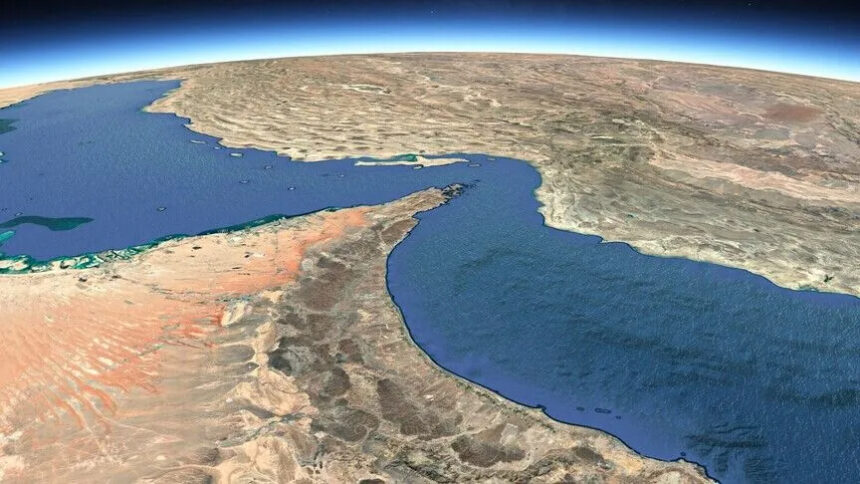
The Strait of Hormuz is a narrow sea passage linking the Persian Gulf to the Gulf of Oman and, beyond that, the open waters of the Arabian Sea. At its tightest point, it narrows to about 33 kilometres wide, with the actual shipping lanes squeezed into two 3-kilometre-wide channels, one for inbound traffic, one for outbound, separated by a buffer zone. Iran sits on the northern shore. Oman’s Musandam exclave and the United Arab Emirates sit on the south.
It is a chokepoint in the truest sense of the word. Every tanker leaving Saudi Arabia, Kuwait, Iraq, Qatar, Bahrain, and the UAE has to pass through it to reach global markets, because there is no practical alternative sea route out of the Gulf.
Why the Strait Matters So Much
Before the current conflict disrupted traffic, roughly a quarter of the world’s seaborne oil trade and about a fifth of global liquefied natural gas moved through this one waterway. On an ordinary day before the fighting started, that meant roughly 110 ships transiting the strait daily, carrying crude bound for refineries in Asia, Europe and the Americas.
That is why any hint of trouble here moves oil markets within minutes. There is no pipeline network big enough to reroute that volume of crude if the strait closes. Saudi Arabia and the UAE have some spare pipeline capacity to bypass Hormuz, but nowhere near enough to replace what normally flows through the strait itself.
What’s Happening in the Strait Right Now
The current crisis has been building since February. Israel and the United States struck Iranian military targets on 28 February 2026, an operation that included the killing of Iran’s Supreme Leader, Ali Khamenei. Iran’s response was immediate: it declared the strait closed to shipping tied to the US and Israel and warned that any vessel using an “unauthorised route” would be fair game.
A ceasefire and preliminary peace deal briefly calmed things down in June. That calm did not last. A week after Washington and Tehran signed the agreement, an Iranian drone struck a cargo ship transiting the strait on 25 June. Nobody was hurt, but the incident set off a chain of hostilities that pulled both countries back toward all-out war in under a month, chipping away at the very deal meant to end the fighting.
By mid-July, the exchanges had escalated sharply. The US launched fresh strikes on Iran after Iranian forces fired on a ship in the strait and Tehran declared the waterway closed. Washington kept the pressure on for days afterward, with a second wave of strikes aimed squarely at Iran’s ability to target vessels, the fifth straight day of American attacks at that point, and reports suggested Trump was weighing whether to widen the operation further. Tehran’s answer came fast: its Foreign Ministry said Iran had no plans for negotiations and would keep responding “firmly,” arguing that the US had abandoned the ceasefire from the start.
The strikes have not stayed confined to military sites out at sea. Explosions have rocked Qeshm Island, right in the strait itself, and Iran’s port city of Bandar Khamir came under attack, with two bridges destroyed and at least seven people killed and nine wounded, according to state media. Iran has hit back at American positions elsewhere in the region too, striking US bases in Kuwait, Jordan and Bahrain, and reports suggest Tehran has told Yemen’s Houthi forces to stand ready to disrupt Red Sea shipping if Washington goes after Iranian power infrastructure next.
Ships Are Staying Away
Shipping companies do not need to be told twice when missiles start landing near a trade route. Traffic through Hormuz has collapsed compared to normal levels, on one recent 24-hour stretch, only three ships transited the strait, against a pre-war average of around 110 a day. Iran has set up what it calls the Persian Gulf Strait Authority, claiming the right to dictate which vessels can pass and along what route, and warning that ships ignoring its preferred corridor cannot count on safe passage.
The toll on the industry since the crisis began in late February has been steep: a sunk tugboat, more than 17 merchant ships damaged (several of them abandoned by their crews), two ships captured outright, and around a dozen seafarers killed or still missing. GPS spoofing has made things worse, scrambling ships’ broadcast positions and turning an already dangerous transit into a genuine gamble.
The Effect on Oil Prices
Oil markets have been on a rollercoaster all year, and the Hormuz standoff is the reason why. Brent crude jumped as much as 3.8% in a single session in mid-July, on top of a 9.6% gain the day before, to hit its highest level in a month. Days later, after Kuwait accused Iran of attacking a power and desalination plant and a tanker took a projectile hit off Oman’s coast, Brent climbed again, this time closing near $88 a barrel. By the following Friday, crude was on track for a weekly gain north of 10%, with the US grinding through its sixth consecutive night of strikes on Iran and a fresh naval blockade back in place around Iranian ports.
Washington briefly floated the idea of making ships pay for military protection through the strait, then quietly dropped it. President Trump abandoned the proposed transit fee after shipping companies pushed back hard and the International Maritime Organization pointed out that mandatory tolls in the strait would be illegal under international law.
Can Iran Actually Close the Strait?
Iran does not need to sink the Gulf’s entire tanker fleet to choke off traffic. Mines, drone strikes, and the constant threat of attack are usually enough to scare shipping insurers and vessel owners into rerouting or simply waiting it out. That is effectively what has happened this year, not a total blockade in the legal sense, but a de facto one created by fear.
The US Navy has responded by reimposing a blockade of its own around Iranian ports and running escort operations for tankers willing to make the crossing. Whether that is enough to reassure the shipping industry is still an open question, and each new night of strikes seems to reset the calculation.
The Bigger Picture
The Strait of Hormuz has been a flashpoint for decades, the 1980s “Tanker War” between Iran and Iraq played out largely in these same waters, but 2026 has turned a long-standing risk into a live crisis with a real, measurable price tag at the pump. For Nigeria and other oil-dependent economies watching from a distance, a prolonged closure would ripple through fuel import costs, shipping insurance, and inflation well beyond the Gulf itself.
For now, the strait remains technically open, but only barely used, patrolled by warships on both sides, and one bad night away from another spike in oil prices. Whether the current round of diplomacy in Muscat produces anything lasting, or simply buys a few weeks before the next escalation, is the question everyone from oil traders to shipping lines is watching closely.