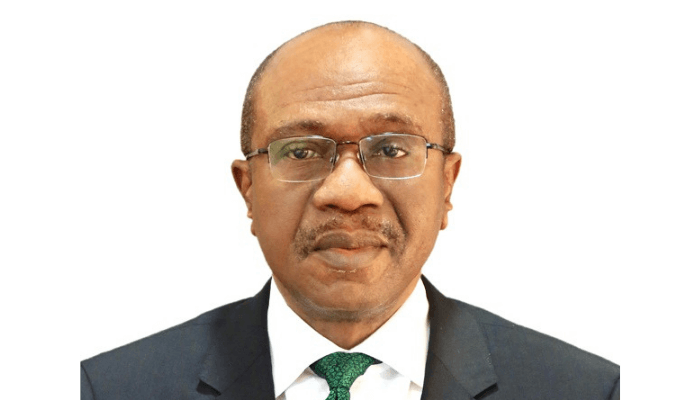
The Supreme Court on Friday, July 17, affirmed the permanent forfeiture of seven properties, over $2 million, and share certificates linked to former CBN Governor Godwin Emefiele to the federal government.
In a unanimous decision by a five-member panel, the court set aside the Court of Appeal Lagos judgement that had overturned the forfeiture order.
Recall that the Federal High Court, Lagos, had earlier ordered the final forfeiture, ruling that the assets were reasonably suspected to be proceeds of unlawful activities.
Here are 10 key things to know about the apex court’s ruling:
1. Reversal of the Court of Appeal
The Supreme Court set aside an earlier ruling by the Court of Appeal, Lagos Division. The appellate court had previously nullified the forfeiture and ordered a fresh trial, claiming interested parties hadn’t received a fair hearing. The Supreme Court completely rejected this and reinstated the original trial court’s order.
2. Final Forfeiture Restored
The ruling permanently vests ownership of seven premium landed properties, cash, and corporate shares directly to the Federal Government of Nigeria. This brings the prolonged legal battle over these specific assets to a conclusive end.
3. Millions in Cash Forfeited
Beyond physical real estate, the apex court affirmed the final forfeiture of $2,045,000 in cash linked to the former CBN governor.
4. Share Certificates Seized
The ruling also encompasses corporate assets, permanently forfeiting the share certificates of a firm known as Queensdorf Global Fund Limited Trust.
5. Highly Coveted Real Estate Locations
The seven physical properties affirmed for permanent forfeiture are located in some of Nigeria’s most expensive real estate zones, including Lekki and Ikoyi in Lagos, as well as Delta State. They include:
Two fully detached duplexes at 17B Hakeem Odumosu Street, Lekki Phase 1.
An undeveloped parcel of land measuring 1,919.592 square meters on Oyinkan Abayomi Drive, Ikoyi.
A bungalow at 65A Oyinkan Abayomi Drive, Ikoyi.
A four-bedroom duplex at 12A Probyn Road, Ikoyi.
Eight units of apartments on Adekunle Lawal Road, Ikoyi.
A duplex on Bank Road, Ikoyi.
An industrial complex under construction on 22 plots of land in Agbor, Delta State (Emefiele’s home state).
6. Unanimous Panel Decision
The judgment was entirely unanimous. It was delivered by a five-member panel of Supreme Court justices led by Justice Ibrahim Mohammed Saulawa, with the lead judgment prepared and read on behalf of the panel by Justice Mohammed Idris.
7. “Reasonable Suspicion” of Illicit Acquisition
The Supreme Court upheld the legal standard that the Economic and Financial Crimes Commission (EFCC) successfully established that the properties were “reasonably suspected to have been acquired with proceeds of unlawful activities”. Emefiele’s legal team failed to present credible evidence showing they were acquired via legitimate income.
8. Non-Conviction-Based Forfeiture
This specific ruling is a civil, non-conviction-based forfeiture (action in rem). This means the state can permanently seize assets tied to illegal acts independently of whether Emefiele himself is criminally convicted in his ongoing trials.
9. Reliance on the Advance Fee Fraud Act
The EFCC successfully anchored its case on Section 17 of the Advance Fee Fraud and Other Fraud Related Offences Act, 2006, alongside Section 44(2)(b) of the 1999 Constitution (as amended), which legally empowers the government to confiscate property suspected to be proceeds of crime.
10. Part of a Broader Legal Dragnet
This is not the only asset forfeiture Emefiele has suffered since his removal from office. This ruling adds to prior massive asset recoveries by the Federal Government, including a separate final forfeiture of a vast housing estate comprising 753 units in Abuja, alongside ongoing separate criminal prosecutions for fraud and procurement breaches.