Nearly 19 million eggs are off the shelves this week, and if you shop at Kroger or Brookshire’s anywhere in the South, it’s worth a quick trip to your fridge before you crack open your next carton.
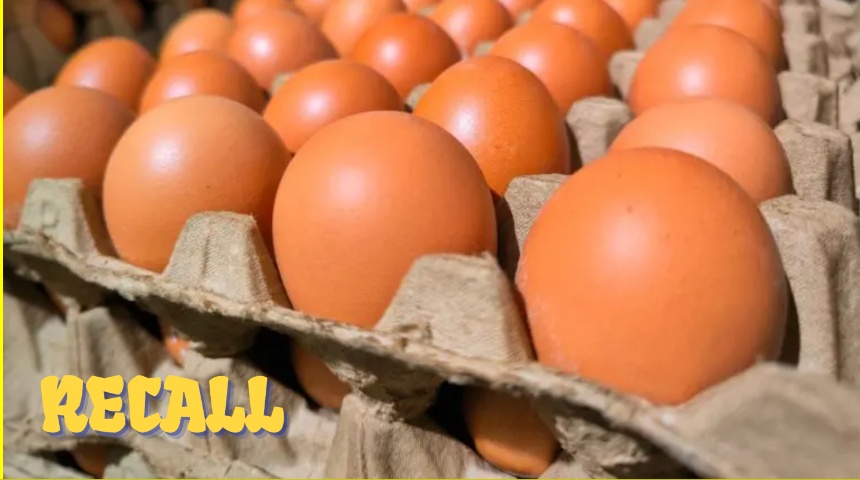
Midwest Poultry Services, L.P. announced a voluntary recall on Wednesday, July 22, covering 1,589,577 dozen eggs produced at two of its Texas farms between June 6 and July 3, 2026. The FDA posted the recall notice the same day. Both white shell eggs and cage-free brown shell eggs are affected, and the company says they may carry Salmonella Enteritidis, one of the more common culprits behind egg-linked foodborne illness.
Here’s the part that actually matters for anyone standing in their kitchen right now: no illnesses have been reported yet. Midwest Poultry Services caught this through its own environmental monitoring and root cause analysis, not because people got sick and called it in. That’s a genuinely different situation from some past egg recalls, and it’s why acting fast, before anyone eats a bad egg, actually counts for something here.
Where the recalled eggs were sold
The eggs moved through a fairly specific distribution chain, so this isn’t a “check every egg carton in America” situation. They reached:
- Kroger stores in Texas and Louisiana
- Brookshire Grocery stores in Texas, Oklahoma, Arkansas, Louisiana, New Mexico, and Mississippi
- A number of smaller retail outlets the company hasn’t named
- Foodservice customers in Texas, Oklahoma, and Louisiana
If you’re outside those states, you’re probably fine. If you’re inside them and you bought eggs from Kroger or Brookshire’s in the last month, it’s worth thirty seconds to check your carton.
How to tell if your eggs are part of the recall
Grab the carton and look at two things: the sell-by or best-by date, and the Julian date code, both usually stamped on the short end.
- Sell-by / best-by dates: July 20, 2026 through August 17, 2026
- Julian date codes: 157 through 184
If your carton falls inside both ranges, it’s part of the recall. No brand list has been published beyond the retailer names above, since these were largely sold under store or private labels rather than a single national brand. When in doubt, the safest move is to just not eat them and take them back.
What to do if you have them
Don’t eat the eggs. Don’t cook with them, don’t bake with them, and don’t feed them to anyone else in the household, including pets. Salmonella doesn’t always announce itself through smell or appearance; a contaminated egg can look and taste completely normal.
Return the carton to wherever you bought it for a full refund. Midwest Poultry Services has already stopped shipping fresh eggs out of the two Texas farms tied to this recall while it sorts out the source of the contamination.
What salmonella actually does to you
Most healthy adults who eat contaminated eggs get through it without a trip to the hospital. Symptoms tend to show up within six hours to six days of exposure and usually include some combination of fever, diarrhoea, stomach cramps, nausea, and vomiting. For most people, it runs its course in four to seven days.
The people who need to be more careful are young children, adults over 65, pregnant women, and anyone with a weakened immune system. In those groups, salmonella can turn into something that needs medical treatment or hospitalization, so if symptoms show up and you fall into one of those categories, don’t wait it out at home hoping it passes.
This isn’t the first big egg recall this year
If this story feels familiar, it’s because it is. Back in June, August Egg Company of Hilmar, California pulled roughly 1.7 million dozen cage-free and organic eggs after a salmonella outbreak that eventually sickened 79 people and sent 21 of them to the hospital. Those eggs, sold under names like Simple Truth Organic and Marketside, moved through Walmart, Safeway, Save Mart, and several other West Coast chains.
Two large egg recalls in one year isn’t exactly reassuring, and it’s fair to wonder whether that’s a coincidence or a sign of something worth watching in how eggs are being monitored before they leave the farm. Either way, it’s a decent reminder that “sell-by date” isn’t just a freshness thing, it’s a food safety thing too.
Advice
Check your carton. If the dates or Julian codes match what’s listed above and you bought your eggs from Kroger, Brookshire’s, or another retailer in the affected states, take them back and get your money back. No illnesses have been tied to this recall so far, and keeping it that way is really just a matter of not eating eggs you’re not sure about.
For updates as the investigation continues, the FDA’s recall page and the CDC’s salmonella prevention guidance are the two sources worth bookmarking.