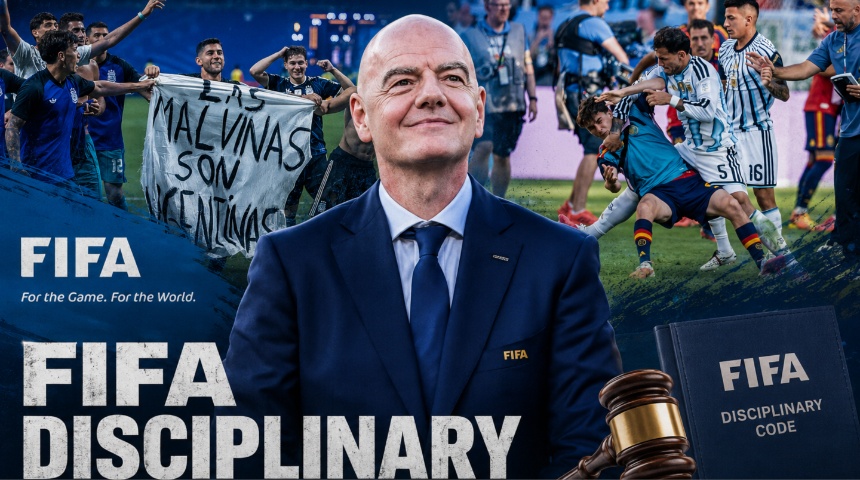
Argentina’s World Cup ended in New Jersey on July 19, and it hasn’t gone quiet since. Ten days after Spain beat the Albiceleste 1-0 in the final, FIFA confirmed it has opened disciplinary proceedings against the Argentine Football Association, three of its players, one assistant coach, and a Spanish player, all tied to a brawl that broke out the moment the referee blew the final whistle.
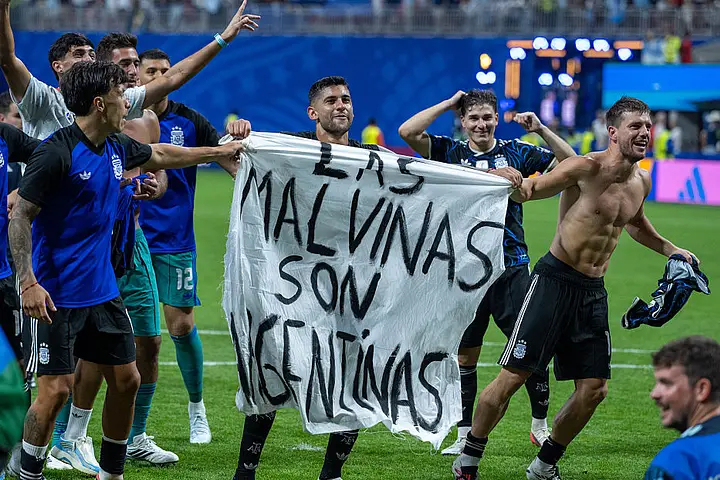
That’s not the only case sitting on FIFA’s desk. Argentina is also being investigated over a “Las Malvinas son Argentinas” banner unveiled after the semi-final win over England, plus a string of separate complaints about chanting, late kick-offs, and crowd behaviour that piled up across the tournament. Put together, it’s the most disciplinary heat any World Cup finalist has faced in recent memory.
What actually happened at MetLife Stadium
By most accounts, it started with Nahuel Molina. Footage aired by the BBC appeared to show the Argentina right-back catching Spain’s Rodri in the midriff as the midfielder sprinted onto the pitch to celebrate. From there it escalated fast. Leandro Paredes came in to even the numbers, spinning Gavi to the ground and getting in his face while still gripping his shirt. Spain’s Borja Iglesias then barrelled into Paredes trying to break things up, and video also caught Argentina assistant coach Roberto Ayala striking Spain’s Dani Olmo, an incident Ayala later played down as a shove. Olmo, for his part, wasn’t interested in the apology.
Paredes was sent off. Molina wasn’t shown a card on the night, which is exactly why FIFA had to go back and cite him separately once the video review came in.
Who’s actually been charged
FIFA’s Disciplinary Committee laid out the individual cases on July 29, after a Disciplinary and Ethics Prosecutor spent roughly a week combing through broadcast footage and match reports. Here’s how it breaks down:
- Leandro Paredes – three counts of assault
- Nahuel Molina – two counts of assault, plus one count of unsporting conduct
- Roberto Ayala – one count of assault
- Thiago Almada – one count of unsporting conduct
- Gavi (Spain) – one count of unsporting conduct
Under FIFA’s Disciplinary Code, assault carries a minimum three-match ban, while unsporting conduct starts at one match. Those are floors, not ceilings. Given the pattern of allegations against Paredes and Molina, FIFA has room to go well beyond the minimum if the committee finds the conduct serious enough. For context, Zinedine Zidane got three matches for headbutting Marco Materazzi in the 2006 final, and that suspension was never even served because he retired straight after.
Nobody’s been sanctioned yet. Everyone charged has been given the chance to respond before the committee rules, which is standard procedure. FIFA’s own line on this has stayed consistent through the week: a decision will follow “in due course.”
The Falklands banner and a season-long list of complaints
Separately, the Argentine Football Association is facing a charge described by FIFA as using a sporting event for a non-sporting demonstration. That one goes back to the semi-final win over England, when Argentina players held up a handwritten sign staking a claim to the Falkland Islands, which Argentina calls Las Malvinas. Britain has controlled the islands since a ten-week war in 1982, fought after Argentina’s military government ordered an invasion, and UK officials pushed publicly for FIFA to look into it. This isn’t new territory for the AFA either. It was fined £20,000 the last time its players pulled the same stunt, back in 2014.
That’s just one line item on a longer charge sheet. FIFA is also investigating the AFA over discriminatory chants and gestures from supporters, late kick-offs, breaches of match and security protocols, objects thrown from the stands, and what it calls inappropriate messaging linked to several of Argentina’s matches across the tournament. None of these are one-off complaints from a single game; FIFA’s statement ties them to the team’s run through the competition as a whole.
If this all sounds familiar, it’s because Argentina’s disciplinary file with FIFA didn’t start this month. After beating the Netherlands on penalties in the 2022 quarter-final, the AFA was charged over players and staff crowding the pitch during a heated finish. Weeks after lifting that trophy in Qatar, FIFA opened another case, this time over the team’s raucous celebration through the media zone, which damaged partition walls and left broadcasters without their post-match interviews. And in 2025, a World Cup qualifier against Brazil at the Maracanã was delayed roughly half an hour after fans clashed with police before kickoff, drawing proceedings against both federations.
None of that history decides this case on its own, but it’s the kind of pattern disciplinary committees tend to notice.
Argentina coach Lionel Scaloni addressed the aftermath directly in the days following the final. “We must be gracious in defeat,” he said, adding that the team needed to show it knew how to lose. It’s a notably different tone from the celebration controversies that followed Argentina’s 2022 title, and it suggests the federation understands how this looks.
What comes next
There’s no fixed clock on FIFA disciplinary cases like this one. The prosecutor’s report has already gone to the committee, the charged parties get to submit their side, and then a ruling follows, sometimes within a couple of weeks, sometimes longer if the case is contested. Given the number of separate strands here, from the on-field violence to the banner to the broader pattern of complaints, it wouldn’t be surprising if Argentina ends up dealing with multiple rulings rather than one tidy verdict.
For Paredes and Molina in particular, the stakes are real. Multi-match bans at this level don’t just cost a game or two; they can knock a player out of qualifiers or friendlies where a federation needs its first-choice squad. Whatever the committee decides, it will set the tone for how seriously FIFA treats post-match flashpoints heading into the next cycle of international football.