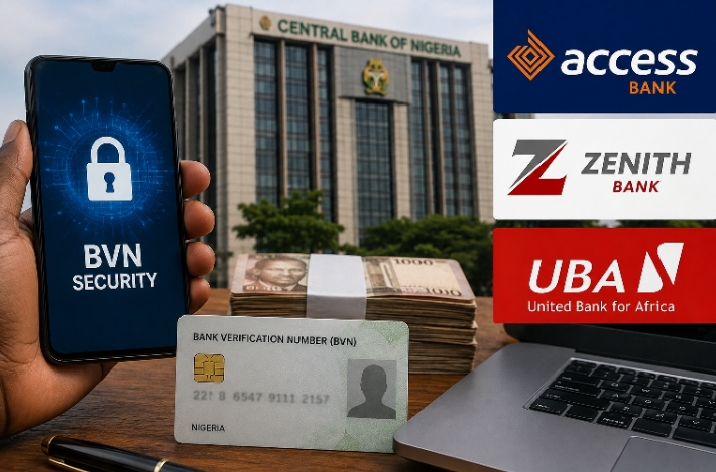
The conversation around Nigeria’s banking security system took a new turn after reports of 13,117 Bank Verification Numbers linked to suspected fraudulent activities surfaced across the financial sector. The figure quickly attracted public attention, with many Nigerians trying to understand what the development means for their accounts, their BVNs, their access to banking services, and the role major financial institutions are playing behind the scenes. While the headline created widespread reactions online, the details behind the figure reveal a much broader financial monitoring process designed to identify suspicious activities before they become bigger threats.
For customers of major banks such as Access Bank Plc, Zenith Bank Plc, and United Bank for Africa Plc, the development raises important questions about how fraud detection works, why BVNs are being monitored more closely, and what happens when an account becomes connected to a suspicious transaction pattern. The focus is not simply on a number released in reports, but on the system created to protect Nigeria’s banking ecosystem from rising cases of digital fraud, identity misuse, account compromise, and illegal movement of funds.
The Central Bank of Nigeria’s approach reflects the growing challenge facing financial institutions as banking activities continue moving deeper into digital platforms. Mobile banking, online transfers, payment applications, and electronic transactions have made financial services faster, but they have also created new opportunities for criminals to exploit weak points. The BVN system has become one of the major tools used to connect banking identities, track unusual behaviour, and support investigations when fraud concerns emerge.
CBN’s 13,117 BVN Fraud Monitoring Development
The report involving 13,117 fraud linked BVNs does not represent a public release of names, BVN numbers, or personal details of individuals. Instead, the figure refers to BVNs captured within the banking fraud monitoring structure due to links with suspected fraudulent activities. The information is handled through regulatory and banking channels rather than being displayed publicly for Nigerians to access.
The BVN system was introduced by the Central Bank of Nigeria in 2014 as a biometric identification initiative designed to strengthen customer identification across Nigerian banks. The programme connects customers’ biometric details with their banking profiles, making it easier for financial institutions to verify identities, reduce impersonation, and improve fraud investigations.
Over time, the role of BVN expanded beyond basic identification. Banks began using BVN information as part of broader risk management processes, especially when unusual transactions occur or when accounts become associated with reported financial crimes. The recent fraud monitoring development highlights how the system continues to evolve as criminals adopt more sophisticated methods.
The concern around the 13,117 figure grew because of the public association between online fraud activities and the popular term “Yahoo Yahoo.” However, a fraud linked BVN does not automatically mean the owner of that BVN has been legally confirmed as a fraudster. A flag can represent a suspicion requiring investigation, a reported incident, or a connection to an account involved in questionable activity.
Banks Mentioned Within Fraud Monitoring Framework
The CBN directive applies across Nigeria’s financial system, covering commercial banks, other financial institutions, and payment service providers. However, reports have mentioned some of Nigeria’s biggest banks because of their size, customer base, transaction volumes, and involvement in implementing stronger fraud prevention measures.
Access Bank Plc is among the major financial institutions associated with discussions around the fraud monitoring system. Like other banks operating under CBN regulations, Access Bank is responsible for monitoring transactions, identifying suspicious patterns, responding to fraud complaints, and providing relevant information through approved regulatory channels.
The bank handles millions of transactions daily across personal banking, business banking, digital platforms, and international financial services. With such a large customer base, fraud detection systems play a major role in identifying unusual account behaviour before losses increase.
Customers linked to suspicious activity may experience additional verification procedures when banks conduct reviews. These measures are designed to confirm account ownership, understand transaction patterns, and determine whether further action is required.
Zenith Bank Plc is another major Nigerian bank connected to the implementation of stronger banking security requirements. The bank, like other regulated financial institutions, has systems designed to monitor transactions, detect unusual account behaviour, and comply with regulatory expectations on financial crime prevention.
The increasing use of digital banking has made fraud monitoring a critical responsibility for large banks. Financial institutions are expected to maintain internal systems that can identify suspicious transfers, account misuse, unauthorised access attempts, and other activities that may indicate fraud risks.
United Bank for Africa Plc is also among the major banks operating within this wider fraud prevention environment. UBA serves millions of customers across Nigeria and other African markets, making transaction monitoring an important part of its banking operations.
The involvement of these banks does not mean they are the only institutions affected by the development. The framework applies across the banking industry because fraud risks are not limited to one institution, customer category, or location.
Why Access Bank, Zenith Bank, UBA Customers Are Paying Attention
The reason customers of these banks are closely following the development is because BVN based monitoring directly connects banking identity with transaction behaviour. When a customer’s account becomes linked to suspicious activity, banks may review the situation before deciding what action is necessary.
A normal customer who receives money from an account later connected to fraud concerns may also attract attention during an investigation. This does not mean the customer committed a crime, but financial institutions may need to understand the source, purpose, and movement of funds connected to the transaction.
Banks operate under strict anti money laundering and fraud prevention requirements. They are expected to investigate unusual activities, protect customers, and cooperate with regulators when financial crime concerns arise.
The banking system depends heavily on accurate identity verification. Without systems like BVN, criminals could create multiple identities, open several accounts under false information, and move stolen funds more easily across different financial institutions.
The current monitoring approach is therefore focused on strengthening accountability within Nigeria’s financial environment while reducing opportunities for criminals to exploit banking channels.
How BVN Fraud Watchlist System Works
The process begins when a bank detects activity that appears unusual or inconsistent with normal account behaviour. This could involve suspicious transfers, complaints from victims, unusual login attempts, identity concerns, or patterns associated with fraudulent transactions.
After detection, the relevant BVN connected to the account may be flagged within internal fraud monitoring systems. The flag does not immediately represent a final judgment against the customer but serves as an alert requiring further review.
The bank then examines available information, including transaction history, customer identity records, account activity, source of funds, and details surrounding the reported incident. The purpose is to determine whether the activity has a genuine explanation or whether further action is needed.
Depending on the outcome of the review, different steps may follow. A customer may receive additional verification requests, monitoring may continue, restrictions may be applied where necessary, or the matter may be referred through appropriate legal and regulatory processes.
The process is designed to balance fraud prevention with customer protection because not every suspicious transaction turns out to involve criminal activity.
What Happens When a BVN Is Flagged For Review
A BVN being connected to a fraud monitoring system does not immediately mean the account holder has been declared guilty of any offence. The banking system operates through investigation procedures because unusual activity can happen for different reasons, including account compromise, mistaken transfers, identity misuse, or genuine fraudulent behaviour.
When a customer’s BVN becomes associated with suspicious activity, the first stage usually involves verification. The bank may request additional information to confirm the customer’s identity, understand the transaction pattern, or establish the source of funds involved.
The customer may be asked questions about specific transactions, recent account activities, or transfers linked to another account under investigation. These checks are part of standard financial security procedures used by banks globally to prevent illegal movement of money.
Where investigations confirm that there is no connection between the customer and the suspicious activity, the monitoring action can be reviewed or removed depending on the circumstances. However, where evidence shows possible involvement in financial crime, the bank may take further steps according to regulatory requirements.
These actions may include placing restrictions on certain banking services, increasing transaction monitoring, reporting the case to relevant authorities, or cooperating with ongoing investigations. The purpose is to prevent further losses while allowing proper procedures to take place.
CBN’s Growing Focus On Digital Fraud Prevention
The Central Bank of Nigeria has continued strengthening financial security measures as digital transactions increase across the country. The rapid growth of mobile banking, internet banking, fintech platforms, and electronic payments has created a larger need for stronger identity verification systems.
The BVN initiative launched in 2014 became one of the foundation tools for improving customer identification within Nigeria’s banking industry. Before the system, criminals could exploit weak identity checks by opening multiple accounts using false information or stolen identities.
Over the years, the CBN introduced additional measures aimed at improving compliance, reducing fraud risks, and ensuring that financial institutions maintain stronger controls around customer information.
On December 1, 2023, the CBN announced further measures requiring banks to strengthen customer verification processes, especially around account access, electronic transactions, and identity management. The move reflected growing concerns about fraudulent activities within the digital banking space.
The regulator has also repeatedly warned Nigerians against sharing sensitive banking information such as BVN details, passwords, one time passwords, and personal identification information with unknown individuals.
Fraudsters often attempt to gain access to accounts through social engineering methods, pretending to represent banks, government agencies, or financial platforms. The stronger monitoring system is designed to make it more difficult for stolen identities or compromised accounts to be used for illegal activities.
The Role Of Major Banks In Fraud Detection
Nigeria’s commercial banks operate under strict regulatory obligations when dealing with suspicious transactions. Every bank is expected to maintain internal systems capable of detecting unusual activities and responding appropriately.
Access Bank Plc, Zenith Bank Plc, and United Bank for Africa Plc are among Nigeria’s largest financial institutions, meaning their transaction volumes require advanced monitoring technology. These banks process millions of transactions involving individuals, businesses, government agencies, and international customers.
Fraud detection systems used by banks analyse different patterns, including unusual transfer amounts, sudden changes in account behaviour, multiple suspicious transactions, and activities that do not match a customer’s normal profile.
For example, an account that suddenly receives large amounts of money from multiple unrelated sources may attract attention if the activity does not match previous banking behaviour. The system does not automatically label the customer as a criminal but creates an alert for further examination.
Banks also work with regulators, law enforcement agencies, and other approved institutions when investigating financial crimes. This cooperation allows information to move through official channels while protecting customer privacy.
The involvement of major banks in the monitoring process shows that fraud prevention has become a shared responsibility across Nigeria’s financial sector rather than an issue affecting one institution.
Other Banks Covered Under The Framework
Although Access Bank, Zenith Bank, and UBA have received significant attention in discussions surrounding the development, the monitoring system covers the entire banking industry.
Other financial institutions including Guaranty Trust Holding Company Plc, First Bank of Nigeria Limited, Fidelity Bank Plc, Wema Bank Plc, and other licensed banks are also expected to comply with CBN requirements on fraud prevention and customer protection.
The banking sector operates under common regulatory standards because financial crime can move across different institutions. A fraudulent transaction may involve several banks through deposits, transfers, withdrawals, or digital payment channels.
This means one bank cannot completely address fraud challenges alone. Cooperation between banks, regulators, payment companies, and security agencies remains necessary to reduce financial crimes.
The industry wide approach allows institutions to identify patterns faster, share approved fraud related information, and take coordinated action against suspicious activities.
Why The 13,117 Figure Created Public Attention
The number 13,117 attracted strong reactions because Nigerians are increasingly concerned about online scams, account theft, and financial losses. Reports connecting BVNs with suspected fraud activities immediately raised questions about who was involved and what actions banks were taking.
Social media discussions quickly linked the development with internet fraud activities commonly referred to as “Yahoo Yahoo.” However, fraud monitoring systems cover a wider range of financial crimes beyond online scams.
Fraud linked activities may include identity theft, unauthorised account access, fake payment schemes, stolen account details, fraudulent transfers, and misuse of financial accounts.
The banking system does not classify every flagged BVN as belonging to a confirmed criminal. A monitoring alert is different from a court conviction or official declaration of guilt.
This distinction is important because financial institutions must investigate suspicious activities carefully while protecting innocent customers who may become connected to fraudulent transactions without knowing the source of the problem.
What Nigerian Bank Customers Should Know
For ordinary customers, the development highlights the importance of protecting personal banking information and maintaining responsible account usage. Many fraud cases begin when criminals gain access to sensitive information through deception or careless sharing.
Customers should avoid giving their BVN, passwords, card details, or verification codes to unknown persons claiming to represent banks or financial organisations.
Banks will never require customers to disclose confidential security information through unofficial channels. Fraudsters often create fake messages, phone calls, and online platforms designed to look legitimate.
Customers should also monitor their accounts regularly and report unfamiliar transactions immediately. Early reporting can help banks investigate suspicious activity faster and reduce potential losses.
Maintaining accurate personal information with banks is also important because outdated records can create difficulties during verification processes.
The BVN system works best when customers protect their identities while banks maintain strong security systems and regulators continue improving financial monitoring standards.
The Bigger Picture Behind Nigeria’s Banking Security Push
The 13,117 fraud linked BVNs represent part of a wider effort to strengthen Nigeria’s financial system as banking becomes increasingly digital. The challenge facing regulators and financial institutions is finding the right balance between preventing crime and ensuring legitimate customers continue enjoying smooth banking services.
Fraud prevention requires constant improvement because criminals continue developing new methods to bypass security systems. As technology changes, banks must upgrade their monitoring tools, improve customer awareness, and strengthen cooperation with regulatory bodies.
The BVN system remains one of Nigeria’s most important financial identity tools because it connects customers with verified banking information. Its effectiveness depends on proper implementation, accurate investigations, and responsible handling of customer data.
The recent attention around 13,117 BVNs shows how seriously financial security is being treated within Nigeria’s banking sector. Rather than a public exposure exercise, the development reflects a deeper monitoring process designed to identify risks, protect customers, and reduce opportunities for financial crimes.
Final Breakdown Of The 13,117 BVN Development
The major points surrounding the report are clear. The 13,117 figure represents BVNs linked to suspected fraudulent activities within Nigeria’s banking fraud monitoring system. It does not represent a publicly released list of individuals or confirmed criminals.
Access Bank Plc, Zenith Bank Plc, and United Bank for Africa Plc are among the institutions mentioned because they operate within the regulated banking environment responsible for detecting and reporting suspicious activities.
The monitoring system covers all banks and approved financial institutions, meaning the process is not targeted at specific banks or customers.
A flagged BVN leads to review, verification, and investigation before any final action is taken. Customers connected to suspicious transactions may face additional checks, but a flag alone does not prove criminal involvement.
The development represents a stronger phase of Nigeria’s fight against financial fraud, where identity verification, transaction monitoring, and cooperation between banks are becoming increasingly important in protecting the country’s digital banking system.