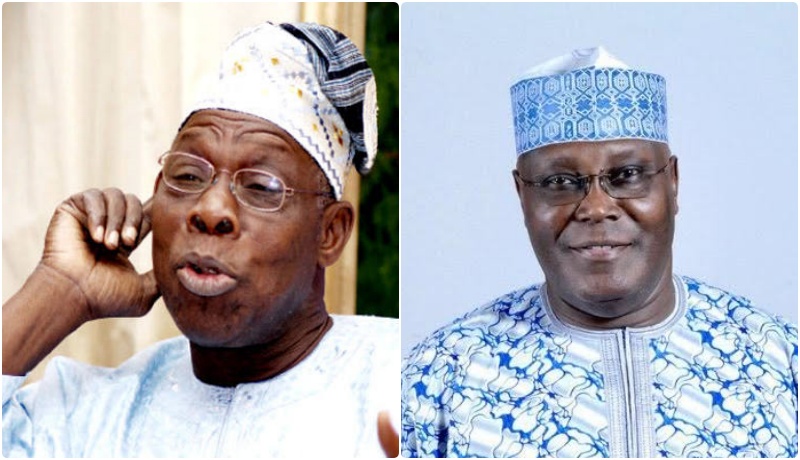
Recently, the former President of Nigeria, Olusegun Obasanjo has described his decision to select Atiku Abubakar as his running mate in the 1999 presidential election as the biggest mistake of his political career.
Mr Obasanjo made this disclosure on Friday, July 2026 in Lagos while speaking with veteran entertainer Charles Oputa, popularly known as Charly Boy, during a fireside chat at the unveiling of the Charly Boy Foundation and the launch of the entertainer’s memoir, 999: A Memoir in Tribute to Late Justice Chukwudifu Oputa.
Reflecting on his political career, the former president said he regretted the decisions he made during his time in office when he was asked about his choice of a running mate in 1999.
According to Mr Obasanjo, he would not have picked Atiku had he known at the time what he later learned about him.
In h is words, “the man I picked as my running mate, my number two. If I had known him as I came to know him later, I would not have picked him.”
When Mr Oputa asked whether he was referring to Atiku, Obasanjo replied: “My vice president. I don’t know what name you want to give him, but my vice president, I mean that.”
Reliving his experience in the office, Obasanjo said this informed his assessment of former vice president.
“Of course, what I know about him later… I would not have picked him. Thank God that God did not allow his actions and reactions to overwhelm me, divert my focus from Nigeria or harm Nigeria,” Mr Obasanjo said.
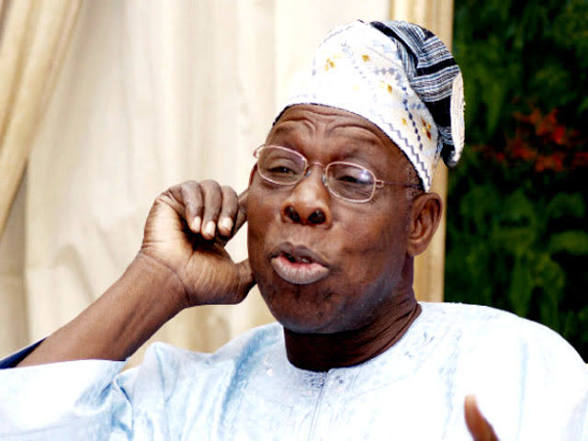
Despite his criticism, Mr Obasanjo said he had no personal bitterness towards his former deputy.
“There’s no bitterness because he did what he believed he should do, and God did what God had to do, which enabled me to achieve what I was able to achieve,” he said.
How the relationship was severed
Recall that Messrs Obasanjo and Atiku initially worked closely during the administration’s first term.
The former vice president even played prominent roles in economic policy and government institutions, including the National Economic Council and the National Council on Privatisation.
However, their relationship took a nose dive due largely to their political differences with the former vice president floating a new party with intention of wrestling power with his boss during the 2003 presidential election.
WITHIN NIGERIA gathered that one of the major sources of their disagreement was Mr Obasanjo’s alleged controversial tenure elongation bid and subsequent attempt to amend the Constitution to enable him to seek a third term in office.
Infuriated by this political greed, Atiku opposed the move and eventually fell out with the president.
What started as a simple disagreement between a political master and his son deepened with few months away from the 2007 general election.
Atiku left the PDP for the defunct Action Congress (AC) and emerged as the party’s presidential candidate.
In his military characteristic, Obasanjo subsequently declared the vice president’s office vacant, but the Supreme Court ruled that the president lacked the constitutional power to remove an elected vice president from office.
The court’s decision allowed Atiku to remain in office until the expiration of the administration in 2007.
This is didn’t in any way deactivate their political rivalry even after they left office in 2007 as have continued to make both men have continued to make accusations against each other over their conduct while in government.
Mr Obasanjo has also previously expressed strong opposition to Atiku’s presidential ambitions.
Recall that few years ago, precisely in 2018, Obasanjo has said that he could not support Atiku for president, arguing that he knew his former deputy differently by then.
“If I support Atiku for anything, God will not forgive me if I do not know, yes. But once I know, Atiku can never enjoy my support,” Mr Obasanjo was quoted as saying.
The renewed feud ahead of 2027
The latest comment against former vice president by Obasanjo could not have come at a better time.
This is as 2027 general elections is few months away with Atiku emerging the presidential candidate of African Democratic Congress, ADC.
Findings showed that Atiku had earlier in the month accused Obasanjo of supporting his kinsmen.
In a press statement by his Senior Special Assistant on Public Communication, Phrank Shaibu, the former vice president has challenged Obasanjo to publicly declare his preferred candidate rather than allegedly attempting to influence the election by criticising his political opponents.
The statement followed Mr Obasanjo’s revival of an allegation that Atiku gave the late Speaker of the House of Representatives, Ghali Na’Abba, ₦5 million to initiate impeachment proceedings against him while he was president.
Though former vice president rejected the allegation, describing it an attempt to tarnish his political image, this has formed new basis for their feud.
He argued that Mr Obasanjo should openly identify the candidate he supports and allow Nigerians to judge the candidates on their merits, particularly because Mr Na’Abba, who was identified as a key figure in the old allegation, is deceased.
Atiku did not expressly name President Bola Tinubu in his remarks but referred to Mr Obasanjo as allegedly supporting his “kinsman,” a description that, in the political context, was interpreted as a reference to the president.
Atiku fires back at Obasanjo
Few hours after Former President Obasanjo’s comment, Atiku Abubakar has fired back at his former political boss.
Atiku has accused former President Olusegun Obasanjo of allowing personal resentment to distort the history of their eight-year administration.
According to Mr. Atiku, he has no regrets about opposing the former president’s bid for a third term.
The former vice president said his decision to oppose the controversial third-term agenda was based on his commitment to the Constitution and to Nigeria’s democracy.
In a statement issued on Saturday by his Senior Special Assistant on Public Communication, Phrank Shaibu, Atiku said Mr Obasanjo’s latest comments were another attempt to rewrite the history of their political relationship and his administration.
According to him, he watched the former president’s comments “with profound sadness, not anger,” arguing that they reflected a man whose personal grievances had overshadowed historical facts.
He described the long-running hostility between and his former boss as an open secret, narrating that pointing to his opposition to the attempt to amend the Constitution to enable the former president to remain in office beyond the constitutionally permitted two terms as the beginning of their political war.
“I am proud that I stood against the third-term agenda. I am proud that I stood by the Constitution of the Federal Republic of Nigeria. I have no apology whatsoever for frustrating every attempt to subvert our democracy for personal ambition,” he said.
Atiku said if Mr Obasanjo’s resentment towards him was rooted in his refusal to support the third-term bid, he considered the resentment a badge of honour.
“If Chief Obasanjo’s bitterness stems from my refusal to support an unconstitutional third term, then I wear that resentment as a badge of honour.
“No individual, regardless of his status or accomplishments, is bigger than the Federal Republic of Nigeria. The Constitution is supreme, and I chose Nigeria over personal loyalty,” he said.
He went further to say that the disagreement over the third-term agenda was not a personal battle between him and Mr Obasanjo, rather a struggle to allow Nigerians to choose their leaders freely.
“The Nigerian people won that battle. Democracy won that battle. History has already delivered its verdict,” he said.
“Whether or not the timing is merely coincidental is for Nigerians to judge. What is beyond dispute, however, is that while distinguished Nigerians who served at the highest levels continue to acknowledge my contributions to one of Nigeria’s most successful periods of economic management, Chief Obasanjo appears determined to diminish them,” he said.
He said Mr Obasanjo was free to disregard his contribution to the administration, but that the historical record would ultimately speak for itself.
“Chief Obasanjo may choose not to appreciate my role in building one of Nigeria’s most prosperous economic eras, but history has been far kinder. The record speaks for itself, and so do the testimonies of those who worked closely with that administration,” he said.
I clothed Obasanjo, says Atiku
Narrating his relationship with Obsanjo before the 1999 presidential election that brought them together politically, Atiku said he had supported the former military ruler during his imprisonment and later helped him politically.
Recall Mr Obasanjo was imprisoned by the military government of the late General Sani Abacha in 1995 after being convicted of involvement in an alleged coup plot. He was released in June 1998 following Abacha’s death and the subsequent transition towards civilian rule.
Atiku said he supported Mr Obasanjo’s family while he was in prison and worked with others to secure his release.
“History records that while Chief Obasanjo was in prison, I stood firmly by him. I supported his family, worked tirelessly with other patriots for his release and never wavered in my belief that he deserved his freedom,” he said.
He further claimed that after Mr Obasanjo’s release, he provided personal and political assistance to him.
“When he eventually regained his freedom, he had little to his name. I received him, clothed him, ensured he was properly cared for and extended every support necessary to help him regain his footing.
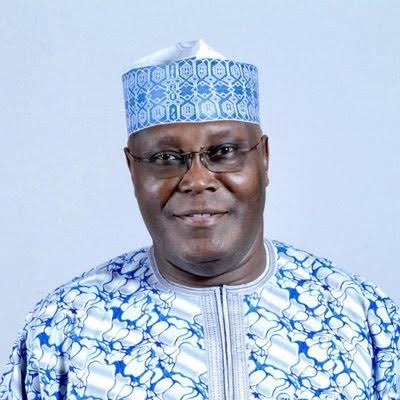
“Beyond that, I mobilised political structures, built alliances and made enormous personal and political sacrifices that culminated in his emergence as president of the Federal Republic of Nigeria.
“Do I regret helping Chief Obasanjo? Absolutely not. When God gives you the opportunity to lift another human being, you do so without expecting repayment. Acts of kindness are matters of conscience, not commercial transactions.
“If the true history of Chief Obasanjo’s political journey is ever written—free from selective recollection and personal bitterness—Atiku Abubakar will feature prominently as one of those whom God used to change the course of his life and political career,” he said.
Focus on Nigeria’s problems, Atiku advises
“The 2027 election should be about rebuilding Nigeria, restoring security, reviving the economy and giving hope to the next generation—not reopening old political wounds,” he said.
Atiku said he had deliberately refrained from responding to Mr Obasanjo’s previous criticisms because of his respect for the office of president and the relationship they once shared.
He, however, warned that his restraint should not be interpreted as an inability or unwillingness to respond.
“That restraint should never be mistaken for weakness or docility,” he said.
“There comes a point when silence in the face of repeated distortions of history ceases to be a virtue. While I have no desire to engage in a public quarrel with a man I once stood beside in his most difficult moments, neither will I permit falsehoods, half-truths and calculated attempts to rewrite history to go unanswered.
“Chief Obasanjo is entitled to his opinions. He is entitled to his personal grievances. What he is not entitled to are his own facts,” he said.