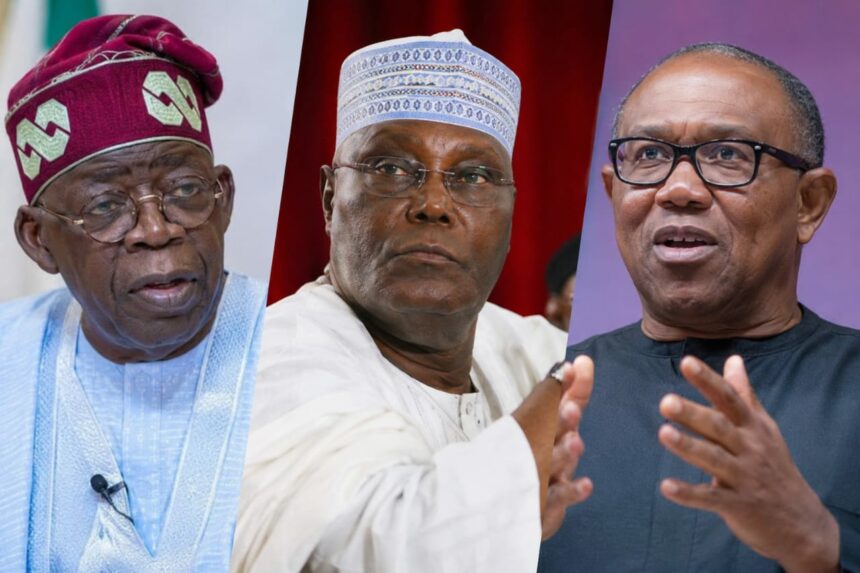
Nigeria’s 2027 presidential election is shaping up to be one of the most contested in the country’s democratic history. Barely two years after President Bola Tinubu secured his victory in February 2023, the opposition has been in constant motion: forming alliances, breaking them, forming new ones, and shuffling between parties at a pace that has left political analysts struggling to keep up. As of May 2026, with general elections less than a year away, multiple parties are fielding presidential candidates against Tinubu and the ruling All Progressives Congress.
The picture is not as simple as counting banners. Some of the same faces keep reappearing under different party labels, the Peoples Democratic Party is locked in a factional crisis with two wings each claiming legitimacy, and a coalition that was being called the most ambitious opposition realignment in a decade collapsed after barely three weeks of formal unity. What Nigeria’s opposition has not lacked in 2026 is drama. What it has often lacked is discipline.
The Political Parties Challenging Tinubu in the 2027 Presidential Race

The parties challenging Tinubu in the 2027 presidential race span the full spectrum of Nigerian opposition politics: the African Democratic Congress, the Nigeria Democratic Congress, the Peoples Democratic Party, the Allied Peoples Movement, the Peoples Redemption Party, and the Labour Party, among others. Taken together, this is not a coordinated challenge but a fragmented field that may end up helping the incumbent more than hurting him.
The African Democratic Congress: Atiku’s Platform
The African Democratic Congress, or ADC, is currently the most high-profile opposition vehicle in the race. The party was relatively obscure until July 2025, when it dissolved its National Working Committee to accommodate opposition heavyweights who needed a neutral platform after their own parties had been weakened by defections, internal crises, or litigation.
Former Vice President Atiku Abubakar, who ran for president in 2019 and 2023 under the PDP banner, formally returned his presidential nomination forms to the ADC in May 2026, signalling his entry into the party’s primary. Alongside him in the initial ADC coalition were Peter Obi, Rabiu Kwankwaso, former Kaduna governor Nasir El-Rufai, former Transport Minister Rotimi Amaechi, former Senate President David Mark, and a number of other influential politicians who had left both the APC and the PDP.
The coalition held a high-profile summit in Ibadan in April 2026 where opposition leaders publicly pledged to present a single candidate against Tinubu. The promise lasted less than three weeks. Peter Obi and Rabiu Kwankwaso resigned from the ADC in early May 2026, citing legal disputes and what they described as internal manipulation of the party’s structure to favour certain aspirants. Their exit fundamentally changed the nature of the ADC’s challenge.
As of late May 2026, the ADC primary was contested between Atiku Abubakar, Rotimi Amaechi, and Mohammed Hayattu-Deen. The outcome of the nationwide primaries had not been officially declared at press time. Whoever emerges will be carrying a coalition that has already lost its two most nationally visible members since the Ibadan summit.
The Nigeria Democratic Congress: The Obi-Kwankwaso Ticket
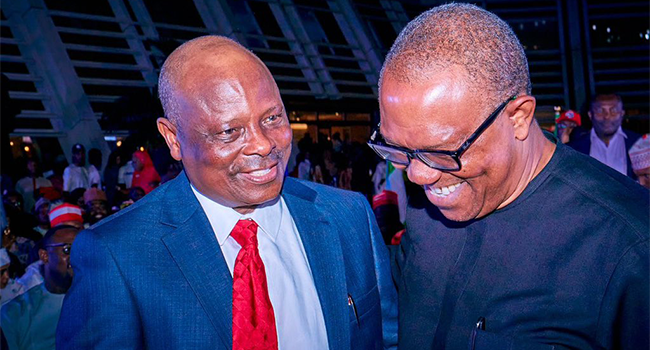
After leaving the ADC, Peter Obi and Rabiu Kwankwaso joined the Nigeria Democratic Congress, or NDC, on May 4, 2026. The party, led by former Bayelsa State Governor Seriake Dickson, had been formally registered by the Independent National Electoral Commission and was positioning itself as a long-term opposition platform rather than a temporary alliance of convenience.
The NDC held its maiden national convention in Abuja on May 9, 2026. At the convention, the party zoned the 2027 presidential ticket to the South, with Peter Obi subsequently unveiled as the NDC’s consensus presidential candidate. Kwankwaso, who leads the Kwankwasiyya movement with a strong base in Kano and the North-West, is widely expected to serve as Obi’s running mate, completing what supporters have already dubbed the ‘O-K’ ticket.
Kwankwaso has since explained publicly that the decision to back Obi rather than push his own presidential ambition was deliberate and strategic. In a May 21, 2026 interview on Global Television, the former Kano governor said that if Obi wins and serves two terms, 2031 would position a northern candidate, potentially himself, as the natural successor under Nigeria’s informal power rotation principle.
The NDC faces its own structural questions. The party is new to national politics and is contesting a presidential election with high-profile but recently defected figures. Whether its party machinery across states is strong enough to translate the Obi-Kwankwaso name recognition into actual votes remains to be seen. In the 2023 election, opposition candidates collectively won roughly 60 percent of the presidential vote but split it across multiple parties. The NDC is betting it can consolidate a significant portion of that.
The Peoples Democratic Party: Internal Crisis and Two Candidates
The situation inside the PDP is a story in itself. The party that ruled Nigeria for sixteen uninterrupted years, from 1999 to 2015, is going into the 2027 elections with two factions, each claiming to be the legitimate PDP, each screening its own presidential aspirants, and each insisting the other has no authority to act.
The faction led by Kabiru Turaki, recognised as the party’s Interim National Working Committee, has declared former President Goodluck Jonathan as the PDP’s sole presidential candidate for 2027. Jonathan was granted a waiver from the formal screening process, with the committee citing his previous service as deputy governor, governor, vice president, and president as sufficient vetting. Jonathan’s eligibility to run is the subject of an ongoing court case, as questions have been raised over whether a president who lost re-election having previously completed less than two full terms can contest again. His camp maintains he only won one election as a candidate and therefore remains eligible under Nigeria’s constitution.
The Nyesom Wike-backed faction, by contrast, has been screening its own aspirants, with Senator Sandy Onor among those linked to that wing’s presidential primary. Wike, the Federal Capital Territory minister and one of the most powerful political operators in the country, has dismissed Makinde and the Turaki faction’s moves as lacking legitimacy.
Seyi Makinde, the outgoing Oyo State governor and a nationally prominent PDP figure, initially appeared likely to contest on the PDP platform after Atiku’s exit from the party opened the field. However, Makinde ultimately defected to the Allied Peoples Movement ahead of his presidential declaration, which is detailed below.
The Allied Peoples Movement: Makinde’s New Platform
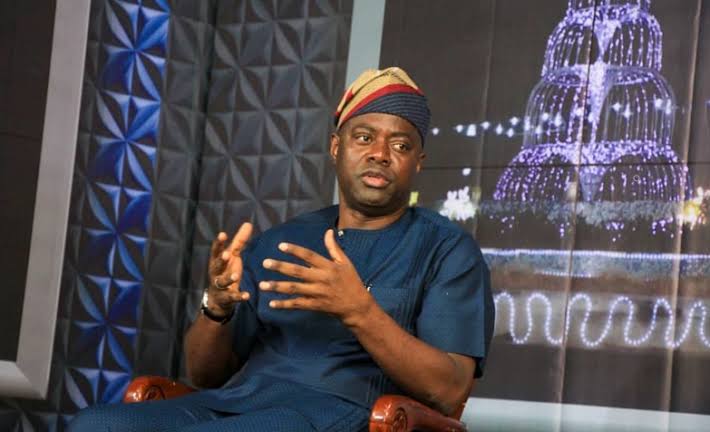
Seyi Makinde formally declared his presidential ambition in May 2026 on the platform of the Allied Peoples Movement, or APM. His defection from the PDP followed a Supreme Court ruling that weakened the Makinde-aligned bloc within the party and complicated his prospects of securing the PDP ticket.
Makinde’s entry into the presidential race is significant for several reasons. He is one of the most capable administrators among Nigeria’s current governors, his governance record in Oyo State has earned him credibility beyond his state, and he commands personal loyalty rather than just structural party support. He is also Yoruba, which raises questions about vote splitting in Tinubu’s South-West base. Tinubu, also from the South-West, was actually defeated in Oyo State in the 2023 presidential election.
The practical challenge for Makinde is that the APM does not yet have the national network or institutional weight that the major parties have spent decades building. His political capital is real. Translating it into a competitive national campaign through a smaller party is a different task entirely.
Labour Party: Preparing for Its Own Primary
The Labour Party, which Peter Obi used as his 2023 presidential platform and which shocked Nigeria’s political establishment by placing third with over six million votes, is also expected to field a presidential candidate in 2027. As of late May 2026, the LP was scheduled to hold its presidential primary on May 29, 2026.
Obi’s departure from Labour Party to ADC, and then to NDC, has left the party without its most recognised figure. The LP leadership had been locked in internal disputes, with Obi himself stating publicly in February 2026 that as long as he remained in the party, INEC would not recognise its leadership, citing what he described as federal government pressure to keep him off the ballot. Labour Party’s candidate from the May 29 primary will enter the race with name recognition built partly on Obi’s 2023 performance, but without Obi himself.
The Peoples Redemption Party: Donald Duke’s Entry

The Peoples Redemption Party, or PRP, was conducting its own presidential primaries as of late May 2026. Among those contesting the ticket was former Cross River State governor Donald Duke, described by reports as the frontrunner. Also in the PRP primary were Nnaoke Ufere, a notable economist from Abia State, and Yakubu Kingsley from Edo State.
Duke is a respected figure with a record of transformative governance in Cross River during his tenure as governor, but the PRP is a smaller party with limited presence at the federal level. If Duke does emerge as its candidate, he would add another experienced political name to what is already a crowded field.
Why the Opposition Keeps Fracturing
Across all of these parties, a pattern repeats itself: big names come together, make unity pledges, disagree over who gets the presidential ticket, and part ways. It happened with the ADC coalition after the Ibadan summit. It happened inside the PDP. It is happening across the board.
The fractures trace back to a structural problem that analysts have identified consistently: Nigeria’s opposition lacks ideological glue. What unites opposition figures is not a shared platform or policy vision but a shared desire to defeat Tinubu. When it comes to who specifically gets to be the person who defeats him, agreements collapse. Everyone wants to be president. Very few are willing to be vice president.
There is also the question of northern versus southern presidential rotation. The informal convention that the presidency should alternate between North and South creates constant tension in any opposition coalition that spans both regions. Atiku, a northerner, wants the ticket. Obi, a southerner, wants the ticket. Makinde, also a southerner, wants the ticket. None of them wants to serve under one of the others.
The result is that the 2027 election, as it currently stands, may replicate the 2023 dynamic rather than overcome it. In 2023, opposition candidates together outpolled the APC in total votes but lost because their support was distributed across too many candidates. A divided field in 2027 benefits Tinubu in exactly the same way.
What the APC and Tinubu Are Doing
While the opposition fragments, the APC has been systematically consolidating. The party formally endorsed Tinubu for a second and final term at a summit in Abuja in May 2025. APC National Chairman Abdullahi Ganduje declared Tinubu the party’s sole presidential candidate, describing the endorsement as an affirmation of the president’s reform agenda.

Tinubu’s government has also benefited from a string of high-profile defections from opposition parties to the APC, including several governors and federal lawmakers. Tinubu himself noted the trend publicly, saying, ‘That is the game.’ The Lagos State APC predicted in January 2026 that the opposition coalition would collapse, citing exactly the competing ego problem that eventually produced the ADC split. They were not wrong.
The economic reforms Tinubu introduced in his first year, including the removal of the petrol subsidy and the liberalisation of the exchange rate, drew significant public criticism as Nigerians absorbed severe cost-of-living increases. International creditors, ratings agencies, and the IMF praised the structural logic of those reforms. Many ordinary Nigerians experienced them as hardship. Whether that hardship translates into electoral punishment in 2027 depends partly on whether any opposition candidate can consolidate the discontent into a single coherent campaign.
The State of the Race as Primary Season Opens
With parties completing or approaching their primaries in late May 2026, the 2027 presidential race is entering its most consequential phase. On one side, Tinubu and the APC are going into the election as a unified incumbent party with state machinery, financial resources, and a broad network of political allies. On the other side, the opposition has produced at least five or six credible parties with presidential candidates, none of which appears positioned to consolidate the anti-Tinubu vote on its own.
The NDC is advancing an Obi-Kwankwaso ticket that draws on the Obidient movement’s urban energy and the Kwankwasiyya’s northern bloc. The ADC, under either Atiku or Amaechi, is counting on northern political networks and Atiku’s decades of presidential campaigning. PDP under Jonathan is a wildcard that depends on a court ruling about eligibility and on whether his name recognition among older voters can produce a viable national campaign. Makinde and APM represent the Yoruba southwest outside Tinubu’s grip. Labour Party will produce a new candidate who inherits part of the 2023 energy without the person who generated it.
Barring a last-minute unity deal, which multiple parties have tried and failed to sustain this year, Nigeria is heading into a 2027 election with a fragmented opposition facing a consolidated incumbent. The parties are many. The common strategy is not.
Conclusion
At least five major political parties are mounting credible presidential challenges against Tinubu in the 2027 election: the ADC, the NDC, the PDP, the APM, and the Labour Party, with the PRP adding a further name to the field. The scale of this opposition does not translate into strength. It translates, as it has in previous elections, into a divided vote that the APC can navigate to victory without necessarily winning a majority.
For ordinary Nigerians who have borne the cost of the current administration’s economic reforms and who want to see genuine democratic competition, the frustration is real. The opposition has the votes, in aggregate. It keeps failing to find the will to concentrate them. Whether that changes before polling day in early 2027 is the defining question of this election cycle.