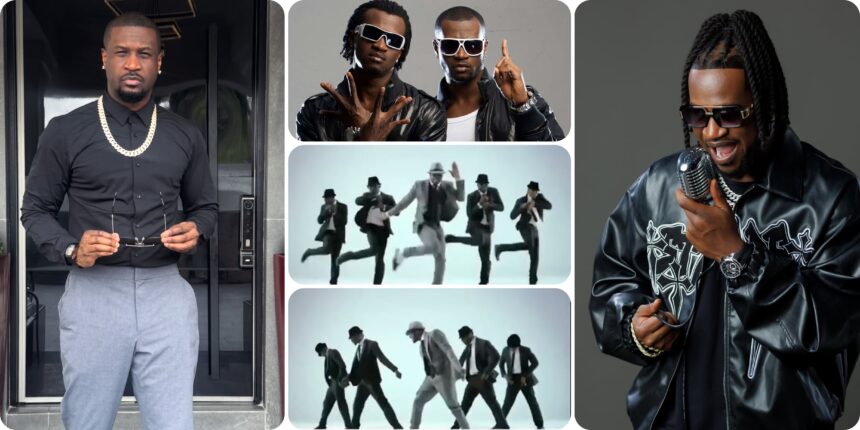
For more than a decade, Peter and Paul Okoye were better known for making music together than for fighting in public.
As P-Square, the twin brothers built a career around energetic performances, catchy songs, elaborate music videos and a sound that moved easily between R&B, hip-hop, highlife and dance-pop. Their music travelled beyond Nigeria, making them one of Africa’s biggest music duos.
Today, however, their relationship is again making headlines.
The brothers have had more than one public fallout over the years. Their first major split came in 2017, after disagreements involving management, finances and creative differences. They reunited in 2021, bringing back memories of their successful years together, but that reunion eventually fell apart.
Their latest dispute has brought renewed attention to the business and family issues surrounding P-Square. Peter Okoye, also known as Mr P, has spoken publicly about alleged betrayal and financial disagreements involving his twin brother Paul and their elder brother and former manager, Jude Okoye. The matter has is currently in court.
While the brothers continue to deal with those issues, their music remains a reminder of what they achieved together.

From the club anthem that helped establish them in the mid-2000s to the Michael Jackson-inspired video that took their performance style to a global audience, these 12 songs capture different stages of the P-Square story.
1. Bizzy Body
Released in 2005 as one of the major songs from Get Squared, “Bizzy Body” came at a crucial point in P-Square’s career. The song helped establish the energetic, club-friendly sound that would become one of their trademarks.
Its greatest strength was its simplicity. The hook was easy to remember and even easier to dance to. At a time when Nigerian pop was moving towards a more modern, club-oriented sound, “Bizzy Body” fit perfectly into that change.
The music video was just as important. Directed by their elder brother, Jude “Engees” Okoye, it placed a strong emphasis on choreography and performance. Peter, in particular, showed the energetic dance style that would become a major part of P-Square’s identity.
The twins’ love for Michael Jackson and Western pop performance was already visible in their approach, but they adapted those influences to their own African sound and style.
“Bizzy Body” therefore did more than become a hit. It helped show audiences that Nigerian pop could be both highly danceable and visually ambitious.
It also featured the voice of Waje in the background, adding a softer vocal layer to the twins’ energetic delivery.
For P-Square, this was the beginning of the era in which the music, dancing and videos would become inseparable.
2. Temptation
Also associated with the Get Squared era, “Temptation” showed that P-Square could slow things down without losing their appeal.
Unlike the high-energy “Bizzy Body,” the song leaned towards smooth R&B. Its acoustic guitar elements and heavier bass created a more relaxed sound, allowing the brothers to explore a different side of their music.
The story was also different. Rather than simply making a party record, “Temptation” centred on a man struggling to remain faithful while being pursued by another woman.
That narrative gave the song a more personal feel. The later remix, associated with their Game Overera, featured British-Nigerian rapper Alaye, adding another dimension to the song.
“Temptation” became important because it showed that P-Square were not limited to one formula. They could make people dance, but they could also make songs built around romance, temptation and emotional conflict.
3. Do Me
By 2007, P-Square had moved into another level.
“Do Me”, released during the Game Over era, became one of the songs most closely associated with their rise to continental superstardom.
The song had everything that worked for the twins: a strong beat, a simple hook, memorable vocals and a video built around performance.The repeated “Do me” chorus made it almost impossible to ignore on a dance floor, while the twins’ chemistry gave the song its familiar P-Square identity.
Waje also appeared on the record, adding a powerful female vocal presence to the song. But the real impact went beyond Nigeria.
P-Square were already successful at home, but “Do Me” helped strengthen their presence across Africa.
4. Ifunanya
Released during the Game Over period in 2007, “Ifunanya” revealed another side of the twins.
The title itself comes from Igbo and is associated with love. The song combined contemporary R&B with elements of Eastern Nigerian musical culture, giving it a sound that was both modern and deeply familiar.
Instead of the confident party atmosphere of “Do Me,” “Ifunanya” dealt with longing, trust and the fear of losing someone. The repeated plea to a lover not to leave became one of the song’s most memorable elements.
Its video also followed a different direction. The choreography was slower and more restrained, allowing the emotional story to take centre stage. The song became particularly popular at weddings and romantic celebrations, helping establish P-Square as more than club-hit makers.
5. No One Like You
Another major Game Over record, “No One Like You” was released in 2007 and became one of P-Square’s most enduring love songs. Apple Music dates the song to May 1, 2007.
The song opened with a gentle, conversational feel before settling into a smooth R&B groove.
While many of P-Square’s biggest songs were built for clubs, “No One Like You” worked just as well in a wedding hall. Couples used it for first dances, wedding receptions and romantic celebrations across Nigeria and beyond. The brothers also kept the record self-contained, relying on their own voices rather than an outside feature.
Years later, the song remains one of those P-Square records that can start playing at a wedding and immediately get people singing along.
6. E No Easy
By 2009, P-Square had moved into the Danger era, and “E No Easy” offered something different again. The song was motivational without sounding like a lecture.
Its message was simple: life is difficult, success does not come easily, but people should continue working, enjoying life and trusting that things will improve.
The breezy production, highlife elements and J. Martins’ contribution gave it a warm sound that stood apart from the more electronic club records that had become common in Nigerian pop.
The line at the heart of the song, ‘that it is not easy’ connected with ordinary people.
It could be heard at parties, social gatherings and celebrations, but it also spoke to people dealing with the everyday pressure of work and survival. The song later gained attention outside Nigeria as well. French singer Matt Houston recorded a French-English version, “Positif,” with P-Square, showing how far the song’s message could travel.
7. Chop My Money Remix
The early 2010s marked another major stage in P-Square’s international ambitions.
“Chop My Money” originally appeared on The Invasion, but the remix featuring Akon and May Dbecame the version that gained major attention outside Nigeria. The remix was released in 2012.
The record was built around a simple celebration of spending money and enjoying life. May D brought his distinctive voice to the song, while Akon’s appearance gave the track another layer of international appeal.
For P-Square, the collaboration was significant because it showed that a Nigerian pop song could accommodate a major international artiste without losing its African identity. The music video pushed the same idea further, using expensive cars, nightlife and a polished party setting to match the song’s theme.
8. Beautiful Onyinye Remix
If “Chop My Money” showed P-Square’s ability to make an international club record, “Beautiful Onyinye” showed that their love songs could travel too.
The original song appeared on their 2011 album The Invasion. The remix featuring American rapper Rick Ross was released in June 2012.
“Onyinye” means “gift,” and the song presented a much softer version of P-Square. The gentle guitar-led production gave Peter and Paul room to focus on melody and romance, while Rick Ross added a rap verse that brought a different flavour to the record.
The collaboration came after P-Square had established links with Akon and the international music industry. According to accounts surrounding the song, Rick Ross heard the original while in the studio with Akon and expressed interest in the record.
The video reinforced the international ambition. Parts of it were filmed in Miami, with the twins appearing in a polished luxury setting alongside Rick Ross.
9. Alingo
Then came “Alingo.”
Released in August 2012, the song represented P-Square at their most energetic. It was fast, electronic and designed to make people move. The track later appeared as a bonus track on Double Trouble. But “Alingo” was about more than the audio.
The song came with a dance, and the dance became part of the conversation. Its rapid choreography and energetic movements fitted perfectly with P-Square’s reputation as performers who could dance as hard as they sang. There was also controversy. The song and its accompanying dance drew comparisons with Ghana’s Azonto movement, creating debate over the influence of the dance trend.
The controversy did not stop the song from growing. Instead, it added to the attention around it.
“Alingo” eventually reached No. 1 on MTV Base’s Official Naija Top 10 in March 2013.
10. Personally
Few P-Square songs captured their performance identity as clearly as “Personally.” Released on June 21, 2013, the song became one of their most recognisable records, but it was the video that gave it a special place in their story.
P-Square used the video to pay tribute to Michael Jackson, one of their biggest musical and performance influences.
The twins borrowed familiar elements of Jackson’s visual language from the styling to the dance moves, while adding their own choreography and African performance style.
The result was a video driven almost entirely by movement. Peter’s dancing, the synchronized routines and the group formations made the video feel like a performance piece rather than simply a music video.
The tribute was noticed by Michael Jackson’s family. In July 2013, Jackson’s brother, Jermaine Jackson, released a message praising P-Square’s singing, dancing and showmanship.
11. Shekini
Released in 2014, “Shekini” arrived during the Double Trouble era and showed that P-Square had not lost their ability to make a dance-floor record.
The song was fast, energetic and built around a command to dance. Its rhythm fitted the period when Nigerian and African pop were filled with high-tempo dance records, while the twins once again used choreography to give the song a visual identity.
“Shekini” was released as part of the Double Trouble period in September 2014. By then, the P-Square formula was clear: strong hooks, energetic production, big dance routines and a music video that could stand on its own. But there was also something bittersweet about the song in hindsight. It belonged to the final stretch of the twins’ first great run together.
A few years later, the P-Square name would be split between Peter’s Mr P identity and Paul’s Rudeboy identity.
12. Bank Alert
Then, in 2016, there was a song that carried meaning beyond the music.
“Bank Alert” was released in September 2016, at a time when P-Square had briefly reconciled after another period of tension. The song became a public symbol of their return.
The record leaned into highlife and celebration, with lyrics about receiving a bank notification and enjoying the rewards of financial success. It was lighter than the serious family issues surrounding the brothers. That was part of its appeal.
The video also carried a strong Nigerian feel, featuring appearances from figures including Onyeka Onwenu, Phyno, Kcee and Mr Ibu. It was directed by Clarence Peters and Jude Okoye. The song itself also drew from Nigerian musical history, sampling lyrics from Onyeka Onwenu’s “Iyogogo.”
For fans, however, the biggest message was simple: P-Square was back. The twins were together again, making music, dancing and appearing on screen as the duo audiences had missed.
Unfortunately, that reunion would not last forever.
But “Bank Alert” remains important because it captured one of the moments when fans genuinely believed the P-Square story had found its way back to where it started.
The Music Remains, Even When The Partnership Does Not
P-Square’s story has never been a straight line. Peter and Paul went from young twins with a dream to one of Africa’s biggest music acts. They built a catalogue that moved between club records, love songs, motivational music and international collaborations.
They also understood the power of performance.
“Bizzy Body” helped establish their club sound. “Do Me” took them further across Africa. “Ifunanya” and “No One Like You” showed their romantic side. “E No Easy” connected with people facing the realities of everyday life. “Chop My Money” and “Beautiful Onyinye” showed their international reach. “Alingo,” “Personally” and “Shekini” reinforced their reputation as exceptional performers.
Then came “Bank Alert,” a song that briefly made reconciliation feel possible again.
Years later, the brothers are once more at the centre of public attention because of disagreements over family, business, money and trust. Peter has continued to speak about what he describes as years of betrayal, while the legal dispute involving Jude Okoye remains ongoing. A February 2026 court hearing also showed that some details surrounding the ownership and management structure of their companies are contested and have been examined under cross-examination.
Whatever the final outcome of those disputes, it does not erase what Peter and Paul achieved when they were working together.
For a generation of African music fans, P-Square was not simply two brothers who sang together. They were the choreography, the matching outfits, the energetic videos, the love songs, the club anthems and the soundtrack to countless weddings, parties and celebrations.
And long after the arguments fade from the headlines, those songs will remain.