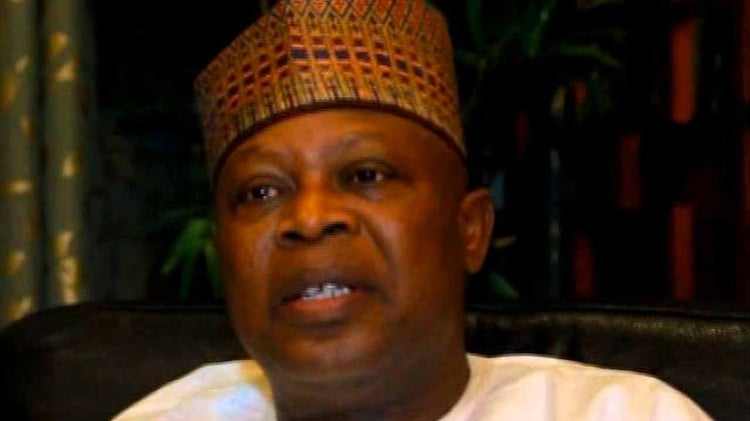
On Sunday, 16 August 2026, the Independent National Electoral Commission,INEC declared Governor Ademola Adeleke as the winner of the August 15, 2026 gubernatorial election in Osun state.
Adeleke who defected from People’s Democratic Party, PDP to Accord Party polled 511,067 to defeat his closest rival, Bola Oyebamiji of All Progressives Congress, APC.
The INEC Returning Professor Joshua Ogunwole, Returning Officer declared Governor Ademola Adeleke as the winner of the Osun State governorship election after a tight contest.
WITHIN NIGERIA gathered that Adeleke was declared the winner following the completion of the collation of results in Osogbo, the state capital.
According to INEC, Adeleke polled 511,067 votes to emerge victorious.
Oyebamiji came second with 444,815 votes, while Najeem Salaam of the African Democratic Congress (ADC) finished third with 17,180 votes.
INEC said Adeleke won in 19 local government areas, while Oyebamiji secured victory in 11 LGAs.Maps
However, due to the tight contest that characterized, it seemed that it was only three political parties that participated in the election.
In any case, a total of 13 political parties took part in the election; the Accord Party (A): Ademola Adeleke; Action Alliance (AC): Farinloye Olarenwaju; African Action Congress (AAC): Esan Olajide; African Democratic Congress (ADC): Najeem Salam; African Democratic Party (ADP): Adeagbo Opawoye; All Progressives Congress (APC): Bola Oyebamiji; All Progressives Grand Alliance (APGA) and Adesina Adeyemi-Doro of Allied People Movement (APM).
Others are Adewale Adebayo; Action Peoples Party (APP): Clement Adesuyi; Boot Party (BP): Masilo Adeleke; New Nigeria Peoples Party (NNPP): Taofeek Adeleke; Peoples Redemption Party (PRP): Saliu Oyelami; Young Progressives Party (YPP): Ogunsakin Olalekan and Zenith Labour Party (ZLP): Adefemi Adesuyi.
Despite huge participation of many parties in the election, the major gladiators were candidates of the Accord Party, Adeleke, who is the incumbent governor; Oyebamiji (AMBO) of the APC; Salam of the ADC; Adebayo of the APM; and Esan of the AAC.
WITHIN NIGERIA took a look at what contributed to the victory of Gov. Adeleke in the August 15, 2026 polls.
Fourteen factors that determined Adeleke’s victory
By and large, fourteen factors appear to have determined the victory of Gov. Adeleke in the August 15, 2026 Guber polls.
Among such factors were incumbency factor, family factor, grassroots political base and among others.
1. Incumbency advantage: It has been said in Nigerian political parlance that defeating an incumbent governor or president is as easy as asking a Carmel to pass through the eye of a needle.
To this end, the sitting governor, Adeleke had greater visibility, access to state-wide political networks and the advantage of running on the record of an administration already familiar to voters.
It goes without saying that the governor has identified the contest as, in part, a battle between incumbency and the federal might of the APC, and so has selected his political tools wisely.
2. Osun West advantage: The governor is from Ede in Osun West, and so, all three leading candidates—Adeleke, APC’s Bola Oyebamiji and ADC’s Najeem Salaam—also came from the same senatorial district.
For this reason, the electorate had to choose the existing governor as against other candidates whom they know little about.
3. The Adeleke family political structure: The governor’s family name remains a significant electoral force, particularly in Osun West.
That family network gave the governor an organisational and emotional connection with voters that opponents had to overcome. The ace musician, Davido took it upon himself and carried out a huge political rally that shaped the structure.
4. Endorsements from other political actors, parties: Few days to the election, two candidates withdrew from the race and endorsed Adeleke.
This helped in boosting his political chances in the election.
5. His strong personal following: The governor went into the election with an established grassroots base built from during his 2022 victory and his family’s longstanding political influence in Osun.
So, his established political clout was identified as one of the factors behind his earlier electoral success.
6.2022 electoral base: On August 15, 2026, Gov. Adeleke went into the election with a huge vote base. It was reported that he won the 2022 election with 403,371 votes against APC’s 375,027, giving him a 28,344-vote advantage to defend. That existing electoral profit was an important advantage over his opponents.
7.Division among the opposition votes: The emergence of other party candidates like Najeem Salaam of the ADC meant that the anti-Adeleke vote was divided among APC, ADC and other candidates.
Some political analysts were of the opinion that the votes were divided rather than being concentrated behind Oyebamiji of APC.
8.The tripod political nature:
There is no gainsaying the fact that the APC mounted a serious challenge.
However, the presence of Najeem Salaam as a strong ADC candidate created a three-way contest.
As observed, the three leading candidates came from Osun West and this made the opposition to Adeleke weak.
This made it very difficult for the APC to convert anti-incumbency sentiment into a decisive majority.
9.The absence of PDP candidate in the contest:
In 2022, the PDP provided the platform for Adeleke’s victory.
However, in 2026, the party did not field a candidate in the contest. The withdrawal of PDP potentially made the party not to have direct contest with Adeleke for voters who had previously supported him.
10. Gov. Adeleke’s campaign machinery:
Gov. Adeleke’s campaign benefited from an already established political structure and familiarity with the state’s electoral terrain.
Analysts were of the opinion that the 2022 campaign had demonstrated the effectiveness of the Adeleke political machine, while the 2026 contest again involved intense mobilisation across the state with high profile individuals like Davido, etc.
11.The APC’s lack of unifying base:
Even with federal might, APC lacked unifying base in the state. The party was banking its victory on the Federal might advantage which could not gave them the desired result.
Again, few days to the election, there was reports of highlighted defections and internal political manoeuvring as important features of the contest.
12. Defections and endorsements from rival camps: The decision by candidates from other parties, including the PDP and APM, to step down and endorse Adeleke potentially consolidated part of the opposition vote behind him rather than allowing those votes to be scattered across several candidates.
13. Utterances of other opposition members: Few days to the election, it was reported that one APC Senator from the area allegedly told the voters to kill any Accord Party member seen during the election.
This utterances infuriated the voters and swung the voters of the Osun state people in favour of Adeleke.
14. Gov. Adeleke’s performance: Beyond political gimmicks, it was reported that Gov. Ademola Adeleke has done well in the state.
To this end, the Osun state people had to choose him again to lead credence to the time-honored adage that ” better the devil you know than the angel you don’t know.”