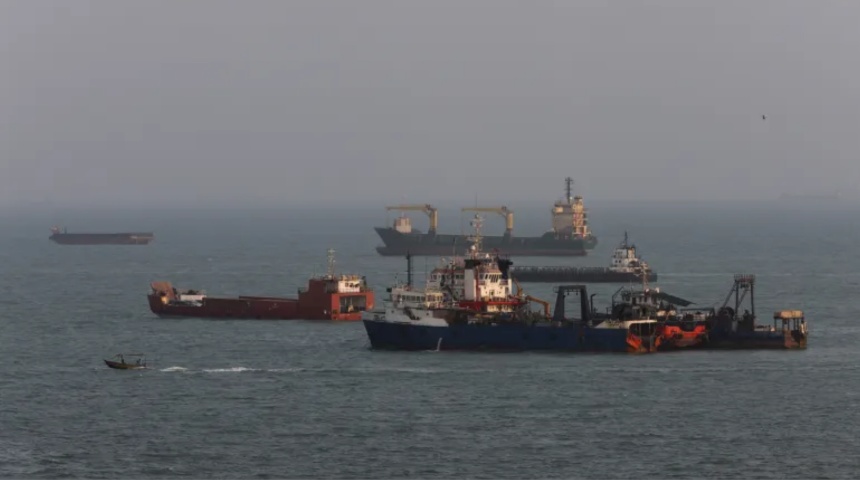
The Strait of Hormuz has been at the centre of a global energy scare for nearly six months now, and as of mid-August 2026, it still isn’t fully open. Oil is trading near $90 a barrel. Tankers are queuing off Fujairah and Muscat waiting for a green light that keeps almost arriving and then slipping away again. And the two countries that matter most, Iran and the United States, are still arguing over who gets to decide when the world’s busiest oil chokepoint is safe to use.
If you’ve been trying to follow this story in fragments, here’s the full picture: where the strait actually is, how it ended up closed, what Iran wants before it reopens, and what Washington is saying in return.
Where the Strait of Hormuz is, and why it matters this much
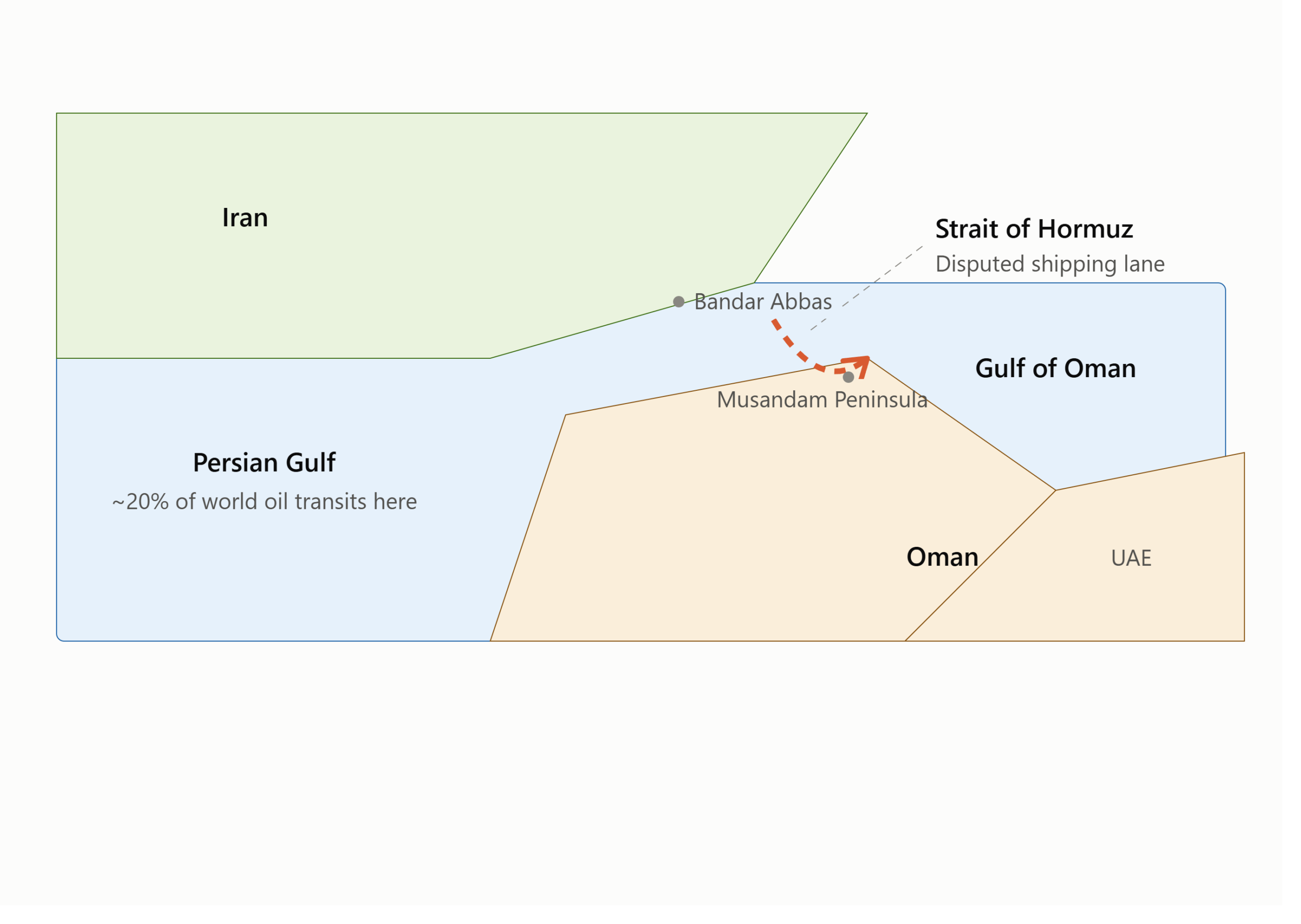
The Strait of Hormuz sits between Iran’s southern coast and Oman’s Musandam Peninsula, connecting the Persian Gulf to the Gulf of Oman and, from there, the open waters of the Arabian Sea. At its narrowest point, the shipping channel is only about 33 kilometres wide, with usable lanes for tankers even tighter than that.
Geography made this stretch of water one of the most important 33 kilometres on the planet. Before the current crisis, roughly one-fifth of the world’s oil and a similar share of global liquefied natural gas passed through it every day, moving crude from Saudi Arabia, Iraq, Kuwait, the UAE and Iran itself out to refineries in Asia, Europe and beyond. There’s no realistic alternative route for most of that cargo. A handful of pipelines can bypass the strait, but nowhere near enough to replace it.
That’s the reason a regional war has turned into a global oil story.
How the strait ended up closed in the first place
The crisis traces back to February 28, 2026, when the United States and Israel launched joint airstrikes on Iran, including the killing of Supreme Leader Ali Khamenei. Iran responded by effectively shutting the strait to shipping. The Revolutionary Guard Corps broadcast warnings over VHF radio telling vessels that “no ship is allowed to pass,” boarded and attacked merchant ships, and laid sea mines across parts of the channel.
Since then, the strait has swung between partial reopening and renewed closure more times than most shipping companies can keep track of. A ceasefire in April briefly promised normal traffic. It didn’t hold. The US imposed a naval blockade on Iranian ports in mid-April after peace talks collapsed. In June, Washington and Tehran signed a memorandum of understanding giving both sides sixty days to negotiate a longer-term deal on reopening the waterway, but that arrangement fell apart within weeks after Iran attacked tankers using a US-proposed southern route along Oman’s coast. That memorandum officially expired on August 17, with no extension announced.
Traffic has never recovered. Ship-tracking data from MarineTraffic showed only eight to fifteen vessels crossing the strait on some days in early August, compared with around 130 transits a day before the war.
What Iran actually wants before it reopens the strait
Iran’s position has stayed fairly consistent, even as the details shift week to week: it wants a say in how ships move through waters it considers partly its own, and it wants something in return for reopening.
Through August, Iran and Oman have been negotiating a bilateral arrangement to manage shipping through the strait, largely without direct US involvement. Iranian officials say the two sides have agreed on the coordinates for a new transit route, with ships entering through a lane closer to the Iranian coast and exiting through a lane closer to Oman’s. Foreign Ministry spokesman Esmail Baghaei described it, in Tehran, as an understanding “regarding the map of the transit route.”
But Iran has been careful to separate that technical agreement from the bigger political demands. Foreign Minister Abbas Araghchi has said repeatedly that a deal with Oman on shipping routes won’t by itself mean the strait reopens to normal traffic. Tehran wants the US naval blockade on its ports lifted first, along with sanctions relief and, according to some reports, compensation for war damage. “As long as the US naval blockade continues, the necessary conditions for the reopening of the Strait of Hormuz do not exist,” Baghaei said in mid-August.
Reuters has also reported that Iran wants more control over vessels passing through, potentially including navigation fees, a proposal Washington has flatly rejected.
What the US is saying
The American position has been blunt and, at times, contradictory depending on who’s speaking. President Trump has spent weeks predicting an imminent deal, at one point suggesting an agreement “could happen” within days, only for talks to stall again. Treasury Secretary Scott Bessent echoed that optimism in early August. But by mid-August, Trump was striking a different tone, saying he wasn’t interested in extending the expired memorandum of understanding and that the US wasn’t currently holding or planning talks with Tehran.
US Central Command has insisted throughout that the southern shipping route through Omani waters “remains free and open for all commercial vessels,” even as insurers and shipping companies treat the whole region as a war-risk zone. Washington has also made clear it won’t support any deal that gives Iran formal control over navigation. A US official told reporters that any temporary arrangement must come “without any impediments, meaning no approvals or permissions and no tolls or charges,” arguing that the strait is international waters that “no party controls.”
Energy Secretary Chris Wright has pushed back on claims that the closure has crippled exports, saying oil flows through the strait have actually climbed to nearly nine million barrels a day, with Gulf output closer to 15 million barrels a day once pipelines are counted. Independent analysts view that figure with some scepticism, since it’s still roughly half of pre-war volumes.
What it’s doing to oil prices and global shipping
Markets have been on a rollercoaster since February. Brent crude spiked above $114 a barrel in the war’s early days, crashed when Trump floated the idea of the US seizing control of the strait to restore access, then climbed again as ceasefires collapsed and attacks resumed. As of mid-August, Brent is trading close to $90 a barrel, up roughly a quarter compared to pre-war levels, while WTI has hovered around $81 to $86.
The International Energy Agency now expects Middle East oil production to stay below pre-conflict levels until early 2027. Gulf output was down 6.3 million barrels a day year-on-year in July, with 8.3 million barrels a day of capacity effectively shut in. Insurance costs for tankers transiting the region have climbed sharply, and several vessels have been damaged or attacked even on routes the US insists are safe, including one ship that suffered engine-room damage and a crew casualty after leaving the strait in mid-August.
Saudi Arabia and the UAE have both started routing more crude through pipelines and alternative loading points that avoid the chokepoint altogether, a workaround that helps but doesn’t come close to covering the shortfall.
Where this leaves things
Nobody involved is describing a full resolution as close. Iran and Oman appear genuinely near a technical agreement on shipping lanes, and officials on both sides have used the word “close” more than once in recent weeks. But that agreement, even if finalised, wouldn’t automatically reopen the strait to the kind of traffic it saw before February. Iran has tied that to US concessions Washington has so far refused to make, and the US has tied its own cooperation to guarantees Tehran hasn’t been willing to give.
For now, the practical reality is a strait that’s neither fully open nor fully closed: a reduced trickle of traffic, elevated shipping risk, and an oil market that reacts to every fresh headline out of Tehran, Muscat or Washington. Until the blockade, the routes and the money are all settled at once, that’s likely to stay the pattern.