The Miss World stage in Vietnam brought together the familiar glamour of an international pageant, the pressure of competition and the personal hopes carried by contestants representing countries across the globe. For Nigeria, the journey became particularly interesting as Tamunosoye Karibi-George moved through the competition with a series of achievements that gave the country’s participation a stronger story than a routine appearance at a global pageant. Her progress placed Nigeria in the middle of the conversation as the competition approached its final night, while another contestant prepared to claim the crown that had drawn the attention of millions of viewers.
The story reached its decisive moment on September 5, 2026, when the 73rd Miss World competition concluded at April 2 Square in Nha Trang, Vietnam. By then, Karibi-George had already secured a continental title, earned a place among the leading contestants and advanced through a public voting route that brought her into the final twelve. The Dominican Republic’s Joheirry Mola Dominguez ultimately took the crown, but the Nigerian representative’s journey had already become one of the notable parts of the competition. Here is how the events unfolded, from the national crown in Lagos to the final night in Vietnam.
The Competition Reaches Vietnam
Miss World 2026 brought contestants from different parts of the world to Vietnam for a competition that combined pageant presentation, cultural representation, advocacy and public engagement. The edition was also presented as part of the Miss World organisation’s 75th anniversary celebration, giving the event an added historical significance as contestants competed for one of the most recognised titles in international pageantry.
The competition culminated on September 5, 2026, at April 2 Square in Nha Trang. The final night followed a series of activities and challenges that helped determine which contestants would move closer to the crown. Rather than relying on a single stage performance, the competition gave contestants several opportunities to demonstrate their abilities, connect with audiences and represent their countries.
Nigeria’s participation became more closely watched as Karibi-George progressed through those stages. Her journey was not simply about reaching Vietnam and appearing on the final stage. It involved a national title, a continental challenge victory, a place in the Top 40 and a further qualification through the People’s Choice category. Each stage added another part to the story.
The National Crown in Lagos
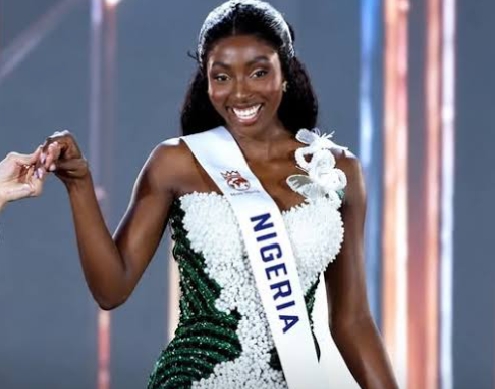
Tamunosoye Karibi-George earned the right to represent Nigeria after winning the Miss World Nigeria 2026 competition on June 6, 2026. The national pageant took place at the Balmoral Hall of the Federal Palace Hotel in Lagos, where she competed against 20 contestants for the title.
Her victory gave her the responsibility of representing Nigeria at the international competition in Vietnam. It also placed her in a position where her personal background, advocacy interests and public presentation would become part of the wider story surrounding Nigeria’s participation.
Karibi-George is a 26 year old communications professional from Port Harcourt, Rivers State. Her advocacy work includes Beyond Labels, an initiative focused on inclusion and opportunities for children with disabilities and special needs. She has also been associated with climate advocacy, vocational skills training and youth empowerment, areas that formed part of the broader purpose behind her pageant participation.
The national crown therefore represented more than a ceremonial victory. It marked the beginning of a journey that would require her to compete internationally while carrying the expectations attached to Nigeria’s representation.
The Road to the International Stage
The period between the national pageant and the Miss World competition gave Karibi-George time to prepare for the international stage. Contestants at this level are expected to balance public appearances, advocacy, cultural representation and the demands of a competition that attracts attention from audiences around the world.
Her participation was shaped by the need to present Nigeria through both her personal identity and the wider cultural identity of the country. That included the way she spoke about her advocacy work, the way she presented herself during pageant activities and the choices she made when representing Nigeria through fashion and cultural expression.
The international competition also offered a different kind of challenge from the national pageant. Karibi-George was no longer competing only against contestants from within Nigeria. She was now part of a field of 111 contestants, each seeking a place in the later stages of the competition.
That larger field made every advancement significant. A contestant could perform well in one area and still face the difficulty of moving through the next stage. For Nigeria, the early challenge was to secure a place among the leading contestants before the competition became more selective.
The African Top Model Victory
A major breakthrough came on August 27, 2026, when Karibi-George won the Top Model title for Africa at the Miss World festival in Vietnam. The victory became one of the most important moments of Nigeria’s participation because it gave her an automatic place in the Top 40.
The Top Model challenge was part of the competition’s wider system of challenges, which offered contestants opportunities to qualify for later stages through different forms of achievement. Karibi-George’s success meant that Nigeria did not have to rely on the general selection process alone to remain in the competition.
Her victory also placed her among the continental winners who received automatic Top 40 qualification. The other continental Top Model winners were the Dominican Republic for the Americas and Caribbean, Vietnam for Asia and Oceania, and France for Europe.
For Nigeria, the result was significant because it provided a clear competitive achievement before the final night. Karibi-George had not merely participated in the challenge. She had won the African title, securing a place in the next stage and giving the Nigerian delegation a reason to look forward to the rest of the competition.
The Top 40 Qualification
The Top 40 stage marked the first major reduction in the field of contestants. From the original 111 participants, only 40 remained in contention for the crown.
Karibi-George’s African Top Model victory secured her place among those 40 contestants. That qualification meant Nigeria had moved beyond the opening stages of the competition and into the part of the contest where every further advancement carried greater significance.
The Top 40 stage also reflected the structure of the 2026 competition, which placed greater emphasis on challenge winners, regional representation and public voting. Contestants could advance through different routes, making the journey to the crown less dependent on a single general ranking.
Nigeria’s place in the Top 40 was therefore the result of a specific achievement rather than a general assumption that every contestant would receive the same opportunity. Karibi-George had earned her place through the African Top Model title, giving the Nigerian campaign a clear point of progress.
The People’s Choice Route
Karibi-George’s journey continued through the People’s Choice category, where she finished among the two highest voted contestants. That result secured her place in the Top 12.
The People’s Choice route was separate from her earlier African Top Model victory. The first achievement had earned her a place in the Top 40, while the public voting result helped her move further into the competition.
That distinction matters because the two achievements represented different parts of the Miss World format. The Top Model title recognised her performance in a specific challenge, while the People’s Choice result reflected her ability to attract public support during the competition.
For Nigeria, the combination of both achievements made the journey particularly notable. Karibi-George had already secured a continental title, and she then used the public voting route to advance to the final twelve contestants.
Nigeria Reaches the Top 12
Karibi-George’s qualification for the Top 12 became the biggest result of Nigeria’s participation at Miss World 2026. The achievement placed her among the final twelve contestants competing for the crown.

The Top 12 stage represented a major reduction from the original field of 111 contestants. By reaching that point, Karibi-George had moved through the Top Model challenge, the Top 40 stage and the People’s Choice qualification route.
The result also corrected the impression that Nigeria’s participation had ended at an earlier stage. Karibi-George had not stopped at the Top 40. She had continued through another qualification route and reached the final twelve.
That made Nigeria’s performance one of the more interesting stories of the competition. The country had a representative who had won a continental title, secured a place in the Top 40 and advanced to the Top 12 through public voting.
The Top 12 Format
The 2026 Miss World competition used a format that placed greater emphasis on challenge winners, regional representation and public voting. The progression was from 111 contestants to the Top 40, then the Top 20, Top 12, Top 6 and finally the winner.
The Top 12 consisted of eight continental selections, two Beauty With a Purpose selections and two People’s Choice selections. This structure meant that contestants could reach the final twelve through different routes, depending on the results of the challenges and the voting process.
Karibi-George’s place came through the People’s Choice route. Her qualification was therefore separate from her earlier Top Model victory, which had already secured her place in the Top 40.
The format also meant that reaching the Top 12 did not automatically guarantee a place in the final six. Contestants still had to advance through another stage before the competition reached its final group.
The Final Six Stage
The Top 12 stage was followed by the selection of the final six contestants. Karibi-George did not advance to that stage, meaning her journey ended among the final twelve contestants.
Her result was nevertheless a significant achievement for Nigeria. Reaching the Top 12 placed her among the last 12 contestants in a field that had begun with 111 participants.
The final six stage was the point at which the competition became even more selective. The contestants who remained were the ones who had successfully moved through the earlier challenges and qualification routes.
Nigeria’s representative had already achieved two important milestones before reaching that point. She had won the African Top Model title and qualified for the Top 12 through the People’s Choice category.
The Final Night in Nha Trang
The grand finale took place on September 5, 2026, at April 2 Square in Nha Trang. The event brought the competition to its conclusion after the contestants had spent the final weeks taking part in pageant activities, challenges and cultural presentations.
The final night was the moment when the remaining contestants competed for the crown. For Nigeria, the attention was on Karibi-George’s progress through the earlier stages and the possibility of seeing her move even closer to the title.
She did not advance to the final six, so Nigeria was not among the contestants competing for the overall crown during the final stage. Her participation nevertheless remained one of the notable parts of the competition because of the achievements she had already secured.
The final night also brought the wider competition to a close, with the Dominican Republic taking the title after the final results were announced.
Joheirry Mola Dominguez Wins the Crown
Joheirry Mola Dominguez of the Dominican Republic was crowned Miss World 2026 at the September 5 finale. Her victory marked the country’s second Miss World title, following its first win in 1982.
The Dominican Republic’s result gave the competition its final headline, as Dominguez became the contestant who would carry the Miss World crown after the final night in Vietnam.
The final results placed Elisabeth Reynés Alabern of Spain as the first runner up and Taanusiya Chetty of Malaysia as the second runner up.
The result meant that the Dominican Republic finished at the top of the competition, while Spain and Malaysia completed the leading positions. Nigeria’s Karibi-George had already concluded her journey among the final twelve contestants before the final six stage.
The Final Results
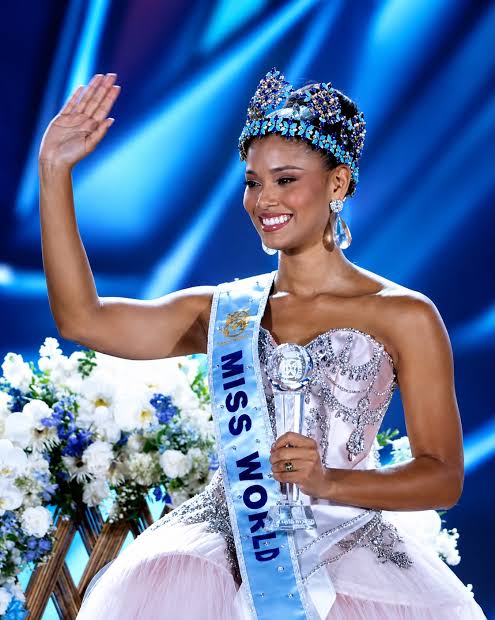
The final results of Miss World 2026 were:
Winner: Joheirry Mola Dominguez, Dominican Republic.
First runner up: Elisabeth Reynés Alabern, Spain.
Second runner up: Taanusiya Chetty, Malaysia.
The Dominican Republic’s victory was the final outcome of the competition, while Nigeria’s result was defined by Karibi-George’s progress through the earlier stages.
Her journey included the African Top Model title, a place in the Top 40 and a Top 12 qualification through the People’s Choice route. She did not win the overall crown, but she had already achieved a significant result by reaching the final twelve.
Nigeria’s Cultural Representation
Karibi-George’s participation also included a strong cultural element, particularly through the looks she presented during the final week of the competition. Her styling choices were described as drawing inspiration from Nigeria and her Niger Delta roots.
Her evening gown was described as a green, white and green design representing the Nigerian flag. Other styling choices also drew from Nigerian cultural identity, giving her presentation a connection to the country she represented.
The cultural aspect of the competition was important because Miss World is not simply a contest of physical presentation. Contestants are also expected to represent their countries through their personal stories, cultural identity and public engagement.
For Karibi-George, the Nigerian inspired looks became part of the wider story of her participation. They offered a way to connect the international pageant stage with the identity of Nigeria and the Niger Delta region.
The National Costume Celebration
On September 2, 2026, the 111 contestants participated in a national costume and traditional dance celebration in Nha Trang. The event formed part of the final week of the competition and gave contestants an opportunity to showcase the cultural heritage of their countries.
The celebration added another layer to the competition, allowing contestants to present their national identity through traditional clothing, dance and cultural expression.
Nigeria’s participation in the event was part of Karibi-George’s wider representation of the country. Her presence at the celebration helped connect the international pageant experience with the cultural identity she carried from home.
The event also reflected the broader nature of Miss World, where contestants are expected to represent more than themselves. Their participation is tied to the countries they come from, the stories they tell and the cultural traditions they bring to the stage.
Beyond the Crown
Karibi-George’s journey at Miss World 2026 was defined by a series of achievements that came before the final night. Her national crown in Lagos gave her the opportunity to represent Nigeria, while her African Top Model victory secured a place in the Top 40.
The People’s Choice qualification then took her further into the competition, placing her among the final twelve contestants. That result made her participation more significant than a simple appearance at the international pageant.
Her advocacy work also formed part of the story. Beyond Labels, her initiative focused on inclusion and opportunities for children with disabilities and special needs, while her interests in climate advocacy, vocational skills training and youth empowerment reflected the wider purpose behind her participation.
The combination of competitive progress and advocacy gave her journey a clear identity. She was not simply a contestant who reached the final twelve. She was a Nigerian representative who had won a continental title and advanced through a public voting route.
The Nigerian Result in Perspective
Nigeria’s performance at Miss World 2026 can be summarised through the stages Karibi-George completed during the competition. She won the Miss World Nigeria 2026 crown, secured the African Top Model title, qualified for the Top 40 and advanced to the Top 12 through the People’s Choice category.
Her journey ended before the final six, meaning she did not compete for the overall crown. The Miss World title went to Joheirry Mola Dominguez of the Dominican Republic.
The result nevertheless placed Nigeria among the countries whose representatives reached the final twelve contestants. That was the clearest measure of the country’s progress during the competition.
Karibi-George’s participation therefore became a story of advancement through several stages, with each achievement adding to the significance of her representation.
A Strong Nigerian Pageant Story
The Miss World 2026 competition gave Nigeria a representative whose journey included a continental title, a Top 40 qualification and a Top 12 finish. Those achievements made her participation one of the notable parts of the competition.
Karibi-George’s African Top Model victory on August 27, 2026, was the first major breakthrough. Her People’s Choice qualification then carried her further into the competition, placing her among the final twelve contestants.
The final night on September 5, 2026, brought the competition to a close with the Dominican Republic’s Joheirry Mola Dominguez taking the crown. Spain’s Elisabeth Reynés Alabern finished as first runner up, while Malaysia’s Taanusiya Chetty finished as second runner up.
Nigeria’s final result was not the overall crown, but it was a journey that included several important milestones. Karibi-George had represented Nigeria on the international stage, won the African Top Model title and advanced to the Top 12.
The Final Takeaway
Miss World 2026 ended with the Dominican Republic celebrating a second title, but Nigeria’s participation had already produced a result worth remembering. Tamunosoye Karibi-George moved from winning the national crown in Lagos to securing the African Top Model title in Vietnam, then advanced to the Top 12 through the People’s Choice route.
Her journey placed Nigeria among the final twelve contestants in a competition that began with 111 participants. The result was a clear achievement for the country, even though she did not advance to the final six or win the overall crown.
The competition’s final result belonged to Joheirry Mola Dominguez, but Karibi-George’s journey gave Nigeria a strong pageant story of its own. From the national title on June 6, 2026, to the African Top Model victory on August 27, 2026, and the Top 12 qualification before the September 5 finale, her participation showed how a contestant can make a significant mark through several stages of an international competition.