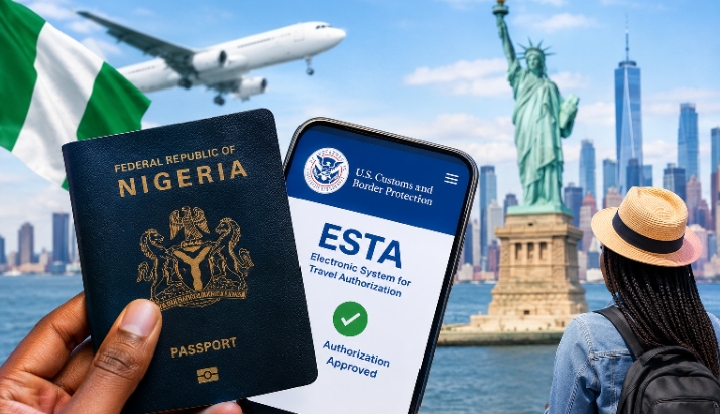
For many people planning a trip to the United States, the visa process is often one of the biggest parts of the preparation, from completing forms and paying fees to attending interviews and waiting for a decision before travel can finally be arranged. That is why any announcement suggesting that travellers from dozens of countries can enter America without a traditional visa immediately attracts attention, especially among people who regularly travel for holidays, business meetings or short visits. The arrangement is real, but the details behind it are more important than the headline suggests.
The United States operates a special travel arrangement for nationals of selected countries, allowing eligible travellers to visit without obtaining the conventional visitor visa normally associated with short trips to America. The system, however, comes with its own authorization process, passport requirements, travel restrictions and strict conditions that determine who can actually use it. Understanding those conditions is particularly important for readers in Nigeria because the country does not appear on the list of participating countries.
The American travel programme behind the headline
The arrangement is known as the Visa Waiver Program, commonly called the VWP, and it allows qualifying nationals of participating countries to travel to the United States for tourism or certain business purposes without first obtaining a traditional visitor visa. The maximum period for a qualifying visit is generally 90 days, which means the programme is designed around short visits rather than relocation, employment or long term residence.
The United States Department of State currently lists 42 countries and territories whose eligible nationals can potentially use the programme. Those countries include Andorra, Australia, Austria, Belgium, Brunei, Chile, Croatia, Czech Republic, Denmark, Estonia, Finland, France, Germany, Greece, Hungary, Iceland, Ireland, Israel, Italy, Japan, Latvia, Liechtenstein, Lithuania, Luxembourg, Malta, Monaco, the Netherlands, New Zealand, Norway, Poland, Portugal, Qatar, San Marino, Singapore, Slovakia, Slovenia, South Korea, Spain, Sweden, Switzerland, Taiwan and the United Kingdom.
The presence of a country on the list does not automatically mean every passport holder from that country can board a plane to America without further checks. The individual traveller must satisfy the conditions of the programme, obtain the required travel authorization and meet the applicable passport and security requirements before travelling.
That distinction is important because the phrase visa free travel can easily create the impression that there is no application at all. The reality is different. The traveller avoids the traditional visitor visa process, but must still pass through the electronic authorization system and satisfy the requirements attached to the Visa Waiver Program.
ESTA is the authorization travellers need
The electronic system at the centre of the process is ESTA, which stands for Electronic System for Travel Authorization. It is operated by U.S. Customs and Border Protection and is used to determine whether an individual traveller is eligible to travel under the Visa Waiver Program.
A qualifying traveller generally needs an approved ESTA before boarding a flight or ship bound for the United States. This means that being a citizen of one of the 42 participating countries is only the starting point. The traveller still has to submit information, answer eligibility questions and receive authorization before making the journey.
ESTA should therefore not be described as an American visa. It is a travel authorization connected to the Visa Waiver Program, and its purpose is to determine whether the traveller can travel under that particular programme without obtaining a conventional visitor visa.
The difference becomes clearer when the process is compared with the normal visa route. A person travelling under the VWP does not ordinarily need to obtain a B1 or B2 visitor visa simply for a qualifying short trip, but that person still needs an approved ESTA and must satisfy all other VWP conditions.
The current ESTA fee has changed
One of the details travellers need to watch carefully is the cost of ESTA because older information circulating online may contain a figure that is no longer current. The current CBP information places the ESTA fee at $40.27.
The increase took effect for applications submitted and paid for from September 30, 2025. This means articles or social media posts that continue to state that ESTA costs $21 are referring to an older fee and should not be relied upon when planning a current application.
The fee is therefore one of the first practical figures travellers should keep in mind when considering the programme. It is separate from other travel expenses such as airline tickets, accommodation, insurance and spending money during the trip.
Applicants should also use the official ESTA system rather than relying on unofficial websites that may charge additional service fees. The safest approach is to verify the application process and current charges through the official U.S. government channels before making payment.
The 90 day rule matters
The Visa Waiver Program is intended for short visits, with qualifying travellers generally permitted to remain in the United States for 90 days or less for approved tourism or business purposes. Transit through the United States can also fall within the programme.
This makes the arrangement useful for people travelling for holidays, visiting friends or family, attending certain business activities or passing through the United States on the way to another destination, provided the particular circumstances meet the programme requirements.
The 90 day period should not be confused with permission to remain in America indefinitely. A traveller who wants to relocate, take up ordinary employment or pursue a purpose outside the activities allowed under the programme may need a different immigration category.
Another important point is that people admitted through the Visa Waiver Program generally cannot simply extend their stay beyond the authorized period or change immigration status inside the United States in the same way that someone in another immigration category might be able to do.
The programme is therefore best understood as a short visit arrangement rather than an alternative immigration route.
ESTA can remain valid for multiple trips
An approved ESTA is generally valid for up to 2 years, or until the passport used for the application expires, whichever comes first. During that period, the authorization can normally be used for multiple trips, provided the traveller continues to meet the requirements of the Visa Waiver Program.
The passport connection is particularly important because the authorization is tied to the traveller’s passport information. Getting a new passport can therefore mean getting a new ESTA rather than continuing to rely on the authorization attached to the previous document.
Changes involving a traveller’s name, citizenship or certain answers to the eligibility questions can also affect whether a new ESTA application is required. Travellers should check their circumstances before every trip rather than assuming that an old authorization automatically covers every future journey.
An ESTA authorization can make repeated short visits easier for an eligible traveller, but it does not remove the requirement to remain compliant with U.S. immigration rules.
The application requires detailed information
Applying for ESTA involves more than entering a passport number and paying a fee. Applicants are required to provide biographical and travel information and answer questions that help determine whether they qualify for travel under the Visa Waiver Program.
The information can include the traveller’s full name, date and place of birth, passport details, citizenship information, contact information, employment details, emergency contact information and relevant travel information. Depending on the circumstances, information about a U.S. point of contact and accommodation can also be required.
The application also contains eligibility and security questions. These cover areas such as previous immigration problems, certain criminal conduct, terrorism related activities, unauthorized employment and travel to particular countries.
Applicants therefore need to provide accurate information. Giving incorrect information or failing to disclose relevant circumstances can create serious problems, particularly because ESTA eligibility depends on answers to specific questions.
The process should not be treated as a casual travel form. A traveller should take time to understand each question and provide truthful information before submitting the application.
The passport must meet the requirements
A passport from a participating country is not enough by itself. The traveller generally needs an appropriate electronic passport that meets the requirements for Visa Waiver Program travel.
An e passport contains an electronic chip and is designed to meet the applicable international standards for machine readable travel documents. The requirement can also apply to emergency or temporary passports being used for VWP travel.
Passport validity is another issue that should be checked before travelling. The State Department explains that passports generally need to remain valid for at least 6 months beyond the planned departure from the United States, although country specific arrangements can affect this requirement.
Travellers should therefore avoid making assumptions based simply on the country printed on their passport. Passport type, validity and the specific circumstances of the journey can all affect eligibility.
Some citizens of participating countries can still be excluded
One of the most important parts of the programme is that nationality alone does not guarantee eligibility. Certain travel histories can prevent a person from using the Visa Waiver Program even when the person holds a passport from one of the 42 participating countries.
Under restrictions introduced through the Visa Waiver Program Improvement and Terrorist Travel Prevention Act, nationals of participating countries who travelled to or were present in certain countries on or after March 1, 2011 may generally lose eligibility for VWP travel, subject to limited exceptions.
The countries covered by this restriction include North Korea, Iran, Iraq, Libya, Somalia, Sudan, Syria and Yemen. There is also a separate restriction relating to travel to Cuba on or after January 12, 2021, again subject to limited exceptions.
Certain dual nationals can also be affected by the restrictions. This means that a person who holds a passport from an eligible country should still examine their travel history and citizenship circumstances before assuming that ESTA is available to them.
These restrictions are among the reasons the programme cannot simply be reduced to a list of 42 countries.
ESTA approval does not guarantee entry
Receiving ESTA approval is important, but it is not the same thing as receiving guaranteed permission to enter the United States.
An approved ESTA allows an eligible traveller to travel to a U.S. port of entry and request admission under the Visa Waiver Program. The final decision remains with Customs and Border Protection officers at the port of entry.
This distinction matters because immigration admission is ultimately determined when the traveller arrives in the United States. Documents and authorization that permitted the journey do not remove the authority of border officers to assess admissibility.
A traveller should therefore understand the process as having different stages. First comes eligibility for the Visa Waiver Program, followed by the ESTA application and approval, then travel to the United States, followed by inspection at the U.S. port of entry.
The phrase enter America without a visa can therefore be useful as a simple description of the programme, but it should never be interpreted as a promise that every approved ESTA holder will automatically be admitted.
The biggest point for Nigerian travellers
For Nigerians reading about the 42 country arrangement, the most important fact is straightforward. Nigeria is not one of the countries currently listed under the Visa Waiver Program.
A Nigerian passport holder therefore cannot simply apply for ESTA and expect to travel to the United States without a conventional visa on the basis of this programme. The presence of 42 participating countries does not create a new visa free route for Nigerian passport holders.
This distinction is particularly important because social media headlines can make the development appear much broader than it actually is. The United States has not announced that citizens of all countries can now use ESTA for visa free travel, and Nigerian nationality does not fall within the VWP list.
A Nigerian traveller must therefore consider the appropriate U.S. visa or immigration category applicable to the purpose of the proposed journey. The correct route depends on the reason for travel and the rules that apply at the time of application.
The January 1, 2026 development Nigerians should know
The issue becomes even more relevant for Nigerian readers because the United States introduced additional visa issuance restrictions affecting Nigerian nationals from January 1, 2026.
The U.S. Department of State says that visa issuance to Nigerian nationals was partially suspended for several categories, including B1 and B2 visitor visas, subject to specified exceptions.
This development means that Nigerians looking at the Visa Waiver Program story need to separate 2 different issues. The first is the list of countries whose nationals can potentially use VWP and ESTA. The second is the separate U.S. policy affecting visa issuance to Nigerian nationals.
The 42 country list does not override the rules applying specifically to Nigerian nationals. It also does not place Nigeria inside the Visa Waiver Program.
For anyone planning travel from Nigeria to the United States, checking the current U.S. government position before making financial commitments is therefore particularly important.
The programme is built around security requirements
The Visa Waiver Program is not simply a reward handed to countries whose citizens want easier access to America. Participating countries are required to meet a range of security, travel document and information sharing standards.
The programme considers issues including passport security, law enforcement cooperation, counterterrorism information sharing, reporting of lost or stolen passports, border controls and document security.
There are also measurable requirements connected to visitor visa refusal rates. For initial designation, the State Department says a country must have a visitor visa refusal rate below 3 percent, alongside other requirements.
Even meeting the objective requirements does not automatically mean a country will be designated. The United States retains a role in determining whether a country joins the programme.
That helps explain why the list is limited rather than open to every country whose citizens want to travel to America without a traditional visa.
Tourism is one of the main purposes
For eligible travellers, tourism is one of the clearest purposes covered by the Visa Waiver Program. Someone travelling for a holiday, sightseeing or another qualifying tourism activity can potentially use the programme instead of applying for a conventional visitor visa.
The arrangement can also cover certain business activities, although business travel under the programme does not mean permission to take up ordinary employment in the United States.
Transit can also be permitted under the programme. A traveller passing through the United States on the way to another country may qualify where all applicable conditions are satisfied.
The key point is that the purpose of the trip matters. ESTA should never be viewed as a general permission to do anything a traveller wants in America.
ESTA is not a work permit
The programme cannot be used as a shortcut into ordinary employment in the United States. A person who wants to work in America generally needs the immigration authorization appropriate to that employment.
This is particularly important for anyone who sees visa free travel as an opportunity to enter the country and then look for work. The Visa Waiver Program does not operate that way.
The ESTA application itself contains questions relating to employment and previous unauthorized work in the United States, which reinforces the importance of understanding the limits of the programme before travelling.
Tourism, qualifying business activity and transit are fundamentally different from taking up employment. A traveller should use the immigration category that matches the actual purpose of the trip.
ESTA is not a route for permanent relocation
The same principle applies to people hoping to use the programme to move permanently to America. The Visa Waiver Program is structured around short stays and does not create a pathway to permanent residence simply because a traveller has been admitted under the programme.
The 90 day limit is one of the clearest indicators of the programme’s purpose. It is designed to facilitate short term travel for eligible nationals while maintaining the United States immigration system’s separate routes for employment, study, family based immigration and other long term purposes.
Anyone considering a permanent move should therefore investigate the immigration category designed for that objective rather than relying on ESTA.
Travellers can still apply for a traditional visa
Being eligible for the Visa Waiver Program does not mean a traveller is forbidden from applying for a traditional U.S. visitor visa. There are circumstances in which an eligible national may prefer or need to use the regular visa process.
For example, someone planning a stay longer than 90 days cannot simply use the VWP to extend the visit. Certain travel circumstances can also make the conventional visa route more appropriate.
The availability of ESTA therefore gives eligible travellers an additional route for qualifying short trips, rather than eliminating the normal U.S. visa system.
This is useful because travel plans differ. Someone travelling for a short holiday may find the VWP suitable, while another traveller may have circumstances that require a different immigration category.
The 42 countries currently covered
The current list contains 42 countries and territories, covering countries across Europe, Asia, Oceania, the Middle East and South America. The list includes Andorra, Australia, Austria, Belgium, Brunei, Chile, Croatia, Czech Republic, Denmark, Estonia, Finland, France, Germany, Greece, Hungary, Iceland, Ireland, Israel, Italy, Japan, Latvia, Liechtenstein, Lithuania, Luxembourg, Malta, Monaco, the Netherlands, New Zealand, Norway, Poland, Portugal, Qatar, San Marino, Singapore, Slovakia, Slovenia, South Korea, Spain, Sweden, Switzerland, Taiwan and the United Kingdom.
The presence of the United Kingdom, Japan, Australia, South Korea, Israel, Singapore, Qatar and other major travel markets on the list shows the geographic reach of the programme, but it does not change the individual eligibility requirements.
Each traveller still has to meet the rules attached to the programme, regardless of how established or widely travelled the country may be.
The numbers travellers should remember
The most important figure is 42, representing the countries and territories currently listed under the Visa Waiver Program.
The maximum permitted VWP stay is generally 90 days, making the programme suitable for qualifying short visits rather than long term residence.
The current ESTA fee is $40.27, following the change that took effect on September 30, 2025.
An ESTA is generally valid for up to 2 years or until the passport expires, whichever comes first, and it can normally support multiple qualifying trips during its validity period.
The passport requirement is also significant because VWP travellers generally need an appropriate electronic passport. Finally, Nigeria is not among the 42 participating countries, meaning Nigerian passport holders cannot use ESTA as a substitute for the U.S. visa process simply because the VWP allows nationals from participating countries to travel without a traditional visa.
The simple meaning of the announcement
The phrase travel to America without a visa has a real foundation, but it needs the right explanation. Eligible nationals from 42 participating countries can potentially travel to the United States for qualifying short visits without first obtaining a conventional visitor visa.
They still need ESTA approval, an appropriate passport and compliance with the programme’s eligibility rules. They must also remain within the permitted purpose of travel and generally within the 90 day maximum stay.
Approval to travel does not guarantee admission at the border, and certain travel histories, citizenship circumstances or other factors can make a person ineligible even when the person’s country appears on the VWP list.
For Nigerian readers, the most important point is even simpler. Nigeria is not on the current Visa Waiver Program list, so a Nigerian passport holder cannot use ESTA as a new visa free route into America.
The headline may therefore be eye catching, but the details determine who can actually travel under the arrangement. For anyone planning a trip to the United States, checking nationality, passport type, travel history, purpose of travel, ESTA requirements and the latest U.S. government rules before booking the journey remains the safest approach.