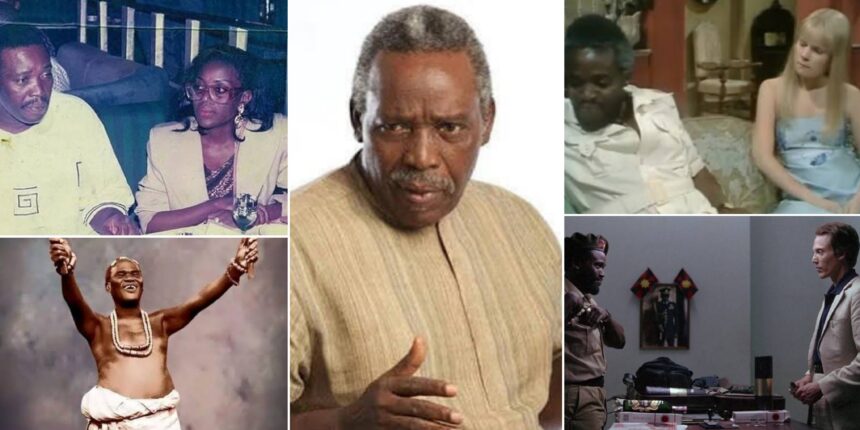
For more than 50 years, the name Olu Jacobs carried a particular weight in Nigerian entertainment, the kind of presence that could make a television character feel larger than the story itself, while his voice, mannerisms and commanding screen presence became familiar across generations. His death on September 16, 2026, at the age of 84, closes the life of a performer whose career stretched across several worlds, from Nigerian theatre and British television to international cinema, Nigerian television, modern Nollywood and the building of creative institutions. Yet the story of Olu Jacobs is far wider than the roles that made him famous, because behind the familiar face was a career shaped by early encounters with theatre, years spent abroad, a return to Nigeria, a long artistic partnership with Joke Silva and an enduring commitment to the performing arts.
Born Oludotun Baiyewu Jacobs on July 11, 1942, Jacobs grew into one of the most recognisable Nigerian actors of his generation, but his professional journey began long before the modern Nollywood industry acquired its name and structure. His death now brings renewed attention to the chapters that came before his best known Nigerian film roles, including the British television programmes in which he appeared, the international films that carried his work beyond Africa and the Nigerian theatre tradition that helped awaken his interest in acting. Those chapters help explain why his career cannot be reduced to a list of Nollywood credits.
The announcement that ended years of uncertainty
The news of Olu Jacobs’ death came from his family on September 16, 2026, bringing an end to a period in which public discussion about the veteran actor had repeatedly been clouded by rumours about his condition and even false reports of his death. His son, Olusoji Jacobs, shared the family’s announcement, while the family referred to the veteran actor as the “Lion of Lufodo” and appealed to bloggers and social media influencers to respect their privacy during the period of mourning. His birth date was given as July 11, 1942, making him 84 at the time of his death.
The wording of the family announcement is important because it provides the clearest basis for reporting his death. The family confirmed that Jacobs had died, but the announcement did not give a cause of death. That means reports attempting to connect his death directly to a particular illness should be handled separately from the family’s confirmation. His medical history had been discussed publicly years earlier, but a previously disclosed diagnosis is not automatically the same thing as an officially established cause of death.
The health disclosure that changed public understanding
Olu Jacobs’ health became a subject of public discussion in November 2021 after his wife, actress Joke Silva, disclosed during an interview with Chude Jideonwo that he had been living with Dementia with Lewy bodies, commonly known as DLB, for some years. The disclosure helped explain why the actor had become less visible at public events after decades of regular appearances on television and film.
The disclosure also changed the way many people understood the images of Jacobs that occasionally appeared online. He had once been a commanding and highly active screen performer, but his public appearances had become increasingly limited. Silva’s account gave the public a rare glimpse into the private reality surrounding a man whose professional life had been lived largely in front of cameras and audiences.
Jacobs still appeared publicly after the disclosure, including at the Africa International Film Festival in Lagos in 2021, where he was recognised during the festival’s awards. Those appearances became especially memorable because they showed the veteran actor being celebrated by an industry he had helped shape over several decades.
The September 2026 moment people will remember
Just 9 days before his death, veteran actress Patience Ozokwor spoke about Olu Jacobs during an interview with Femi Babs TV on September 7, 2026. Her comments reflected her personal observations about Jacobs’ situation and the passing of members of the generation with whom she had shared Nigeria’s entertainment industry.
The timing of those comments became significant after the family confirmed Jacobs’ death on September 16. For anyone looking back at the final chapter of his life, the interview now forms part of the chronology surrounding his final days, although it should not be treated as medical evidence or as an explanation of the cause of his death.
The death rumours that came before the real announcement
Few stories surrounding Olu Jacobs are as unusual as the number of times his death was falsely announced while he was still alive. The first major wave came in 2021, when social media reports claimed that the actor had died and Joke Silva publicly dismissed the reports.
Another round followed in August 2022, again prompting Silva to reassure the public that her husband was alive. The rumours returned with particular force in June 2024, when another viral report claimed that Jacobs had died. His family again intervened, with his son Soji Jacobs publicly dispelling the report.
That history created an unusual situation by the time September 2026 arrived. News of Jacobs’ death had become something that members of the public had learned to approach cautiously because previous reports had repeatedly proved false. The September 16 announcement was different because confirmation came directly from his family, turning a story that had been repeatedly denied over the years into a confirmed loss.
His acting journey began before Nollywood
The phrase “Nollywood legend” is often used to describe Olu Jacobs, but it only captures one portion of his professional history. Jacobs had already developed substantial acting experience before the Nigerian video film industry of the 1990s became the cultural force now associated with Nollywood.
His interest in performance developed during his early years in Kano, where he attended Holy Trinity School and participated in debate and drama societies. A performance by Chief Hubert Ogunde reportedly made a particularly strong impression on him. Jacobs watched Ogunde’s concert party at the Colonial Hotel in Kano, an experience frequently mentioned in accounts of his early attraction to acting.
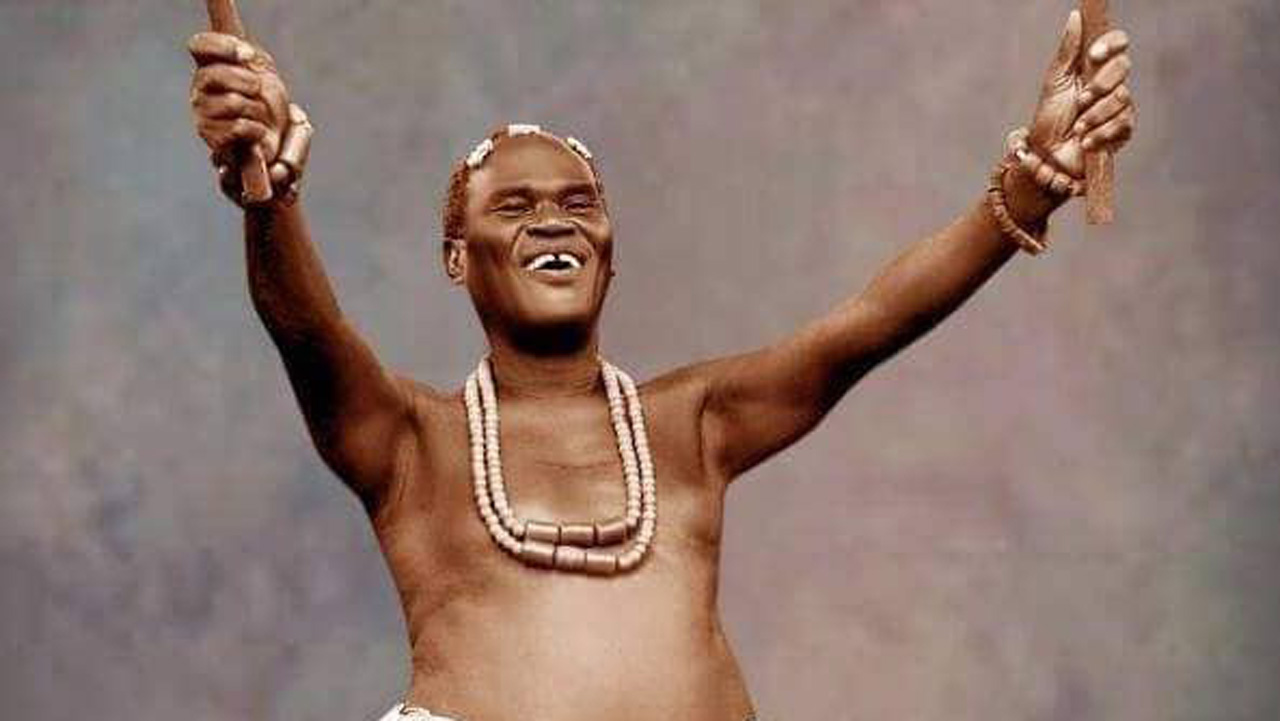
That encounter is significant because Hubert Ogunde represented an earlier generation of Nigerian theatre, one that existed decades before modern Nollywood became established. Jacobs therefore belonged to a professional lineage that connected traditional Nigerian travelling theatre with later television and film production. His career would eventually carry that influence into British theatre, international cinema and Nigerian screen entertainment.
The Hubert Ogunde connection reaches deeper
Hubert Ogunde’s importance to Nigerian theatre history makes Jacobs’ early encounter with his work more than an interesting childhood detail. Ogunde had helped establish a theatrical tradition in which performance, music, drama and touring productions reached audiences across Nigeria. For a young Jacobs watching one of those performances in Kano, the experience provided an early picture of what a professional acting life could look like.
Years later, Jacobs would develop a career that moved through many of the same broad creative spaces that Ogunde helped open for Nigerian performers. The connection was not one of formal apprenticeship in the conventional sense, but it forms an intriguing line between an older Nigerian theatre tradition and the generation of actors who eventually became household names through television and film.
That historical link also places Jacobs within a much longer story of Nigerian performance. Before Nollywood became a dominant international label, Nigerian actors were already working through stage productions, television drama, travelling theatre and cinema. Jacobs’ career became one of the clearest examples of how a performer could move across those different worlds.
The RADA chapter changed the scale of his career
Jacobs later travelled to Britain and trained at the Royal Academy of Dramatic Art, commonly known as RADA, one of the best known drama schools in the United Kingdom. His training provided a professional foundation that would become important as he began working in British theatre and television.
The British chapter of his career is one of the areas that can easily disappear when his life is remembered mainly through Nigerian films. Jacobs appeared in several British television productions, including The Goodies, Till Death Us Do Part, Barlow at Large, The Venturers, Angels, The Tomorrow People and The Professionals.
His television work demonstrated that his professional identity had already extended beyond Nigeria long before his return home. He was not entering international entertainment as an unknown performer searching for his first major opportunity. He had already worked within a highly developed theatre and television environment and had accumulated experience that would later inform his Nigerian career.
His British theatre career included a major stage production
Jacobs’ British career was not limited to television appearances. His theatre work included a 1978 appearance as President Mageeba in Tom Stoppard’s Night and Day, placing him within the professional British stage environment during an important period of his career.
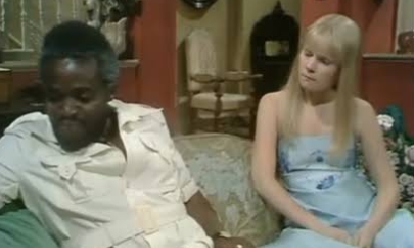
That stage experience matters when considering the qualities that later became associated with Jacobs on Nigerian television and film. His performances often carried the control and projection associated with theatre, allowing him to command attention even in scenes where his character was not the only major presence.
The British stage therefore became one of the important foundations of a career that would eventually return to Nigeria and continue for decades. By the time Jacobs became widely known to Nigerian television and film audiences, he had already passed through professional theatre and television systems outside the country.
His international film credits came before modern Nollywood
Jacobs also appeared in international films during the period before Nollywood’s global rise. His credits included The Dogs of War in 1980, Baby: Secret of the Lost Legend in 1985 and Pirates in 1986, a film directed by Roman Polanski and starring Walter Matthau.
Those credits reveal another side of his career that is sometimes overlooked. His international work was not a later development created by Nollywood’s growing global visibility. Jacobs had already appeared in productions connected to international cinema years before Nigerian video films became a major export.
That distinction gives his career a particularly unusual shape. His professional path moved from Nigerian theatre to British training, British television, international cinema and eventually back to Nigeria, where he became one of the defining elder actors of the television and film generations that followed.
The return to Nigeria opened another chapter
Jacobs returned to Nigeria around 1990, bringing with him years of professional experience acquired in Britain and international productions. His return coincided with a period in which Nigerian television was developing rapidly and audiences were becoming increasingly familiar with locally produced drama.
One of his important Nigerian television roles was Inspector Best Idafa in the NTA detective series The Third Eye. The series became part of the television landscape of the early 1990s and helped establish Jacobs as a major Nigerian screen presence before the video film industry expanded dramatically.
His return was therefore not simply a homecoming after an overseas career. It marked the beginning of another phase in which his international experience was absorbed into Nigeria’s evolving television and film culture.
The Nollywood era made him a household name
The growth of Nigerian video films in the 1990s and 2000s created the environment in which Jacobs became known to a much wider Nigerian and African audience. His commanding delivery, mature screen presence and ability to play powerful, complicated and authoritative characters made him one of the familiar faces of the industry.
For audiences who discovered him through Nigerian films, the earlier British television and international cinema chapters were often less visible. The actor they knew was the respected elder statesman appearing in films alongside a new generation of Nigerian performers.
Yet the Nollywood chapter was only one part of a professional journey that had already lasted for years. Jacobs brought decades of experience into the Nigerian industry, making his contribution part of a wider transition from stage and television drama into the modern film era.
His marriage to Joke Silva became a creative partnership
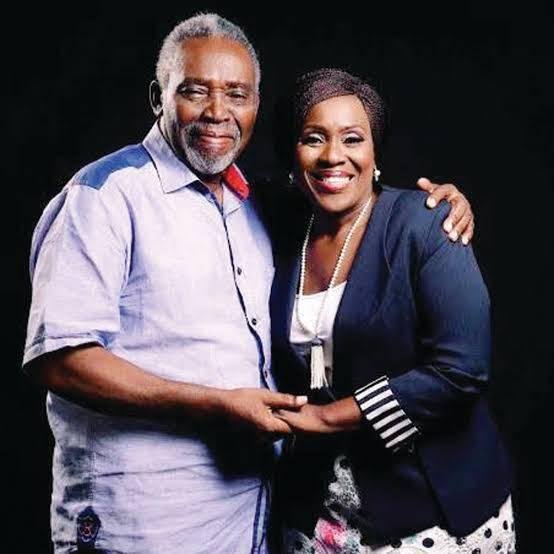
Olu Jacobs married Joke Silva in 1989, creating one of the most recognised partnerships in Nigerian theatre and film. Both were accomplished performers, but their relationship developed into something larger than their individual acting careers.
Together, they became involved in production, professional training and the development of creative institutions. Their work through Lufodo Group gave their partnership a business and institutional dimension that continued long after their individual performances became established.
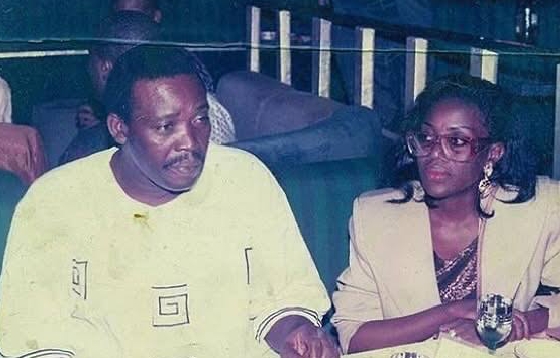
The relationship therefore became part of the history of Nigerian entertainment not only because two famous actors were married, but because they used their experience to create structures intended to support performing artists and theatre practitioners.
The story behind the Lion of Lufodo
The phrase “Lion of Lufodo” used by Jacobs’ family after his death carries a specific connection to the company he helped establish with Joke Silva. Lufodo Group became involved in production, performing arts and related creative activities, while Silva served as co founder and Co CEO for Artistic Design and Performing Arts.
That makes the family’s description more than a ceremonial phrase attached to a famous actor. It connects directly to the institutional side of Jacobs’ career, a part of his legacy that can be overlooked when attention is focused entirely on his acting roles.
Lufodo represented an attempt to build a lasting creative organisation around professional performance and production. Through the company and other initiatives, Jacobs and Silva moved from simply participating in the entertainment industry to creating structures within it.
Lufodo Academy carried his teaching legacy further
The Lufodo Academy of Performing Arts became another major part of the Jacobs and Silva story. The academy was created to provide practical professional training in stage, television and film production, giving aspiring performers and production professionals an opportunity to develop skills within a structured environment.
Its programme included a 2 year conservatory course and received accreditation from Nigeria’s National Board for Technical Education. That development reflected a broader idea behind the academy, which was to provide serious professional preparation for people seeking careers in the performing arts.
For Jacobs, this represented a different kind of legacy from acting awards and memorable characters. The academy created a mechanism through which professional knowledge could be passed to younger performers and production practitioners, extending his influence beyond the screen.
The academy survived a difficult period
The Lufodo Academy also faced a major setback during the #EndSARS unrest in 2020. Joke Silva disclosed in 2022 that equipment belonging to the academy, valued at approximately ₦12 million, had been destroyed during the unrest.
The academy had been preparing to resume operations after earlier difficulties, making the loss particularly significant for the institution. Silva also said Lagos State Governor Babajide Sanwo Olu subsequently helped by returning rent that the academy had paid for 2 years.
The episode became another chapter in the story of an institution that had to rebuild after losing equipment worth millions of naira. It also showed that the Jacobs and Silva creative partnership involved the practical challenges of maintaining arts infrastructure, not only the glamour associated with acting.
Glover Memorial Hall added another dimension
The institutional story continued in 2022 when Lufodo Group took over the management of Glover Memorial Hall in Lagos. The historic venue became part of the group’s wider involvement in theatre and cultural infrastructure.
That development gave further meaning to the broader legacy attached to Jacobs and Silva. Their work had expanded from performing in productions to creating opportunities for production, training and the preservation and use of performance spaces.
Viewed across the full timeline, Jacobs’ career therefore included several distinct professional roles. He was an actor, theatre practitioner, producer, educator and creative institution builder, with each stage growing from the experience accumulated during the previous one.
The national honour that recognised his contribution
Nigeria formally recognised Jacobs with the national honour of Member of the Order of the Federal Republic, MFR, in 2011. His name appeared among the entertainers recognised during the 2011 national honours process.
The honour became another official marker of the contribution he had made to Nigerian entertainment. By that point, Jacobs had already accumulated decades of experience across theatre, television and film, while his work had reached audiences in Nigeria and beyond.
His MFR title also explains why the family’s announcement identified him as Oludotun Baiyewu Jacobs, MFR. It was part of the formal recognition attached to a career that had become closely associated with Nigerian cultural life.
His awards reflected decades of acting
Jacobs received major recognition from several African entertainment institutions. In 2007, he won the Africa Movie Academy Award for Best Actor in a Leading Role for Dancing Heart, adding a major continental acting honour to a career that had already crossed several entertainment systems.
The recognition continued in 2011 when he received the Écran d’Honneur, also known as the Prix Charles Mensah, for lifetime achievement at the Écrans Noirs festival. The honour reflected the wider recognition of his contribution to African cinema.
Then, in 2013, the Africa Magic Viewers’ Choice Awards presented him with the Industry Merit Award. Coming from different organisations and at different points in his career, the awards collectively marked the continued recognition of Jacobs as an influential figure in African screen entertainment.
A career that crossed more than 50 years
The length of Jacobs’ career is one of the clearest ways to understand his place in Nigerian entertainment history. His professional journey stretched across more than 5 decades, depending on the point used to mark the beginning of his professional work.
That span meant he belonged to several generations at once. He had links to the older Nigerian theatre tradition through his early exposure to Hubert Ogunde, professional experience in British theatre and television, appearances in international films, a major Nigerian television career and later decades of Nollywood.
Few actors manage to remain professionally relevant while the industry around them changes so dramatically. Jacobs moved through those changes rather than being confined to a single era, which is why his death reaches beyond one generation of film audiences.
The actor behind the familiar screen image
For many Nigerians, Olu Jacobs became associated with characters who carried authority, wealth, family power, political influence, traditional status or deep personal conflict. His voice and delivery could give a scene an immediate sense of importance, while his physical presence allowed him to dominate the frame without relying on exaggerated performance.
That screen identity was built on foundations that had been formed much earlier. Theatre training encouraged control and projection, British television provided experience in different forms of production, international films exposed him to another working environment and Nigerian television allowed him to develop a local screen identity.
His later Nollywood reputation therefore came from accumulated experience rather than from one sudden breakthrough. The man audiences eventually knew as one of Nigeria’s most recognisable veteran actors had spent years developing his craft before the industry reached the form for which he became best known.
The final years became part of his public story
Jacobs’ final years were marked by increasing concern about his health and a reduction in his public appearances. Joke Silva’s 2021 disclosure about his diagnosis of Dementia with Lewy bodies brought an unusually private aspect of their family life into public view.
The disclosure was made by someone who knew his condition closely, but it still does not provide a confirmed explanation for his death on September 16, 2026. The distinction is important because a medical diagnosis disclosed during a person’s lifetime should not automatically be presented as the official cause of death unless the family or an appropriate medical authority establishes that connection.
His final years also showed how differently public life can look for someone who spent decades under constant attention. An actor who had once appeared regularly on screens became increasingly private, while old films, photographs and occasional public appearances kept his image alive in the public imagination.
The death rumours now have a different ending
The repeated false reports of Jacobs’ death between 2021 and 2024 now form a particularly unusual part of his biography. Each time, his family or representatives had to correct information that had spread rapidly through social media.
The September 2026 announcement carries a different historical weight because it came directly from his family. After years in which reports of his death had been false, the public was finally confronted with an official confirmation.
That history also explains why responsible reporting of his death requires care. His life contains enough remarkable facts without adding an unconfirmed cause of death, an unverified final medical account or claims circulating through social media as established fact.
The legacy stretches beyond his filmography
Olu Jacobs leaves behind a body of work that can be counted through films, television productions, theatre performances and awards, but his legacy is larger than those credits. His professional life also includes the institutions he helped establish with Joke Silva and the training structures created through Lufodo.
The Lufodo Group, Lufodo Academy of Performing Arts and the management of Glover Memorial Hall all form part of the wider story. They show a performer who became increasingly involved in creating spaces where other people could learn, perform and develop careers.
That institutional contribution gives another meaning to the family’s description of him as the “Lion of Lufodo”. It links his public identity as an actor to a private professional effort to build something that could continue beyond individual performances.
The long journey from Kano to international screens
The arc of Jacobs’ life can be followed through several locations and stages of professional development. His early years in Kano exposed him to theatre, including the performance by Hubert Ogunde that became an important part of his biographical story.
Britain then provided formal dramatic training and access to theatre and television productions. International cinema followed, giving him credits that placed his work alongside major international productions during the 1980s.
His return to Nigeria around 1990 brought another transformation. Through The Third Eye and subsequent Nigerian productions, Jacobs became deeply embedded in the country’s television and film culture, eventually becoming one of the most familiar elder actors of the Nollywood era.
Why his story reaches beyond Nollywood
Calling Olu Jacobs a Nollywood legend is understandable, but his complete professional history begins earlier and travels further. He belonged to a generation that experienced the transition from theatre dominated by live performance to television drama and later to a Nigerian film industry with an international audience.
His British television credits show that he had already established himself abroad. His international film appearances show that his professional range had crossed national boundaries. His Nigerian television work demonstrates his role in the period before Nollywood became globally dominant, while his later films connected him directly to the industry’s most recognisable era.
His work with Joke Silva then added another chapter, moving his contribution from performance into production, education and cultural infrastructure. Taken together, those chapters form the biography of an actor whose career cannot be contained by one industry label.
The unanswered questions should remain unanswered
The most important unresolved issue surrounding Jacobs’ death is the cause of death. His family’s September 16 announcement confirmed his passing but did not publicly disclose a cause, so any report presenting a specific illness as the official cause goes beyond what the family has established.
His DLB diagnosis is documented through Joke Silva’s 2021 public disclosure, but that fact should remain separate from claims about the medical circumstances of his death. The same caution applies to spiritual predictions, social media posts and retrospective claims that may circulate after his death.
A serious account of Jacobs’ final chapter therefore has to preserve the line between known information and speculation. His biography is already rich enough to tell a compelling story without filling gaps in the public record with claims that have not been established.
The man behind more than 50 years of Nigerian entertainment
Olu Jacobs’ story began with a young Nigerian exposed to theatre in Kano and grew into a career that reached the British stage, British television, international cinema, Nigerian television, Nollywood and creative institution building. Along the way came formal training at RADA, roles in productions watched beyond Nigeria, a return home around 1990, a marriage to Joke Silva in 1989 and decades of performances that made his face familiar across generations.
His recognition also came through different channels, from the 2007 Africa Movie Academy Award to the 2011 Écran d’Honneur, the 2011 Nigerian national honour of MFR and the 2013 Industry Merit Award at the Africa Magic Viewers’ Choice Awards. Each recognition marked a different stage of a career that had already crossed several boundaries.
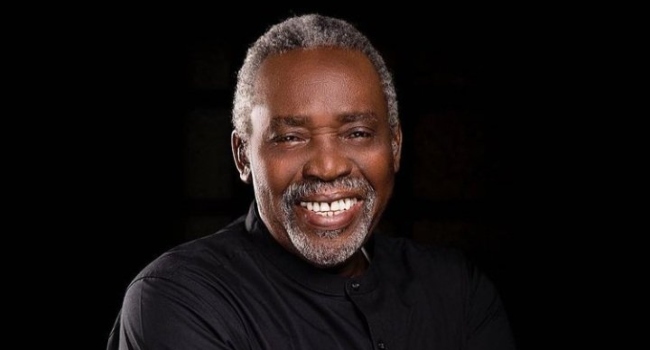
Now, with his death confirmed on September 16, 2026, at 84, the full shape of that career becomes clearer. The story is not only about the veteran actor who became one of Nollywood’s most respected faces. It is about the young man influenced by Hubert Ogunde, the performer who trained at RADA, the actor who appeared on British television and international screens, the Nigerian who returned home and helped define a television generation, the husband who built a creative partnership with Joke Silva and the institution builder remembered by his family as the Lion of Lufodo.
That is the larger story behind Olu Jacobs’ death, and it is why his biography reaches far beyond the final announcement that brought his long public journey to an end.