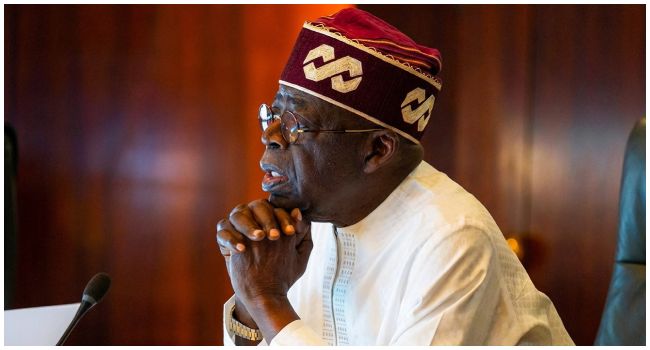
The year 2027 is the most pregnant and baleful one for Nigeria. The disconcerting second-term bid of President Tinubu amid a socio-economic reality that has left Nigerians forlorn and despondent, the fear of Nigeria becoming a one-party state, the dubious wave of defection, the intra- and inter-party wrangling, and the devil-may-care aura of desperados in the political space, all add up to create suspense and drama.
With the politicking and gamesmanship ahead of the 2027 presidential election entering high gear, events in the political space are unfolding at a pace many observers, commentators, and analysts find hard to keep up with. As we race towards 2027, the manœuvring and meandering of political actors and entities through the treacherous and perilous political landscape with cold and calculating shenanigans has created intrigue, drama and imbroglio that could shape the general election next year.
For some time now, the Minister of the Federal Capital Territory, Nyesom Wike, has been at daggers drawn with key members, especially governors of the ruling All Progressives Congress (APC). Earlier in the week, the simmering tension and cold war between the governor and Wike became a feisty confrontation as both parties issued a stern warning and drew a line in the sand for what will become a full-blown battle of supremacy.
Frustration boiled over on Monday night when the Progressive Governors Forum (PGF) formally rejected inter-party political arrangements set by the FCT minister under the rainbow coalition.
Wike is the national leader of a faction of the Peoples Democratic Party (PDP) whose candidates have been recognised by the Independent National Electoral Commission (INEC), but he has openly been working for the re-election of President Bola Ahmed Tinubu.
The main political goal of the coalition is to rally support for President Tinubu’s second term under the “Renewed Hope Agenda”, while working for the election of other candidates on different political platforms in the alliance. His home state of Rivers is the testing ground and launch pad for the cross-party alliance, bringing four major political parties: the APC, the PDP, the Labour Party (LP) and the Action Alliance (AA) to work together.
However, this arrangement has put him on a collision course with governors of the APC who feel he is now using the coalition to interfere in their states, hijack their political structure and undermine their chances or those of their candidates in next year’s general election. In states like Katsina, Benue, Plateau, Rivers, Kwara, Nasarawa, Gombe and Taraba, Wike has been said to be backing and working with the candidates of the faction of the PDP aligned to him while he is supporting the governorship candidate of another party in Gombe State, even though there are APC governorship candidates in these states.
In what is clearly a move to thwart Wike, clip his wing whittle down his influence, the APC governors’ alliance, following a closed-door meeting in Abuja, prohibited its members from engaging in or endorsing external coalitions that could divide the party’s vote base, saying this could jeopardise President Tinubu’s re-election bid.
PGF Chairman and Imo State Governor, Hope Uzodimma, while reading the communique, said the APC Governors’ Forum unanimously resolved that its members would not participate in, support, or endorse any alliance or political arrangement capable of undermining the re-election of President Tinubu, saying it would weaken the APC, “or adversely affect any candidate of the party at all levels.”
Wike, in his response, implored the APC governors not to conflate support for President Tinubu with the electoral fortunes of the ruling party’s candidates, saying his support was strictly for the president and did not amount to an endorsement of APC candidates contesting governorship and legislative elections.
He also rejected the claim by the Rainbow Coalition that it is an APC project, noting that the coalition is made up of politicians from different parties who have decided to support Tinubu’s presidential ambition. The arrangement, he said, does not require members to abandon their political parties or stop them from contesting elections against APC candidates at the state and legislative levels.
What we must establish here is that both the governors and Wike are particularly embroiled in this war of dominance because of Nigerians. The imbroglio and the public face-off that it has engendered is spurred by nothing but pure consolidation of power and accumulation of questionable wealth. However, this crude scramble for power and superiority contest could negatively impact the very man whom the actors on both sides of the political divide claim to be at the core of their electoral objectives: the president. Especially for Wike.
For a deeply unpopular president who, for most of his first term, is embroiled in a crisis of credibility, infighting and divided loyalties within his camp will only weaken his re-election chances. Wike may frame his shenanigans of public hobnobbing with multiple political parties as part of his strategy to ensure Tinubu’s re-election, but such a move is bound to be counterproductive in the long run.
The other political parties Wike claimed their candidates for other elective posts also have presidential candidates who will be on the ballot next year. There is no way the minister can guarantee total commitment and unflinching dedication of these candidates, especially those in the African Democratic Congress (ADC), whom he is backing against APC candidates in their states, to the re-election of Tinubu when the parties also have their own candidates.
It is also worth mentioning here that it is not exactly as if Wike has the public appeal and an exemplary character or commands the respect of his contemporaries to pull off his political and electoral objectives of gaining a foothold in many states of the Federation through his cross-party allegiance and support for multiple candidates in different parties, which in itself is an aberration. What he is relying on here is the use of undemocratic means, which has become normalised in Nigerian political settings, to achieve his aim.
Lastly, the governors are the party leaders in their state, and many of the candidates vying for public office in the state are people they have carefully and strategically selected to protect their interests when they leave office, but if Wike is allowed to undermine their authority in their states by backing opposition candidates, the governors will feel Wike is acting at the behest of the president and may be forced to act clandestinely to checkmate the minister in a way that threatens Tinubu’s second-term bid.