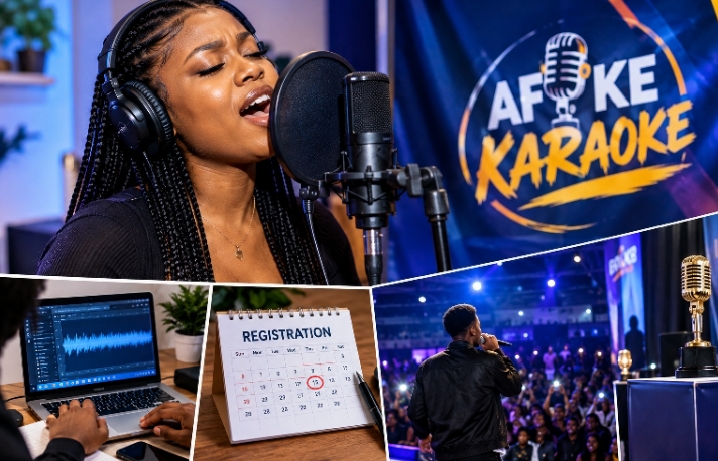
For singers who have spent time recording their voices, sharing covers online or wondering whether their talent can take them beyond social media, AFOKE Online Karaoke Championship 2026 is opening a different kind of opportunity. The competition is built around an online singing experience, but the journey does not end with uploading a performance. There is a selection process, there are voting stages, there is a live final and there is a cash prize waiting at the end of the competition for the eventual champion. Registration is already underway, which means singers who are interested have a limited period to understand the requirements before the entry window closes.
AFOKE has set out a structured calendar for the 2026 championship, beginning with registration on August 3, 2026 and moving through several stages before the scheduled live final on November 8, 2026. The competition is designed for eligible Nigerians who are at least 18 years old, while the entry itself requires a genuine vocal performance submitted in an accepted audio format. That detail becomes important because AFOKE has placed clear restrictions around lip syncing, AI generated vocals and excessive pitch correction. For anyone considering entering, the quality of the voice matters, but so does the way the performance is prepared and submitted.
The competition begins with registration
Registration for the AFOKE Online Karaoke Championship 2026 opened on August 3, 2026, giving prospective contestants the opportunity to enter the competition before the first major selection stage begins. The current competition timeline identifies October 15, 2026 as the closing date for registration, meaning interested singers still have a window to prepare their performance, check their eligibility and complete the required submission before the deadline. The date is particularly important because October 15 is also scheduled to be the day AFOKE announces the Top 100 contestants, moving the competition from the registration stage into the first major stage of the contest.
The competition is positioned as a digital singing platform rather than an event restricted to contestants living in one particular Nigerian city. That means singers from different parts of Nigeria can potentially participate without needing to travel to Lagos or Abuja simply to submit their first performance. The online structure gives the competition a wider reach while also placing greater importance on the quality of the recording submitted by each contestant. A singer preparing to participate therefore needs to treat the entry as a serious performance rather than an ordinary voice note recorded casually on a phone.
AFOKE E Karaoke forms part of the wider AFOKE entertainment platform, which presents the digital karaoke experience as a space where singers can perform, compete, connect with audiences and build visibility. The 2026 championship takes that concept further by giving singers a defined competition route. Contestants begin with registration, move into selection, face voting stages and then potentially reach a live final. The structure means the competition is not simply about uploading a song and waiting for a winner to be announced.
Who is eligible to participate?
The published eligibility information identifies Nigerian residents who are 18 years old or above as eligible participants, subject to compliance with the competition rules. That gives the basic entry requirement a relatively straightforward starting point. A person considering the competition needs to meet the age requirement, qualify under the Nigerian residency condition and be able to provide the required vocal performance in the format specified by AFOKE.
Age is therefore one of the first details prospective contestants should confirm before spending time preparing an entry. The competition is not presented as a children or teenage singing contest, since the published requirement places the minimum age at 18. Nigerian residents who meet that requirement can then look at the performance conditions and submission format before deciding how to prepare their entry.
The online nature of the competition also means the entry stage is not limited to singers physically based in Lagos. A contestant living in another part of Nigeria can prepare the required recording and submit it through the competition process, provided the contestant satisfies the published rules. That wider reach is one of the practical features of a digital competition because the initial stage does not require contestants to appear physically before an audition panel.
Eligibility, however, should not be treated as the only requirement. Meeting the age and residency conditions does not automatically mean every submitted recording will qualify for progression. AFOKE has also published requirements concerning the vocal performance itself, including the file format, file size and authenticity of the vocals. Those conditions are important because a technically strong singer could still face problems if the submission does not follow the stated rules.
The singing performance must meet the rules
The central part of the AFOKE championship entry is the vocal performance. Contestants are expected to submit one genuine vocal performance, which means the competition is looking for an actual demonstration of singing ability rather than a collection of unrelated materials. The published submission formats are MP3, WAV and M4A, while the file must not exceed 10MB. Anyone preparing an entry therefore needs to pay attention to both the performance and the technical condition of the recording before submitting it.
The 10MB limit is particularly relevant for contestants who may be recording with modern phones or editing applications that automatically produce large audio files. A singer may have a good performance but still need to check the final file size before submission. Keeping the recording within the published limit can prevent a technical issue from interfering with the entry process. The safest approach is to prepare the performance early enough to allow the final file to be checked before the October 15 registration deadline.
AFOKE also places emphasis on authenticity. The competition rules specifically prohibit lip syncing, AI generated vocals and excessive pitch correction. This means contestants should not approach the recording as an opportunity to create a heavily processed studio performance that hides the natural character of the voice. The published requirements make it clear that the contestant’s genuine vocal ability should remain central to the performance.
That requirement could affect how singers prepare their recordings. Someone who normally relies heavily on vocal effects may need to produce a cleaner performance for the competition. The purpose is not simply to make the recording sound polished but to ensure that the submitted performance represents the singer’s actual voice. Clear recording is encouraged, but the published conditions place limits on the type of processing that can be used.
AFOKE has several musical directions
The competition page highlights Afrobeats, R&B, Pop, Highlife and other genres as musical directions available to contestants. This gives singers room to present their voices through different styles instead of forcing every contestant into one narrow musical category. A singer who is more comfortable with Afrobeats can approach the performance differently from someone whose strongest area is R&B or Highlife.
Genre selection can therefore become part of the preparation process. Contestants should consider the type of song that allows their natural vocal ability to come through clearly while also fitting the competition’s requirement for a genuine performance. The strongest choice for an individual contestant may not necessarily be the song with the biggest popularity, but the song that allows the singer to demonstrate control, tone and vocal personality without relying excessively on effects.
AFOKE’s reference to other genres also leaves room for contestants whose style does not fit neatly into the listed categories. The competition is presented as a digital singing platform with several musical directions rather than a contest built around one specific sound. That gives participants an opportunity to approach their performance according to their own musical strengths while remaining within the published rules.
The first major stage leads to the Top 100
October 15, 2026 is one of the most important dates in the published AFOKE competition calendar because it combines the end of registration with the announcement of the Top 100. Registration opened on August 3 and remains open until October 15, after which the competition moves into its next phase. The announcement of the Top 100 marks the first major reduction in the number of contestants taking part.
For singers entering the competition, reaching the Top 100 would represent the first significant progression after registration. The published structure does not present registration as an automatic route into the next stage. Instead, the competition moves through selection stages before contestants reach the voting rounds. This is why preparing a compliant and genuine performance matters from the beginning.
The Top 100 stage also sets up the next part of the competition, where the field becomes much smaller. AFOKE’s schedule moves from the Top 100 into the Top 25 quarterfinal stage, creating a sharp reduction in the number of contestants who continue. The competition therefore becomes progressively more concentrated as the calendar moves towards the live final.
The Top 25 stage introduces voting
The Top 25 quarterfinal stage is scheduled to run from October 15 to October 24, 2026. This is the first clearly published voting window in the competition timeline, meaning public participation becomes an important part of the journey once the competition reaches this stage. Contestants who make the Top 25 are therefore not simply waiting for another announcement. Their performances are expected to enter a stage where voting plays a role.
The voting period is only 9 days long, running from October 15 through October 24. That creates a defined window for contestants and their supporters to participate. Anyone who progresses to this stage would need to pay attention to the official voting process and the dates provided by AFOKE rather than assuming voting will remain open indefinitely.
AFOKE’s contestants page is also designed to display approved performances for listeners and voters. This is significant because it gives the competition a public facing element after the initial selection. Performances become part of the online competition environment, allowing the audience to engage with the contestants as the field becomes smaller.
The published information confirms the voting dates, but the publicly visible competition material does not provide a detailed explanation of exactly how votes are weighted against other judging factors at every stage. That distinction is important when describing the competition accurately. The existence of voting is clear, while assumptions about voting being the sole deciding factor at every stage should not be presented as established fact unless the detailed rules say so.
The Top 10 stage moves closer to the final
October 24, 2026 begins another important stage of the competition as the Top 25 period gives way to the Top 10 semifinal stage. Voting for the Top 10 is scheduled from October 24 to October 31, 2026. Contestants who survive the Top 25 stage therefore have another opportunity to remain in the competition, but the field becomes significantly smaller before the live final.
The semifinal stage is where the competition moves closer to its final group. From the original registration pool, only 10 contestants are scheduled to reach the live final stage. That makes the journey from registration to the final a considerable reduction in numbers. Each stage therefore becomes more consequential as contestants move closer to November 8.
The October 31 deadline marks the end of the published Top 10 voting period. After that stage, the competition is expected to move towards the live final rather than another online elimination round. Contestants who reach the Top 10 therefore have a clear target ahead of them, with November 8, 2026 set as the scheduled date for the final.
November 8 is the scheduled live final
The AFOKE Online Karaoke Championship 2026 is scheduled to reach its final on November 8, 2026. AFOKE describes the final as a live performance and also states that the event will be livestreamed. That gives the competition a different character from its opening stage, where contestants submit digital audio performances remotely.
Reaching the final therefore means moving from an online entry environment into a live performance setting. The Top 10 contestants are the group scheduled to reach this stage, after passing through the earlier selection and voting stages. The final is where the competition’s top prize becomes directly relevant because the published ₦1 million amount belongs to the champion.
The scheduled final date also gives contestants a clear timeline for preparation. Someone entering on or near the October 15 deadline would have only a few weeks before the competition reaches the live stage. That makes early preparation useful for anyone hoping to progress through the various stages rather than waiting until reaching the Top 10 before thinking about live performance readiness.
The ₦1 million prize belongs to the champion
The headline financial attraction of the AFOKE Online Karaoke Championship 2026 is the ₦1 million cash prize for the champion. Second place is scheduled to receive ₦500,000, while third place is scheduled to receive ₦250,000. Taken together, the published top three cash prizes amount to ₦1.75 million.
The prize structure should be understood correctly because the ₦1 million is not an entry payment, registration bonus or general grant available to every contestant. It is the published first place prize attached to the championship. A singer entering the competition is therefore competing for a position within the final ranking rather than receiving the money simply for submitting a performance.
The second and third place prizes also give the final three positions defined cash rewards. The published structure provides ₦500,000 for second place and ₦250,000 for third place, making the final stage financially significant for the contestants who reach it. There is currently no published indication on the competition page that every member of the Top 100, Top 25 or Top 10 receives a cash payment.
That distinction matters when explaining the opportunity to prospective contestants. Describing AFOKE as an opportunity to win up to ₦1 million is accurate when the statement is connected to the championship prize, but it should not be presented as though ₦1 million is guaranteed to anyone who registers. The amount is specifically the champion’s published cash prize.
The journey follows a clear sequence
The published competition structure can be followed through a straightforward sequence. Registration opened on August 3, 2026 and continues until October 15, 2026. The Top 100 is scheduled to be announced on October 15, followed by the Top 25 quarterfinal voting period from October 15 to October 24. The Top 10 semifinal voting period then runs from October 24 to October 31, before the competition reaches the live final on November 8.
That sequence gives potential contestants an idea of how quickly the competition will progress once registration closes. The first major transition happens immediately on October 15, when registration ends and the Top 100 is announced. The next stages then move in relatively short periods, with each voting window lasting about a week and the final following shortly after the semifinal stage.
The full published timeline is therefore:
Registration opens on August 3, 2026.
Registration closes on October 15, 2026.
Top 100 announcement is scheduled for October 15, 2026.
Top 25 quarterfinal voting runs from October 15 to October 24, 2026.
Top 10 semifinal voting runs from October 24 to October 31, 2026.
Live final is scheduled for November 8, 2026.
Champion receives ₦1,000,000.
Second place receives ₦500,000.
Third place receives ₦250,000.
Contestants should prepare before submitting
A singer considering AFOKE 2026 should have the required performance ready before starting the submission process. The recording needs to be genuine, clear and within the 10MB file limit, while the accepted formats are MP3, WAV and M4A. The performance should not involve lip syncing, AI generated vocals or excessive pitch correction because those are specifically identified within the published requirements.
Preparation should also include checking the final audio file rather than assuming that every recording will automatically meet the technical requirements. A performance recorded on a phone may sound acceptable but still need editing or conversion to meet the required format and file size. Checking the file before submission can help reduce avoidable problems close to the October 15 deadline.
The choice of song deserves attention as well. Since AFOKE highlights Afrobeats, R&B, Pop, Highlife and other genres, contestants have room to choose a musical direction that suits their voice. The important consideration is that the performance should give a clear representation of the contestant’s actual singing ability while remaining within the authenticity rules.
Contestants should also understand that reaching the later stages could require more than simply recording one good performance. The Top 25 and Top 10 stages include voting periods, while the final is scheduled as a live performance. Anyone hoping to progress should therefore be prepared for an increasingly public competition environment after the initial submission.
The competition goes beyond a single audio upload
AFOKE’s broader E Karaoke platform is presented as a digital environment where singers can perform, compete, connect with fans and increase their visibility. The 2026 championship follows that broader concept by creating a structured route from online submission to a live final. That makes the competition more than a simple request for singers to upload karaoke recordings.
The format also creates different moments for contestants to demonstrate themselves. The initial performance determines entry into the competition process, the selection stages reduce the field, the voting rounds bring audience participation into the journey and the final moves the remaining contestants onto a live stage. Each stage has its own significance within the overall competition.
The AFOKE platform’s connection to a wider entertainment ecosystem is also relevant. AFOKE Media describes its work across storytelling, television, music, culture and digital entertainment, with AFOKE E Karaoke presented as one of its connected properties. The championship therefore sits within a broader entertainment platform rather than existing completely separately from AFOKE’s other digital activities.
The important details before October 15
Anyone planning to enter should keep October 15, 2026 firmly in mind because it is both the published registration closing date and the scheduled Top 100 announcement date. Waiting until the final hours could leave little room to correct a technical problem with the recording, replace an unsuitable file or confirm that the submission meets the competition requirements.
The basic checklist is clear. The contestant should be a Nigerian resident who is at least 18 years old, should prepare one genuine vocal performance and should submit it in MP3, WAV or M4A format. The file should be 10MB or smaller, while the performance should not rely on lip syncing, AI generated vocals or excessive pitch correction.
After submission, the journey does not immediately end. The published structure moves from registration to the Top 100, then to the Top 25, followed by the Top 10 and finally the live final. Voting becomes part of the competition at the Top 25 and Top 10 stages, with the published voting periods running from October 15 to October 24 and October 24 to October 31 respectively.
The final scheduled date is November 8, 2026, when the Top 10 are expected to perform live and the championship prizes come into focus. The champion is set to receive ₦1 million, second place ₦500,000 and third place ₦250,000. For singers who have the required age, residency and vocal performance, the immediate opportunity is to understand the rules and complete the entry before the October 15 registration deadline.