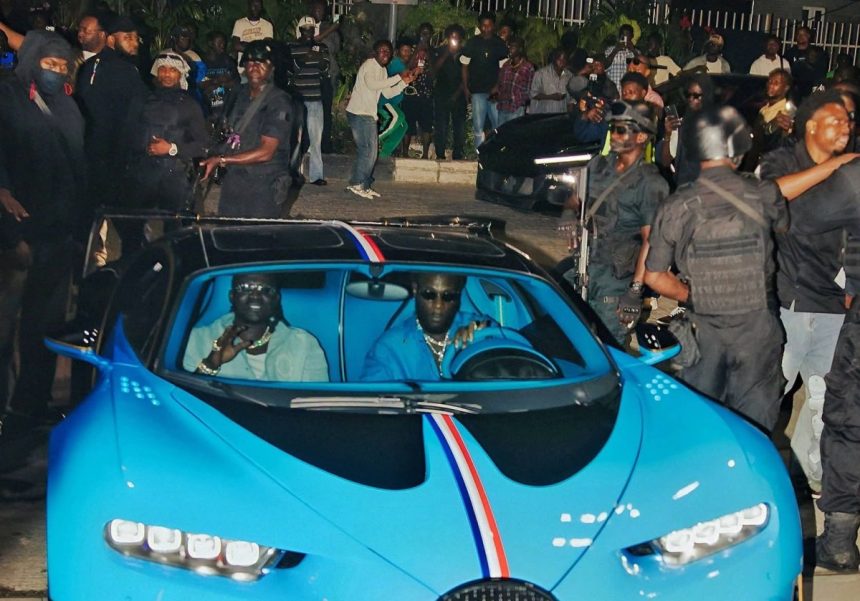
It was 6:30 a.m. on Monday. A new Bugatti Chiron VXX drove out of a nightclub, and the driver parked in the middle of the street, smiled gleefully behind the wheel, and basked in the hailing and admiration of the deluge of young, able-bodied men who had flocked around the car. The man whom they crowded around and who was the cynosure of every eye was Nigerian music star, Burna Boy.
On the surface, the whole scene may look and feel harmless and lovely, but a deeper study of the spectacle reveals a profound and deeply disturbing reality. At that time of day, when thousands, if not millions, of residents of the city are preparing for work or already on their way to work, to have hundreds of young men praising a music star and chasing after his expensive and sophisticated speed car for some monetary reward is a jarring testament to the hopeless and parlous economic situation of the country. These are people who should be doing something productive and rewarding with their time and body. Instead, they were outside a nightclub, chasing a car.
Make no mistake about it: this is not about Burna Boy or his car or the excessive praise lavished on him by the doting crowd of young, exuberant men; it is about a country that has failed to harness the potential of a teeming youthful population, who have left its young men at the mercy of a bleak and deplorable socio-economic reality, leaving them to compensate for lack of prospects and a chance at a good life; government failures and incompetence with mundane, inconsequential and banal activities like relishing and admiring the presence of a musician in his car in front of a nightclub at dawn.
However, the worrying Burna Boy club departure spectacle is not a one-off incident. In fact, it is a troubling symptom of a perennial problem. The practice of young men waiting and loitering around posh and exquisite places that high-profile entertainers and social media influencers frequent has become some sort of norm in recent years. And in many instances, they are not there just to catch a glimpse of these elusive superstars and public figures that they only see on the Internet, but also to engage in other nefarious and criminal activities.
In August, at TikToker Peller’s traditional wedding, phones went missing from guests’ pockets in the melee and disorderliness that usually characterised most of Nigeria’s public figure functions and gatherings. Different event, same pattern: young men physically espousing the ideals of materialism, youth glorification of luxury, the allure of fame and anything that promises a moment of proximity to it.
The reasons are not far-fetched, and part of it is palpable: Unemployment. The youth unemployment figure has been growing for some years now, but the number has reached grim and alarming levels in recent years. When there is no secure job, you take away the luxury of being busy and building a bright future, while giving the youth the leeway to become a nuisance. A young man with a job to get to at 8 a.m. is not free to chase a Bugatti at 6:30 a.m. When there is nothing that keeps the mind and hand of a young man productively engaged, and opportunities for a better life are dreadfully scarce, they indulge in activities that give a semblance of satisfaction and fulfilment but are painfully detrimental not just to them but to society at large.
But lack of jobs and prospects do not tell the whole story of this appalling socio-economic degradation. We’ve become an overly materialistic and money-centric nation. This has fundamentally changed our values regarding what constitutes success. Many people no longer want to go through the tough, rigorous and merit-based process of becoming a successful person. They want to become famous and rich by doing so little and not putting in the required effort, and this has engendered a situation where proximity to affluence turns into an illusion of success. Running after a car worth more than most people will earn in ten lifetimes, filming it, posting it for many, feels like living in the moment they have always dreamed of. We have built a culture where proximity to fame feels like a substitute for a future.
But things need to change, and they need to change fast. We need to find a way to maximise the energy of the massive unemployed young people and harness their potential. To do this, the government will have to channel its own energy and capital to build the things that truly matter to the development of a nation and the future of its young population. Investment in factories, workshops, farm settlements, and construction sites. Its policies will have to be fine-tuned to align with plans for industrialisation. Massive capital will have to go into addressing the nation’s appalling electricity situation so as to attain energy security, which will go a long way in easing the huge burden of high production costs on manufacturers, which will in turn allow them to employ more people. Grants and low-interest loans to small businesses, which are the nerve of the economy, will also go a long way in pulling these youths from the streets to places where they can meaningfully contribute to the growth of the nation and build a future for themselves.
If we want different mornings, we need different mornings to offer. Not another moral lecture about “our youths.” Real jobs. Real factories. Real reasons to wake up for something other than someone else’s Bugatti